
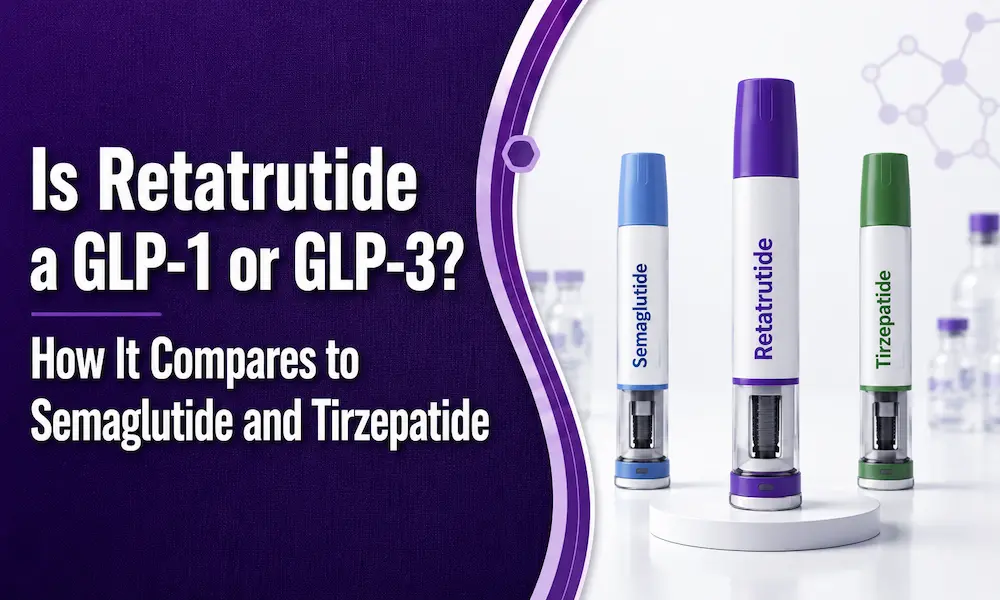
Retatrutide vs Semaglutide & Tirzepatide: What to Know
A new weight loss drug can sound exciting, especially when early results look powerful and many patients are asking the same question: Is retatrutide the next breakthrough after semaglutide and tirzepatide—or is the online hype moving faster than the medical facts?
Retatrutide has created major attention because many people call it the “next big thing” after Ozempic, Wegovy, Mounjaro, and Zepbound. But one question matters first: Is retatrutide a GLP-1 or GLP-3?
Here is the clear answer. Retatrutide is not GLP-3. It is an investigational triple hormone receptor agonist. It acts on three hormone pathways: GIP, GLP-1, and glucagon.
That makes the comparison between retatrutide vs semaglutide and tirzepatide important for anyone thinking about future weight loss treatment.
This article explains retatrutide vs semaglutide and tirzepatide, how these medicines differ, what Phase 3 results show, and why patients should avoid unsafe online products claiming to contain retatrutide.
Concerned about weight, blood sugar, cholesterol, or medication safety? Book an appointment with Passion Health Advanced Primary Care for a personalized medical review before starting any weight loss treatment.
What Is Retatrutide?
Retatrutide is an investigational once-weekly injection developed by Eli Lilly. Researchers study it for Excess body weight, weight-related risk, type 2 diabetes, sleep apnea, knee osteoarthritis pain, and other weight-related health problems.
Unlike older weight loss medications, retatrutide works through three hormone receptors. These receptors affect appetite, food intake, blood sugar control, and energy balance.
The three pathways include:
GIP receptor
GLP-1 receptor
Glucagon receptor
This triple action explains why many people compare retatrutide vs semaglutide and tirzepatide. However, retatrutide has not received FDA approval. Patients should not buy retatrutide online, mix it at home, or inject products from unverified sellers.
Is Retatrutide a GLP-1 or GLP-3?
Retatrutide includes GLP-1 activity, but it is not only a GLP-1 drug. It also targets GIP and glucagon receptors. So, the best medical term is triple agonist.
The term “GLP-3” creates confusion. Some people use it online because retatrutide targets three pathways. Still, GLP-3 does not describe a correct drug class. Retatrutide does not belong to a scientific category called GLP-3.
A simple way to understand it:
Semaglutide = GLP-1 receptor agonist
Tirzepatide = GIP + GLP-1 dual agonist
Retatrutide = GIP + GLP-1 + glucagon triple agonist
That difference makes retatrutide vs semaglutide and tirzepatide an important topic for patients who follow new weight loss treatments.
Retatrutide Phase 3 Results: What Patients Should Know
Retatrutide gained more attention after the Phase 3 obesity trial results. In Lilly’s TRIUMPH-1 study, adults with obesity or overweight and at least one weight-related condition received retatrutide or placebo.
The highest studied dose showed major weight loss over 80 weeks. Lilly reported that patients on retatrutide lost a large average percentage of body weight, and some patients moved below the obesity range.
These results sound promising. However, promising trial results do not mean the drug is available for public use.
FDA approval requires a complete review of benefits, risks, dosing, safety data, manufacturing quality, and patient use instructions.
Also, every weight loss drug can cause side effects. Patients may experience nausea, vomiting, diarrhea, constipation, stomach pain, reduced appetite, fatigue, or other concerns. Higher drug strength can also increase side effect risk.
This is why the Phase 3 topic should sit inside the blog, not replace the safety message. Patients need facts, not hype.
Retatrutide vs Semaglutide and Tirzepatide: Main Difference
The main difference comes from the number of hormone receptors each medicine targets.
Semaglutide targets one pathway. Tirzepatide targets two pathways. Retatrutide targets three pathways.
This does not automatically mean retatrutide is better for every patient. A stronger effect may also bring stronger side effects.
Medical history, current medications, diabetes status, heart health, kidney health, stomach problems, insurance coverage, and weight goals all matter.
A patient with type 2 diabetes may need a different plan than someone without diabetes.
Another patient with stomach sensitivity may not tolerate the same medication schedule. Someone with uncontrolled blood pressure, thyroid concerns, gallbladder disease, or kidney risk needs careful review.
That is why retatrutide vs semaglutide and tirzepatide should never become a “which one is strongest?” decision. The safer question is: which treatment fits the patient’s health profile
Retatrutide vs Tirzepatide vs Semaglutide
Comparison Point | Semaglutide | Tirzepatide | Retatrutide |
Common brand names | Ozempic, Wegovy | Mounjaro, Zepbound | Not FDA-approved yet |
Main drug type | GLP-1 receptor agonist | GIP + GLP-1 dual agonist | GIP + GLP-1 + glucagon triple agonist |
How it works | Activates the GLP-1 receptor | Activates GIP and GLP-1 receptors | Activates GIP, GLP-1, and glucagon receptors |
Weight loss role | Helps reduce appetite, slow stomach emptying, increase fullness, and support blood sugar control | Helps reduce appetite and food intake while supporting blood sugar control | May lead to stronger weight loss in trials because of its triple-receptor action |
FDA approval status | Wegovy has approval for chronic weight management in certain adults and children. Ozempic has approval for type 2 diabetes. | Zepbound has approval for chronic weight management in adults with obesity or overweight and at least one weight-related condition. Mounjaro has approval for type 2 diabetes | Retatrutide remains investigational and still needs regulatory approval before public use. |
Key safety point | Approved uses have prescribing guidance, dosing instructions, and safety information. | Approved uses have prescribing guidance, dosing instructions, and safety information. | Patients should not use online retatrutide products because it does not yet have public prescribing approval. |
Simple takeaway | Semaglutide uses one hormone pathway. | Tirzepatide uses two hormone pathways. | Retatrutide uses three hormone pathways. |
Is Retatrutide FDA Approved?
No. Retatrutide is not FDA-approved at this time. It remains an investigational medication.
This point matters because many websites may advertise “retatrutide peptide,” “retatrutide dosage chart,” or “retatrutide for sale.”
These products can carry serious risks. Some may contain the wrong ingredient, too much active ingredient, too little active ingredient, or harmful contaminants.
Do not inject an unapproved product because a social media post or online forum recommends it.
Weight loss medications affect digestion, blood sugar, hydration, kidney function, gallbladder risk, and overall metabolism. A medical provider should review your health first.
Who Should Be Careful With Weight Loss Medications?
Patients should speak with a medical provider before using any GLP-1, GIP/GLP-1, or future triple-agonist medication.
Extra caution may apply if a patient has:
Type 1 diabetes
History of pancreatitis
Severe stomach emptying problems
Gallbladder disease
Kidney disease
Thyroid cancer history
Multiple diabetes medications
Pregnancy plans
Eating disorder history
Very low calorie intake
Dehydration or frequent vomiting
A safe weight loss plan needs more than a prescription. It should include nutrition, physical activity, lab monitoring, blood pressure checks, cholesterol review, sleep evaluation, and follow-up visits.
Should Patients Wait for Retatrutide?
Some patients may feel tempted to wait for retatrutide because headlines sound impressive. But untreated higher weight, diabetes, high blood pressure, high cholesterol, and sleep apnea can worsen while waiting.
Approved options already exist for many patients. Lifestyle changes, primary care monitoring, FDA-approved medications, diabetes treatment, nutrition support, and chronic disease management can help now.
Retatrutide may become an option in the future if regulators approve it. Until then, patients should focus on safe, available, evidence-based care.
Final Thoughts on Retatrutide vs Semaglutide and Tirzepatide
Retatrutide is not a GLP-3 drug. It is an investigational triple agonist that targets GIP, GLP-1, and glucagon receptors. Semaglutide targets GLP-1. Tirzepatide targets GIP and GLP-1.
The comparison between retatrutide vs semaglutide and tirzepatide matters because each drug works differently. However, the safest treatment depends on the patient, not the trend.
Retatrutide Phase 3 results look promising, but the drug is not FDA-approved for public use. Avoid online retatrutide products, DIY dosing charts, and social media injection advice.
Weight loss care should feel safe, clear, and personal — not confusing or rushed. If you have questions about GLP-1 options, diabetes, cholesterol, or a safer weight loss plan, talk with Passion Health Advanced Primary Care.
Book an Appointment → Get guidance based on your health history, lab results, medications, and long-term goals.
FAQs
1. Is retatrutide a GLP-1?
Retatrutide has GLP-1 activity, but it is not only a GLP-1 drug. It targets GIP, GLP-1, and glucagon receptors.
2. Is retatrutide a GLP-3?
No. GLP-3 is not the correct scientific term. Retatrutide is better described as a triple agonist.
3. Is retatrutide better than semaglutide?
Trial results look promising, but retatrutide is not FDA-approved. Semaglutide already has approved uses for certain patients.
4. Is retatrutide better than tirzepatide?
Retatrutide targets three pathways, while tirzepatide targets two. That does not automatically make one better for every patient.
5. Can I buy retatrutide online?
No patient should buy retatrutide online. Retatrutide is investigational, and unapproved products may contain unsafe or unknown ingredients.