Key Takeaways
- A2 milk contains only A2 beta-casein, while regular milk usually contains both A1 and A2 proteins.
- A2 milk may reduce digestive discomfort for some people, but research results remain mixed.
- Standard A2 milk contains lactose and may not relieve symptoms caused by lactose intolerance.
- A2 milk still contains cow’s-milk proteins and is not suitable for people with a milk allergy.
- Persistent bloating, diarrhea or indigestion may require evaluation by a primary care provider.
Could Switching Your Milk Help Reduce Bloating and Indigestion?
Milk provides protein, calcium, and several important vitamins. However, some people experience bloating, gas, diarrhea, or stomach discomfort after drinking it. These symptoms often create confusion about lactose intolerance, milk allergies, and different milk proteins.
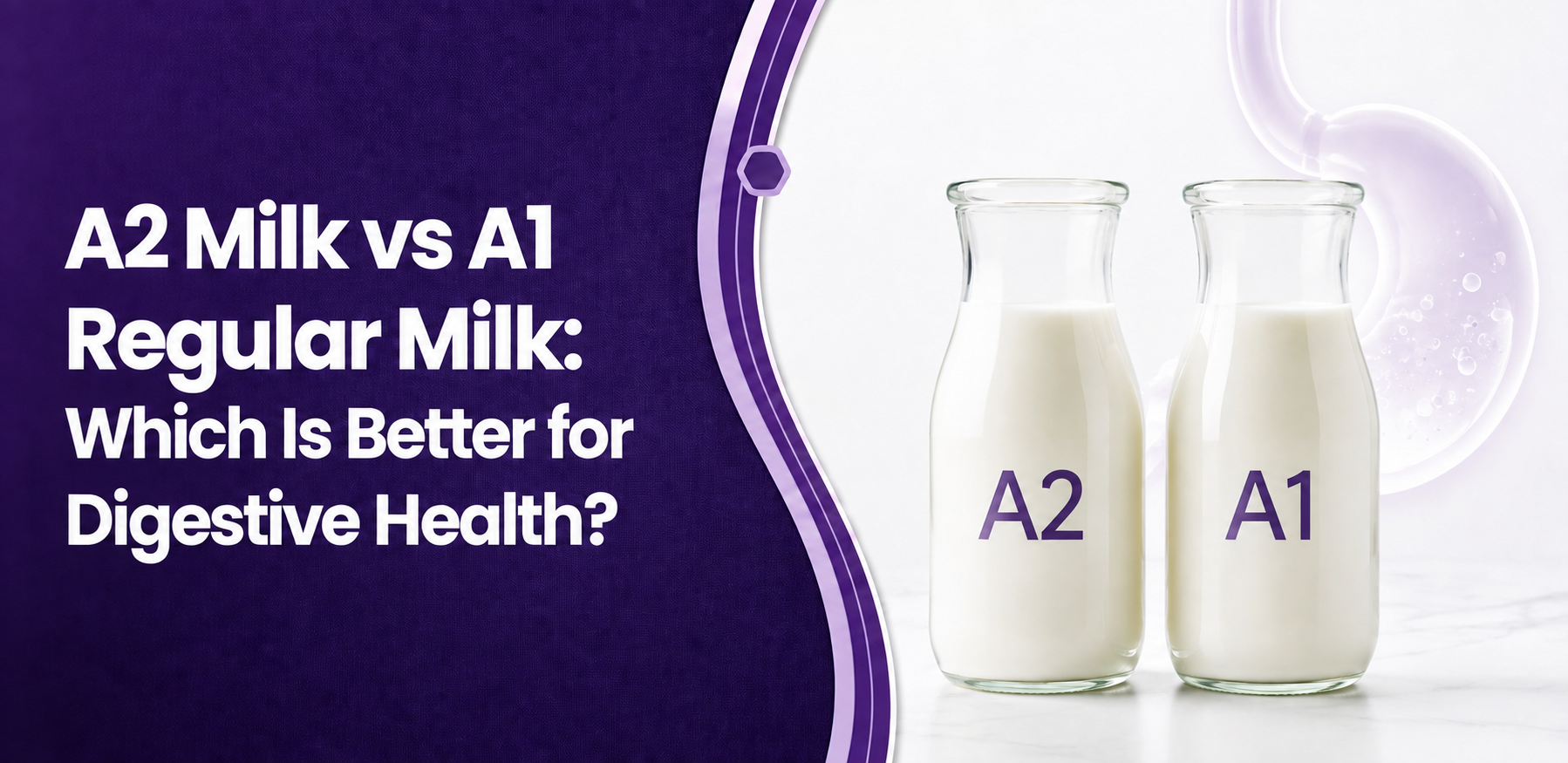
The A2 milk vs. A1 regular milk discussion focuses on beta-casein, one of the main proteins in cow’s milk. A2 milk contains only A2 beta-casein, while most regular milk contains a mixture of A1 and A2 beta-casein. Although A2 milk may feel easier to digest for some people, it still contains lactose and cow’s milk proteins.
Therefore, choosing the right milk requires more than reading an A1 or A2 label. Your symptoms, nutritional needs, and medical history should guide your decision.
What Do A1 and A2 Mean?
Cow’s milk contains whey and casein proteins. Beta-casein makes up part of the casein group and occurs in several genetic forms. A1 and A2 represent the two most widely discussed forms.
A1 and A2 beta-casein differ by one amino acid. Despite this small difference, the digestive system may process them differently.
During digestion, A1 beta-casein can release a peptide called beta-casomorphin-7, or BCM-7. Researchers continue to examine whether this peptide affects intestinal movement, inflammation, or digestive comfort. In comparison, A2 beta-casein releases much less BCM-7.
This difference forms the basis of the A2 milk vs. A1 regular milk debate. Still, current research does not prove that A1-containing milk harms everyone.
Does Regular Milk Contain Only A1 Protein?
No. The phrase “A1 regular milk” can create a misleading impression. Most conventional cow’s milk contains both A1 and A2 beta-casein rather than A1 alone.
In contrast, A2 milk comes from cows that naturally produce only A2 beta-casein. Farmers identify these cows through genetic testing and keep their milk separate during production. Genetic modification does not create A2 milk.
Consequently, a medically accurate comparison involves A2-only milk and regular milk that usually contains both protein variants.
Is A2 Milk Easier to Digest?
Some studies suggest that people who experience discomfort after drinking conventional milk may tolerate A2 milk better. Participants in certain trials have reported less abdominal pain, urgency, and stomach rumbling after consuming A2 milk.
However, the results remain inconsistent. A 2024 randomized crossover study found less abdominal pain and fecal urgency with A2 milk. On the other hand, some measurements showed increased bloating and loose stools.
In addition, many available studies include small participant groups or short testing periods. Some studies also received industry support. Researchers therefore need larger, independent, and longer trials before recommending A2 milk for everyone with digestive symptoms.
The present evidence supports a balanced conclusion: A2 milk may improve digestive comfort for some people, but individual results vary.
A2 Milk vs. A1 Regular Milk: Nutritional Comparison
A2 milk and conventional milk generally provide similar nutrition when they contain the same fat percentage. Brand formulations and vitamin fortification can create small differences.
Feature | A2 milk | Regular milk |
Beta-casein | A2 only | Usually A1 and A2 |
Lactose | Present | Present |
Protein | Similar amount | Similar amount |
Calcium | Similar amount | Similar amount |
Depends on fortification | Depends on fortification | |
Cow’s milk allergens | Present | Present |
Typical cost | Higher | Lower |
Therefore, A2 milk does not automatically provide more protein, calcium, or vitamins. Its potential advantage relates mainly to digestive tolerance.
Always compare nutrition facts labels. Additionally, choose a fat level that supports your overall nutritional needs and medical goals.
Does A2 Milk Contain Lactose?
Yes. Standard A2 milk contains lactose, the natural sugar in dairy products.
The small intestine produces lactase, an enzyme that breaks down lactose. When the body produces too little lactase, undigested lactose reaches the colon. Gut bacteria then ferment it, creating gas and fluid.
As a result, lactose intolerance may cause:
Gas
Abdominal cramps
Diarrhea
Nausea
Stomach rumbling
Because A2 milk still contains lactose, it may not relieve symptoms caused by lactose intolerance. According to the National Institute of Diabetes and Digestive and Kidney Diseases, people tolerate different amounts of lactose. Some individuals can consume small servings, while others need lactose-free products.
A2 Milk or Lactose-Free Milk: Which Should You Choose?
The right option depends on what triggers your symptoms.
Lactose-free milk contains added lactase, which breaks down lactose before consumption. Therefore, it may work better for someone with lactose intolerance. However, lactose-free regular milk may still contain both A1 and A2 beta-casein.
A2 milk removes the A1 protein from the comparison but retains lactose. Meanwhile, lactose-free A2 milk addresses both factors when available.
Consider the following approach:
Choose regular milk if it causes no symptoms.
Consider A2 milk if regular milk causes mild discomfort but lactose does not appear to cause the problem.
Try lactose-free milk when testing or when symptoms suggest lactose intolerance.
Avoid every form of cow’s milk if you have a confirmed milk allergy.
Choose fortified plant-based milk when you cannot tolerate dairy.
A primary care provider or registered dietitian can help you avoid unnecessary food restrictions.
Dietary Tips for Milk-Related Indigestion
A structured dietary trial can provide more useful information than removing several foods at once. However, stop the trial and seek medical guidance if symptoms become severe.
Begin with a small serving.
Start with a few ounces instead of a full glass. Many people tolerate smaller amounts of lactose better than larger servings.
Drink milk with a meal.
Food slows digestion and may improve tolerance. In contrast, drinking a large serving on an empty stomach may trigger stronger symptoms.
Test one milk at a time.
Try regular, A2, and lactose-free milk separately. Keep the serving size and meal conditions similar. This method gives you a clearer comparison.
Keep a symptom diary.
Record the product, portion, time, and accompanying foods. Also note bloating, gas, pain, bowel changes, and symptom duration. Bring the record to your medical appointment.
Consider lower-lactose dairy foods.
Yogurt with live cultures and many hard cheeses contain less lactose than milk. Therefore, some people tolerate these foods more comfortably.
Check added ingredients
Flavored milk may contain sugar, sugar alcohols, gums, or artificial sweeteners. These ingredients can also trigger bloating or diarrhea in sensitive individuals.
Maintain calcium and vitamin D intake.
If you reduce dairy, choose an unsweetened, fortified alternative. Moreover, compare protein levels because some plant-based drinks contain very little protein.
A2 Milk Does Not Treat a Milk Allergy
A2 milk contains cow’s milk proteins. Therefore, it cannot provide a safe substitute for someone with a cow’s-milk allergy.
Milk allergy may cause hives, facial swelling, vomiting, wheezing or breathing difficulty. The FDA lists milk as a major food allergen.
When Indigestion May Have Another Cause
Milk may not cause every digestive symptom that follows a meal. Coffee, sweeteners, high-fat foods, or another ingredient may contribute to the reaction.
Persistent indigestion may also relate to:
Irritable bowel syndrome
Food sensitivity
Gastrointestinal infection
Medication side effects
Gallbladder disease
Inflammatory bowel disease
For example, upper abdominal burning and frequent belching may suggest a different problem than lactose-related gas and diarrhea. Consequently, a proper evaluation can prevent unnecessary dietary restrictions.
When Should You See a Primary Care Provider?
Contact a primary care provider when symptoms recur, disrupt daily activities or continue despite dietary changes.
Arrange an evaluation if you experience:
Persistent or severe abdominal pain
Frequent diarrhea or vomiting
Unexplained weight loss
Difficulty swallowing
Blood in the stool
Loss of appetite
Symptoms that interrupt sleep
Your provider may recommend a lactose hydrogen breath test, allergy evaluation, laboratory work, or specialist referral. Moreover, primary care can help you maintain balanced nutrition while investigating the cause.
Which Milk Is Better for Your Digestion?
The A2 milk vs. A1 regular milk comparison does not produce one answer for everyone. Regular milk remains nutritious and affordable for people who tolerate it. Meanwhile, A2 milk may offer better digestive comfort for some individuals who react to conventional milk.
However, lactose-free milk may work better for confirmed lactose intolerance. People with milk allergies must avoid A2 milk because it still contains allergenic proteins.
Ultimately, your symptom pattern provides more useful guidance than marketing claims.
Get Help for Persistent Indigestion
A dietary change may relieve occasional milk-related discomfort. Nevertheless, recurring bloating, diarrhea, abdominal pain, or indigestion may require medical evaluation.
Still Experiencing Bloating or Indigestion?
Schedule an evaluation at Passion Health Advanced Primary Care to discuss possible causes and receive personalized next steps.
FAQs
1. Is A2 milk lactose-free?
No. Standard A2 milk contains lactose unless the label specifically states “lactose-free.”
2. Can A2 milk reduce bloating?
It may reduce bloating for some people, but study results remain mixed.
3. Is A2 milk more nutritious than regular milk?
No major nutritional advantage exists. Both usually provide similar protein, calcium, and vitamins.
4. Can A2 milk help lactose intolerance?
A2 milk still contains lactose. Therefore, lactose-free milk may work better.
5. Can primary care evaluate milk-related indigestion?
Yes. Primary care can review symptoms, dietary patterns, and medical history and recommend appropriate testing or treatment.

About the Author
Dr. Anantha Chentha is a board-certified internal medicine physician with extensive experience in primary care and chronic disease management. He provides comprehensive, patient-centered care with a focus on prevention, accurate diagnosis, and long-term health management.
View Provider Profile →