Passion Health Primary Care Blog mFlusiva mRNA Flu Vaccine: Is It FDA-Approved for Adults Over 50?

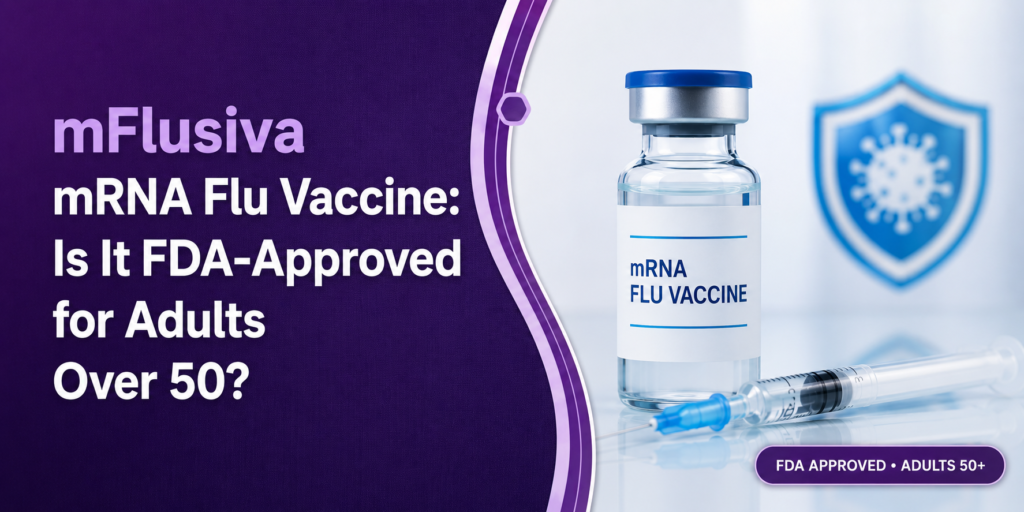
mFlusiva mRNA Flu Vaccine: Is It FDA-Approved for Adults Over 50?

Medically reviewed by Dr. Anantha Chentha, MD, FACP, CHCQM-PHY ADV Internal Medicine

mFlusiva mRNA Flu Vaccine: Effectiveness and Side Effects

Key takeaways

  • mFlusiva, an mRNA flu vaccine, has been approved for adults aged 50 and older.
  • Approval pathways differ by age: traditional approval for ages 50–64 and accelerated approval for 65 and older.
  • Common side effects include injection-site pain, fatigue, headache, and muscle or joint pain, and most are mild or moderate.
  • Pregnancy safety data for mFlusiva remain limited, so talk with a clinician if you are pregnant or breastfeeding.
  • Choosing a flu vaccine should consider age, health conditions, allergies, and current vaccine recommendations.

Influenza can cause more than a few uncomfortable days at home. Adults over 50 face a greater chance of complications, especially when diabetes, heart disease, asthma, or another chronic condition affects their health. Therefore, annual vaccination remains an important part of preventive care.

Approval of the mFlusiva mRNA flu vaccine gives older adults another seasonal vaccination option. Moderna developed this first-in-class flu shot using technology similar to that used in some COVID-19 vaccines. However, the approval pathway, clinical results and current vaccine recommendations require careful explanation.

What Is mFlusiva?

The mFlusiva mRNA flu vaccine, also called mRNA-1010, helps prevent influenza disease caused by the strains represented in the seasonal formula. It has been approved for people aged 50 and older.

Unlike traditional egg-based flu vaccines, mFlusiva uses messenger RNA. This mRNA gives cells temporary instructions to produce harmless copies of influenza hemagglutinin proteins. 

In response, the immune system learns to recognize those proteins and prepares antibodies that can respond after future exposure.

The vaccine cannot cause influenza because its mRNA does not contain a whole flu virus. Additionally, the mRNA breaks down after delivering its instructions.

Healthcare professionals give mFlusiva as one 0.38 mL injection into a muscle once during each flu season. The formula contains no egg protein, preservatives, or antibiotics, according to the product’s prescribing information.

Quick Facts About mFlusiva

Feature

Details

Vaccine type

Trivalent mRNA seasonal influenza vaccine

Manufacturer

Moderna

FDA approval

Traditional approval for ages 50–64; accelerated approval for 65 and older

Eligible age

50 years and older

Dose

One 0.38 mL intramuscular injection

Frequency

Once each flu season

Flu components

Two influenza A strains and one influenza B strain

Egg protein

None

Preservatives or antibiotics

None

Is mFlusiva FDA-approved for adults over 50?

Yes. However, two approval pathways were used for different age groups.

Approval for adults ages 50–64

Traditional approval was granted for adults ages 50–64. Clinical efficacy data from a large Phase 3 trial supported this decision.

In this age group, researchers found fewer cases of laboratory-confirmed influenza-like illness among mFlusiva recipients than among people who received a standard-dose inactivated vaccine. Consequently, the benefits were judged to outweigh the known risks.

Accelerated approval for adults 65 and older

Adults 65 and older received accelerated approval based mainly on immune-response data compared with a high-dose flu vaccine. Moderna is required to complete a post-approval study to confirm clinical benefit and support continued approval for this age group.

How Does the Vaccine Work?

The shot contains three mRNA sequences. Each sequence provides instructions for producing the hemagglutinin protein from one targeted influenza strain.

After vaccination, cells briefly create harmless copies of these proteins. The immune system then recognizes them as foreign and develops a protective response. If the vaccinated person later encounters a matching flu virus, the immune system can respond more quickly.

However, influenza viruses change through a process called antigenic drift. For that reason, health authorities review circulating strains and update seasonal vaccine formulas when needed. Protection also depends on how closely the selected vaccine strains match the viruses circulating during a particular season.

Which Flu Strains Does mFlusiva Cover?

The current prescribing information lists three components for the current seasonal formula:

  • An H1N1-type influenza A virus
  • An H3N2-type influenza A virus
  • One influenza B virus

Together, these components target two influenza A subtypes and one influenza B lineage. Still, the formula may change in future seasons. Patients should confirm that they receive the current seasonal formulation.

How Effective Is mFlusiva and What Are the Side Effects?

How effective was it in clinical trials?

In a large Phase 3 trial of adults aged 50 and older, laboratory-confirmed flu-like illness occurred less often among mFlusiva recipients than among standard-dose vaccine recipients.

Efficacy results are relative figures, meaning they describe the reduction in illness compared with the comparator rather than an absolute level of protection. Results were reported separately for adults ages 50–64 and for adults 65 and older, and accelerated approval for the older group was based mainly on immune-response data.

What did the study find in adults 65 and older?

A second study evaluated an earlier quadrivalent Moderna mRNA flu vaccine made with the same manufacturing process. Researchers compared it with a high-dose inactivated vaccine in adults aged 65 and older.

The mRNA vaccine produced stronger measured antibody responses against the included strains. However, antibody levels do not always guarantee better protection against illness. Therefore, the required post-approval study must confirm the clinical benefit.

What are the common side effects?

The most frequently reported reactions included:

  • Pain at the injection site

  • Fatigue

  • Headache

  • Muscle pain

  • Joint pain

  • Chills

  • Underarm swelling or tenderness

  • Nausea or vomiting

  • Fever

  • Injection-site swelling or redness

Most reactions remained mild or moderate and were typically short-lived. Furthermore, adults aged 65 and older generally reported these reactions less often than adults aged 50–64.

Were serious adverse events reported?

Serious events occurred at similar rates in the mFlusiva and standard-vaccine groups, with no clear pattern linking them to mFlusiva.

Although rare, severe allergic reactions can occur. Seek emergency care for trouble breathing, facial or throat swelling, hives, or severe dizziness.

How Does mFlusiva Compare With Traditional Flu Vaccines?

The mFlusiva mRNA flu vaccine uses genetic instructions rather than growing influenza viruses in eggs or cell culture. Its manufacturing platform may also allow researchers to update targeted strains more quickly. Nevertheless, potential manufacturing speed does not automatically make one vaccine the best option for every patient.

Feature

mFlusiva

Traditional flu vaccines

Technology

mRNA

Inactivated, recombinant, adjuvanted, or live attenuated

Contains whole flu virus

No

Depends on vaccine type

Egg-free

Yes

Some, but not all

Approved ages

50 and older

Varies by product

Seasonal dose

One injection

Usually one dose for adults

Strain coverage

Trivalent

Trivalent for current U.S. seasonal vaccines

For adults 65 and older, public health guidance prefers high-dose, recombinant or adjuvanted flu vaccines. If unavailable, another age-appropriate option may be used. Review the latest flu vaccine guidance with your healthcare provider. 

Who Can Receive mFlusiva?

  • mFlusiva offers an egg-free flu vaccine option for adults aged 50 and older.

  • Vaccine choice depends on age, allergies, health conditions, previous reactions, and current recommendations.

  • Adults under 50 should choose another age-appropriate flu vaccine.

Who Should Not Receive mFlusiva?

  • Do not receive mFlusiva if a previous dose or any ingredient caused a severe allergic reaction.

  • Tell your healthcare provider about previous vaccine reactions or Guillain-Barré syndrome.

  • Mention a weakened immune system or immunosuppressive medication.

  • Report any moderate or severe current illness.

  • Discuss any history of fainting after injections.

  • Tell your provider if you are pregnant, planning pregnancy, or breastfeeding.

  • Your provider may delay vaccination during a moderate or severe acute illness.

Can Pregnant or Breastfeeding Adults Receive It?

  • Pregnancy safety data for mFlusiva remain limited.

  • Researchers do not know whether its components enter breast milk or affect a breastfed infant.

  • mFlusiva is approved only for adults aged 50 and older.

  • Pregnant or breastfeeding adults should discuss appropriate flu vaccine options with their healthcare provider.

What Are the Vaccine’s Limitations?

The mFlusiva mRNA flu vaccine may not protect everyone and only targets included influenza strains—not COVID-19, RSV, colds, or other infections. Data also remain limited for immunocompromised and very frail older adults. 

Why Primary Care Guidance Matters

Choosing a flu vaccine requires more than checking age. A primary care provider reviews health conditions, medications, allergies, immune status, and previous vaccine reactions to identify an appropriate option.

How Primary Care Helps

A primary care provider can:

  • Compare age-appropriate flu vaccine options.

  • Apply current vaccine recommendations to individual health needs.

  • Review chronic conditions that may increase the risk of flu complications.

  • Discuss previous allergic reactions or Guillain-Barré syndrome.

  • Check for medication or immune-system concerns.

  • Recommend the best vaccination timing.

  • Review other vaccines, including pneumonia, shingles, COVID-19, and RSV.

The mFlusiva mRNA flu vaccine expands the available options, but personalized primary care guidance can help patients make an informed vaccination decision.

Final Takeaway

The FDA-approved mFlusiva mRNA flu vaccine offers adults 50 and older a new egg-free option, while further research must confirm its clinical benefit for adults 65 and older. 

Patients should consider current vaccine recommendations alongside age, health history, and vaccine availability. A primary care consultation can help each person choose an appropriate flu vaccine and prepare for the coming season.

Need care for this?

A Passion Health clinician can see you in person or online.

In person

Request an in-person visit at any Passion Health location to review your cholesterol numbers and heart risk.

Choose your clinic and clinician across North Texas

Book an appointment in person at Passion Health clinics

Online

Answer a few questions online to find the right next step, whether that is a visit, lab work, or a referral. For non-emergency questions, you can get care online through Passion Health Online Care.

Adults 18 and older in Texas · Texas-licensed clinicians

Get the right care in a few steps

Blood work

Your clinician can order a lipid panel and any other labs recommended for you during your visit.

Essential Blood Work · $59

Get Passion Health Blood Work

Frequently Asked Questions 

Is mFlusiva the first FDA-approved mRNA flu vaccine?

Yes. mFlusiva is the first mRNA-based seasonal influenza vaccine approved in the United States.

Is it fully approved for adults over 65?

Accelerated approval was granted for adults 65 and older based on immune-response evidence. Moderna must complete a confirmatory study to verify clinical benefit in this group.

Is it more effective than a standard flu vaccine?

In one Phase 3 trial, mFlusiva produced fewer laboratory-confirmed influenza-like illness cases than a standard-dose comparator. Results may vary by season and circulating strain.

Can the vaccine cause influenza?

No. It does not contain a whole influenza virus and cannot cause flu.

Does it contain egg protein?

No. The product’s prescribing information identifies mFlusiva as an egg-free product.

When should adults get a seasonal flu vaccine?

Public health guidance generally identifies September and October as suitable vaccination months for most adults who need one seasonal dose. However, timing may depend on age, pregnancy, travel plans, and the ability to return later.

Dr. Anantha Chentha, internal medicine physician
Physician Author

About the Author

Dr. Anantha Chentha
MD, FACP, CHCQM-PHY ADV | Internal Medicine

Dr. Anantha Chentha is a board-certified internal medicine physician with extensive experience in primary care and chronic disease management. He provides comprehensive, patient-centered care with a focus on prevention, accurate diagnosis, and long-term health management.

View Provider Profile

Related Post