
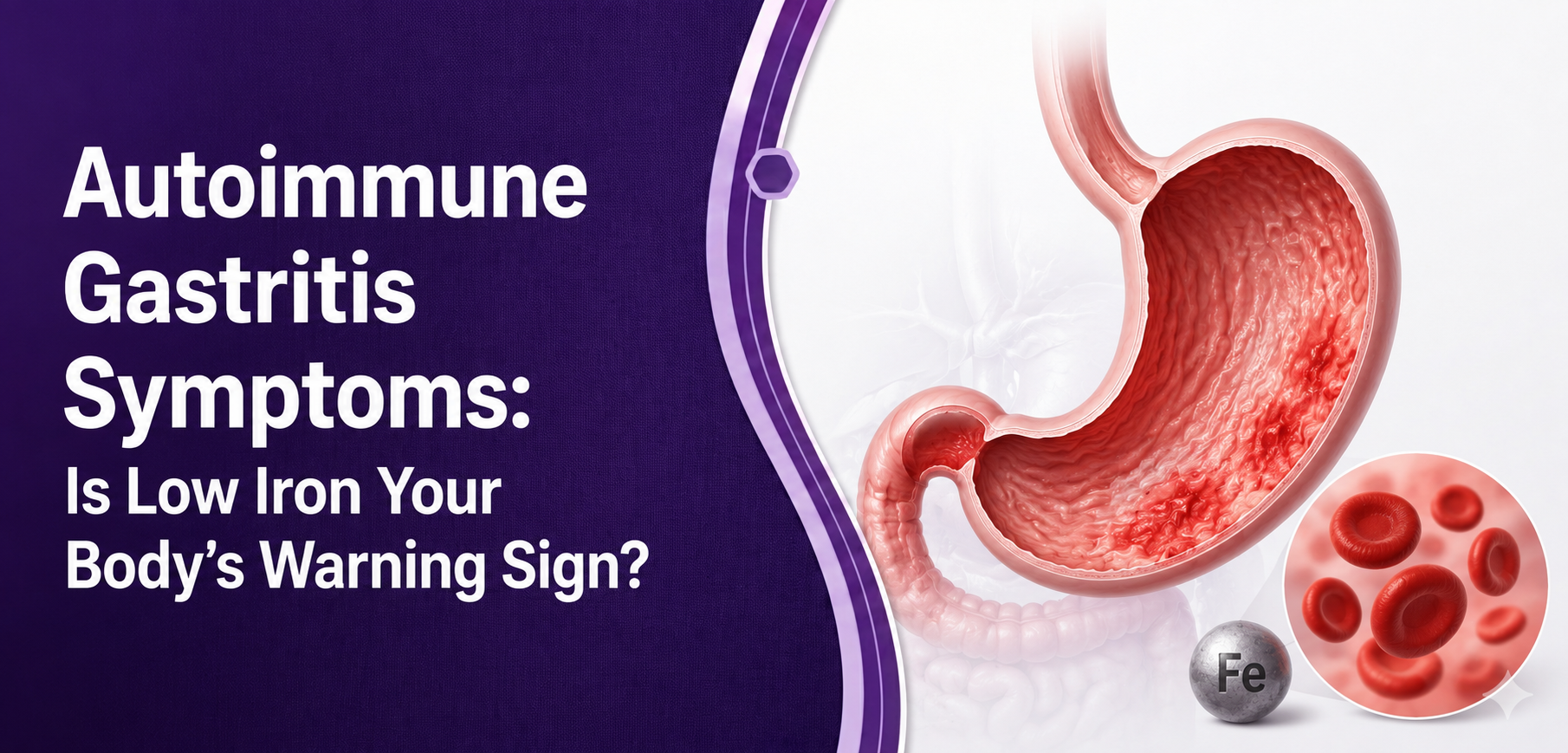
Can Low Iron Be the First Sign of a Stomach Problem?
Low iron can feel confusing. A person may eat well, take vitamins, and still feel tired, weak, dizzy, or foggy. Sometimes the real problem starts in the stomach, not the diet.
Autoimmune gastritis symptoms can stay quiet for a long time. Some patients do not feel strong stomach pain at first. Instead, blood work may show low ferritin, iron deficiency, vitamin B12 deficiency, or anemia. That is why repeated low iron needs attention, especially when it keeps coming back without a clear reason.
Recent stomach disease news has made more people search for autoimmune gastritis. The important lesson is simple: the stomach does more than digest food. It also helps the body absorb key nutrients. When the stomach lining changes, energy, blood health, and nerve function can suffer.
Concerned about fatigue, low iron, B12 deficiency, or anemia? Passion Health Advanced Primary Care can review your symptoms, check labs, and guide the next step.
Patients looking for primary care in Frisco, Irving, Plano, Prosper, Anna, Aubrey, Flower Mound, Ennis, Kaufman, Kemp, McKinney, TX
What Is Autoimmune Gastritis?
Autoimmune gastritis happens when the immune system mistakenly attacks certain cells in the stomach lining. These cells help make stomach acid and intrinsic factor. Intrinsic factor helps the body absorb vitamin B12.
When these stomach cells get damaged over time, the body may not absorb iron or vitamin B12 well.
NIDDK notes that autoimmune gastritis can cause problems absorbing iron and vitamin B12 from food.
This condition can become chronic. It may also connect with pernicious anemia, which develops when the body cannot absorb enough vitamin B12. Merck Manual explains that lack of intrinsic factor can lead to vitamin B12 deficiency, anemia, and sometimes nerve-related symptoms.
Stomach Disease News Raises Autoimmune Gastritis Awareness
Recent health news has brought attention to autoimmune gastritis, a chronic condition where the immune system attacks parts of the stomach lining.
Reports say the diagnosis followed years of unexplained low ferritin, testing, and biopsy findings. This condition may stay quiet early, but it can affect iron, vitamin B12, energy levels, and anemia risk.
For patients, the main lesson is simple: ongoing low iron, B12 deficiency, fatigue, dizziness, or unexplained anemia should not be ignored. A primary care visit can help check labs, review symptoms, and decide whether further testing is needed.
Autoimmune Gastritis Symptoms Patients Should Notice
Autoimmune gastritis symptoms do not always look like a typical stomach problem. Some people expect burning pain, acid reflux, or nausea. However, the early signs may look more like a blood or energy problem.
Common warning signs may include:
Low Iron and Low Ferritin
Low ferritin means the body’s iron storage runs low. This can cause tiredness, weakness, dizziness, headaches, fast heartbeat, shortness of breath with activity, or poor exercise tolerance.
Low iron does not always come from poor food choices. The stomach needs enough acid to help absorb iron. When autoimmune gastritis affects acid-producing cells, iron absorption may fall.
Vitamin B12 Deficiency
Vitamin B12 supports red blood cells, nerves, brain function, and energy. A low B12 level may cause fatigue, numbness, tingling, balance problems, memory trouble, mood changes, sore tongue, or anemia.
Cleveland Clinic notes that atrophic gastritis may need treatment such as vitamin B12 injections or iron support when deficiencies develop.
Stomach and Digestion Changes
Some patients notice upper stomach discomfort, nausea, bloating, early fullness, poor appetite, indigestion, upper abdominal discomfort, nausea, vomiting, feeling full too soon, appetite loss, and weight loss as possible gastritis symptoms.
Still, a person can have gastritis or gastropathy with few or no symptoms. That makes lab testing and follow-up important when iron or B12 problems do not make sense.
Why Autoimmune Gastritis Symptoms Can Be Missed
Many patients blame fatigue on stress, poor sleep, work pressure, or aging. Others take iron pills for months without asking why their levels dropped in the first place.
That delay matters. Untreated B12 deficiency can affect nerves. Long-term anemia can affect energy, heart strain, and daily function. Ongoing stomach lining changes may also need specialist follow-up.
Autoimmune gastritis symptoms deserve a deeper look when low iron, low ferritin, or B12 deficiency keeps returning.
Autoimmune Gastritis Prognosis: Can It Be Managed?
Autoimmune gastritis prognosis depends on early recognition, nutrient treatment, and regular follow-up. The condition usually does not have a quick cure because it involves an immune response.
Care focuses on finding deficiencies, correcting them, checking for related conditions, and watching the stomach lining when needed.
Many patients do well when doctors find the problem early. A provider may check complete blood count, ferritin, iron studies, vitamin B12, folate, thyroid levels, and specific antibodies. Some patients may need a gastroenterology referral for endoscopy and biopsy.
The American Gastroenterological Association highlights the importance of checking iron and vitamin B12 levels in patients with autoimmune gastritis. It also notes that autoimmune gastritis should come into the discussion when a patient has unexplained B12 or iron deficiency.
Autoimmune Gastritis Life Expectancy: What Patients Should Know
Many people searching for autoimmune gastritis life expectancy feel scared after reading about a chronic stomach diagnosis. The better question is not only “How long can someone live?” The better question is, “Has the condition been found, monitored, and treated correctly?”
Many patients can live a normal life span with proper medical care, especially when iron and B12 problems get treated. The risk grows when deficiencies stay untreated, or follow-up gets skipped.
Atrophic gastritis can cause long-term stomach lining changes. Merck Manual lists possible complications of autoimmune metaplastic atrophic gastritis, including vitamin B12 deficiency, gastric adenocarcinoma, and neuroendocrine tumor.
That does not mean every patient will develop serious disease. It means the diagnosis should not get ignored.
When to See a Doctor for Autoimmune Gastritis Symptoms
A primary care visit can help find the reason behind repeated low iron, fatigue, or B12 deficiency. The goal is not to guess. The goal is to connect symptoms, labs, medical history, and risk factors.
See a doctor if you have:
Low ferritin that keeps coming back
Iron deficiency without a clear cause
Vitamin B12 deficiency
Ongoing fatigue or weakness
Dizziness or shortness of breath with activity
Numbness, tingling, or balance changes
Unexplained anemia
Upper stomach discomfort that does not improve
Family history of autoimmune disease
Thyroid disease with low iron or B12 problems
How Primary Care Can Help
A primary care provider may start with a symptom review and lab work. The visit may include questions about diet, menstrual history, bowel changes, stomach symptoms, medicines, supplements, family history, and autoimmune conditions.
Next, the provider may order or review blood tests. If autoimmune gastritis looks possible, the provider may discuss antibody testing, B12 treatment, iron support, or referral to a stomach specialist.
Feeling tired every day can affect work, family, mood, and confidence. Low iron and B12 deficiency should not become a cycle of temporary fixes.
Final Takeaway
Autoimmune gastritis symptoms can hide behind fatigue, low ferritin, iron deficiency, vitamin B12 deficiency, numbness, dizziness, or unexplained anemia. Stomach pain may not always appear first.
The condition needs careful follow-up because it can affect nutrient absorption and long-term stomach health. A timely primary care visit can help uncover the cause, correct deficiencies, and decide whether specialist testing makes sense.
Patients in Frisco, Irving, Plano, Prosper, Anna, Aubrey, Flower Mound, Ennis, Kaufman, Kemp, Mesquite, McKinney, and nearby North Texas areas can visit Passion Health Advanced Primary Care for evaluation of fatigue, low iron, B12 deficiency, anemia, and stomach-related symptoms.
FAQs
1. What are common autoimmune gastritis symptoms?
Autoimmune gastritis symptoms may include fatigue, weakness, dizziness, low iron, low ferritin, vitamin B12 deficiency, anemia, numbness, tingling, nausea, or upper stomach discomfort.
2. Can autoimmune gastritis cause low iron?
Yes. Autoimmune gastritis can affect stomach acid levels, which may make it harder for the body to absorb iron from food.
3. Can autoimmune gastritis cause B12 deficiency?
Yes. It can affect intrinsic factor, a stomach protein the body needs to absorb vitamin B12.
4. What is the autoimmune gastritis prognosis?
The autoimmune gastritis prognosis can be good when doctors find it early, treat iron or B12 deficiency, and monitor the stomach lining when needed.
5. Does autoimmune gastritis affect life expectancy?
Many people live well with proper care. The main risk comes from untreated anemia, B12 deficiency, nerve symptoms, or missed follow-up.