How Is Type 2 Diabetes Mellitus Treated in Adults? A Doctor-Guided Plan
Type 2 diabetes mellitus can look quiet in the beginning, but high blood sugar can slowly harm the heart, kidneys, eyes, nerves, feet, and blood vessels.
Many adults do not notice the problem until thirst, tiredness, blurry vision, slow healing, or frequent urination become harder to ignore.
Mayo Clinic notes that type 2 diabetes symptoms often develop slowly, and some people may live with it for years without knowing.
The good news is that treatment can help control blood sugar and lower the risk of serious complications.
Doctors do not treat type 2 diabetes mellitus with one single step. They usually create a full care plan with food changes, exercise, weight care, blood sugar tracking, medicines, and insulin when needed.
Worried about high A1C, blood sugar changes, fatigue, thirst, or diabetes symptoms? Book an appointment with Passion Health Advanced Primary Care for doctor-guided diabetes care.
What Is Type 2 Diabetes Mellitus?
Type 2 diabetes mellitus happens when the body does not use insulin well, and the pancreas cannot make enough insulin to keep blood sugar in a healthy range. Insulin works like a key.
It helps sugar move from the blood into the cells for energy. When insulin does not work properly, sugar builds up in the blood.
That slow start can create a dangerous delay. Blood sugar may rise quietly while damage continues inside the body.
Common Symptoms of Type 2 Diabetes Mellitus
Adults may notice:
Increased thirst
Frequent urination
Increased hunger
Unexplained weight loss
Tiredness
Blurred vision
Slow-healing sores
Frequent infections
Numbness or tingling in the hands or feet
Dark skin patches around the neck or armpits
How Is Type 2 Diabetes Mellitus Treated in Adults?
Doctors treat type 2 diabetes mellitus with a complete plan, not one single step. The goal is to lower blood sugar, improve insulin response, protect organs, and reduce future complications.
A proper treatment plan may include:
Blood sugar and A1C testing
Meal planning
Physical activity
Weight management
Oral diabetes medicines
Injectable medicines
Insulin when needed
Blood pressure and cholesterol control
Medscape’s treatment summary says early pharmacologic therapy can improve glycemic control and reduce long-term complications in type 2 diabetes.
A1C Goals in Type 2 Diabetes Mellitus Treatment
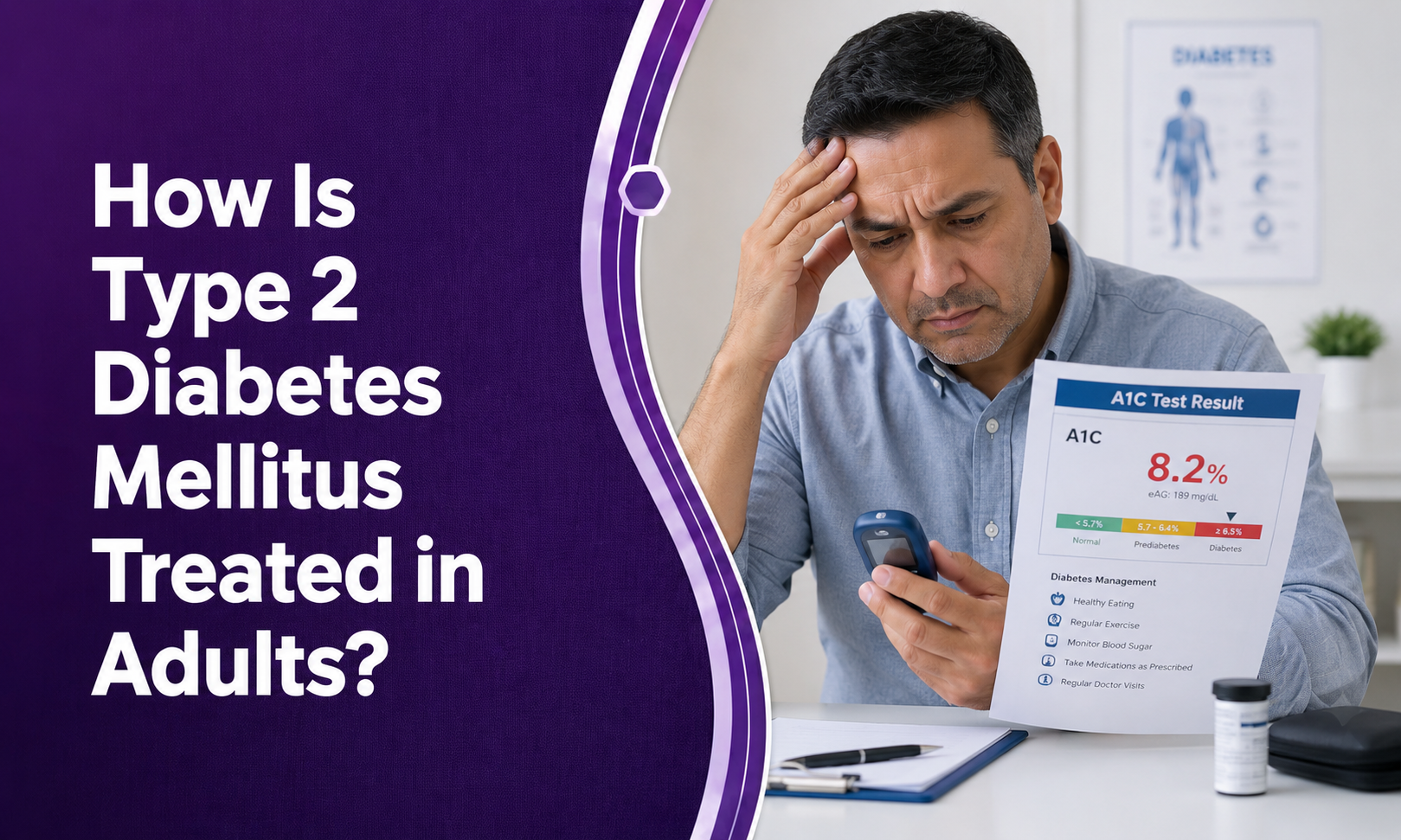
A1C is one of the most important tests in diabetes care. It shows the average blood sugar level over the past two to three months. Doctors use it to diagnose diabetes and check whether treatment works.
A1C result | What It May Mean |
Below 5.7% | Normal range |
5.7% to 6.4% | Prediabetes range |
6.5% or higher | Diabetes range |
Around 7% or higher | May need better control, depending on the patient |
An A1C of 6.5% or higher on two separate tests means diabetes. For many people with diabetes, the American Diabetes Association suggests a target below 7%, but the right goal depends on age and other health factors.
Type 2 Diabetes Mellitus Treatment Options
Treatment option | How it helps | Best for | ||
|---|---|---|---|---|
Healthy eating | Reduces blood sugar spikes | Most adults with type 2 diabetes | ||
Weight loss | Improves blood sugar and heart risk | Adults with excess weight | ||
SGLT2 inhibitors | Helps remove extra sugar through urine | Some adults with heart or kidney risk | ||
Metformin | Lowers liver Glucose Production | Common first medicine | ||
Insulin | Lowers high blood sugar strongly | Adults needing tighter control | ||
Supports sugar and weight control | Some adults needing extra help | |||
Exercise | Helps the body use insulin better | Adults who can safely stay active | ||
Blood sugar tracking | Shows daily glucose patterns | Adults on medicines or insulin | ||
A1C testing | Shows average sugar control | Long-term monitoring |
Medicines Used for Type 2 Diabetes Mellitus
Doctors may prescribe medicine when diet and exercise do not keep blood sugar in the target range. The right medicine depends on A1C, weight, kidney health, heart risk, cost, side effects, and other medical conditions.
Medicine type | Main Purpose | Important Note |
Metformin | Helps lower the glucose made by the liver | Often used first |
Sulfonylureas | Helps the body release more insulin | May cause low blood sugar |
DPP-4 inhibitors | Helps lower blood sugar | Usually has a smaller effect |
GLP-1 medicines | Helps control sugar and weight loss | May cause nausea or vomiting |
SGLT2 inhibitors | Removes extra sugar through urine | May increase urinary infection risk |
Insulin | Gives strong blood sugar control | May increase urinary infection risk |
Metformin is often the first medicine prescribed for type 2 diabetes. It lowers how much glucose the liver makes and helps the body use insulin better.
GLP-1 medicines may support weight loss and may lower heart attack and stroke risk in some patients. SGLT2 inhibitors help remove extra glucose through urine and may lower heart risk in selected high-risk adults, but they can also cause side effects.
When Is Insulin Needed for Type 2 Diabetes Mellitus?
Insulin does not mean the patient failed. It means the body needs stronger support.
Some adults need insulin when blood sugar stays very high, symptoms become serious, or other medicines do not control glucose safely.
Some people with type 2 diabetes need insulin therapy, and doctors may prescribe it sooner when lifestyle changes and other medicines do not manage blood sugar well.
A doctor may consider insulin if:
A1C remains very high
Fasting sugar stays uncontrolled
Weight loss happens without trying
Symptoms become severe
Infection, surgery, or illness raises sugar
Other medicines are not safe or effective
The goal is simple: protect the body before complications become harder to manage.
Warning Signs Adults Should Not Ignore
Get medical care if these symptoms appear:
Extreme thirst
Frequent urination
Dry mouth
Blurred vision
Severe tiredness
Headache
Confusion
Vomiting
Shortness of breath
Very high home glucose readings
Slow-healing wounds
Numbness or burning in the feet
Frequent urination, extreme thirst, dry mouth, blurred vision, tiredness, and headache as symptoms of high blood sugar that may need care right away.
Long-Term Care for Type 2 Diabetes Mellitus
Treatment does not end after one prescription. Diabetes care needs follow-up.
A doctor may check A1C, kidney function, cholesterol, blood pressure, feet, eyes, and medication side effects.
Yearly physical exams, regular eye exams, foot care, dental care, vaccination review, and blood pressure and cholesterol management for people with type 2 diabetes.
This follow-up matters because diabetes can affect many parts of the body before pain appears. Regular visits help catch problems earlier.
Final Thoughts
So, how is type 2 diabetes mellitus treated in adults? Doctors treat it with a complete plan: healthy eating, regular movement, weight care, A1C monitoring, blood sugar tracking, medication, insulin when needed, and long-term checkups.
The biggest mistake is waiting until symptoms become severe. Type 2 diabetes mellitus can damage the body silently, but early care can lower the risk and bring blood sugar under better control.
Concerned about high blood sugar, A1C results, or type 2 diabetes symptoms? Passion Health Advanced Primary Care gets a doctor-guided treatment plan built around your health needs.
FAQs
1. How is type 2 diabetes mellitus treated in adults?
Doctors treat it with healthy eating, exercise, weight control, blood sugar monitoring, medicines, and insulin when needed.
2. Can type 2 diabetes mellitus be controlled without insulin?
Yes, many adults control it with lifestyle changes and oral or injectable medicines, but some may need insulin later.
3. What is the best first treatment for type 2 diabetes mellitus?
The first step usually includes diet changes, regular activity, weight care, and often metformin if a doctor recommends it.
4. When should I see a doctor for type 2 diabetes symptoms?
See a doctor if you have frequent urination, extreme thirst, fatigue, blurry vision, slow healing, or high blood sugar readings.
5. Is type 2 diabetes mellitus a lifelong condition?
Yes, it usually needs long-term care, but good treatment can control blood sugar and reduce complications.