Before Starting GLP-1 Medicines, Older Adults Need the Right Health Review
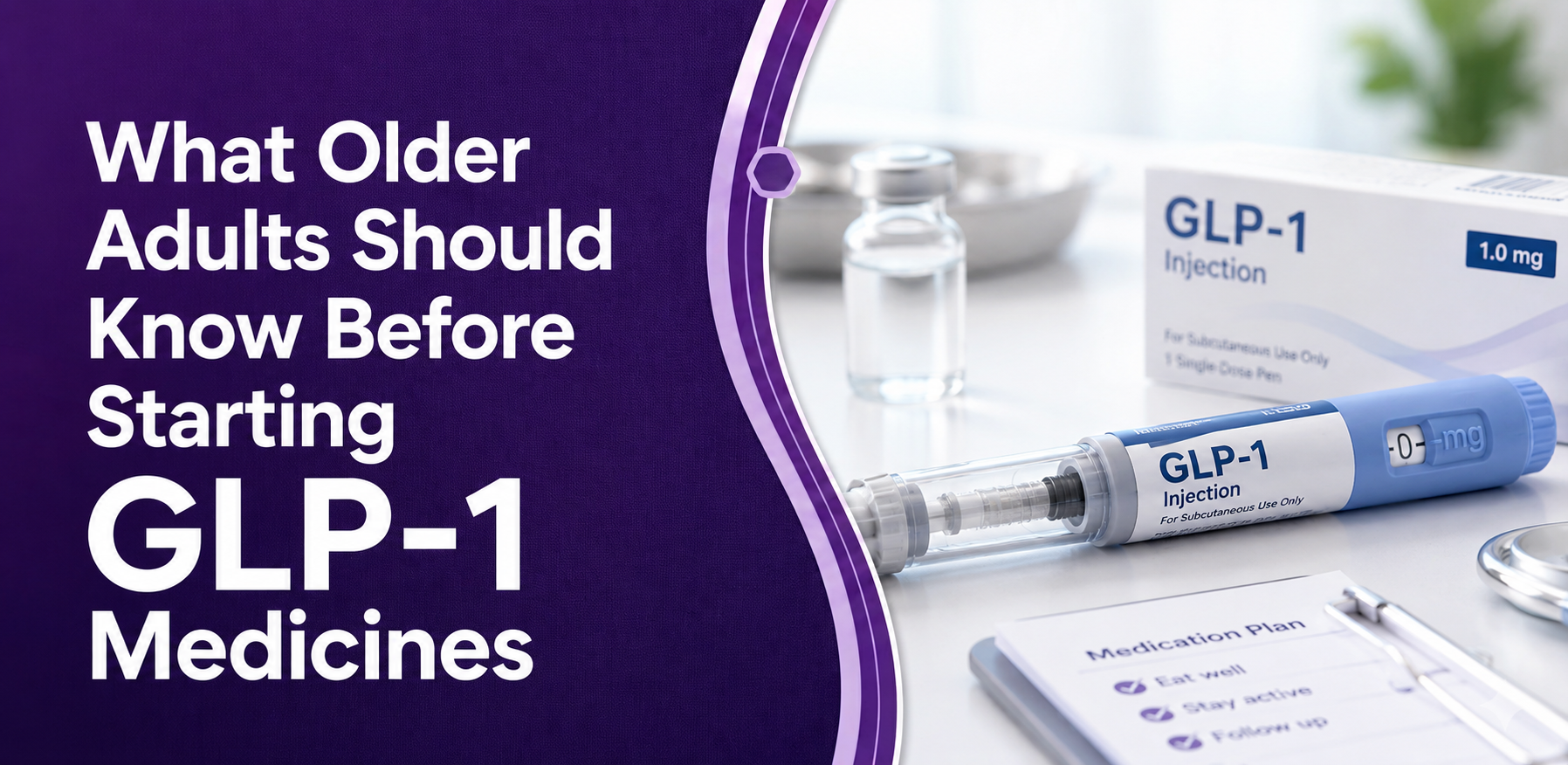
GLP-1 medicines for older adults can help with weight, blood sugar, appetite, and some weight-related health risks. Still, older adults should not start these medicines with only a social media idea or a weight-loss goal.
Age, muscle strength, kidney function, diabetes medicines, appetite changes, and fall risk all matter.
Thinking about GLP-1 medicines for weight loss or diabetes care?
Passion Health Advanced Primary Care can review your health history, current medicines, weight goals, labs, and insurance options before you start.
What Are GLP-1 Medicines?
These medicines mimic the action of a natural hormone that helps the body manage appetite, digestion, and blood sugar. Some GLP-1 medicines treat type 2 diabetes.
Some treat weight-related conditions. Some now have added approvals for heart, kidney, sleep apnea, or liver-related use, depending on the medicine and diagnosis.
The American Diabetes Association reviews and updates its diabetes care guidance every year, helping providers choose safer and more effective treatment plans.
Common medicine names include semaglutide and tirzepatide. Brand names may include Ozempic, Wegovy, Mounjaro, and Zepbound. The right choice depends on the patient’s diagnosis, insurance coverage, side effect risk, and treatment goal.
Why Older Adults Need Extra Care Before Starting
Older adults may lose weight faster than expected because appetite drops. That may sound helpful, but fast weight loss can also reduce muscle, strength, and balance.
That matters because muscle helps with:
Walking
Standing from a chair
Preventing falls
Carrying groceries
Keeping blood sugar stable
Staying independent
A 2025 review on GLP-1 medicines and muscle loss states that resistance training and enough protein should remain a priority during treatment, especially for people at higher risk for muscle loss.
Important Checks Before the First Dose
Before starting GLP-1 medicines for older adults, a primary care provider should review a few key points:
Current weight, BMI, and waist size
A1C and fasting glucose
Liver tests
Thyroid history
Gallbladder history
Pancreatitis history
Eye disease from diabetes
Constipation, reflux, or slow stomach emptying
All medicines, especially insulin or sulfonylureas
This review helps reduce avoidable side effects and unsafe dosing.
Simple BMI Calculation
BMI does not tell the whole story, but it helps doctors decide whether weight-loss treatment may fit. The CDC BMI calculator applies to adults age 20 and older.
BMI formula using pounds and inches:
BMI = weight in pounds ÷ height in inches ÷ height in inches × 703
Example:
Weight: 200 lb
Height: 5 feet 6 inches = 66 inches
200 ÷ 66 ÷ 66 × 703 = 32.3 BMI
A provider should also check muscle, age, waist size, diabetes risk, blood pressure, and daily function. A strong 70-year-old and a frail 70-year-old may need different plans.
Protein Calculation for Muscle Protection
Older adults using GLP-1 medicines should plan protein before appetite drops.
A practical target many clinicians use for older adults trying to protect muscle is about 1.0 to 1.2 grams of protein per kilogram of body weight per day, unless kidney disease or another medical issue requires a lower amount.
Easy calculation:
Weight in pounds ÷ 2.2 = weight in kg
Weight in kg × 1.0 to 1.2 = daily protein range
Example:
180 lb ÷ 2.2 = 82 kg
82 × 1.0 = 82 grams
82 × 1.2 = 98 grams
Daily protein goal: about 82–98 grams, if the provider says it fits kidney health.
Simple meal idea:
Breakfast: eggs or Greek yogurt
Lunch: chicken, fish, beans, or tofu
Dinner: lean protein with vegetables
Snack: protein shake, cottage cheese, or nuts if tolerated
Common GLP-1 Medicines Used for Weight and Diabetes Care
Several GLP-1 and related medicines are used for weight management or type 2 diabetes care. Each medicine has a different purpose, brand name, and insurance coverage rule. A primary care provider can help decide which option fits your health goals and medical history.
Wegovy: Semaglutide for Weight Management
Wegovy is a semaglutide medicine used for chronic weight management. Some adults may also use it when weight-related health risks need medical support. Older adults should discuss appetite changes, muscle protection, hydration, and side effects before starting.
Zepbound: Tirzepatide for Weight Management
Zepbound is a tirzepatide medicine used for chronic weight management. It may help reduce appetite and support weight loss when paired with healthy eating, activity, and medical follow-up. A provider should review digestion issues, kidney health, and current medicines before use.
Ozempic: Semaglutide for Type 2 Diabetes
Ozempic is a semaglutide medicine used for type 2 diabetes care. It helps support blood sugar control and may also affect appetite and weight. Older adults who use insulin or other diabetes medicines should talk with a provider about low blood sugar risk.
Mounjaro: Tirzepatide for Type 2 Diabetes
Mounjaro contains tirzepatide and helps adults with type 2 diabetes manage blood sugar levels.
It helps support blood sugar control and may also lead to weight changes. A provider should review A1C, kidney function, appetite, and other diabetes medicines before treatment.
Side Effects Older Adults Should Watch Closely
Most patients worry about nausea. Older adults should also watch for dehydration, weakness, dizziness, constipation, and low food intake.
Call a provider if any of these happen:
Severe or lasting stomach pain
Vomiting that prevents fluid intake
Diarrhea with weakness
Dizziness when standing
Very low appetite for several days
Confusion or shakiness
New vision changes
Right upper belly pain after meals
Blood sugar dropping too low
Ozempic labeling warns that insulin or sulfonylurea use can increase hypoglycemia risk, and the dose of those medicines may need adjustment. The label also notes kidney injury risk when nausea, vomiting, or diarrhea lead to dehydration.
Who May Need a Different Plan?
GLP-1 medicines may not suit every older adult.
A provider needs extra caution with:
Personal or family history of medullary thyroid cancer
Multiple Endocrine Neoplasia syndrome type 2
Past pancreatitis
Severe gastroparesis
Recurrent dehydration
Advanced kidney disease
Frailty or frequent falls
Poor appetite before starting
History of diabetic eye disease
Zepbound and Mounjaro labels include warnings about thyroid C-cell tumor risk, pancreatitis, kidney injury from dehydration, gallbladder disease, and low blood sugar when used with insulin or insulin secretagogues.
Medicare and Cost Questions in 2026
Cost matters, especially for older adults on Medicare.
Starting July 1, 2026, Medicare covers certain GLP-1 drugs through the temporary Medicare GLP-1 Bridge program for eligible people with Part D coverage. Medicare lists Foundayo tablets, Wegovy injection or tablet, and Zepbound KwikPen only as covered GLP-1 options under this program.
CMS states that eligible Medicare beneficiaries may pay $50 per month through the Medicare GLP-1 Bridge, and the program remains available through December 31, 2027. Not every Medicare patient qualifies, so a provider may need to complete prior authorization.
What to Ask Your Doctor Before Starting
Bring your medicine bottles or list to the visit.
Ask these questions:
Is this medicine for diabetes, weight loss, heart risk, sleep apnea, or another reason?
What starting dose fits my age and health?
Which labs do I need before treatment?
Should my insulin or diabetes pills change?
How much protein should I eat each day?
What exercise plan protects my muscle?
What side effects should I report?
What will my Medicare or insurance cover?
Final Takeaway
What older adults should know before starting GLP-1 medicines is simple: the medicine is only one part of the plan. The safest results come from the right diagnosis, the right dose, the right protein goal, the right lab checks, and close follow-up.
Passion Health Advanced Primary Care can help older adults review GLP-1 options, diabetes medicines, weight goals, Medicare questions, side effects, and long-term health risks.
Ready to talk with a primary care provider about GLP-1 medicines?
Book an appointment with Passion Health Advanced Primary Care →
FAQs
1. Are GLP-1 medicines safe for older adults?
They may help some older adults, but safety depends on health history, kidney function, other medicines, appetite, muscle strength, and side effect risk.
2. Can GLP-1 medicines cause muscle loss?
Weight loss can include muscle loss, especially when protein intake drops. Strength training and enough protein help protect function.
3. Do GLP-1 medicines replace diet and exercise?
No. These medicines work best with a food plan, protein goal, hydration plan, and strength activity.
4. Can Medicare cover GLP-1 weight-loss medicines?
Yes, some Medicare Part D members may qualify through the Medicare GLP-1 Bridge program starting July 1, 2026. Eligibility rules apply.
5. Should older adults stop GLP-1 medicine if nausea starts?
Do not stop or change the dose without medical guidance. Call the provider if nausea lasts, vomiting starts, or fluid intake drops.