Key Takeaways
- Disease outbreaks can spread through respiratory droplets, food, water, insects, animals, or close contact.
- Vaccination, hand hygiene, food safety, and exposure awareness can help lower infection risks.
- Primary care can assess symptoms, review exposure history, and recommend appropriate testing or treatment.
- Early medical guidance can be especially important for older adults and people with chronic health conditions.
- Follow trusted public health updates and avoid relying on unverified outbreak information.
- Seek emergency care for severe breathing problems, chest pain, confusion, fainting, or rapidly worsening symptoms.
An outbreak can turn an ordinary week into a stressful one. A sudden increase in flu, measles, COVID-19, foodborne illness, mosquito-borne infection, or another contagious disease can leave families with many questions.
Was I exposed? Are these symptoms serious? Should I get tested? How do I protect my family? When should I call a doctor?
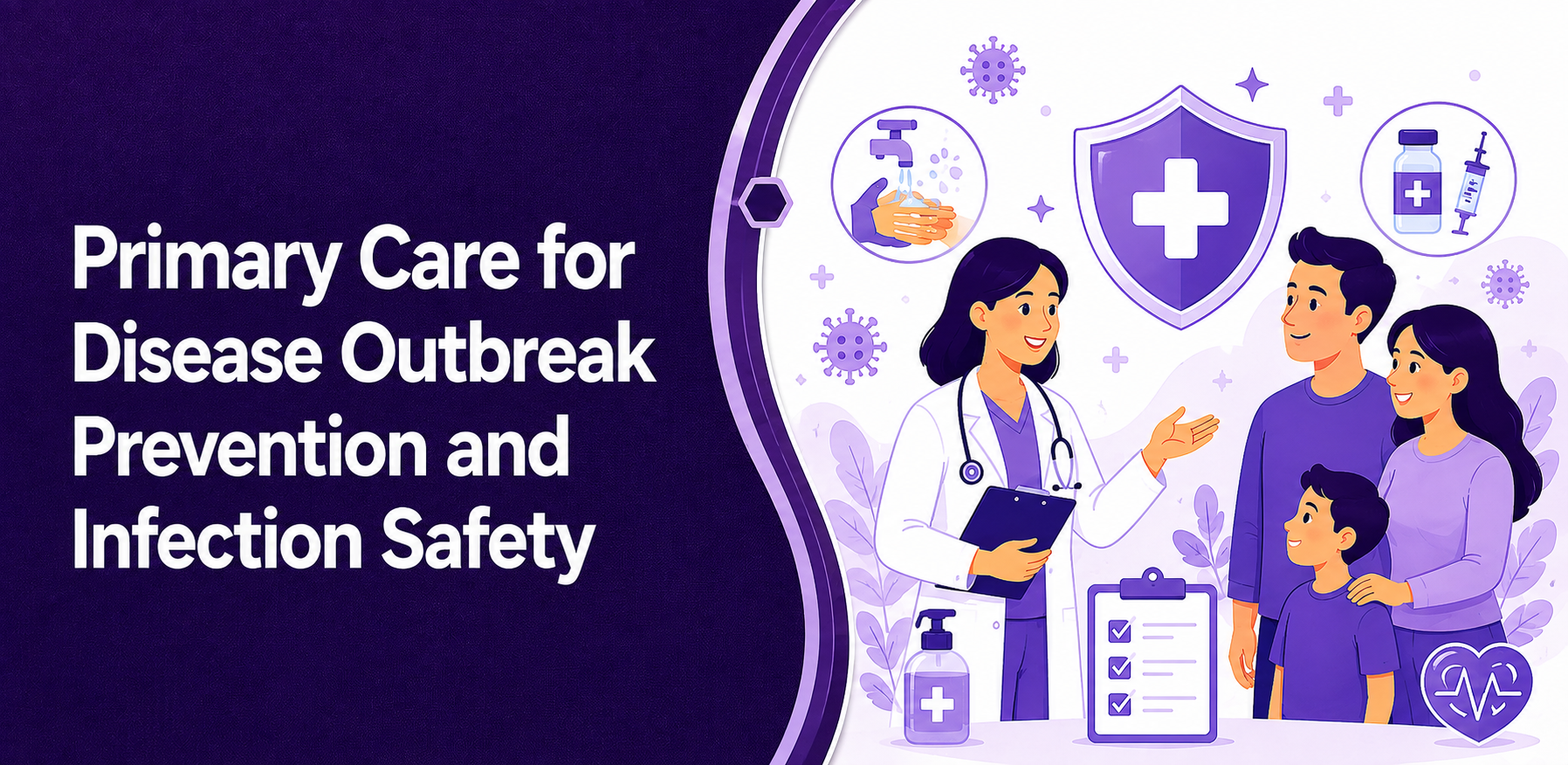
Primary Care for Disease Outbreak Prevention can help answer those questions before uncertainty turns into unnecessary risk. Your primary care provider can look at your symptoms, medical history, vaccination status, recent exposures, medications, and existing health conditions to recommend the right next step.
Early guidance matters because every outbreak does not spread in the same way, and every patient does not face the same level of risk.
What Does a Disease Outbreak Mean?
A disease outbreak occurs when more cases of an illness appear than health officials normally expect within a certain place, population, or period.
An outbreak may involve a familiar seasonal disease or a less common infection. Some outbreaks stay within one household or facility. Others affect communities, several states, or multiple countries.
Health officials investigate outbreaks to understand the following:
What illness is causing the cases
How people became exposed
How the infection spreads
Who faces a higher risk
Which prevention steps may reduce further transmission
The right response depends on the disease. Prevention for influenza looks different from prevention for Salmonella, measles, Lyme disease, or a waterborne infection.
Know the Major Types of Disease Outbreaks
Understanding how infections spread makes prevention easier and more effective.
Respiratory Disease Outbreaks
Respiratory infections spread frequently in homes, schools, workplaces, and other shared environments.
Examples include:
Symptoms may include cough, fever, sore throat, congestion, headache, fatigue, or body aches. Different respiratory infections can cause similar symptoms, so symptoms alone may not identify the exact cause.
Helpful precautions include regular handwashing, covering coughs and sneezes, improving indoor airflow when practical, avoiding close contact with others while sick, and keeping recommended vaccinations current.
People with asthma, diabetes, heart disease, weakened immunity, pregnancy, older age, or other risk factors may need earlier medical guidance if respiratory symptoms develop.
Vaccine-Preventable Disease Outbreaks
Some contagious diseases become much more dangerous when vaccination rates fall, or an infected person enters a population with limited immunity.
Measles provides an important example. It spreads very easily among people who lack protection.
Vaccines also help prevent several other illnesses that can cause community outbreaks.
Primary care can help patients review vaccination records and identify vaccines recommended according to age, health history, previous doses, travel plans, and individual risk.
Do not wait for an outbreak before checking your vaccination history. Routine review can identify missing or overdue protection.
Foodborne Disease Outbreaks
Contaminated food can expose people across neighborhoods, cities, or several states.
Common organisms involved in foodborne outbreaks include:
Salmonella
Shiga toxin-producing E. coli
Listeria
Campylobacter
Other viruses, bacteria, and parasites can also spread through food.
Symptoms may include diarrhea, vomiting, nausea, stomach cramps, and fever.
Reduce risk by washing hands before preparing food, keeping raw foods separate from ready-to-eat foods, cooking food to safe temperatures, refrigerating perishables promptly, and following official recall notices.
Seek medical advice when symptoms become severe, persist, or cause dehydration. Older adults, young children, pregnant patients, and people with weakened immune systems may face greater risks from certain foodborne infections.
Waterborne Disease Outbreaks
Contaminated drinking water, swimming pools, lakes, and other recreational water can sometimes spread infectious organisms.
Waterborne illness may involve bacteria, viruses, or parasites such as Cryptosporidium or Giardia. Legionella can also spread through contaminated water systems under certain conditions.
Always follow local boil-water notices and public-health instructions.
Contact a healthcare provider when significant diarrhea, persistent vomiting, fever, dehydration, or another concerning symptom develops after a suspected water exposure.
Mosquito-, Tick-, and Flea-Borne Diseases
Mosquitoes, ticks, and fleas can carry germs from one host to another.
Examples include:
Lyme disease
Rocky Mountain spotted fever
Ehrlichiosis
Other vector-borne infections
Risk varies by location, season, travel, outdoor activity, and the type of insect or tick involved.
Use appropriate insect repellent, wear protective clothing when needed, perform tick checks after outdoor activities, and reduce standing water around the home.
Tell your healthcare provider about recent travel, outdoor exposure, or known bites when symptoms such as fever, rash, headache, unusual fatigue, or body aches develop.
Animal-Related and Zoonotic Outbreaks
Animals can sometimes carry germs that infect people.
Exposure may occur through:
Bites or scratches
Saliva
Animal waste
Contaminated food
Direct animal contact
Contaminated environments
Rabies and some Salmonella infections are examples of illnesses associated with animal exposure.
Prompt medical evaluation matters after certain animal bites or high-risk exposures because some preventive treatments work best when care begins quickly.
Close-Contact and Skin-Contact Outbreaks
Some infections spread mainly through close physical contact, skin-to-skin contact, body fluids, shared personal items, or contaminated materials.
Prevention depends on the specific illness.
Good hand hygiene, avoiding shared personal items during an outbreak, covering open wounds, cleaning appropriate high-touch surfaces, and following disease-specific guidance can reduce exposure.
Healthcare-Associated Outbreaks
Hospitals, nursing facilities, and other healthcare environments can experience outbreaks involving bacteria, viruses, or fungi.
People with weakened immune systems, medical devices, recent hospitalization, or prolonged healthcare exposure may face greater risk from certain healthcare-associated infections.
Patients should tell their primary care provider about recent hospital stays, procedures, rehabilitation stays, or known exposure to an infectious disease.
What Should You Do During a Local Disease Outbreak?
First, avoid reacting to rumors or social media posts without checking the source.
Look for updates from healthcare professionals and public health authorities. You can also review the official CDC Current Outbreak List for U.S. outbreak information.
Then focus on actions that match the specific disease:
Learn how the infection spreads.
Monitor yourself for relevant symptoms.
Review your vaccination status.
Practice appropriate hand and respiratory hygiene.
Follow food or water safety warnings.
Prevent mosquito and tick bites when relevant.
Limit exposure to others when you may be contagious.
Contact your healthcare provider when symptoms or significant exposure occurs.
Avoid taking leftover antibiotics. Antibiotics only treat certain bacterial infections. They do not treat viral illnesses such as influenza or the common cold.
How Primary Care Helps During an Outbreak
A primary care provider does more than identify symptoms.
Your provider can evaluate your overall risk by considering your medical history, chronic conditions, age, medications, vaccination record, symptoms, travel, and possible exposure.
Primary care may help with:
Symptom assessment
Exposure evaluation
Vaccination review
Decisions about appropriate testing
Treatment when medically appropriate
Guidance on reducing transmission at home
Monitoring of chronic conditions during illness
Follow-up when symptoms persist or change
Referral for urgent, emergency, or specialist care when necessary
This continuity becomes particularly valuable for patients with diabetes, heart disease, lung conditions, weakened immunity, or other long-term medical needs.
Know When an Illness Becomes an Emergency
Not every infection requires emergency treatment. However, some warning signs should never wait for a routine medical visit.
Seek emergency care for:
Severe difficulty breathing
Persistent chest pain or pressure
New or severe confusion
Seizures
Fainting or inability to stay awake
Severe dehydration
Rapidly worsening symptoms
Any condition that appears immediately life-threatening
Prepare Before the Next Outbreak
The best time to think about outbreak prevention is before someone in your household becomes sick.
Primary Care for Disease Outbreak Prevention focuses on preparation, early recognition, appropriate vaccination, practical infection-control habits, and timely medical care.
You cannot prevent every exposure. You can make informed decisions that reduce unnecessary risks.
Passion Health Advanced Primary Care can help patients understand their health risks, review concerning symptoms, evaluate possible exposures, and make informed decisions about appropriate care.
Do you have new symptoms, a recent exposure, vaccination questions, or concerns about an outbreak in your community?
Schedule an evaluation at Passion Health Advanced Primary Care to discuss possible causes and receive personalized next steps.
Frequently Asked Questions
1. Can primary care help during a disease outbreak?
Yes. A primary care provider can check symptoms, review exposure risks, and recommend the right next step.2. Should I see a doctor after possible exposure?
Yes, especially if the exposure was significant or you have health risks. Your provider can advise whether you need testing or monitoring.
3. Do antibiotics treat all infections?
No. Antibiotics treat certain bacterial infections, not viral infections such as the flu or the common cold.
4. How can I protect my family during an outbreak?
Follow trusted health guidance, wash hands, stay current with recommended vaccines, and avoid close contact when sick.
5. When should I seek emergency care?
Get emergency help for severe breathing problems, chest pain, confusion, fainting, or rapidly worsening symptoms.

About the Author
Dr. Anantha Chentha is a board-certified internal medicine physician with extensive experience in primary care and chronic disease management. He provides comprehensive, patient-centered care with a focus on prevention, accurate diagnosis, and long-term health management.
View Provider Profile →