How to Get Relief From Constipation Naturally
Constipation can ruin your day fast. You feel bloated, heavy, uncomfortable, and tired of waiting in the bathroom. Sometimes you strain, yet still feel like your body did not fully empty. Many people ignore constipation because it feels common. However, when it keeps coming back, your gut may need better support or medical attention.
Constipation relief and prevention start with simple daily habits: more fiber, enough water, regular movement, better bathroom timing, and a careful review of medicines or health conditions that may slow your bowels.
If constipation lasts more than a few weeks, keeps returning, or comes with pain, blood in stool, vomiting, weight loss, or a sudden bowel change, book an appointment with Passion Health Advanced Primary Care. Our primary care team can help you find the cause and choose safe treatment.
What Does Constipation Mean?
Constipation means bowel movements become less frequent, hard, dry, or difficult to pass. Some people think they must defecate every day. That is not always true.
Normal bowel habits differ from person to person. Still, doctors often look for constipation when a person has fewer than three bowel movements per week, hard stools, straining, or a feeling of incomplete emptying.
Constipation may last a few days after travel, stress, dehydration, diet changes, or a new medicine. It may also continue for weeks or months. When constipation becomes frequent, it can affect appetite, sleep, mood, and daily comfort.
Constipation relief and prevention matter because stool becomes harder when it stays too long in the colon.
The colon pulls water from the stool. As a result, stool becomes dry, firm, and harder to pass. Then straining increases, discomfort grows, and problems like hemorrhoids or anal fissures may develop.
Common Symptoms of Constipation
Constipation does not feel the same for everyone. One person may go less often. Another person may go daily but still pass hard stool with effort.
Common symptoms include fewer than three bowel movements per week, hard or lumpy stool, straining, bloating, lower belly discomfort, a blocked feeling, pain while passing stool, and a feeling that stool remains after using the bathroom.
Repeated constipation deserves attention. It can point to low fiber intake, poor hydration, low activity, medicine side effects, thyroid problems, diabetes, irritable bowel syndrome, pelvic floor problems, or another digestive condition.
Why Constipation Happens
Constipation often starts when stool moves too slowly through the colon. The longer the stool stays there, the more water the body removes from it. Then the stool becomes hard and difficult to pass.
1. Low Fiber Intake
Fiber helps stool hold water and move through the digestive tract. Many diets contain too much processed food and too few fruits, vegetables, beans, lentils, oats, and whole grains.
Without enough fiber, stool can become small, dry, and slow. For constipation relief and prevention, add fiber slowly because a sudden jump may cause gas or bloating.
2. Not Enough Fluids
Water helps stool stay soft. When your body lacks fluid, the colon pulls more water from the stool.
This can make stool dry and painful to pass. People who drink very little water may notice constipation more often, especially when they add fiber without adding fluids.
3. Lack of Movement
Your gut responds to movement. Walking, stretching, cycling, swimming, or regular exercise can help stimulate bowel activity. Long sitting and low activity can slow digestion. Even a short walk after meals may help your bowel rhythm.
4. Ignoring the Urge to Go
Your body sends signals when stool reaches the rectum. If you ignore that urge often, the signal can weaken. Stool may sit longer, dry out, and become harder. A regular bathroom routine can help retrain your body.
5. Stress, Travel, and Medicines
Stress can affect digestion, appetite, sleep, and muscle tension. Travel can disrupt meals, water intake, bathroom access, and sleep.
Some medicines and supplements can also cause constipation, including certain pain medicines, iron tablets, calcium supplements, antacids, blood pressure medicines, antidepressants, allergy medicines, and bladder medicines.
Do not stop prescribed medicine on your own. Ask your provider if a medicine may contribute to constipation.
Constipation Relief and Prevention at Home
Most mild constipation improves with steady lifestyle habits. The keyword is steady. One salad or one glass of water may not fix a long-standing problem. Your gut needs a daily routine.
1. Add Fiber Slowly
Fiber-rich foods help the stool hold water and move more easily. Good choices include apples with skin, pears, berries, prunes, beans, lentils, oatmeal, brown rice, whole-grain bread, broccoli, carrots, sweet potatoes, leafy greens, chia seeds, and flaxseeds.
Start small. Add one high-fiber food each day for a few days. Then increase gradually. This approach helps your gut adjust and reduces gas.
2. Drink Water Through the Day
Fiber works best with enough fluid. Without water, fiber can make stool bulkier but still hard to pass. Keep water nearby and sip throughout the day. Drink more during hot weather, exercise, or illness.
3. Move Every Day
Regular movement supports bowel activity. You do not need intense workouts. A 10- to 20-minute walk after breakfast or dinner can help. Stretching, yoga, or light exercise may also reduce stress and improve gut movement.
4. Build a Bathroom Routine
The colon often works best after meals, especially after breakfast. Sit on the toilet for a few minutes at the same time each day. Do not strain. Give your body time to respond. A small footstool may also help the stool pass more easily.
5. Do Not Delay the Urge
When you feel the urge to pass stool, go soon. Waiting too long can dry out the stool and make the next bowel movement harder.
6. Limit Low-Fiber Foods
Large amounts of cheese, red meat, fried food, fast food, refined grains, and low-fiber snacks may worsen constipation for some people. Balance meals with vegetables, fruit, whole grains, and water.
7. Use Laxatives Carefully
Some people need a fiber supplement, stool softener, osmotic laxative, or another constipation medicine. However, laxatives do not fit every situation.
Frequent use without medical advice can hide the real cause. Talk with a healthcare provider if you need laxatives often or constipation keeps returning.
Best Foods for Constipation Relief and Prevention
Food can support regular bowel movements when you choose the right mix of fiber and fluid. For breakfast, try oatmeal with berries, whole-grain toast with avocado, or yogurt with chia seeds and fruit. For lunch, choose a vegetable bowl with beans, brown rice, and greens. For dinner, try lentil soup, grilled fish with vegetables, chicken with sweet potato and salad, or bean chili. For snacks, choose prunes, pears, oranges, nuts, seeds, carrots, or raw vegetables. Pair high-fiber foods with water so fiber can work better.
When Constipation Needs Medical Care
Constipation can look simple, but some signs need prompt care. Contact a healthcare provider if you notice blood in stool, black stool, severe belly pain, vomiting, fever, unexplained weight loss, sudden bowel changes, ongoing rectal pain, thin pencil-like stool, constipation after a new medicine, or constipation that lasts more than three weeks.
Also, seek care if you need laxatives often. These symptoms do not always mean a serious problem, but they need medical review.
Chronic Constipation: Why You Should Not Ignore It
Chronic constipation can affect more than bathroom comfort. Repeated straining can lead to hemorrhoids, anal fissures, rectal pain, and fear of bowel movements. Bloating can also reduce appetite and energy.
Chronic constipation may signal thyroid disease, diabetes, irritable bowel syndrome, pelvic floor dysfunction, medication side effects, or a bowel blockage. A primary care provider can review your symptoms, diet, medicines, medical history, and warning signs.
Simple Daily Plan for Busy Adults
Busy schedules often create constipation. Skipped breakfast, low water intake, long sitting, stress, and delayed bathroom breaks can slow your gut.
Morning: Drink water after waking. Eat a fiber-rich breakfast. Sit on the toilet for a few minutes after breakfast without straining.
Midday: Drink water again. Add vegetables, beans, fruit, or whole grains to lunch. Walk for 10 minutes if possible.
Evening: Eat a balanced dinner with fiber. Avoid a heavy, low-fiber meal late at night. Take a short walk after dinner.
Before bed: Prepare water and a fiber-rich breakfast option for the next day. Keep the plan simple and repeat it.
Constipation relief and prevention improve when your body gets a steady schedule.
How Passion Health Advanced Primary Care Can Help
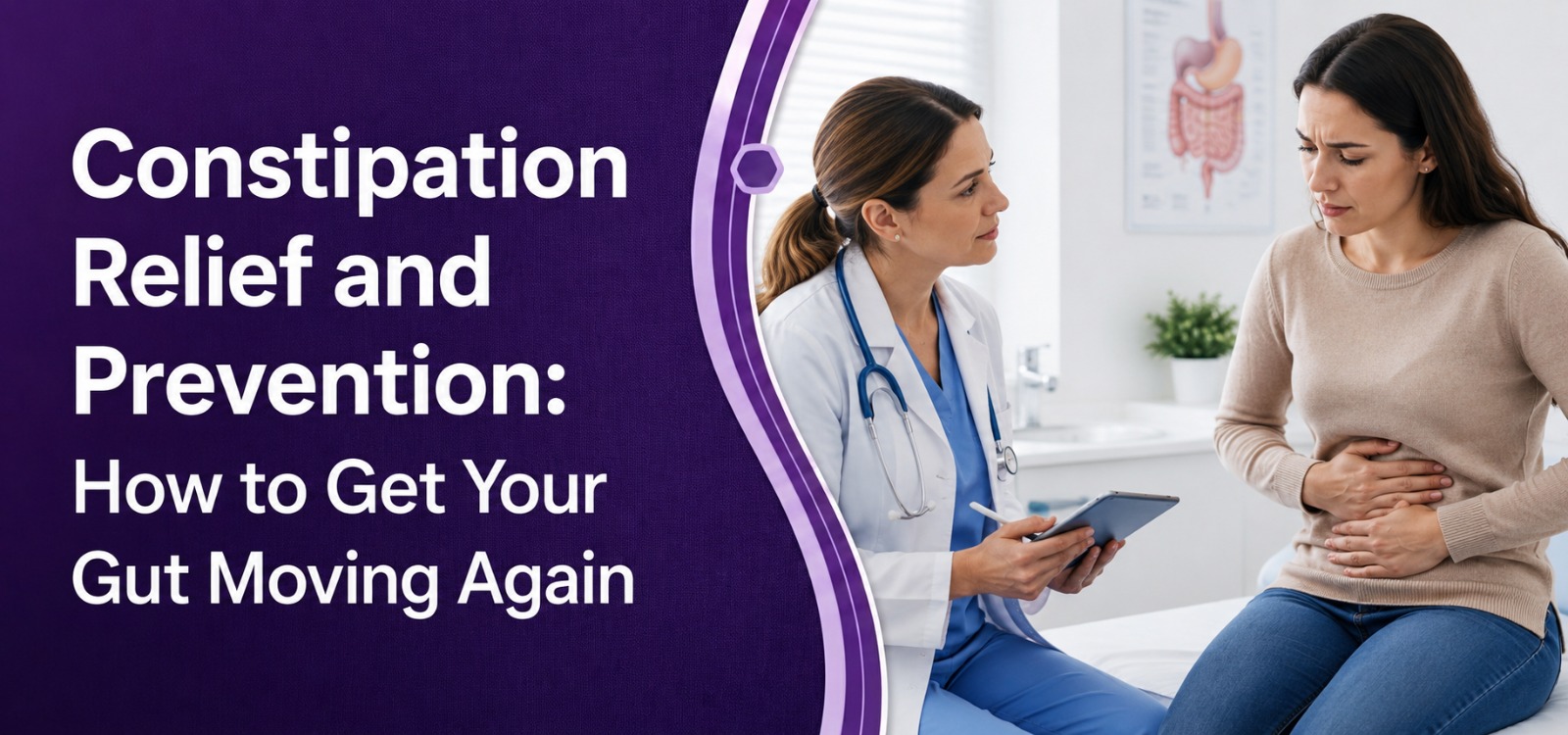
A primary care visit can help identify why constipation started. Your provider can review stool pattern, diet, medicines, warning signs, thyroid disease, diabetes, IBS symptoms, and screening needs. Your care plan may include diet changes, hydration goals, safe medicine options, lab work, screening advice, or specialist referral when needed.
Final Takeaway
Constipation can feel uncomfortable, embarrassing, and stressful. However, many people improve with the right daily habits. Focus on fiber-rich foods, water, movement, bathroom routine, and medicine review.
Also, listen to warning signs. Constipation that lasts, returns often, or comes with blood, pain, vomiting, weight loss, or sudden bowel changes needs medical attention.
Do not keep guessing when your gut keeps sending signals. Book an appointment with Passion Health Advanced Primary Care today.
Our team can evaluate constipation, check for underlying causes, review medications, and create a safe plan for constipation relief and prevention.
FAQs
1. What is constipation?
Constipation means you have hard stools, trouble passing stool, or fewer bowel movements than usual.
2. What causes constipation?
Low fiber, not drinking enough water, less physical activity, stress, travel, pregnancy, and some medicines can cause constipation.
3. What helps constipation naturally?
Drink more water, eat fiber-rich foods, walk daily, and avoid holding stool for too long.
4. When should I see a doctor for constipation?
See a doctor if constipation lasts more than 3 weeks, causes severe pain, bleeding, black stool, weight loss, or daily-life problems.
5. Can constipation become serious?
Yes. Long-term constipation may lead to hemorrhoids, pain, stool blockage, or signal another health issue, so don’t ignore ongoing symptoms.