
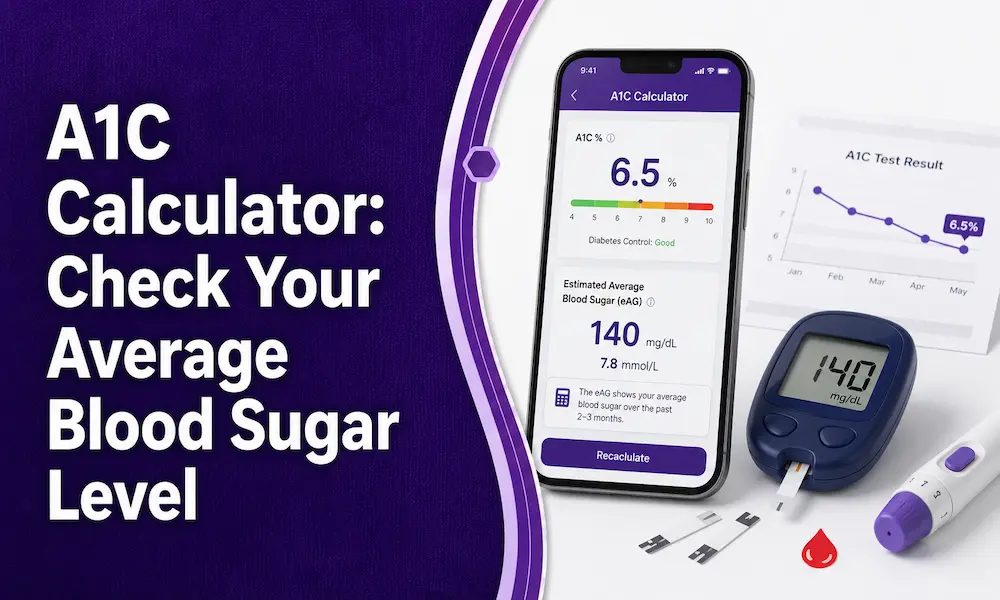
A1C Calculator
See how your average blood sugar may relate to an estimated A1C number.
This A1C calculator helps explain the relationship between estimated average blood sugar and A1C. It is made for education only.
Do not use this result as a replacement for a lab A1C test. Do not change diabetes medicines, diet, insulin, or treatment plans based only on this calculator.
Enter a number between 100 and 300 mg/dL.
Please enter a number between 100 and 300.
Estimated A1C
--%
Your result will appear here after calculation.
What is A1C?
A1C, also called HbA1c, is a blood test that shows a person’s average blood sugar level over the past 2 to 3 months. Doctors often use A1C to screen for diabetes, diagnose diabetes, and monitor diabetes control.
How this calculator works
This tool uses the estimated average glucose and A1C relationship commonly used in diabetes education. The result is an estimate, not a diagnosis.
Need help understanding your blood sugar?
Passion Health Advanced Primary Care can help review your A1C, glucose readings, medications, lifestyle plan, and next steps.
Book an FAppointmentAn A1C calculator helps you understand what your A1C result means in everyday blood sugar numbers. Many patients see an A1C percentage on their lab report but feel confused about what it means. For example, is 6.5% high? Is 7% dangerous? What does A1C mean for diabetes risk?
The A1C test shows your average blood sugar level over the past 2 to 3 months. Doctors use it to check for prediabetes, diabetes, and diabetes control. A higher A1C usually means your blood sugar has stayed high for a longer time.
Book an Appointment at Passion Health Advanced Primary Care. Our providers help patients understand A1C results, blood sugar patterns, diabetes risk, and lifestyle steps that may protect long-term health.
What Is an A1C Calculator?
An A1C calculator converts your A1C percentage into estimated average glucose, also called eAG. This number is shown in mg/dL, the same unit many glucose meters use.
For example, an A1C result of 7% is equal to an estimated average blood sugar of about 154 mg/dL. The American Diabetes Association gives the commonly used formula as:
eAG = 28.7 × A1C − 46.7
This calculator does not replace a doctor’s diagnosis. However, it can make your lab results easier to understand.
A1C Calculator Chart
|
These numbers are estimates. Your daily blood sugar readings may look different because A1C shows a longer-term average, including times when blood sugar may rise after meals or overnight.
What A1C Results Mean
A1C results are usually grouped into three main ranges: These same general ranges for A1C interpretation.
A diabetes diagnosis may need repeat testing or additional blood sugar tests, depending on symptoms and medical history. Always review your results with a healthcare provider.
Why the A1C Calculator Matters
The A1C calculator matters because high blood sugar can damage the body slowly. Many people with prediabetes or early diabetes may not feel symptoms at first. That means a person may feel “normal” while blood sugar remains higher than healthy.
Over time, uncontrolled blood sugar can increase the risk of:
Nerve damage
Eye disease
Poor wound healing
Foot ulcers
Fatigue and frequent infections
An A1C test gives a bigger picture than a single finger-stick glucose check. Daily glucose checks show your blood sugar at one moment. A1C shows your average blood sugar over several weeks.
A1C Calculator Example
Let’s say your A1C is 8%.
Using the formula:
28.7 × 8 − 46.7 = 183 mg/dL
That means your estimated average blood sugar is about 183 mg/dL.
This does not mean your blood sugar is always 183. Sometimes it may be lower. Sometimes it may be much higher, especially after meals, sugary drinks, stress, poor sleep, or missed medications.
Is an A1C of 6.5 diabetes?
An A1C of 6.5% or higher falls in the diabetes range. However, doctors may confirm the result with a second test or another type of blood sugar test, especially if symptoms are not clear.
Common diabetes symptoms may include:
Frequent urination
Increased thirst
Unexplained weight loss
Blurry vision
Tiredness
Slow-healing cuts
Tingling or numbness in the feet
A primary care provider can check your A1C, fasting glucose, kidney function, cholesterol, blood pressure, and diabetes risk factors together.
Is A1C 5.7 Prediabetes?
Yes. An A1C from 5.7% to 6.4% is usually considered the prediabetes range. Prediabetes means blood sugar is higher than normal but not yet in the diabetes range.
This stage is important because lifestyle changes may help lower the risk of type 2 diabetes. A provider may recommend weight management, nutrition changes, exercise, sleep improvement, and regular monitoring.
What Is a Good A1C Goal?
For many adults with diabetes, a common A1C goal is around less than 7%, but this goal is not the same for everyone. Some patients may need a lower goal, while others may need a safer higher goal because of age, medical problems, low blood sugar risk, or medications. Mayo Clinic notes that A1C goals can vary by person.
Your doctor may adjust your A1C goal based on:
Age
Diabetes type
Heart disease risk
Kidney health
Pregnancy status
Medication plan
Risk of low blood sugar
Other health conditions
How Often Should You Check A1C?
Many patients with diabetes need an A1C test every few months, especially when treatment changes or blood sugar is not controlled. Patients with stable results may need testing less often.
Your provider will decide the right schedule based on your health condition.
Patients with prediabetes may also need repeat testing to watch for changes.
How to Lower A1C Naturally and Safely
Lowering A1C usually takes time. A healthy plan may include:
1. Choose balanced meals.
Focus on high-fiber foods, vegetables, lean protein, and controlled portions of carbohydrates. Avoid frequent sugary drinks and large portions of refined carbs.
2. Move your body regularly.
Walking, strength training, and regular activity can help the body use glucose better. Even small daily changes may support blood sugar control.
3. Maintain a healthy weight
For patients with overweight or insulin resistance, weight loss may improve blood sugar numbers.
4. Take medicines correctly.
If your doctor prescribed diabetes medicine, take it as directed. Do not stop or change medication without medical advice.
5. Sleep well.
Poor sleep can affect hunger hormones, stress hormones, and blood sugar control.
6. Track your numbers.
A1C, fasting glucose, post-meal glucose, blood pressure, cholesterol, and kidney tests all help create a full diabetes care picture.
When to See a Doctor
Book a visit with a primary care provider if:
Your A1C is 5.7% or higher
You have symptoms of diabetes
You have a family history of diabetes
You feel tired or thirsty or urinate often
You have numbness or burning in your feet
Your blood sugar readings stay high
You need help understanding your A1C calculator result
Early care can help prevent complications and give you a clear plan.
Final Thoughts
An A1C calculator is a simple tool that helps convert your A1C percentage into an estimated average blood sugar number. It can help you understand your diabetes risk, track progress, and talk with your doctor more clearly.
Still, A1C is only one part of your health picture. A provider should review your symptoms, medical history, medications, blood sugar readings, and lab results before making treatment decisions.
Need help understanding your A1C result? Book an appointment with Passion Health Advanced Primary Care today. Our providers can review your blood sugar, explain your risk, and create a care plan that fits your health needs.
FAQs About A1C Calculator
1. What does an A1C calculator do?
An A1C calculator converts your A1C percentage into estimated average blood sugar, also called eAG.
2. What is a normal A1C?
A normal A1C is usually below 5.7%.
3. What A1C level mean for diabetes?
An A1C of 6.5% or higher is in the diabetes range. A doctor may confirm it with repeat testing.
4. Is A1C the same as daily blood sugar?
No. Daily blood sugar shows your glucose at one moment. A1C shows your average blood sugar over about 2 to 3 months.
5. Can I lower my A1C?
Yes. Many people can lower A1C with the right food plan, physical activity, weight control, medication support, and regular medical care.