Why Bat Exposure Needs Fast Medical Guidance
Rabies from bats is rare, but possible exposure needs quick medical guidance. A bat bite can look like a tiny scratch, a red dot, or no visible mark at all. That makes bat-related rabies risk easy to miss.
From a primary care point of view, the safest rule is simple: do not wait for symptoms after direct bat contact.
Rabies can often be prevented when care starts soon after exposure, but once symptoms begin, the disease is almost always fatal.
The CDC states that post-exposure prophylaxis, or PEP, is nearly 100% effective when given correctly after exposure.
If you touched a bat, woke up with a bat in the room, found a bat near a child, or noticed a possible bite or scratch, call a healthcare provider or your local public health department right away.
Worried after finding a bat in your home or waking up with a bat nearby?
Passion Health Advanced Primary Care can help you review the exposure, check for possible bite marks, and guide you on the safest next step. For possible rabies exposure, seek medical or public health guidance right away.
What Is Rabies?
This infection affects the brain and nervous system and can become life-threatening without fast medical care.
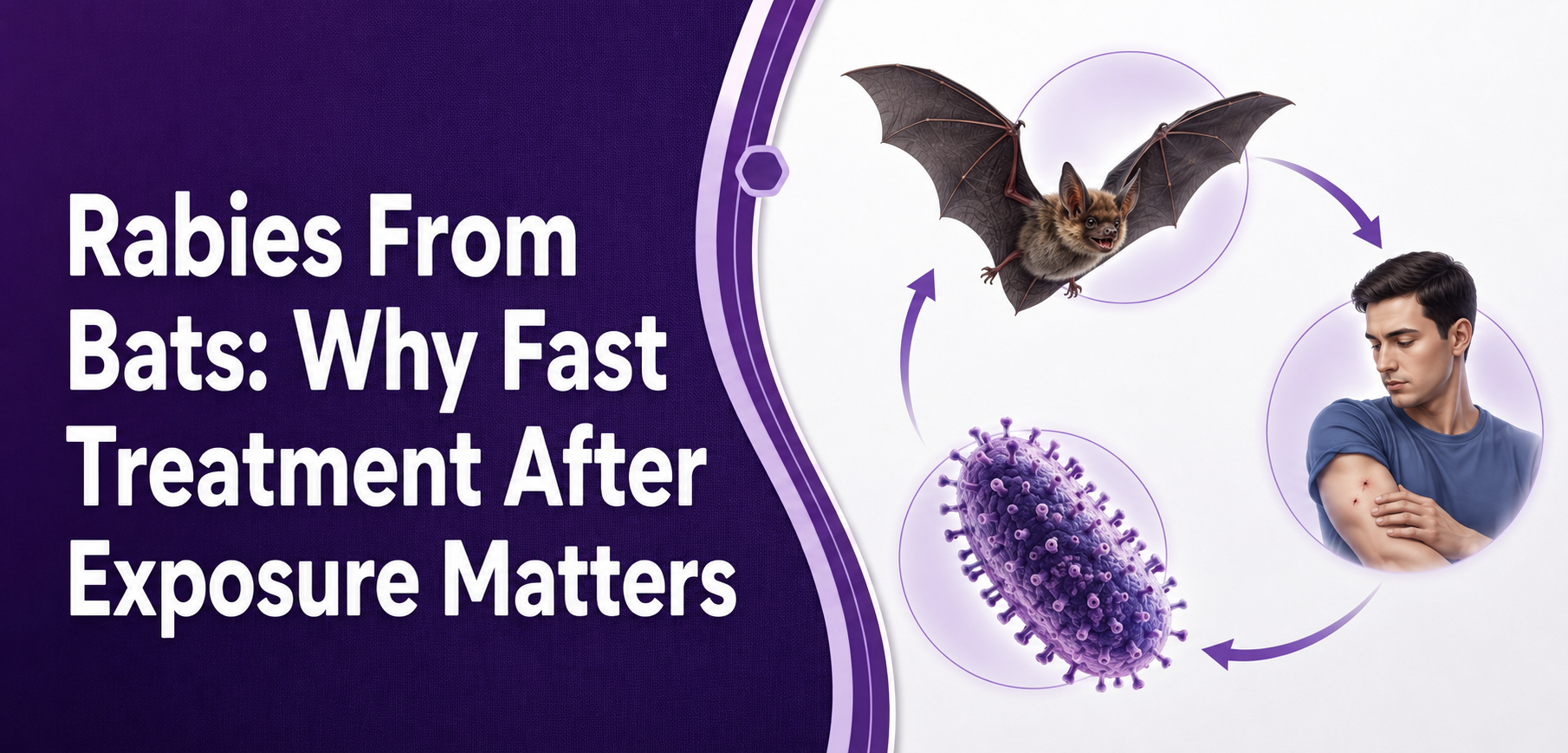
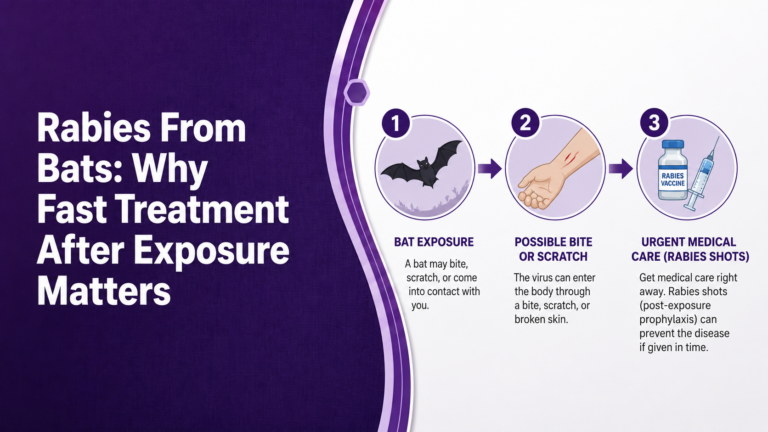
Rabies spreads when the virus in an infected animal’s saliva gets into a person’s body. This can happen through a bite, scratch, or contact with broken skin. It can also spread if infected saliva touches the eyes, nose, mouth, or broken skin.
Rabies is a medical urgency because the treatment window comes before symptoms start.
After possible exposure, doctors focus on prevention. This may include wound cleaning, rabies vaccine doses, and sometimes human rabies immune globulin, depending on the exposure and vaccination history.
Early symptoms may feel mild at first, such as fever, headache, weakness, discomfort, itching, prickling, or tingling near the bite area.
Later symptoms can include anxiety, confusion, hallucinations, trouble swallowing, breathing problems, paralysis, or severe neurologic changes.
Why Rabies From Bats Gets Missed
Bats usually avoid people, but contact can happen inside bedrooms, attics, cabins, garages, porches, or outdoor sleeping areas. The risk becomes more concerning when a person cannot clearly say whether contact happened.
Bat teeth are very small. A bite may not bleed. A scratch may fade quickly.
A sleeping person may wake up and see a bat nearby but may not know whether the bat touched the skin. A baby, young child, confused adult, or deeply sleeping person may not be able to explain what happened.
The CDC says bats are the most reported animals with rabies in the United States, and most U.S. rabies deaths are linked to rabid bat exposure.
The CDC also advises people to avoid touching bats and see a medical professional if contact may have happened.
A Recent Bat Rabies Death Shows the Risk
A 2026 report described a fatal rabies case involving an 11-year-old boy in northern Ontario. He woke up with a bat lying across his nose and mouth.
No clear bite or scratch was seen, and preventive care was not started right away. About 19 days later, symptoms appeared, and doctors diagnosed rabies.
This case shows why bat exposure should not be guessed at home. Even if the skin looks normal, direct bat contact should be reviewed by a medical professional or public health department.
Why North Texas Families Should Take Bat Exposure Seriously
Bat exposure can happen anywhere, including homes, apartments, attics, garages, rural properties, outdoor sleeping areas, and vacation cabins. The local concern is prevention.
Texas DSHS says bat bites are not always visible, so close contact with a bat’s mouth should be carefully evaluated for the need for rabies prevention treatment. Post-exposure treatment may need to be considered unless the bat tests negative for rabies.
When Bat Contact May Count as Exposure
Get medical advice quickly if:
A bat bit or scratched you
Bat saliva touched your eyes, nose, mouth, or broken skin
You woke up and found a bat in the room
A bat was found near a baby, child, or confused adult
Someone touched a bat with bare hands
A bat landed on the face, head, neck, or body
You are unsure whether contact happened
Most bats do not have rabies. Still, rabies carries such a high risk once symptoms begin that possible exposure should not be ignored.
What To Do Right Away
If you see a bite or scratch, wash the area with soap and running water as soon as possible. Then call a doctor, urgent care clinic, or local public health department.
Do not release the bat if it can be safely contained. Public health or animal control may need the bat for rabies testing.
The CDC recommends contacting animal control or the health department if a bat is found in your home.
Do not catch a bat with bare hands. Keep children and pets away. Use thick gloves only if health officials or animal control give safe instructions.
Why Treatment Must Start Before Symptoms
Rabies prevention works best before the virus causes symptoms. Once symptoms appear, rabies is almost always fatal, and treatment usually cannot stop the disease.
After possible rabies exposure, a healthcare provider may recommend PEP.
This can include wound care, human rabies immune globulin, and a series of rabies vaccine doses. The exact plan depends on the type of exposure and whether the person has had rabies vaccine before.
This is why timing matters. Waiting for fever, tingling, anxiety, weakness, or breathing symptoms can remove the chance to prevent the infection.
How To Keep Bats Out of Your Home
Prevention starts with bat-proofing your home. Bats can fit through openings as small as ¼ inch. Check attic gaps, rooflines, chimneys, vents, torn screens, plumbing spaces, and openings around doors.
Helpful steps include:
Seal small gaps and cracks
Add chimney caps and vent screens
Repair torn window screens
Keep exterior doors closed tightly
Check attic openings before summer bat activity increases
Call wildlife control if bats keep returning
If bats already live in your home, avoid trapping them inside. A trained wildlife professional can remove them safely and follow local rules.
When To See a Primary Care Doctor
See a doctor or contact public health quickly after any possible bat exposure. Do not wait for symptoms.
A provider may ask:
When did you see the bat?
Was the bat in your bedroom?
Were you sleeping?
Did the bat touch your skin?
Do you see a bite, scratch, or red mark?
Can the bat be tested?
Have you had rabies vaccine before?
These answers help decide whether rabies prevention treatment is needed.
How Primary Care Can Help After Bat Exposure
Primary care can review what happened, check for bites or scratches, clean the wound, and guide you on the safest next step.
A provider may help decide whether you need public health guidance, rabies shots, or urgent care referral. If symptoms like fever, tingling, weakness, confusion, or trouble swallowing appear after bat contact, seek urgent medical care right away.
Passion Health Advanced Primary Care can help assess possible bat exposure and guide you quickly.
Final Takeaway
Rabies from bats is uncommon, but it needs urgent attention because bat bites can be hard to see and symptoms can appear too late for treatment to work. Fast medical guidance is the safest step after any direct bat contact.
For possible rabies exposure, contact medical care or your local public health department immediately.
If you had possible bat exposure, Passion Health Advanced Primary Care can help you understand your risk, review next steps, and guide you on when public health or urgent treatment is needed.
FAQs
1. Can you get rabies from bats without a bite mark?
Yes. A bat bite can be very small and may not leave a clear mark. If you touched a bat or woke up with one nearby, get medical guidance.
2. What should I do if I find a bat in my room?
Leave the room, keep children and pets away, and contact animal control or your local health department. Do not touch the bat with bare hands.
3. Do all bats carry rabies?
No. Most bats do not have rabies, but any direct bat contact should be taken seriously because rabies is almost always fatal once symptoms begin.
4. When do rabies symptoms start after bat exposure?
Symptoms can appear days to weeks later, and sometimes longer. Do not wait for symptoms. Seek medical advice right after possible exposure.
5. Can primary care help after bat exposure?
Yes. Primary care can review what happened, check for possible bite marks, clean the wound, and guide you on whether urgent care, public health, or rabies prevention treatment is needed.