Insulin Resistance Symptoms and Treatment: What Adults Should Know First
Insulin resistance can build quietly for years. Many adults feel tired, gain weight around the belly, crave sugar, or see blood sugar numbers rise before they understand what has changed inside the body.
The problem starts when the body does not use insulin well. Insulin should help move sugar from the blood into the cells for energy.
When cells resist insulin, the pancreas works harder and makes more insulin. Over time, blood sugar can rise and increase the risk of prediabetes and type 2 diabetes.
Worried about high blood sugar, weight gain, fatigue, or prediabetes risk? Passion Health Advanced Primary Care can review your symptoms, check your labs, and help you build a safe plan.
Patients looking for primary care in Frisco, Irving, Plano, Prosper, Anna, Aubrey, Flower Mound, Ennis, Kaufman, Kemp, or Mesquite.
What Is Insulin Resistance?
Insulin resistance means the body needs more insulin than usual to keep blood sugar in a healthy range.
The muscles, fat cells, and liver do not respond to insulin as well as they should. At first, the pancreas may keep up by making extra insulin. That can hide the problem for a while.
Later, the pancreas may struggle to keep pace. Blood sugar may rise after meals or stay high while fasting. This is when many adults first hear words like “prediabetes,” “high A1C,” or “borderline diabetes.”
A primary care visit can help connect the dots between blood sugar, weight, cholesterol, blood pressure, sleep, food habits, and family history.
Common Insulin Resistance Symptoms
Insulin resistance may not cause clear symptoms in the beginning. That makes lab testing important. Still, some adults notice body changes before diabetes develops.
Possible signs include:
Tiredness after meals
Belly weight gain
Strong sugar or carb cravings
Dark, velvety skin patches on the neck, underarms, or skin folds
Skin tags
Increased thirst
Frequent urination
Blurry vision
Increased hunger
Slow weight changes despite normal habits
Higher fasting blood sugar
Higher A1C
High triglycerides or low HDL cholesterol
These symptoms do not always mean diabetes. Thyroid problems, sleep issues, stress, medication effects, and hormone changes can also play a role. A doctor can check the right labs and guide the next step.
What Causes Insulin Resistance?
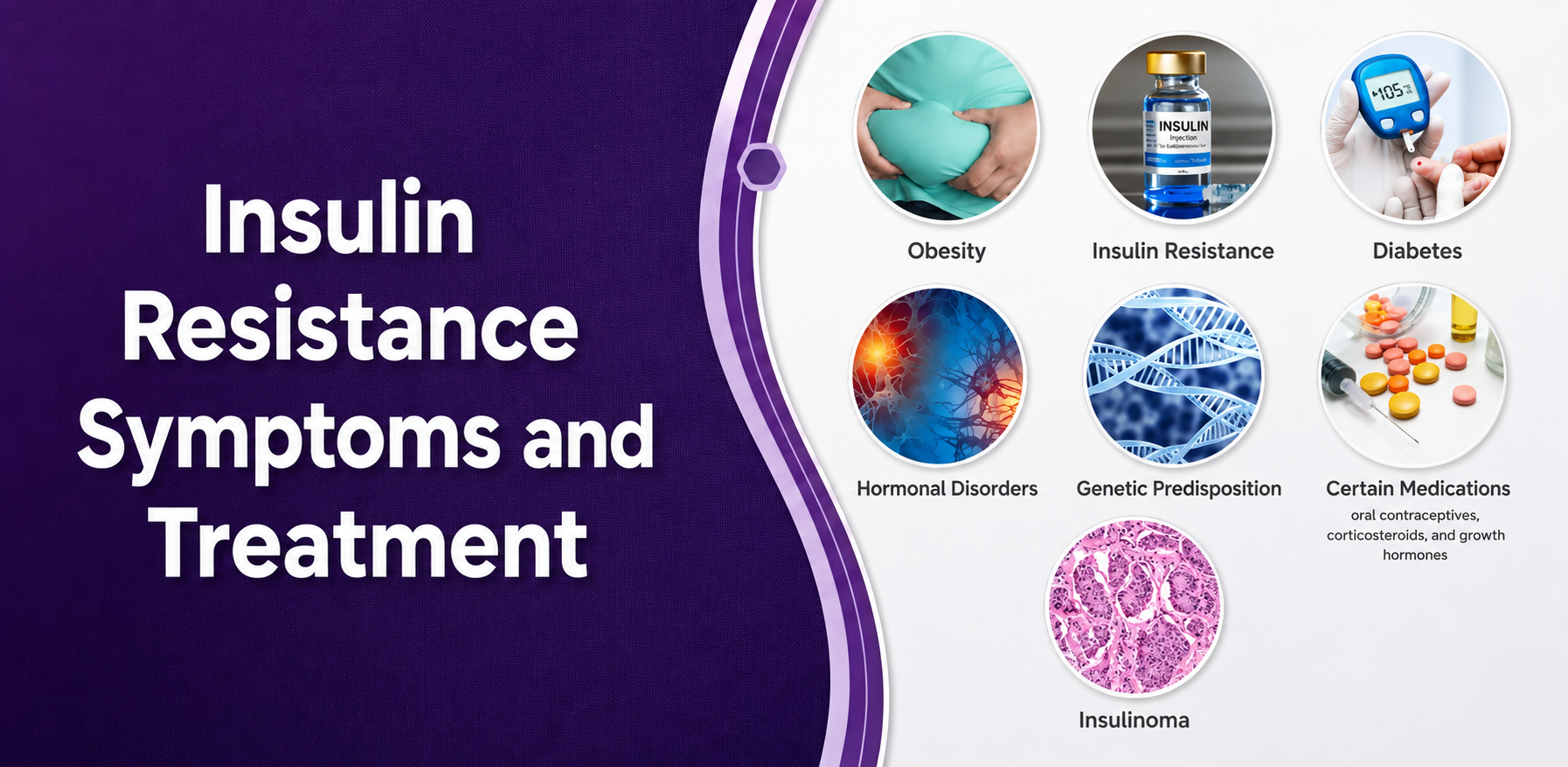
Insulin resistance usually develops from more than one factor. One person may have a family history of diabetes. Another may have belly fat, poor sleep, stress, or a sedentary routine. Some adults may develop insulin resistance after certain medicines or hormone conditions.
Common risk factors include:
Excess belly fat
Low physical activity
Family history of type 2 diabetes
Prediabetes
High blood pressure
High triglycerides
Low HDL cholesterol
Sleep apnea
PCOS
Smoking
High intake of sugary drinks, refined carbs, and processed foods
Certain medicines, such as steroid medicines or some antipsychotic medicines
The good news: adults can improve many risk factors with the right plan. Small changes can lower blood sugar pressure on the pancreas.
Insulin Resistance and Prediabetes
Prediabetes means blood sugar runs higher than normal but not high enough for a type 2 diabetes diagnosis. Insulin resistance often comes before prediabetes.
Doctors commonly use these blood test ranges:
Test | Prediabetes Range |
A1C | 5.7% to 6.4% |
Fasting plasma glucose | 100 to 125 mg/dL |
Oral glucose tolerance test | 140 to 199 mg/dL |
The A1C test shows an average blood sugar picture over about three months. Fasting glucose shows blood sugar at the time of the test after fasting. The oral glucose tolerance test checks how the body handles sugar after a glucose drink.
A single abnormal number should lead to a discussion, not panic. Your provider may repeat labs, check cholesterol, review blood pressure, and look at your full health history.
Useful Insulin Resistance Calculations
Clear numbers help patients take action. These examples can support a simple plan.
1. Weight-Loss Target Calculation
Research shows that losing 5% to 7% of starting body weight may help adults at high risk lower diabetes risk.
Example:
Starting weight: 200 pounds
5% target: 200 × 0.05 = 10 pounds
7% target: 200 × 0.07 = 14 pounds
So, a 200-pound adult may start with a goal of losing 10 to 14 pounds. This goal feels more realistic than trying to lose a large amount quickly.
2. Weekly Exercise Calculation
A useful activity target for many adults is 150 minutes of moderate activity per week.
Simple breakdown:
150 minutes ÷ 5 days = 30 minutes per day
150 minutes ÷ 6 days = 25 minutes per day
150 minutes ÷ 10 short walks = 15 minutes each
Walking after meals can help the body use glucose. Strength training also matters because muscle helps absorb blood sugar.
3. Plate Method Calculation
A simple plate plan can reduce blood sugar spikes:
1/2 plate: non-starchy vegetables
1/4 plate: lean protein
1/4 plate: high-fiber carbs
Add water or unsweetened drinks
This method does not require strict counting for every patient. It gives structure and keeps meals balanced.
4. Lab Tracking Calculation
Track changes every 3 to 6 months if your provider recommends it.
Helpful numbers to track:
Waist size
Triglycerides
HDL cholesterol
LDL cholesterol
Progress does not always show only on the scale. Better fasting glucose, lower triglycerides, and more energy also matter.
Insulin Resistance Symptoms and Treatment: What Actually Helps?
Treatment starts with a plan that fits your labs, body weight, schedule, food habits, and medical history. No single diet fixes insulin resistance for every adult.
Strong treatment steps include:
Eat More High-Fiber Foods
Fiber slows digestion and supports steadier blood sugar. Good choices include beans, lentils, oats, berries, apples, leafy greens, broccoli, chia seeds, flaxseed, and whole grains.
Start slowly if your diet currently has low fiber. A sudden fiber jump may cause gas or bloating. Drink water and increase portions step by step.
Reduce Sugary Drinks
Sugary drinks can raise blood sugar fast. Soda, sweet tea, energy drinks, sweet coffee drinks, fruit juice, and sports drinks often add more sugar than patients realize.
Better choices include water, sparkling water without sugar, unsweetened tea, or coffee without heavy sweeteners.
Build Protein Into Meals
Protein can help with fullness and reduce frequent snacking. Options include eggs, fish, chicken, turkey, Greek yogurt, tofu, beans, lentils, and cottage cheese.
A primary care provider or dietitian can help if you have kidney disease, heart disease, or other medical concerns that affect protein goals.
Move After Meals
A 10- to 15-minute walk after meals can help many adults feel better and support blood sugar control. You do not need a perfect gym plan to begin. Start with a movement you can repeat.
Improve Sleep
Poor sleep can worsen cravings, hunger hormones, weight gain, and blood sugar control. Adults with loud snoring, morning headaches, daytime sleepiness, or high blood pressure may need screening for sleep apnea.
Manage Stress
Stress hormones can raise blood sugar and increase cravings. Deep breathing, walking, prayer, journaling, counseling, and a steady sleep routine can help the body calm down.
Medication and Dosage Safety
Some adults with prediabetes or high diabetes risk may need medicine such as metformin. Others may need treatment for blood pressure, cholesterol, thyroid disease, PCOS, or weight-related risks.
Do not start, stop, or change medication doses without a medical visit. Dosing depends on kidney function, A1C, age, other medicines, side effects, and health history. A primary care provider can check labs and decide whether medicine makes sense.
When Should You See a Primary Care Doctor?
Schedule a primary care visit if you have:
A1C of 5.7% or higher
Fasting glucose of 100 mg/dL or higher
Family history of type 2 diabetes
Belly weight gain with fatigue
Dark skin patches or skin tags
High triglycerides
Low HDL cholesterol
High blood pressure
PCOS
Frequent thirst or urination
Blurry vision
Trouble losing weight despite effort
Early care gives you more options. Waiting until diabetes develops can make treatment harder.
How Passion Health Advanced Primary Care Can Help
Passion Health Advanced Primary Care helps adults check risk early and create a practical plan. Your visit may include symptom review, family history, medication review, blood pressure check, A1C testing, fasting glucose testing, cholesterol labs, weight care discussion, nutrition guidance, and follow-up planning.
The goal is not to blame the patient. The goal is to understand what is happening and help the body respond better.
Final Takeaway
Insulin resistance can stay silent until blood sugar rises. Watch for fatigue, belly weight gain, cravings, skin changes, high A1C, and prediabetes risk. The right treatment plan may include better food choices, regular movement, weight management, sleep support, stress control, and medical follow-up.
Concerned about insulin resistance symptoms and treatment? Passion Health Advanced Primary Care can help you check your numbers and take action before diabetes starts. Book an appointment →
Patients looking for primary care in Frisco, Irving, Plano, Prosper, Anna, Aubrey, Flower Mound, Ennis, Kaufman, Kemp, or Mesquite.
FAQs
1. What are the early symptoms of insulin resistance?
Early symptoms may include tiredness, belly weight gain, sugar cravings, dark skin patches, skin tags, high blood sugar, or high A1C. Some people may not notice symptoms at first.
2. Can insulin resistance turn into diabetes?
Yes. Insulin resistance can increase the risk of prediabetes and type 2 diabetes if blood sugar stays high over time.
3. How can I improve insulin resistance?
You can improve insulin resistance with regular exercise, weight management, high-fiber foods, less sugar, better sleep, and routine blood sugar checks.
4. What blood tests check insulin resistance risk?
Doctors may check A1C, fasting glucose, cholesterol, triglycerides, and sometimes an oral glucose tolerance test to understand your risk.
5. When should I see a doctor for insulin resistance?
See a primary care doctor if you have high A1C, fasting glucose above normal, belly weight gain, fatigue, dark skin patches, frequent thirst, or a family history of diabetes.