
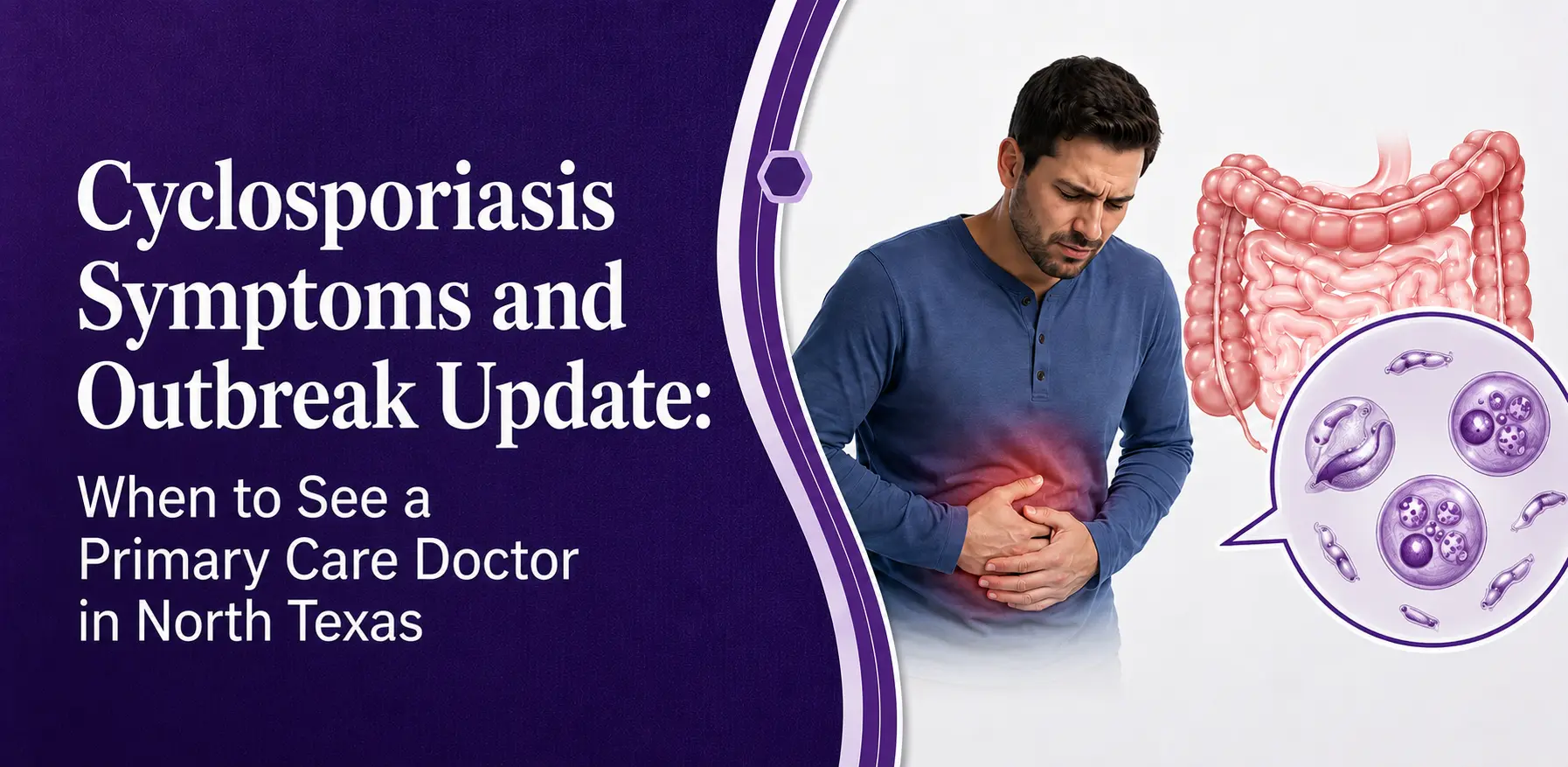
What Patients Should Know About Cyclosporiasis Outbreak Symptoms
Sudden watery diarrhea can ruin a day fast. One urgent bathroom trip turns into many. Cramps start, energy drops, and food becomes the first suspect.
During a cyclosporiasis outbreak, those symptoms may point to more than a regular stomach bug.
Cyclosporiasis comes from a tiny parasite called Cyclospora cayetanensis. It can cause frequent watery diarrhea, sometimes with explosive bowel movements.
CDC says untreated illness may last from a few days to over a month, and symptoms can leave and return again.
If diarrhea lasts more than 2 to 3 days, keeps coming back, or causes weakness, Passion Health Advanced Primary Care can help review symptoms and guide the next step.
Patients looking for primary care in Frisco, Irving, Plano, Prosper, Anna, Aubrey, Flower Mound, Ennis, Kaufman, Kemp, McKinney, TX
Latest 2026 Cyclosporiasis Outbreak Update
As of July 9, 2026, the CDC had received reports of 843 people who acquired cyclosporiasis in the United States. Cases came from 31 states, and 86 patients required hospitalization. No deaths had been reported.
The reported illnesses began between May 1 and July 5, 2026. Case totals may continue to change because several weeks can pass between the start of cyclosporiasis symptoms, medical testing, laboratory confirmation, and public-health reporting.
The national total includes several clusters under investigation as well as cases that may not share the same source. Public-health officials have not linked every infection to one food product or one outbreak.
The FDA is investigating active Cyclospora clusters. Traceback work has started, but investigators have not identified every food product connected with the current investigations. Patients should avoid blaming a particular restaurant, grocery store, fruit, vegetable, or salad product unless the CDC, FDA, or a state health department confirms the connection.
People looking for a Cyclospora outbreak Texas update should follow official state and federal notices because case counts and food-source information can change quickly.
What Is Cyclosporiasis?
Cyclosporiasis is an intestinal infection caused by the parasite Cyclospora cayetanensis. . Cyclosporiasis starts in the small intestine, where the parasite can upset normal digestion.
Most infections happen when someone eats or drinks something that has been contaminated, often through unsafe water or fresh food handling.
This disease can feel like food poisoning at first. However, cyclosporiasis outbreak symptoms can last longer than a short stomach upset. The diarrhea may improve for a day, then return without warning.
Many patients do not know the word “cyclosporiasis.” They only know the feeling: watery diarrhea, stomach cramps, bloating, nausea, and fatigue.
A stool test can help diagnose cyclosporiasis, and some patients may need to give more than one sample because parasite levels can vary by day.
Why Can Cyclospora Symptoms Improve and Return?
Cyclosporiasis does not always follow a steady pattern. Diarrhea may slow down for a day or two, making a person believe the illness has ended. The symptoms can then return.
Appetite loss and fatigue may continue even after diarrhea improves. A person may feel too tired to work, exercise, prepare meals, or complete routine activities. Recurring cyclosporiasis symptoms can also make it difficult to maintain hydration and normal nutrition.
This stop-and-start pattern may raise suspicion for Cyclospora, but it does not provide a diagnosis. Viral illness, bacterial food poisoning, medication side effects, inflammatory conditions, and other parasites can create similar symptoms.
What Causes Cyclosporiasis?
Cyclospora spreads when a person swallows contaminated food or water. The parasite can get on fresh produce before it reaches the store, restaurant, or home kitchen.
Common risk links may include:
Fresh fruits
Raw vegetables
Herbs
Salad ingredients
Contaminated water
Travel-related food exposure
Food handled in unsafe conditions
A person cannot see, smell, or taste Cyclospora on food. That makes cyclosporiasis outbreak symptoms more important than guessing the exact source.
This infection does not usually spread directly from one person to another. Instead, food and water exposure usually drive cases. For that reason, a patient should tell the doctor about recent restaurant meals, salads, fruit, travel, cookouts, and shared foods.
Has a Food Recall Been Announced?
The FDA has opened investigations into several Cyclospora clusters, but investigators have not identified one common food product connected with every 2026 case.
Previous outbreaks involving fresh produce do not prove that a particular fruit, vegetable, salad, store, or restaurant caused the current illnesses. Consumers should follow official FDA recall notices and public-health advisories rather than relying on unconfirmed social media posts.
During a cyclosporiasis outbreak, patients should rely on verified information about symptoms, testing, food recalls, and treatment instead of unconfirmed social media claims.
Cyclosporiasis Outbreak Symptoms North Texas Patients Should Know
The most common symptom is watery diarrhea. The CDC says Cyclospora can cause frequent and sometimes explosive bowel movements. Symptoms may last a long time if the infection does not get treated.
Watch for these cyclosporiasis outbreak symptoms:
Watery diarrhea
Urgent or explosive bowel movements
Nausea
Vomiting
Low-grade fever
Loss of appetite
Weight loss
Fatigue
Body aches
Not every person develops every symptom. Some people have a mild illness, while others experience repeated diarrhea, weakness, and dehydration. Children, older adults, and people managing chronic health conditions may lose fluids more quickly and may need earlier medical guidance.
Because many digestive illnesses cause similar problems, cyclosporiasis symptoms alone cannot confirm the infection. A healthcare provider may need to review the full symptom pattern, food exposure, travel history, and test results.
Why Cyclosporiasis Diarrhea Can Feel Different
Regular stomach upset often improves within a short time. Cyclosporiasis can act differently.
The diarrhea may slow down, then return. Fatigue may continue after bathroom symptoms improve. Appetite may stay low, and weight may drop if the illness lasts.
That stop-and-start pattern creates confusion. A patient may think, “I am getting better,” but then symptoms come back the next day. This pattern is one reason a primary care visit can help.
When to See a Primary Care Doctor
See a primary care doctor if you notice any of these signs:
Diarrhea lasts more than 2 to 3 days
Watery diarrhea improves, then comes back again
Stomach cramps feel strong or do not settle
Fever starts with diarrhea
Vomiting makes it hard to keep fluids down
Dizziness or weakness develops
My mouth feels very dry
Fatigue feels stronger than normal
Symptoms started after eating fresh produce or restaurant food
Passion Health Advanced Primary Care can check your diarrhea symptoms, look for dehydration, and help decide whether stool testing is the right next step.
How Doctors Diagnose Cyclosporiasis
During the visit, the provider may ask simple questions such as:
When did the diarrhea start?
How many times are you going each day?
Does the diarrhea stop and come back?
What did you eat before symptoms began?
Did you eat fresh produce, salad, fruit, or restaurant food recently?
Did anyone at home, at work, or at a recent gathering get similar stomach symptoms?
Have you had a fever, vomiting, weakness, or dizziness?
What medicines or home remedies have you already tried?
After that, the provider may check for dehydration, belly tenderness, fever, blood pressure changes, and other possible causes of diarrhea.
A stool test may help confirm the diagnosis.
Cyclospora diagnosis can be difficult because patients may not shed enough organisms in every sample, so several stool samples from different days may be needed.
This detail matters. A basic stool test may not always catch Cyclospora unless the lab uses the right methods. That is why patients should explain the full symptom pattern.
Cyclosporiasis Treatment and Recovery
Treatment depends on how sick the patient feels, test results, allergies, and dehydration signs. If medicine is needed, a doctor may prescribe an antibiotic that treats cyclosporiasis.
Recovery also needs fluids. Small sips of water or oral rehydration drinks can help the body replace lost fluids. Bland foods may help once nausea starts to calm down.
Avoid leftover antibiotics, random supplements, or strong anti-diarrhea medicines without medical advice. The wrong choice can delay proper care or create side effects.
How Primary Care Can Help
Passion Health Advanced Primary Care helps North Texas patients understand whether diarrhea looks like a short stomach illness, food poisoning, or a possible parasite-related infection.
A visit may include:
Diarrhea symptom review
Hydration check
Food and travel history
Medication review
Stool testing discussion
Treatment guidance
Follow up if symptoms return
This support matters because explosive diarrhea can cause fear, embarrassment, and missed work. A clear plan can reduce guessing and help patients recover safely.
How to Lower Your Risk
Food safety cannot remove every risk, but it can lower exposure.
Use these steps:
Wash hands before eating
Rinse fruits and vegetables under clean running water
Keep produce refrigerated
Separate raw meat from fresh produce
Clean cutting boards and counters
Avoid untreated water
Be extra careful with fresh produce during outbreak season
A few careful food-safety habits can lower the chance of stomach infections, especially in spring and summer when Cyclospora cases tend to increase.
Final Takeaway
Cyclosporiasis may start like food poisoning, but watery diarrhea that keeps going, returns, or causes weakness needs medical attention.
The phrase “explosive diarrhea parasite” sounds alarming, yet it points to a real infection that doctors can evaluate.
North Texas patients should not ignore ongoing diarrhea, severe cramps, bloating, fatigue, or dehydration signs.
A timely primary care visit can help identify the problem and guide safe treatment.
Passion Health Advanced Primary Care is here to help patients take the next step with confidence.
FAQs
1. Is there a cyclosporiasis outbreak in 2026?
Yes. Health agencies have reported domestically acquired cases across multiple states during the 2026 outbreak season. Several illness clusters remain under investigation.
2. What is the first sign of cyclosporiasis?
Frequent watery diarrhea is the most common early sign. Other cyclosporiasis symptoms may include cramps, bloating, nausea, appetite loss, fatigue, and weight loss.
3. What food caused the 2026 Cyclospora outbreak?
Health authorities have not identified one food responsible for every reported case. The FDA continues to investigate several clusters and may issue updates when evidence identifies a product.
4. Can a regular stool test detect Cyclospora?
Not every standard stool test includes Cyclospora. A healthcare provider may need to request specific testing, and more than one specimen may sometimes improve detection.
5. When should I see a doctor for watery diarrhea?
See a doctor when diarrhea lasts more than a few days, keeps returning, causes dehydration, or occurs with significant weakness, vomiting, fever, weight loss, or ongoing abdominal pain.