Key Takeaways
- Summer colds and COVID-19 can cause similar respiratory symptoms.
- Symptoms alone cannot reliably confirm which illness you have.
- COVID-19 testing can provide a clearer answer when symptoms develop.
- Follow the test instructions if your first at-home result is negative.
- Rest, fluids and careful symptom monitoring can support recovery.
- Contact a healthcare provider if symptoms persist, worsen or affect breathing.
Feeling Sick This Summer? Compare Cold and COVID-19 Symptoms
A scratchy throat, stuffy nose, or cough can feel surprising during warm weather. You may blame allergies or an ordinary cold. However, COVID-19 circulates throughout the year, and its symptoms often resemble a mild respiratory infection.
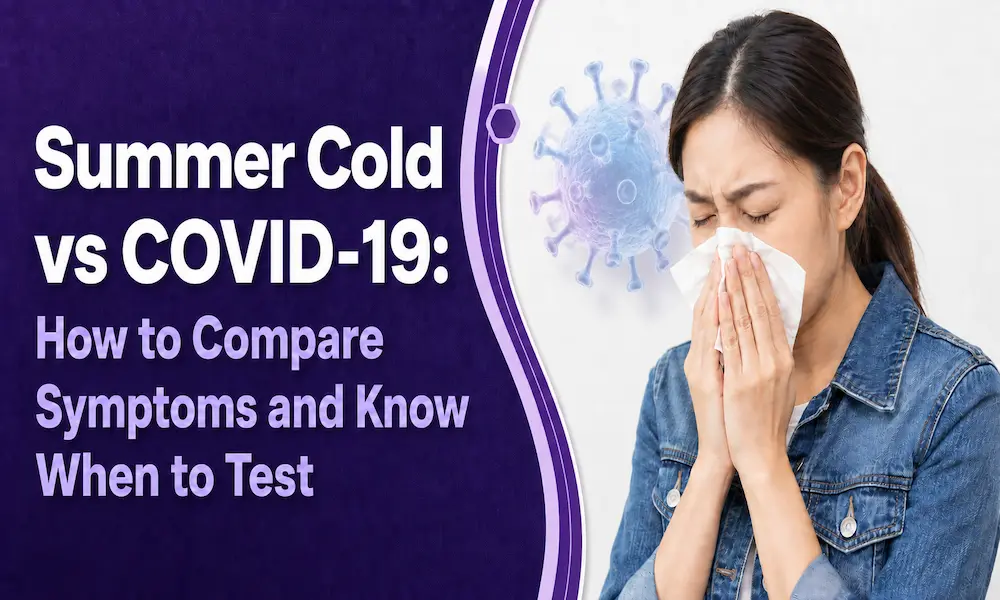
Understanding summer cold vs. COVID-19 can help you choose sensible next steps without diagnosing yourself from one symptom.
Both illnesses can cause congestion, coughing, fatigue, headache, and sore throat. Therefore, the season cannot identify the virus. Testing, exposure, symptom patterns, and personal risks provide better information. If you feel unwell, rest and protect the people around you.
Can You Get a Cold During Summer?
Yes, cold viruses can spread during any season. Rhinoviruses commonly cause colds, while other respiratory viruses also circulate during warmer months.
Although people associate colds with winter, summer travel, indoor gatherings, and close contact create opportunities for infection.
Air conditioning does not create a viral illness. Still, dry air may irritate the nose or throat, while enclosed spaces help viruses spread. Consequently, a person may develop a cold after travel or a crowded event.
Common symptoms include a runny nose, sneezing, sore throat, mild cough, and tiredness. Some people also experience a headache or low fever. Usually, symptoms gradually improve. However, worsening symptoms deserve medical attention.
What Symptoms Can COVID-19 Cause?
COVID-19 affects people differently. The CDC COVID-19 symptoms guide lists Possible COVID-19 symptoms, including:
Chills
Cough
Shortness of breath
Nasal congestion
Fatigue
Muscle or body aches
Digestive symptoms
Changes in taste or smell
Symptoms may change as COVID-19 variants evolve.
Importantly, many people experience symptoms that feel like a cold. For example, someone may notice congestion, fatigue, and a sore throat first. Others develop fever, body aches, or breathing problems. Therefore, symptoms alone cannot confirm a summer cold vs. COVID-19.
Our article about COVID-19 Cicada variant symptoms provides more information. However, no specific symptom identifies a variant. A clinician can assess symptoms alongside testing, exposure, and current public-health information.
Is It COVID-19, a Summer Cold, or Seasonal Allergies?
A runny nose, sneezing, and congestion can make it difficult to identify the cause of your symptoms. When comparing COVID vs seasonal allergies, remember that allergies develop when the immune system reacts to triggers such as pollen, grass, mold, or dust. Unlike a summer cold or COVID-19, seasonal allergies do not result from a viral infection and cannot spread to others.
So, is a runny nose caused by a cold, allergies, or COVID? Itchy or watery eyes, frequent sneezing, and symptoms that change with allergen exposure may suggest allergies. Meanwhile, fever, chills, body aches, fatigue, or digestive problems may indicate a viral illness. However, many respiratory infection symptoms overlap, and symptoms alone cannot provide a definite diagnosis. Consider COVID-19 testing or contact a healthcare provider if the cause remains unclear.
Summer Cold vs COVID-19: Comparing the Symptoms
Comparison | Summer cold | COVID-19 |
Common symptoms | Sneezing, congestion, runny nose | Fever, fatigue, body aches |
Other symptoms | Mild sore throat or cough | Digestive symptoms or breathing difficulty |
Recovery | Often improves gradually | Recovery time varies |
Summer cold and COVID-19 symptoms can overlap. Additionally, COVID-19 may cause changes in taste or smell, but this symptom does not occur in every infection. Therefore, do not rely on one symptom to identify the illness. Consider testing and contact a healthcare provider if your symptoms persist or worsen.
When Should You Take a COVID-19 Test?
Consider testing when new cold-like symptoms develop, especially after close contact with someone who tested positive. Testing may also help before visiting someone with a higher risk of complications. Moreover, a result can guide work, gatherings, and treatment decisions.
At-home antigen tests offer convenient results, but timing matters. The FDA’s at-home testing guidance recommends repeat testing after most negative antigen results. Follow your test instructions because authorized products may use different schedules.
If symptoms continue after a negative result, monitor how you feel. Then, repeat the test as directed or ask a clinician about another test. One early negative result may not settle the summer cold vs. COVID-19.
Can You Have COVID Symptoms but a Negative Test?
Yes, you can have COVID symptoms but a negative test, especially during the early stage of an infection. An at-home antigen test may not detect the virus if the viral level remains too low at the time of testing. Therefore, one negative result does not completely rule out COVID-19.
If your symptoms continue, follow the test manufacturer’s repeat-testing instructions. Additionally, limit close contact with others while you feel sick. A healthcare provider may recommend another antigen test, a PCR test, or testing for other respiratory illnesses based on your symptoms, exposure history, and health risks.
What Should You Do While You Feel Sick?
First, stay home when symptoms lack another clear explanation. Rest, drink fluids, and monitor your temperature and breathing. Additionally, ask a clinician or pharmacist which medicines fit your health needs.
Once symptoms improve and you remain fever-free for 24 hours without fever-reducing medicine, current CDC respiratory-virus guidance supports returning to normal activities. For five more days, consider cleaner air, hygiene, distancing, testing, or a well-fitting mask. These steps protect people with greater health risks.
Antibiotics do not treat viral colds or COVID-19. However, antiviral treatment may help some people who face higher risks. Because treatment works best when started promptly, contact a provider early about your eligibility.
How Are Mild Summer Cold and COVID Symptoms Managed?
Mild summer cold treatment and COVID symptom management often focus on comfort, hydration, and careful monitoring. Because respiratory infection symptoms can change, pay attention to any new or worsening concerns.
Supportive measures may include:
Getting adequate rest
Drinking enough fluids
Monitoring temperature and symptoms
Using a clean humidifier to ease congestion
Asking a clinician about over-the-counter medicines
Staying home while feeling sick
Limiting close contact with people at higher risk
Some people with COVID-19 may qualify for prescription antiviral treatment, particularly when they face a higher risk of severe illness. Because antiviral medicines work best when started early, contact a healthcare provider promptly to discuss eligibility. Seek immediate medical care for breathing difficulty, persistent chest pain, confusion, or trouble staying awake.
When Should You See a Primary Care Doctor for Cold or COVID Symptoms?
Contact a healthcare professional when symptoms persist, worsen, or return after improvement. Likewise, request guidance for continuing fever, dehydration, severe weakness, worsening cough, or difficulty managing a condition. People with asthma, diabetes, heart disease, lung disease, or weakened immunity may need earlier evaluation.
Seek emergency care for trouble breathing, persistent chest pressure, new confusion, difficulty staying awake, or pale, gray, or blue lips, skin, or nail beds. These signs require urgent attention, regardless of whether a summer cold or COVID-19 caused the illness.
Same-Day Visit Respiratory Care in North Texas
Guessing about summer cold vs. COVID-19 can increase worry. Instead, a primary care evaluation considers your complete health picture. A clinician can review symptoms, exposures, test results, breathing, medications, and chronic conditions in a same-day visit.
Passion Health Advanced Primary Care serves communities across North Texas. Our team can evaluate cold-like symptoms, discuss testing, manage ongoing conditions, and recommend follow-up. We welcome people of every background, identity, ability, and family structure while tailoring care to individual needs.
Protect Your Health Without Guessing
Ultimately, summer cold vs. COVID-19 involves more than comparing a runny nose with a sore throat. Because symptoms overlap, testing and professional guidance offer clearer answers. Meanwhile, rest, hydration, precautions, and monitoring support recovery.
For a summer cold vs. COVID-19 decision, note when symptoms began, record test dates, and list recent exposures. This summer cold vs. COVID-19 summary can help your clinician understand concerns and recommend care.
If respiratory symptoms concern you, schedule an appointment with Passion Health Advanced Primary Care. Our North Texas team can recommend an appropriate next step.
If respiratory symptoms concern you?
Schedule an evaluation at Passion Health Advanced Primary Care to discuss possible causes and receive personalized next steps.
Frequently Asked Questions
1. Can a summer cold cause a fever?
A cold can sometimes cause a mild fever, although adults often experience no fever. Consider COVID-19 testing when fever accompanies new respiratory symptoms.
2. Can COVID-19 feel like a minor cold?
Yes. COVID-19 may cause mild congestion, coughing, fatigue, headache, or sore throat. Testing offers more reliable information than symptoms alone.
3. Should I test if I only have a sore throat?
Consider testing if the symptom feels new, follows an exposure, or occurs before contact with someone at higher risk. Follow the test’s directions carefully.
4. What if my home COVID-19 test remains negative?
Follow the manufacturer’s repeat-testing instructions. Additionally, contact a healthcare provider if symptoms continue, worsen, or concern you.
5. How can I prevent spreading a respiratory illness?
Stay home while sick, improve indoor airflow, practice good hygiene, and consider wearing a well-fitting mask around others. Follow current public-health guidance as you recover.

About the Author
Dr. Anantha Chentha is a board-certified internal medicine physician with extensive experience in primary care and chronic disease management. He provides comprehensive, patient-centered care with a focus on prevention, accurate diagnosis, and long-term health management.
View Provider Profile →