A New ADHD Medication Needs Personalized Care
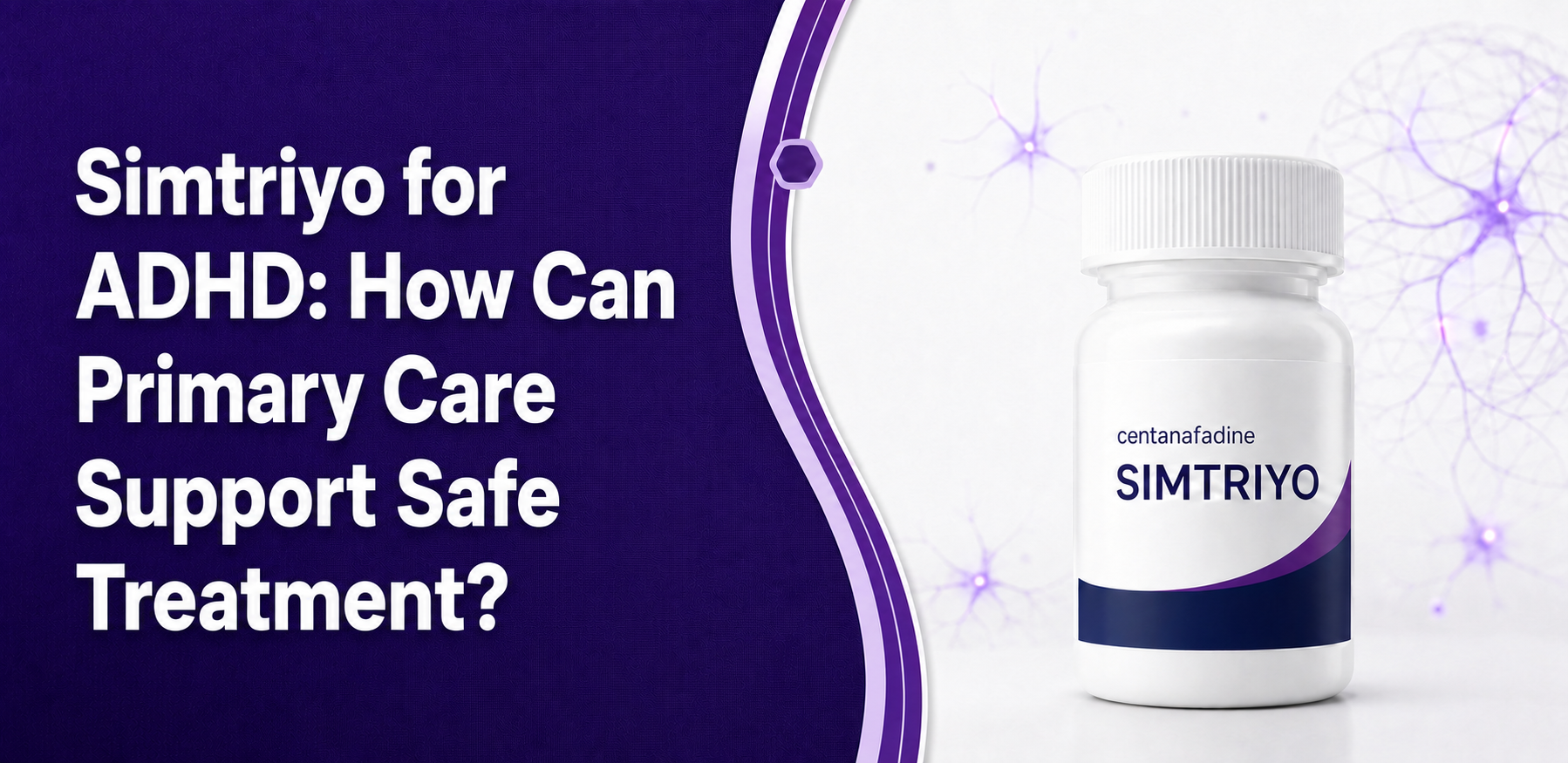
The FDA approved Simtriyo for ADHD on July 24, 2026, giving patients and clinicians another treatment option. Simtriyo contains centanafadine and comes as a once-daily extended-release capsule. The approval covers adults and children aged 6 or older who weigh at least 20 kilograms, or about 44 pounds.
Although Simtriyo uses a new approach, no ADHD medication suits everyone. Age, symptoms, heart health, sleep, other medicines, and previous treatment experiences influence the choice. Therefore, patients need an individualized plan instead of choosing medicine from headlines.
Concerned About Possible ADHD Symptoms?
If trouble focusing, impulsive behavior, or restlessness affects your work, school, or relationships, a primary care evaluation can help identify possible causes and guide the next step.
Key Takeaways
Simtriyo is a once-daily stimulant for eligible adults and children with ADHD.
It increases norepinephrine, dopamine, and serotonin availability in the brain.
Four Phase 3 trials found greater symptom improvement than placebo.
Boxed warnings cover pediatric suicidal thoughts, misuse, and addiction.
Primary care supports evaluation, medication review, and ongoing monitoring.
What Is Simtriyo and How Does It Work?
Simtriyo for ADHD is the brand name for centanafadine, a central nervous system stimulant. Unlike many established stimulants, it belongs to a new class called norepinephrine, dopamine, and serotonin reuptake inhibitors, or NDSRIs.
Nerve cells release chemical messengers and later take some back up. Centanafadine limits that reuptake, leaving more norepinephrine, dopamine, and serotonin available in pathways linked with attention and behavior.
Norepinephrine supports alertness, dopamine contributes to motivation and self-control, and serotonin influences mood.
However, this triple-action mechanism does not prove that Simtriyo for ADHD works better than other medicines. Researchers do not fully understand how it reduces symptoms.
How Is Simtriyo Different From Other ADHD Medications?
Treatment category | Neurotransmitters targeted | Important consideration |
Simtriyo (centanafadine) | Norepinephrine, dopamine, and serotonin | Offers a different mechanism as the first approved NDSRI for ADHD |
Amphetamine medications | Mainly dopamine and norepinephrine | Includes established stimulant options such as Adderall and Vyvanse |
Methylphenidate medications | Mainly dopamine and norepinephrine | Includes medications such as Ritalin and Concerta |
Nonstimulant medications | Varies by medication | May suit some patients who cannot tolerate stimulants |
What Did the Simtriyo Clinical Trials Find?
FDA approval relied on four Phase 3 studies involving children, adolescents, and adults. Across those trials, centanafadine reduced standard ADHD symptom scores more than placebo. Some improvement appeared during the first week.
Nevertheless, placebo-controlled results cannot tell patients whether Simtriyo for ADHD will outperform another medicine. Not every tested dose produced the same result, and individual responses can vary. Follow-up will show how benefits and side effects develop outside controlled studies.
Could Another Health Problem Be Causing ADHD-Like Symptoms?
Difficulty concentrating does not always mean ADHD. Several health or lifestyle concerns can cause similar symptoms, including:
Anxiety or depression
Chronic stress
Substance use
Medication side effects
Hearing or vision problems
Learning difficulties
Primary care offers a valuable starting point. A provider can:
Review when the symptoms began
Identify where and how often they occur
Assess their effect on school, work, and daily life
Review medications and medical history
Perform relevant examinations or testing
Check for other physical or mental-health conditions
Recommend treatment or specialist care when appropriate
This whole-person approach can identify the underlying cause and prevent treatment from focusing on only one symptom.
What Are the Common Side Effects and Serious Warnings?
Common Side Effects
Children need regular height, weight, and appetite monitoring.
Boxed Warnings
Suicidal thoughts or behaviors in children
Abuse, misuse and addiction
Overdose risk when misused
Other Serious Risks
Increased blood pressure or heart rate
New psychiatric symptoms
Circulation problems
Severe allergic reactions
New or worsening tics
Report sudden mood or behavioral changes immediately. Take Simtriyo only as prescribed, store it securely, and never share it.
Simtriyo Use and Safety Guide
Category | Key information |
When to take it | Take Simtriyo once every morning, with or without food, exactly as prescribed. |
Capsule instructions | Swallow the capsule whole. Do not crush or chew the granules. |
Who should avoid it? | Do not use it with a centanafadine allergy, pheochromocytoma, or MAOI use within the past 14 days. |
Safety precautions | Report health conditions and medications, and avoid alcohol for two hours after taking Simtriyo. |
When Should You Discuss ADHD Symptoms With a Primary Care Provider?
Consider an appointment when inattention, disorganization, impulsivity, or restlessness repeatedly affects work, education, relationships, or safety. Frequent missed deadlines, unfinished tasks, lost items, and difficulty following conversations may justify evaluation.
Occasional distraction happens to everyone. However, ADHD symptoms usually form a persistent pattern, interfere with more than one area of life, and trace back to childhood. A provider can help distinguish that pattern from temporary stress or another health concern.
Considering Simtriyo for ADHD?
A primary care provider can review your symptoms, heart health, medications, and possible treatment risks.
Book an Appointment →What Happens During a Primary Care ADHD Evaluation?
The provider may review symptoms, childhood experiences, school or employment difficulties, sleep, mood, medications, substance use, and family history. Validated questionnaires can support the assessment, although an online quiz cannot confirm ADHD.
Additionally, the visit may include an examination, blood-pressure measurement, and relevant checks. Reports from parents, partners, or teachers may add context. If the diagnosis remains uncertain, primary care can coordinate partners with behavioral health specialists.
How Does Primary Care Monitor Simtriyo for ADHD?
Follow-up visits should measure symptoms. A primary care provider can track blood pressure, heart rate, appetite, weight, sleep, mood, behavior, tics, and daily functioning. For children, monitoring also includes height and growth.
Meanwhile, honest conversations about missed doses, side effects, and possible misuse help protect the patient. If benefits remain limited or risks increase, the clinician can reconsider the dose, treatment choice, or need for specialist input.
Need an ADHD medication review? Passion Health Advanced Primary Care can review symptoms, cardiovascular health, mental-health history, and current medicines while coordinating additional care when appropriate.
How Does Primary Care Help Choose an ADHD Treatment?
Primary care connects ADHD treatment goals with whole-person health. Before recommending treatment, a provider may consider:
Age and body weight
Heart health and blood pressure
Sleep quality
Appetite and growth
Mental-health history
Substance-use history
Current medications and possible interactions
Previous treatment response
Personal treatment goals
Medication is only one part of ADHD care. Additional support may include:
Behavioral therapy or counseling
Consistent daily routines
Sleep and lifestyle guidance
School accommodations
Workplace strategies
Family education and support
Coordination with behavioral-health specialists
Shared decision-making helps patients, families, and clinicians compare the expected benefits, possible side effects, and risks of each treatment option.
How Can Primary Care Support ADHD Beyond Medication?
Primary Care Support Beyond Medication
Behavioral therapy and counseling
Sleep and lifestyle guidance
Support for anxiety, depression or substance use
School accommodations and structured routines for children
Calendars, reminders and workplace strategies for adults
Regular exercise, sleep and balanced meals
Follow-up visits to review progress and personal goals
Treatment adjustments based on daily functioning
These strategies support ADHD care but do not replace appropriate medical treatment.
When Should You Contact a Provider or Seek Emergency Care?
Contact the prescriber about persistent appetite loss, weight changes, insomnia, headaches, new tics, mood changes, or painful, numb, or discolored fingers and toes. Also report concerning blood-pressure or heart-rate readings.
Seek emergency help for suicidal thoughts or actions, chest pain, fainting, seizures, severe breathing trouble, facial or throat swelling, hallucinations or extreme mania. High fever, confusion, rapid heartbeat,t and muscle stiffness may signal serotonin syndrome and require immediate care.
Final Takeaway: Create a Long-Term ADHD Care Plan
Simtriyo for ADHD introduces a distinct triple-reuptake approach, yet safe treatment still starts with an accurate diagnosis and personalized decisions. Ongoing monitoring matters because response, side effects, and daily needs can change.
If ADHD symptoms affect your work, education, or relationships, schedule an evaluation at Passion Health Advanced Primary Care.
Our North Texas primary care team can explore possible causes, review treatment safety, and coordinate behavioral-health or specialist care when needed.
Our Primary Care Locations
Frequently Asked Questions
1. Is Simtriyo a stimulant?
Yes. Simtriyo for ADHD is a central nervous system stimulant with a different mechanism from traditional amphetamine-based medicines.
2. Can adults take Simtriyo?
Yes. The approval includes adults with ADHD, although individual health factors determine suitability.
3. Can children take Simtriyo?
Eligible children must be at least 6 years old and weigh at least 20 kilograms. A clinician should evaluate risks carefully.
4. How quickly may Simtriyo work?
Clinical trials observed improvement as early as week one. However, timing and results vary.
5. Is Simtriyo better than Adderall or Ritalin?
Current evidence cannot answer that question. Researchers have not conducted direct head-to-head trials that establish superiority.

About the Author
Dr. Anantha Chentha is a board-certified internal medicine physician with extensive experience in primary care and chronic disease management. He provides comprehensive, patient-centered care with a focus on prevention, accurate diagnosis, and long-term health management.
View Provider Profile →