

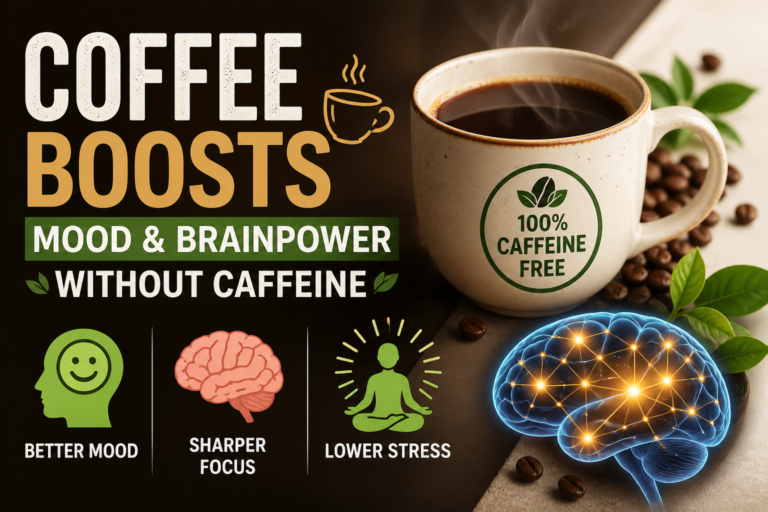
You drink coffee to wake up. But what if your daily cup does something deeper—steadying your mood, sharpening your thinking, and helping your body handle stress more effectively—even when caffeine isn’t the reason?
Clinicians see many patients who struggle with low energy, brain fog, and constant stress, and many of them rely on caffeine for a quick fix.
Recent research has explored how coffee may affect mood and brain function beyond caffeine, including through gut pathways. The evidence is still developing.
Here is what the research suggests and how to use coffee more thoughtfully.
Does Coffee Boost Mood and Brainpower Without Caffeine?
Key takeaways
- Research on coffee, mood, and brain fog is promising but still developing, and many findings show associations rather than proof.
- Some studies suggest coffee’s effects may involve gut-brain pathways, though this is not fully established.
- Decaf contains much less caffeine and may be a useful option for people sensitive to stimulants.
- Moderate intake, often about 2–3 cups a day, is the range most often discussed, but individual needs vary.
- Persistent brain fog, fatigue, or stress should be evaluated by a clinician rather than treated with coffee alone.
On this page
- Does Coffee Boost Mood and Brainpower Without Caffeine?
- What Does the Research Show?
- How the Gut-Brain Axis May Be Involved
- Mood, Stress, and Focus: What People Often Report
- The Case for Decaf Coffee
- How Much Coffee Is Right for You?
- When Should You Drink Coffee?
- When Coffee Doesn’t Help
- Why This Matters
- Final Takeaway
- Take Control of Your Health
- Frequently Asked Questions
Most people think caffeine drives coffee’s benefits. That idea is incomplete.
Coffee contains many bioactive compounds, including:
- Polyphenols that may reduce inflammation
- Antioxidants that may help protect cells
- Natural acids that may support metabolism and gut health
Researchers are studying how these compounds interact with the gut microbiome, which may influence brain function.
One proposed pathway works like this:
- Coffee may feed beneficial gut bacteria
- Some of these bacteria may produce neuroactive compounds
- These signals may influence mood and stress
This gut-brain communication may help explain why some people feel calmer or clearer after drinking coffee, including decaf.
Coffee’s effects on mood and brain function may not depend only on caffeine, though the gut pathway is still being studied.
What Does the Research Show?
Some recent large observational studies have examined how coffee intake relates to stress, mood, and cognition. These studies show associations, not proof that coffee causes these effects.
Reported findings include:
- Some studies associate 2–3 cups of coffee daily with lower reported stress
- Both caffeinated and decaf coffee were linked to mental health benefits in some analyses
- Some analyses found better cognitive performance among coffee drinkers
- Some findings suggested benefits may persist without caffeine, but evidence is limited
How the Gut-Brain Axis May Be Involved
The gut-brain axis connects the digestive tract and brain through nerves, hormones, and immune signals.
Coffee may influence this system.
Proposed steps in this pathway include:
- It may feed beneficial gut bacteria
- These bacteria may produce compounds that affect brain chemistry
- Your brain may receive signals that influence mood and stress response
This may help explain why coffee can affect how people feel, even without caffeine.
Think of it this way: a healthy gut may support a more balanced mood.
Mood, Stress, and Focus: What People Often Report
Patients who drink moderate amounts of coffee sometimes describe the following patterns:
Better Mood Stability
You may feel more balanced throughout the day. Fewer emotional dips. Less irritability.
Reduced Stress Response
Some research suggests coffee may influence cortisol, a stress hormone, though results vary.
Improved Focus and Clarity
Some people find tasks easier to manage and notice better attention, especially in the morning.
Steadier Mental Energy
Unlike energy drinks, plain coffee may provide a steadier cognitive lift, especially without added sugar.
The Case for Decaf Coffee
Decaf is often overlooked, but it still contains many of the same compounds.
Decaf still contains:
- Antioxidants
- Anti-inflammatory compounds
- Plant compounds that may support gut health
For people sensitive to caffeine, decaf can be a useful option because it contains much less caffeine, which may reduce:
Increased anxiety
Heart palpitations
For many people, decaf can be a reasonable choice rather than a compromise.
Need care for this?
A Passion Health clinician can see you in person or online.

In person
Book an in-person visit with a Passion Health Primary Care provider if stress, fatigue, or brain fog persist. You can book at any of our locations.
Choose your clinic and clinician across North Texas
Book an appointment in person at Passion Health clinics
Online
Bring a list of your daily caffeine and coffee intake, sleep patterns, and any medications so your visit can focus on the causes of your symptoms. For non-emergency questions, you can get care online through Passion Health Online Care.
Adults 18 and older in Texas · Texas-licensed clinicians
Get the right care in a few steps
Blood work
Blood tests can check thyroid function, blood sugar, vitamin levels, and other factors that may contribute to fatigue or brain fog.
Essential Blood Work · $59
Get Passion Health Blood WorkHow Much Coffee Is Right for You?
More coffee does not necessarily mean better results, and too much can backfire.
Many studies point to a moderate range of about 2–3 cups per day, though individual needs vary.
- 2–3 cups per day: often associated with the most favorable findings in studies
- Excess intake: may increase stress and sleep problems
Drinking more than this range may lead to:
Restlessness
Poor sleep
Increased anxiety
Balance matters. Coffee should support your system—not overwhelm it.
When Should You Drink Coffee?
How you drink coffee affects how it works in your body.
Helpful timing tips include:
- Drink coffee after your first meal, not immediately after waking
- Limit coffee late in the day, including decaf, if you are sensitive to it
- Pair coffee with protein or fiber, which may help steady blood sugar
These small adjustments may help your body handle coffee more comfortably.
When Coffee Doesn’t Help
Coffee is not a solution for every problem, and persistent symptoms should be evaluated.
If you experience:
Chronic anxiety
Severe fatigue
Ongoing brain fog
Coffee alone will not fix the issue. These symptoms often point to deeper concerns, such as:
Hormonal imbalance
Poor sleep quality
Nutritional deficiencies
Chronic stress overload
Coffee can support recovery, but it cannot replace proper medical care.
Why This Matters
Many people look for simple daily habits that support emotional well-being.
Coffee is one habit many people turn to, but it should not replace a broader plan.
The key distinction:
- Coffee may support mood and cognition
- It does not replace medical care when needed
If you struggle with chronic stress, anxiety, or depression, a comprehensive approach works best, not dietary changes alone.
Final Takeaway
Coffee is a familiar beverage with emerging research into its effects on mood and brain function. Some evidence suggests it may help some people think more clearly and manage stress, though more research is needed.
The main point: coffee’s effects may not depend on caffeine alone, but more research is needed.
Moderation, quality, and timing make all the difference.
Take Control of Your Health
If you have ongoing stress, brain fog, or low energy, speak with a clinician rather than waiting. Persistent symptoms can signal underlying health issues.
At Passion Health Physicians, we take a whole-body approach—combining lifestyle guidance, preventive care, and personalized treatment plans.
Frequently Asked Questions
Is decaf coffee actually useful?
Yes. Decaf contains many of the same compounds with much less caffeine.
Can coffee replace sleep?
No. Coffee may improve alertness, but your brain still requires proper rest for recovery and memory function.
Is coffee addictive?
Caffeine can create mild dependence, but moderate intake remains safe for most healthy adults.