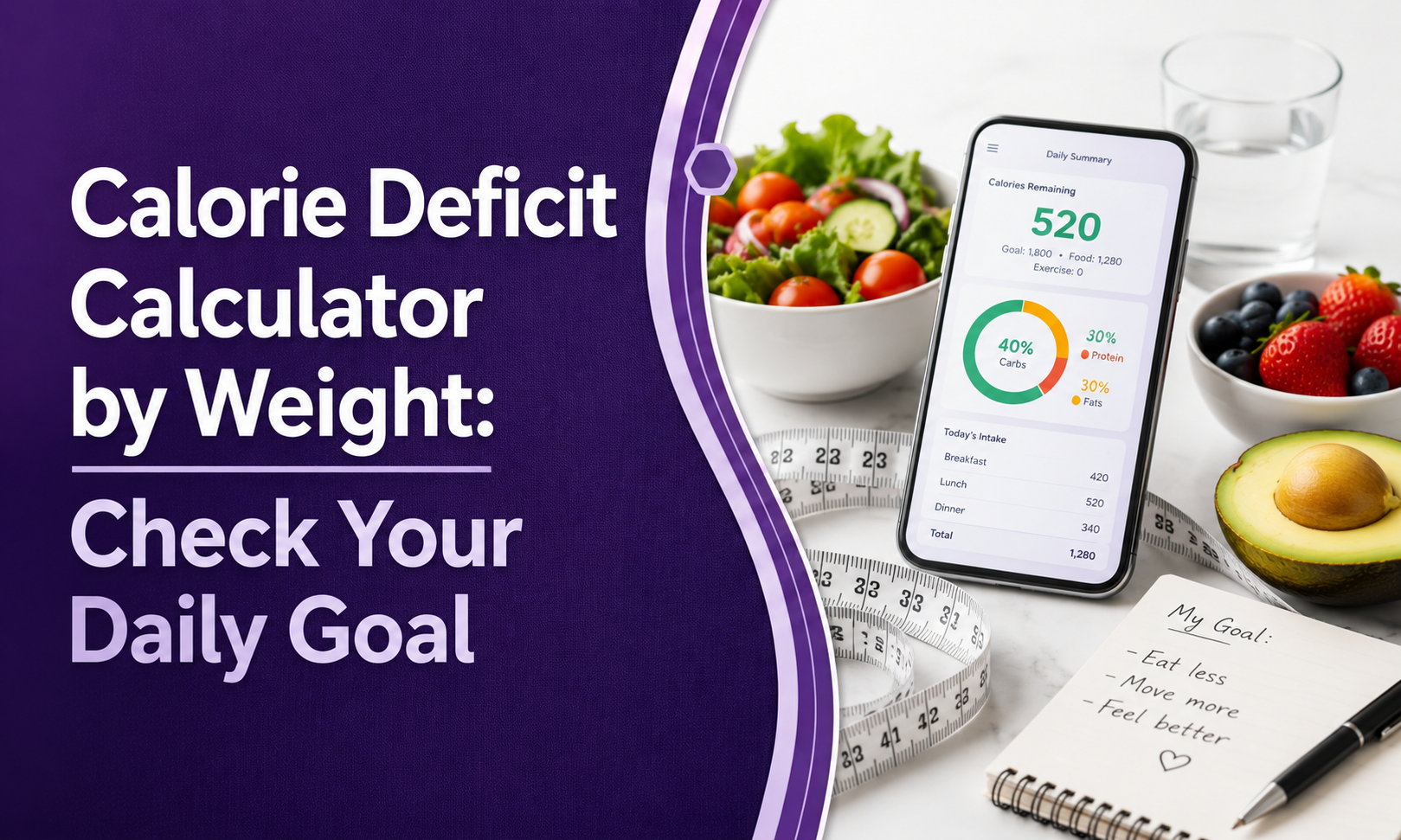
Calorie Deficit Calculator by Weight
Estimate your daily calories for weight loss using age, height, weight, sex, activity level, and goal.
Enter Your Details
Your Results
Maintenance Calories
Calories per day to maintain your current weight.
Weight Loss Calories
Enter your details to see your calorie deficit target.
Need help choosing a safe weight loss plan?
Passion Health Advanced Primary Care can help you understand your calorie needs, weight goals, and health risks with doctor-guided care.
Book an AppointmentHow the Calorie Deficit Calculator by Weight Works
Trying to lose weight without knowing your daily calorie target can feel confusing.
A calorie deficit calculator by weight gives you a clear starting point by estimating how many calories your body may need each day to maintain weight and how many calories you may need to reduce for gradual weight loss.
A calorie calculator usually uses age, height, weight, sex, and activity level to estimate daily calorie needs.
Mayo Clinic’s calorie calculator also warns that calorie estimates may not fit pregnancy, breastfeeding, competitive athletes, or people with metabolic diseases such as diabetes.
Ready to lose weight safely? Use our calorie deficit calculator by weight to estimate your daily calorie goal, then get doctor-guided support from Passion Health Advanced Primary Care. Book an Appointment today
What Is a Calorie Deficit Calculator by Weight?
A calorie deficit calculator by weight estimates your daily calorie needs based on your current body weight and other details. Then it shows a lower calorie target for weight loss.
Your body burns calories for breathing, digestion, movement, body temperature, and daily activity. When you eat fewer calories than your body uses, your body starts using stored energy. That gap is called a calorie deficit.
For example, if your body needs 2,200 calories to maintain your current weight and you eat 1,700 calories, your daily deficit is about 500 calories.
Why Weight Matters in Calorie Calculation
Body weight strongly affects daily calorie needs. A person with a higher body weight usually burns more calories at rest because the body needs more energy to support basic functions. A smaller body often needs fewer calories.
That is why a calorie deficit calculator by weight gives a better estimate than guessing. It connects your calorie goal to your actual body size instead of giving the same number to everyone.
The Mifflin-St Jeor equation often helps estimate resting metabolic rate. Research has found it more reliable than several older equations for many adults with and without obesity.
How the Calorie Deficit Calculator by Weight Works
A good calorie deficit calculator by weight uses these details:
Input | Why it Matters |
Age | Metabolism Often changes with age |
sex | Men and women usually have different calorie needs |
Height | Taller bodies often need more energy |
Weight | Taller bodies often need more energy |
Activity level | Movement changes daily calorie needs |
Goal | Your deficit depends on how fast you want to lose weight |
The calculator first estimates maintenance calories. Maintenance calories mean the number of calories you may need to keep your current weight. Then it subtracts your selected deficit, such as 250, 500, or 750 calories per day.
What Is a Safe Calorie Deficit?
Many adults start with a moderate deficit of about 300 to 500 calories per day. Mayo Clinic says cutting about 500 calories a day may lead to about ½ to 1 pound of weight loss per week, but results can vary based on body size, sex, activity level, and weight goal.
A very large deficit may look attractive, but it can backfire. You may feel tired, hungry, weak, or irritated. Some people also lose muscle when they cut calories too hard and skip protein or strength training.
Use a calorie deficit calculator by weight as a guide, not a strict rule. Your real progress depends on food quality, sleep, stress, exercise, hormones, medicines, and medical history.
Calorie Deficit Guide
Goal | Daily Deficit | Expected Pace |
Slow weight loss | 250 calories | About 0.5 lb/week |
Steady weight loss | 500 calories | About 1 lb/week |
Faster weight loss | 750 calories | About 1.5 lb/week |
Aggressive weight loss | 1000 calories | Need medical guidance |
A calorie deficit calculator by weight can show these targets quickly, but you should choose the goal that fits your health, energy, and lifestyle.
Who Should Be Careful With Calorie Deficit Calculators?
Some people should not follow calculator results without medical advice.
Talk to a doctor first if you have diabetes, thyroid disease, kidney disease, heart disease, breastfeeding, or major weight changes.
People taking diabetes medicines also need extra care because calorie changes can affect blood sugar. A sudden calorie drop may increase the risk of low blood sugar in some cases.
Passion Health Advanced Primary Care can help patients choose a safer plan when weight loss connects with blood pressure, diabetes, cholesterol, fatigue, or medication use.
How to Use a Calorie Deficit Calculator by Weight Correctly
Start with accurate details. Enter your real age, height, weight, sex, and activity level.
Many people overestimate exercise, so choose the activity level that matches your normal week.
After you get your result, follow it for 2 to 4 weeks. Track weight, hunger, energy, sleep, and mood.
If your weight does not change, your body may need a small adjustment. If you feel weak or overly hungry, your deficit may feel too aggressive.
The National Institute of Diabetes and Digestive and Kidney Diseases offers a body weight planner that creates personalized calorie and activity plans for reaching and maintaining a goal weight.
Best Foods for a Calorie Deficit
A calorie deficit calculator by weight gives you the number, but food choices decide how easy that number feels.
Focus on:
Lean protein such as eggs, chicken, fish, Greek yogurt, tofu, or beans
High-fiber foods such as vegetables, berries, oats, lentils, and whole grains
Healthy fats from nuts, seeds, avocado, and olive oil
Water instead of sugary drinks
Simple meals you can repeat during busy days
Protein and fiber help you stay full. A balanced plate also reduces the urge to snack heavily at night.
Common Mistakes to Avoid
Many people use a calorie deficit calculator by weight once and expect perfect results. That approach causes frustration. Your result is only an estimate.
Avoid these mistakes:
Choosing “very active” when you sit most of the day
Cutting calories too low
Ignoring protein
Drinking high-calorie coffee, soda, or alcohol
Skipping meals and overeating later
Checking weight daily and panicking over water changes
Forgetting strength training
Small, steady changes usually work better than extreme plans.
When to See a Doctor
See a doctor if you gain weight without a clear reason, feel tired all the time, struggle with cravings, have uncontrolled diabetes, or cannot lose weight despite a consistent plan.
Medical issues such as thyroid disease, insulin resistance, sleep apnea, depression, or certain medicines can affect weight.
A calorie deficit calculator by weight can support your journey, but it cannot diagnose health problems. Doctor-guided care helps you understand the reason behind weight gain and choose a plan that matches your body.
Final Thoughts
A calorie deficit calculator by weight gives you a smart starting point for weight loss. It helps you estimate maintenance calories, choose a daily deficit, and set a realistic goal.
Do not chase the lowest calorie number. Choose a target that supports energy, nutrition, sleep, and long-term consistency.
Need help choosing a safe weight loss plan? Passion Health Advanced Primary Care can help you understand your calorie needs, weight goals, and health risks with doctor-guided care.
FAQs
1. What is a calorie deficit calculator by weight?
A calorie deficit calculator by weight estimates how many calories you may need daily to lose weight based on your body weight, height, age, sex, activity, and goal.
2. How much calorie deficit is safe?
A 300 to 500 calorie daily deficit is a common starting point for many adults. Larger deficits need medical guidance.
3. Can I lose weight with a 500-calorie deficit?
Yes, a 500-calorie deficit may support steady weight loss for many people, but results can vary by body size, activity, sleep, and health conditions.
4. Is this calculator accurate for everyone?
No. It gives an estimate only. It may not fit for planning a baby, diabetes, thyroid problems, athletes, or people with medical conditions.
5. When should I see a doctor for weight loss?
See a doctor if you have diabetes, high blood pressure, thyroid disease, fatigue, sudden weight gain, or trouble losing weight despite healthy changes.