
West Nile Virus Symptoms After a Mosquito Bite: When a Small Bite Turns Risky
A mosquito bite may look small, but it can sometimes raise bigger health questions.
Most bites cause itching and mild swelling. However, a bite from an infected mosquito can spread West Nile virus.
That risk makes many people ask one important question: when should symptoms cause concern?
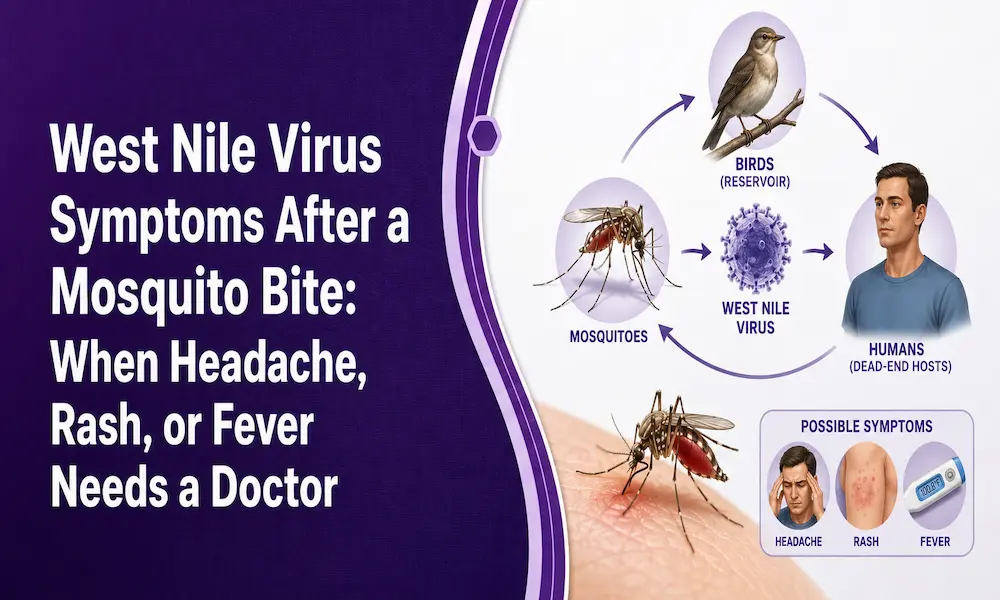
West Nile virus symptoms after a mosquito bite can range from no symptoms at all to fever, body aches, rash, weakness, or, in rare cases, serious nervous system problems.
Many people recover without major issues, but warning signs need fast medical attention.
If fever, rash, unusual weakness, or severe headache starts after mosquito exposure, Passion Health Advanced Primary Care can review symptoms and guide the next step.
Patients looking for primary care in Frisco, Irving, Plano, Prosper, Anna, Aubrey, Flower Mound, Ennis, Kaufman, and Kemp.
What Is West Nile Virus?
West Nile virus usually reaches people through the bite of an infected mosquito. Mosquitoes usually pick up the virus from infected birds. Then, the mosquito can pass the virus to a person through a bite.
The illness does not usually spread from person to person through casual contact. Hugging, touching, coughing, or sitting near someone with the virus does not cause infection.
West Nile virus often appears more often during mosquito season, especially in warm months. Outdoor evenings, standing water, and heavy mosquito activity can increase exposure.
Therefore, people who spend time near yards, parks, lakes, gardens, or patios should watch for symptoms after bites.
West Nile Virus Symptoms After a Mosquito Bite: What to Watch For
West Nile virus symptoms after a mosquito bite usually start within 2 to 6 days. In some cases, symptoms may take up to 14 days. People with a weaker immune system may notice symptoms later.
Many infected people never feel sick. Others develop symptoms that feel similar to a flu-like illness.
Common West Nile virus symptoms after a mosquito bite may include:
Fever
Body aches
Tiredness
Vomiting
Diarrhea
Swollen lymph nodes
Pain behind the eyes
These symptoms can confuse patients because they look like many common infections. However, recent mosquito exposure gives an important clue.
A mild case may improve with rest, fluids, and symptom care. Still, symptoms that feel stronger than a normal viral illness deserve a medical check, especially when fever and weakness continue.
Why Some People Do Not Notice Symptoms
A large number of people with West Nile virus may not know they have it because no symptoms appear. That can create false comfort because a person may never know an infection happened.
However, the absence of symptoms does not mean mosquito protection should stop. Mosquitoes can carry different infections, and bite prevention remains the best defense.
West Nile virus symptoms after a mosquito bite matter most when the body reacts with fever, rash, body pain, stomach symptoms, or nervous system changes.
A primary care visit can help separate mild illness from signs that need urgent evaluation.
Warning Signs of Severe West Nile Virus Symptoms
Severe illness from West Nile virus remains uncommon, but it can affect the brain, spinal cord, and nerves. This type of illness can become dangerous.
Do not ignore these warning signs:
High fever
Severe headache
Neck stiffness
Confusion
Tremors
Muscle weakness
Trouble walking
Vision changes
Seizures
Paralysis
Extreme sleepiness or trouble staying alert
These symptoms need urgent medical care. A severe headache with fever and neck stiffness deserves special attention.
Confusion, weakness, tremors, or numbness can point to nervous system involvement.
West Nile virus symptoms after a mosquito bite should not create panic, but they should create action when the body sends clear warning signals.
Who Has a Higher Risk of Serious Illness?
Anyone can get West Nile virus after an infected mosquito bite. Yet some people face a higher risk of severe disease.
Risk can increase with:
Age over 60
High blood pressure
Organ transplant history
Medicines that weaken the immune response
For these patients, early symptom review matters. A fever that seems mild at first can still deserve a closer look when risk factors exist.
Primary care doctors understand how chronic conditions change infection risk. They can review medications, hydration status, blood pressure, fever pattern, and warning signs during the visit.
West Nile Virus Symptoms After a Mosquito Bite or a Regular Bug Bite?
A normal mosquito bite usually causes itching, redness, and a small bump. The skin may feel irritated for a few days. That alone does not mean West Nile virus.
The concern rises when body-wide symptoms begin after mosquito exposure. Fever, headache, body aches, rash, vomiting, diarrhea, or deep fatigue can suggest more than a local skin reaction.
The easiest way to compare them is to break the symptoms into three levels:
Local bite reaction
Itching, mild swelling, redness, and skin irritation near the bite.
Possible viral illness
Fever, headache, body aches, rash, stomach upset, or unusual tiredness.
Possible severe illness
High fever, stiff neck, confusion, tremors, weakness, numbness, seizure, or trouble walking.
This difference helps patients decide when to rest, when to call a doctor, and when to seek urgent care.
How Doctors Check West Nile Virus Symptoms After a Mosquito Bite
A doctor starts with questions. Recent mosquito bites, outdoor exposure, travel, fever timeline, rash, stomach symptoms, and weakness all matter.
After reviewing symptoms, the doctor may check temperature, blood pressure, skin changes, and muscle strength. The exam may include temperature, blood pressure, hydration check, skin review, and a basic nerve and muscle check.
Testing depends on symptom severity. Mild symptoms may not need special testing.
However, serious symptoms may require lab tests. In severe cases, doctors may check blood or spinal fluid for signs of West Nile virus or other infections.
Doctors may also consider other causes because fever and body aches can come from many illnesses.
This step protects the patient from missing another condition that needs different care.
Treatment for West Nile Virus Symptoms
No specific antiviral medicine cures West Nile virus. Treatment focuses on comfort, hydration, fever control, and close monitoring.
For mild West Nile virus symptoms after a mosquito bite, a provider may recommend:
Rest
Fluids
Fever or pain relief guidance
Monitoring symptoms
Follow up if weakness or fever continues
Patients should not guess with medications, especially if they have kidney disease, liver disease, stomach ulcers, blood pressure concerns, or take blood thinners. A primary care doctor can suggest safer options based on health history.
Severe illness may need hospital care. Doctors may monitor breathing, hydration, seizures, brain inflammation, and nerve weakness. Fast evaluation can make a major difference when symptoms affect the nervous system.
How to Prevent West Nile Virus
Prevention starts before the bite. Since no licensed human vaccine prevents West Nile virus, mosquito control matters.
Use these steps:
Apply EPA-registered insect repellent before outdoor time.
Wear long, loose-fitting shirts and pants outside.
Avoid dusk and dawn outdoor exposure when mosquitoes are active.
Use screens on windows and doors.
Remove standing water from buckets, pots, gutters, toys, and birdbaths.
Keep grass and yard areas maintained.
Use air conditioning when available.
Standing water gives mosquitoes a place to breed. Even a small amount of water can become a problem after rain or lawn watering. Therefore, weekly yard checks can reduce mosquito activity around the home.
When to See a Primary Care Doctor
Book a primary care visit if West Nile virus symptoms after a mosquito bite include fever, rash, body aches, vomiting, diarrhea, swollen glands, or weakness that does not improve.
Patients with diabetes, high blood pressure, kidney disease, cancer history, immune concerns, or older age should take symptoms more seriously. These risk factors can change how illness affects the body.
A doctor can help answer key questions:
Does this look like a mild viral illness?
Do symptoms suggest dehydration?
Does the patient need lab testing?
Are warning signs present?
Could another infection cause these symptoms?
What symptoms should trigger urgent care?
Clear answers can reduce worry and help the patient act at the right time.
Final Takeaway
West Nile virus symptoms after a mosquito bite can feel mild, confusing, or serious, depending on how the body responds. Most people do not develop symptoms.
Some get fever, headache, body aches, stomach upset, or rash. A small number develop serious nervous system symptoms.
The safest approach stays simple: prevent mosquito bites, watch symptoms after exposure, and do not ignore high fever, stiff neck, confusion, tremors, weakness, numbness, or seizures.
If mosquito bites lead to fever, rash, body aches, or unusual weakness, Passion Health Advanced Primary Care can help with symptom review, risk checks, and next-step guidance.
FAQs
1. What are the first West Nile virus symptoms after a mosquito bite?
Early symptoms may include fever, headache, body aches, tiredness, rash, vomiting, diarrhea, or joint pain.
2. How soon do West Nile virus symptoms start?
Symptoms often start 2 to 6 days after an infected mosquito bite. For some people, symptoms can appear later, even close to 14 days after exposure.
3. Does every mosquito bite cause West Nile virus?
No. Most mosquito bites do not cause West Nile virus. The risk comes from mosquitoes that carry the virus.
4. When should I see a doctor for West Nile virus symptoms?
See a doctor if fever, rash, weakness, vomiting, diarrhea, severe headache, or unusual tiredness starts after mosquito exposure.
5. Can West Nile virus go away on its own?
Mild cases may improve with rest, fluids, and symptom care. Severe symptoms like confusion, stiff neck, tremors, or weakness need urgent medical care.