
Can GLP-1 Drugs Reduce Asthma Attacks?
An asthma attack can start with a small cough, chest tightness, or mild wheezing. Then, suddenly, breathing feels harder.
For many patients, that moment creates fear, panic, and urgency. Asthma does not always stay quiet, especially when weight concerns, inflammation, diabetes risk, allergies, or poor medication control affect the body.
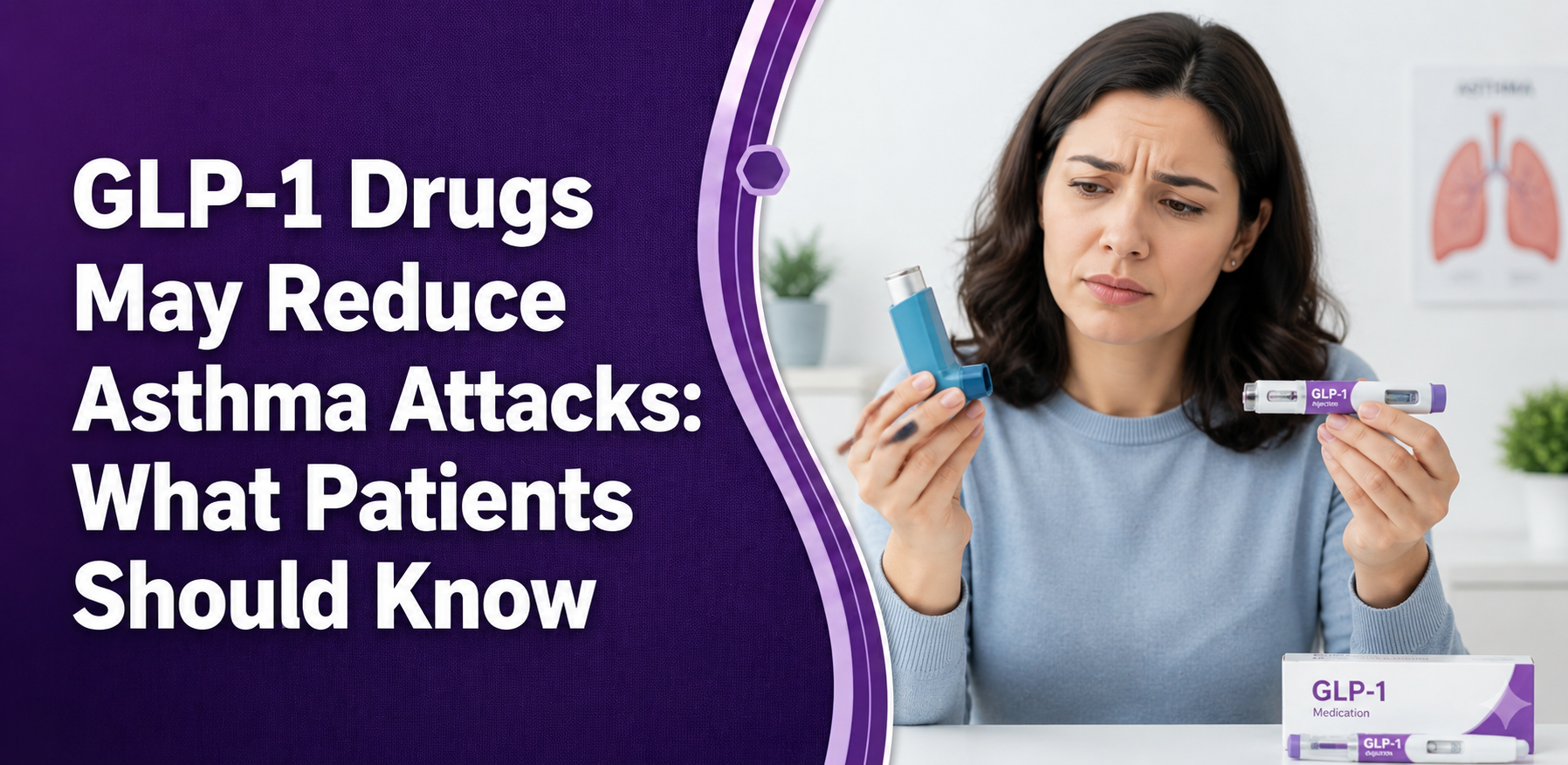
Now, new research has brought attention to an important question: GLP-1 Drugs May Reduce Asthma Attacks in some patients with Higher weight
This sounds promising, but patients need clear guidance. GLP-1 medications are not asthma medicines.
Doctors commonly use them for type 2 diabetes and weight management, not as a direct asthma treatment.
Still, this topic matters. If weight affects breathing, and GLP-1 medications support weight loss in the right patient, asthma control may improve for some people.
At Passion Health Advanced Primary Care, patients can discuss asthma symptoms, weight concerns, diabetes risk, and medication safety with a primary care provider.
If breathing problems keep coming back, do not wait for the next scary episode. Book a visit and build a safer care plan early.
What Are GLP-1 Drugs?
GLP-1 drugs are medicines that act like a natural hormone in the body called glucagon-like peptide-1.
This hormone helps control blood sugar, slows digestion, and helps many patients feel full sooner.
Doctors use GLP-1 receptor agonists for type 2 diabetes and obesity care in selected patients.
Some patients know these medications through diabetes or weight loss discussions. However, every medicine has specific rules, possible side effects, and safety limits.
That is why the phrase GLP-1 Drugs May Reduce Asthma Attacks needs careful explanation. The research creates interest, but a provider must decide whether the medicine fits the patient’s health history.
What Research Says: GLP-1 Drugs May Reduce Asthma Attacks?
Recent research discussed by Verywell Health found a possible link between GLP-1 medications and fewer asthma worsening episodes in patients with Higher weight or obesity.
Researchers reviewed TriNetX health data over three years and compared asthma patients who used GLP-1 drugs with patients who did not use them.
The study reported:
14.6% lower asthma attack risk in patients with higher weight
12.2% lower risk in patients with obesity
13.3% lower risk in patients with severe obesity
These results look encouraging. However, they do not prove that GLP-1 drugs directly treat asthma.
Researchers still need more clinical trials. Experts also need to know whether the benefit comes from weight loss, lower inflammation, better metabolic health, or a direct effect on the airways.
This matters because asthma is not currently an FDA-approved reason for GLP-1 prescriptions.
So, the safe message is simple: GLP-1 Drugs May Reduce Asthma Attacks in some patients with weight concerns, but patients should talk to a medical provider before making any medication decision.
How Weight Can Affect Asthma Symptoms?
Weight can affect breathing more than many patients realize. Extra weight may press against the chest and lungs.
It may reduce lung volume and make breathing feel harder during walking, exercise, sleep, or illness.
In addition, Heavy weight can increase inflammation in the body. Asthma also involves airway inflammation. When both problems happen together, asthma may become harder to control.
The National Heart, Lung, and Blood Institute says higher weight can make asthma harder to manage, and even small weight loss may help symptoms.
This is why the topic GLP-1 Drugs May Reduce Asthma Attacks has strong patient interest.
A patient with asthma and weight concerns may want to know whether weight management could help with breathing.
Asthma Attacks Are More Than “Just Wheezing”
Many patients ignore early asthma symptoms. They may think a cough will pass or chest tightness comes from tiredness. However, asthma can worsen quickly.
An asthma attack may cause:
Wheezing
Chest tightness
Shortness of breath
Nighttime coughing
Trouble speaking during breathing difficulty
More frequent rescue inhaler use
Breathing trouble during normal activity
If symptoms keep returning, the asthma plan may need adjustment. A provider may review inhaler technique, triggers, allergies, infections, reflux, sleep problems, and weight-related risks.
Can Weight Loss Help Breathing?
Weight loss may help some patients breathe better. It may reduce pressure on the lungs, improve energy, support better sleep, and lower inflammation.
Even modest weight loss may improve asthma symptoms for some patients, especially when weight makes breathing harder.
However, safe weight loss requires the right plan. A patient may need nutrition guidance, physical activity support, lab testing, diabetes screening, medication review, or chronic care follow-up.
GLP-1 medications may become one option for selected patients. But they are not the only option.
Some patients need lifestyle support first. Others may need diabetes management. Some may need asthma medication changes before any weight loss drug discussion.
That is why GLP-1 Drugs May Reduce Asthma Attacks should lead patients to a medical conversation, not self-treatment.
Are GLP-1 Drugs Safe for Everyone?
No. GLP-1 drugs do not fit every patient. Some people may have nausea, vomiting, diarrhea, constipation, stomach discomfort, or appetite changes.
Others may need extra caution because of pancreas problems, gallbladder disease, kidney concerns, certain thyroid-related risks, or medication interactions.
A primary care provider should review:
Medical history
The provider checks diabetes, prediabetes, obesity-related risks, stomach issues, kidney health, medication history, and family history.
Current symptoms
The provider reviews asthma symptoms, rescue inhaler use, nighttime cough, exercise tolerance, and recent urgent care visits.
Medication safety
The provider checks whether GLP-1 treatment makes sense, whether another option is safer, and whether the patient needs follow-up monitoring.
Insurance and access
Coverage may vary. Since asthma is not an approved indication for GLP-1 medications, insurance may not cover the medicine for asthma alone.
Avoid Unsafe Online GLP-1 Products
Many patients search online after reading headlines like GLP-1 Drugs May Reduce Asthma Attacks.
That can become risky. The FDA has warned consumers about unapproved GLP-1 products sold online for weight loss, including products falsely labeled for research use or not for human consumption.
The FDA says these products may have unknown quality and may harm health.
Patients should avoid buying GLP-1 products from unsafe websites, social media sellers, or non-medical sources.
A lower price can look attractive, but wrong dosing, poor quality, or fake medication can create serious problems.
A safe treatment plan starts with a qualified healthcare provider.
When Should You Talk to a Primary Care Doctor?
Talk to a primary care doctor if you have asthma and any of these concerns:
Asthma attacks happen more often
You use a rescue inhaler more than usual
You wake up coughing or wheezing
Exercise or walking causes breathing trouble
You have weight concerns and asthma symptoms
You have diabetes or prediabetes
You want to know whether GLP-1 treatment is safe for you
You feel unsure about your current asthma plan
How Passion Health Advanced Primary Care Can Help
Passion Health Advanced Primary Care can help patients understand asthma symptoms, weight concerns, diabetes risk, and medication choices in one place.
A provider can review your breathing history, current inhalers, triggers, weight goals, blood sugar levels, and overall health risks. Then, the provider can guide you toward a safer plan.
Care may include:
Asthma symptom review
Your provider can discuss how often symptoms happen, what triggers them, and whether your current plan works well.
Weight management support
Your provider can help you understand whether weight may affect breathing and what steps may support a healthier weight.
Diabetes and prediabetes screening
Because GLP-1 medications often connect with blood sugar and metabolic health, a provider may check diabetes risk before treatment discussions.
GLP-1 medication guidance
Your provider can explain whether GLP-1 treatment may fit your health needs, what risks to consider, and what follow-up you may need.
Chronic care planning
Asthma, obesity, diabetes, and high blood pressure often need regular follow-up. Primary care helps keep those conditions from becoming emergencies.
Final Takeaway
The headline GLP-1 Drugs May Reduce Asthma Attacks sounds powerful, and early research makes the topic worth watching. However, patients need the full truth. GLP-1 drugs are not asthma medicines.
They may help some patients indirectly through weight loss, inflammation changes, or metabolic improvement, but more research must confirm the connection.
Asthma still needs proper treatment. Weight concerns need safe care. GLP-1 medications need medical supervision.
If you have asthma attacks, breathing problems, weight concerns, diabetes, or questions about GLP-1 treatment, book an appointment with Passion Health Advanced Primary Care. Early care can help you breathe easier, reduce confusion, and choose a safer path for your health.
FAQs About GLP-1 Drugs and Asthma Attacks
1. Can GLP-1 drugs treat asthma?
No. GLP-1 drugs are not asthma medicines. Doctors mainly use them for type 2 diabetes and weight management in selected patients. Early research suggests they may be linked with fewer asthma attacks in some people with higher weight or obesity, but more studies are needed.
2. Why may GLP-1 drugs reduce asthma attacks?
Researchers believe the possible benefit may come from weight loss, reduced inflammation, better blood sugar control, or improved overall metabolic health. Since excess weight can make breathing harder and worsen asthma control, weight improvement may help some patients breathe better.
3. Are GLP-1 drugs safe for people with asthma?
Many people with asthma may be able to use GLP-1 drugs if they meet medical criteria, but they are not safe for everyone. A doctor should review medical history, current medications, stomach problems, pancreas or gallbladder history, kidney health, and weight-related risks before starting treatment.
4. Should patients use GLP-1 drugs only to prevent asthma attacks?
No. Patients should not use GLP-1 drugs only for asthma attack prevention. Asthma is not currently the main approved reason for these medicines. Patients with asthma still need proper asthma care, inhaler review, trigger control, and regular medical guidance.
5. When should asthma symptoms concern a patient?
Asthma symptoms need attention when wheezing, chest tightness, coughing, shortness of breath, or rescue inhaler use becomes more frequent. Severe breathing trouble, difficulty speaking, bluish lips, or symptoms that do not improve with rescue medication need urgent medical care.