6 Key Takeaways
- Repeated head impacts. CTE research focuses on repeated head impacts over time.
- Concussion symptoms can be absent. Some head impacts cause no noticeable concussion symptoms.
- Several possible causes. Changes in memory, behavior, or balance can have several causes.
- Limits of testing. No current blood test or brain scan can confirm CTE during life.
- Primary care evaluation. Primary care can evaluate persistent changes and decide whether you need further testing.
- Emergency warning signs. Danger signs after a recent head injury, such as repeated vomiting or trouble waking up, require emergency care. CDC guidance
What Is Chronic Traumatic Encephalopathy and How Is It Diagnosed?
You lose track of a conversation you had yesterday. Later, a familiar task takes more effort than usual. If you took repeated hits to the head years ago, you may wonder whether those experiences have anything to do with the changes you notice today.
Chronic traumatic encephalopathy (CTE) is a brain disease that researchers link to repeated head impacts over time. A specialist can confirm CTE only by examining brain tissue after death. During life, a clinician can evaluate changes in memory, thinking, or behavior and look for possible causes. CDC
If memory changes keep disrupting your routine, book a primary care appointment with Passion Health in North Texas.
How Do Repeated Head Impacts Relate to CTE?
A former football player might remember two diagnosed concussions and also recall taking hits during practice and games over several seasons. Both details matter when describing exposure. Researchers who study CTE consider repeated impacts, including hits that never caused obvious symptoms. They have studied these patterns in contact-sport athletes, boxers, and some military veterans.
Current evidence does not establish that one concussion or occasional hits cause CTE. Researchers also don’t know how common CTE is or who will develop it after years of repeated exposure. If you discuss past hits with your clinician, describe the activities involved, how long you took part, and the injuries you remember.
What Symptoms Have Researchers Reported in People With CTE?
Some people whose autopsies confirmed CTE had trouble remembering recent events, planning tasks, or managing changes in mood or behavior during life. Researchers have also reported walking and balance problems. Since many conditions can cause these changes, describe what has changed and how it affects your day.
Swipe sideways to view the full table.
| Change you notice | What it might look like | What to tell your clinician |
|---|---|---|
| Memory lapses | You ask the same question again shortly after hearing the answer. | When this started and how often it happens. |
| Trouble planning | You miss bills or appointments you previously managed on your own. | Which familiar tasks have become harder and how that affects your routine. |
| Behavior changes | A family member notices that you make impulsive decisions more often. | One specific example and how it differs from your usual behavior. |
| Balance problems | You feel unsteady on walks you used to take comfortably. | When you feel unsteady and whether you’ve fallen or nearly fallen. |
How Do Doctors Confirm CTE?
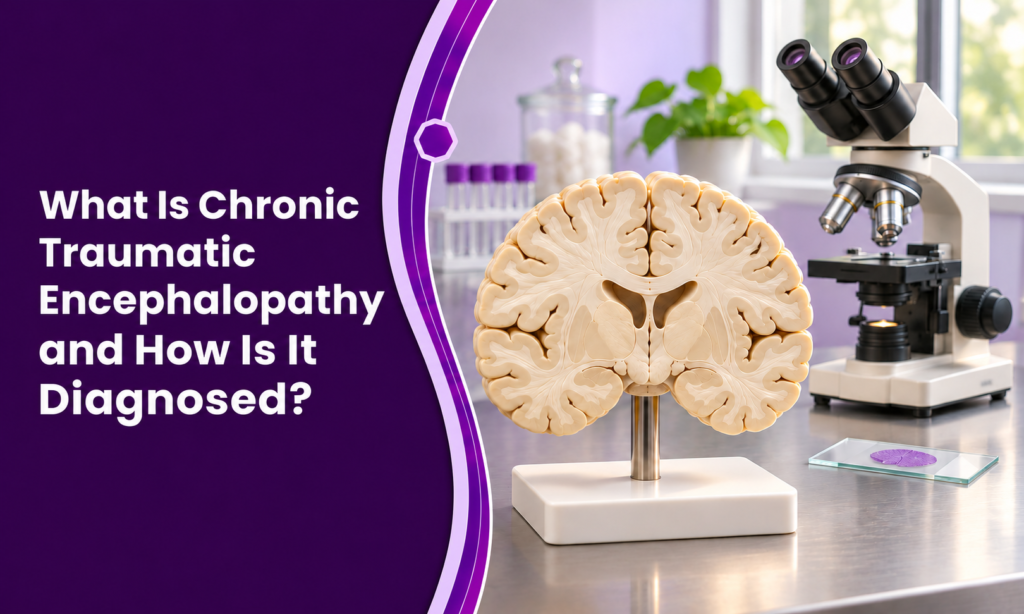
After death, a specialist called a neuropathologist examines brain tissue under a microscope. The specialist looks for a distinctive pattern of abnormal tau protein around small blood vessels in specific areas of the brain. Researchers continue to study whether specialized imaging or other tests could identify CTE during life.
You may also come across traumatic encephalopathy syndrome (TES). Researchers use TES criteria to study worsening problems with thinking or behavior among people with substantial exposure to repeated head impacts. The criteria also call for checking whether another condition explains the symptoms. Meeting TES criteria cannot confirm CTE.
When Should You Seek Medical Care?
Ongoing memory or behavior changes
Schedule a primary care visit if memory problems keep happening, get worse, or interfere with everyday tasks. Bring two or three examples and note when each change started. Mention past head impacts, even if they happened years ago.
Danger signs after a recent head injury
Call 911 or go to the emergency department immediately if any of these signs appear after a recent head injury:
Repeated vomiting or a headache that worsens and won’t go away
Increasing confusion, unusual behavior, or trouble recognizing familiar people or places
A seizure, slurred speech, new weakness or numbness, or poor coordination
Symptoms can appear hours after an injury. Seek emergency care as soon as you notice a danger sign.
What Can a Primary Care Clinician Check?
Your clinician may ask about sleep, mood, medicines, past injuries, and changes in daily routines. The visit may include a brief check of memory and thinking skills. Depending on the findings, your clinician may order tests or recommend a specialist evaluation. Bring a current list of prescription medicines, over-the-counter products, and supplements. Before you leave, ask what changes to track at home and when to follow up. If you’ve noticed a pattern of memory changes, schedule a primary care evaluation with Passion Health.
Talk With Passion About Health and Ongoing Memory Changes
If you find yourself relying more on reminders or having trouble with familiar tasks, tell your clinician what has changed. Knowing when the problem began, how often it happens, and whether you have a history of repeated head impacts can help guide the evaluation.
Book an appointment with Passion Health Primary Care in North Texas
Talk With Passion Health About Ongoing Memory Changes
If memory lapses or changes in thinking keep disrupting your routine, a primary care visit can help you decide what to do next.
In-Person Primary Care
Meet with a Passion Health clinician in North Texas to discuss your symptoms, medications, and history of repeated head impacts. Your clinician can help decide whether you need further evaluation.
Book a Primary Care AppointmentOnline Care Options
If you prefer to start online, explore Passion Health Online Care and ask whether a virtual visit suits your concerns. Your care team may recommend an in-person evaluation.
Explore Online CarePrepare for Your Visit
Bring a current medication list and two or three examples of changes you’ve noticed. Note when they began, how they affect your day, and any past head impacts you remember.
Frequently Asked Questions
1. What is chronic traumatic encephalopathy (CTE)?
CTE is a condition that damages brain cells. Researchers have found a link between CTE and a history of repeated blows to the head.
2. Can CTE develop without a diagnosed concussion?
Yes. Repeated hits can contribute to the exposure linked to CTE even when they cause no noticeable concussion symptoms.
3. How do doctors confirm CTE?
A specialist can confirm CTE only by examining brain tissue after death.
4. Can a normal MRI rule out CTE?
No. Doctors may use MRI to look for other causes of symptoms.
5. Is there a cure for CTE?
There’s no known cure. A clinician can help manage symptoms such as anxiety or depression.

About the Author
Dr. Anantha Chentha is a board-certified internal medicine physician with extensive experience in primary care and chronic disease management. He provides comprehensive, patient-centered care with a focus on prevention, accurate diagnosis, and long-term health management.
View Provider Profile →