Can Microplastics Affect Your Heart?
Tiny plastic particles have entered the food we eat, the water we drink, and the air we breathe. Now, emerging research has raised another concern: Could microplastics also affect the heart and arteries?
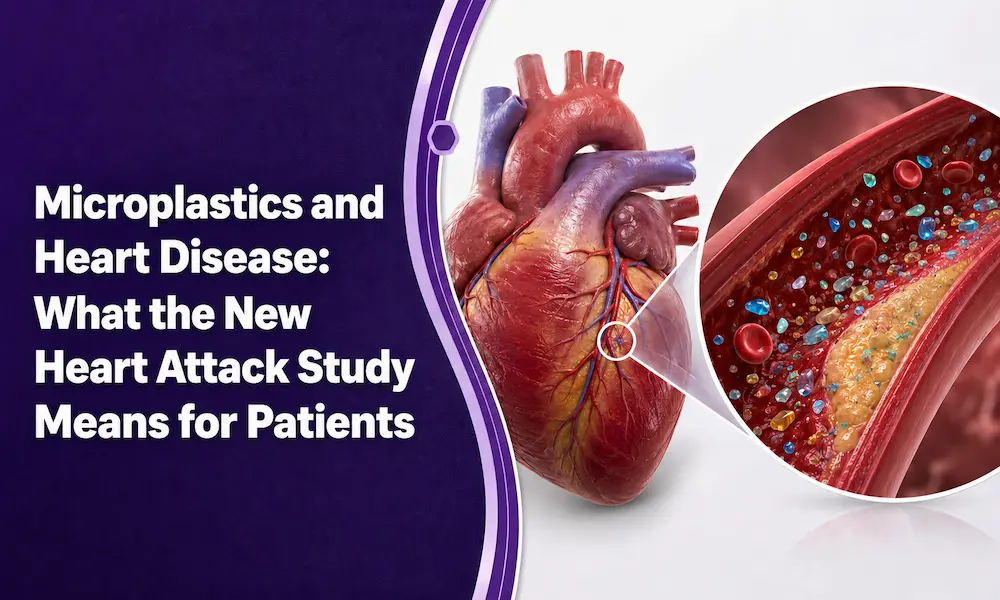
A recent study detected microplastics and nanoplastics more frequently in people experiencing heart attacks than in patients with chronic heart disease or healthy coronary arteries. However, the findings show an association—not proof that plastic particles directly cause heart attacks.
Although the research deserves attention, patients should not panic. Instead, they can work with a primary care clinician to identify and manage established heart disease risk factors.
Concerned about your heart health? Passion Health Advanced Primary Care can evaluate your blood pressure, cholesterol, blood sugar, lifestyle, and family history and help you build a personalized prevention plan.
Patients looking for primary care in Frisco, Irving, Plano, Prosper, Aubrey, Flower Mound, Ennis, Kaufman, Kemp, and McKinney, TX
Key Takeaways
- Researchers detected microplastics in 84% of heart-attack patients in the study.
- Detection reached 40% in patients with chronic ischemic heart disease and 32% in those with healthy coronary arteries.
- The study found a connection, but it did not prove that microplastics caused heart attacks.
- Doctors do not currently use microplastic testing during routine primary care.
- Managing blood pressure, cholesterol, diabetes, smoking, and weight remains essential.
- Anyone with possible heart-attack symptoms should call 911 immediately.
What Are Microplastics and Nanoplastics?
Microplastics are plastic fragments smaller than five millimeters. Nanoplastics measure much smaller, sometimes making them difficult to detect with standard laboratory methods.
These particles can come from food packaging, plastic bottles, synthetic clothing, household dust, vehicle tires, and industrial pollution. Over time, larger plastic products break down into increasingly smaller pieces.
People may swallow or inhale these particles. Researchers have detected tiny plastics in human blood and several tissues, although scientists still debate their exact quantities and long-term health effects.
What Did the New Heart Attack Study Find?
Researchers collected blood from vessels that supply the heart and from other areas of the body. They then compared patients experiencing heart attacks with people who had chronic ischemic heart disease.
The results showed a noticeable difference:
Patient group | Microplastics detected |
Patients experiencing a heart attack | 84% |
Patients with chronic ischemic heart disease | 40% |
Patients with healthy coronary arteries | 32% |
Polyethylene appeared most frequently. Manufacturers commonly use this plastic in packaging, bags, bottles, containers, and many household products.
Additionally, smoking and air-pollution exposure showed important connections. Smokers had a greater likelihood of detectable microplastics, while patients exposed to higher long-term air pollution also showed higher levels.
These results suggest that environmental exposure may contribute to cardiovascular health risks. Still, the researchers need larger studies to confirm what the findings mean for everyday patient care. The European Society of Cardiology provides additional details about the study.
Do Microplastics Cause Heart Attacks?
No current study proves that microplastics directly cause heart attacks. The latest research only shows that heart-attack patients had a higher rate of detectable plastic particles.
Several factors could influence that relationship. For example, smoking exposes people to chemicals and particles while independently increasing cardiovascular risk.
Likewise, long-term air pollution can harm blood vessels and raise heart-disease risk.
Moreover, the study examined a relatively small group of patients. Researchers collected samples at one point rather than following participants for many years. Therefore, they cannot determine whether plastic exposure came before the heart condition.
Scientists also face challenges when measuring microscopic plastic particles. Laboratories need strict methods to prevent contamination and distinguish plastic from biological material. Consequently, patients should view dramatic claims about plastic “clogging” the heart with caution.
How Might Microplastics Affect the Arteries?
Researchers continue to investigate several possible mechanisms. First, microplastics may encourage inflammation, which plays a role in the development and instability of arterial plaque.
In addition, tiny plastic particles could contribute to oxidative stress. This process can damage cells and affect the lining of blood vessels.
Microplastics may also influence immune activity or blood clotting. If they increase inflammation inside existing plaque, they could potentially make that plaque less stable. However, scientists have not confirmed these effects as direct causes of heart attacks in humans.
Therefore, healthcare organizations need more research before doctors can use microplastic exposure to calculate an individual patient’s cardiovascular risk.
Proven Heart-Risk Factors Still Matter Most
Microplastics represent an emerging concern, but physicians already understand many major causes of cardiovascular disease. Most importantly, several of these risks respond to screening, lifestyle changes, and medical treatment.
Established risk factors include:
High blood pressure
High LDL cholesterol
Diabetes or prediabetes
Smoking or vaping
Obesity
Limited physical activity
Unhealthy eating patterns
A family history of early heart disease
For this reason, patients should not focus on microplastics while ignoring high blood pressure or elevated cholesterol. These conditions often cause no early symptoms, yet they can gradually damage the arteries.
Regular primary care appointments can identify these silent risks before they lead to serious complications.
How Can Primary Care Help Protect Your Heart?
A primary care clinician can assess your overall cardiovascular health instead of focusing on one possible environmental exposure. During an appointment, the clinician may review your symptoms, medicines, diet, activity level, tobacco use, sleep, and family history.
Depending on your age and risk profile, your evaluation may include:
An accurate blood-pressure measurement
A cholesterol or lipid panel
Weight and waist measurements
A medication and supplement review
A cardiovascular-risk calculation
An electrocardiogram when appropriate
A cardiology referral when necessary
After reviewing the results, your clinician can create a practical plan. That plan may involve dietary changes, physical activity, smoking cessation, weight management, medication, or additional testing.
Concerned About Your Heart-Disease Risk?
A primary care provider can review your blood pressure, cholesterol, blood sugar, family history, lifestyle, and other established heart-risk factors.
Book an Appointment ⟶Can Doctors Test Your Blood for Microplastics?
Researchers can detect microplastics with specialized laboratory equipment. Nevertheless, routine medical laboratories do not usually offer this testing as part of a cardiovascular evaluation.
Currently, doctors lack a standardized microplastic blood test for everyday patient care. Medical organizations have not established a healthy, concerning, or dangerous blood level.
Furthermore, a result would not tell a clinician whether a patient will have a heart attack. It also would not provide a proven treatment direction. Therefore, commercial tests may offer information without delivering medically useful answers.
Patients can gain more actionable information from blood-pressure checks, cholesterol panels, diabetes screening, and established cardiovascular-risk assessments.
Can You Remove Microplastics From Your Body?
No approved medication, supplement, cleanse, or “detox” has proven that it can remove microplastics from human blood or arteries.
Although online products may promise rapid detoxification, those claims often lack reliable clinical evidence. Some products can also interact with prescription medicines or harm the liver and kidneys.
Before trying a detox product or supplement, discuss it with a primary care clinician. A medication review can help prevent avoidable interactions and side effects.
How Can You Reduce Microplastic Exposure?
Avoiding every plastic particle remains unrealistic. Still, reasonable household changes may reduce unnecessary exposure without creating fear.
Consider these practical steps:
Avoid heating food in plastic containers.
Choose glass or stainless-steel storage when practical.
Replace heavily scratched or damaged plastic containers.
Limit unnecessary single-use plastics.
Follow local drinking-water safety recommendations.
Wash your hands before eating or preparing food.
Clean indoor dust regularly.
Avoid smoking and secondhand smoke.
Never burn plastic waste.
However, researchers have not proven that these measures prevent heart attacks. Patients should use them as sensible precautions while continuing evidence-based cardiovascular care.
What Can You Do for Your Heart Today?
Start by learning your blood-pressure, cholesterol, and blood-sugar numbers. Next, ask your clinician how those results affect your long-term cardiovascular risk.
Additionally, aim for about 150 minutes of moderate physical activity each week when your health allows. Choose more vegetables, fruits, whole grains, beans, and lean proteins while reducing excessive sodium and highly processed foods.
If you smoke, ask for help quitting. Meanwhile, take prescribed blood-pressure, cholesterol, or diabetes medicines consistently and attend recommended follow-up appointments.
These steps provide clearer cardiovascular benefits than unproven detox programs.
Which Warning Signs Need Emergency Medical Care?
Heart attacks and strokes can begin suddenly, although some symptoms may develop gradually. Seek emergency help when symptoms feel severe, unusual, or continue for more than a few minutes.
Call 911 for:
New or intense chest discomfort
Unexplained trouble breathing
Pain that moves from the chest into the arms, jaw, back, or neck
Sudden sweating, nausea, lightheadedness, or loss of consciousness
Unexpected facial weakness or an uneven smile
Sudden numbness or weakness, especially on one side
New confusion, slurred speech, or difficulty communicating
Avoid driving to the emergency room or waiting for a primary care appointment. Emergency medical professionals can assess the condition, provide immediate care, and alert the hospital while traveling.
Protect Your Heart With a Personalized Primary Care Plan
Research into microplastics and heart disease will continue. Meanwhile, patients can take meaningful action by managing blood pressure, cholesterol, blood sugar, tobacco use, weight, and other established risk factors.
Passion Health Advanced Primary Care can evaluate your cardiovascular health and help you understand which prevention steps matter most for you.
Ready to take a practical step toward better heart health? Book an appointment with Passion Health Advanced Primary Care for a personalized cardiovascular risk assessment.
Our Primary Care Locations
Frequently Asked Questions
1. Are microplastics present in human blood?
Researchers have detected microplastics in human blood and tissues. However, scientists continue to study measurement accuracy and long-term health effects.
2. Do microplastics clog the arteries?
Research has found microplastics in arterial plaque, but scientists have not proven that the particles directly create blockages.
3. Can microplastics cause a heart attack?
Current evidence shows an association with cardiovascular problems, not direct causation.
4. Should I get a microplastic blood test?
Routine microplastic testing does not currently provide standardized or medically actionable cardiovascular information.
5. Can a detox remove microplastics?
No detox, supplement, or cleanse has demonstrated that it can safely remove microplastics from the body.

About the Author
Dr. Anantha Chentha is a board-certified internal medicine physician with extensive experience in primary care and chronic disease management. He provides comprehensive, patient-centered care with a focus on prevention, accurate diagnosis, and long-term health management.
View Provider Profile →