Lyme Disease Symptoms After Tick Bite
A tick bite can look small at first, but it can sometimes lead to a serious infection. Lyme disease symptoms after a tick bite may start days or weeks later, and many people do not remember getting bitten. That is why it helps to know what symptoms to watch for, when testing may help, and when a doctor should check the bite.
Worried about a tick bite, rash, fever, or body aches after outdoor activity? Book an appointment with Passion Health Advanced Primary Care for a doctor-guided evaluation and the right next step.
What Is Lyme Disease?
Lyme disease is a bacterial infection that usually spreads through the bite of an infected black-legged tick, also called a deer tick. Mayo Clinic explains that Borrelia bacteria cause Lyme disease, and people often get it after a tick carrying the bacteria attaches and feeds on the skin. Lyme disease occurs across many parts of the United States, but it appears more often in the upper Midwest, Northeast, and mid-Atlantic regions.
Ticks often live in grassy, wooded, brushy, and leafy areas. People may get exposed while hiking, camping, gardening, walking pets, or spending time near tall grass. A tick can attach to the skin and move to hidden areas, such as the scalp, armpit, waist, groin, back of the knee, or behind the ear.
Why Lyme Disease Symptoms After a Tick Bite Matter
Many tick bites do not cause Lyme disease. Still, people should not ignore symptoms after a bite because early treatment can reduce the risk of later complications. Mayo Clinic notes that many people with Lyme disease do not remember a tick bite, and symptoms can look like other illnesses. Early diagnosis and proper treatment can improve outcomes.
The FDA adds an important timing point: in most cases, a tick needs to stay attached for about 36 to 48 hours or more before it can transmit Lyme disease. Removing a tick within 24 hours greatly lowers the risk.
That timing helps, but it does not remove every concern. A person may not know how long the tick stayed attached. The tick may also carry other infections. For that reason, symptoms matter more than guesswork.
Early Lyme Disease Symptoms After a Tick Bite
Early Lyme disease symptoms often begin 3 to 30 days after a tick bite. Mayo Clinic lists early symptoms such as fever, headache, extreme tiredness, joint stiffness, muscle aches, swollen lymph nodes, and a spreading rash.
Common early symptoms include:
Symptom | What It May Feel Like |
Fever or chills | Flu-like illness after a tick bite |
Headache | Pressure, dull pain, or strong head pain |
Fatigue | Unusual tiredness that does not match normal activity |
Muscle aches | Soreness in legs, arms, back, or neck |
Joint stiffness | Stiff or achy joints, sometimes without swelling |
Swollen lymph nodes | Tender lumps near the neck, armpit, or groin |
Rash | A spreading red patch that may look like a target |
These symptoms can confuse patients because they may look like a viral infection, flu, summer illness, or body strain from outdoor work. The clue comes from timing: symptoms that start after tick exposure deserve attention.
Does Every Patient Get a Bull’s-Eye Rash?
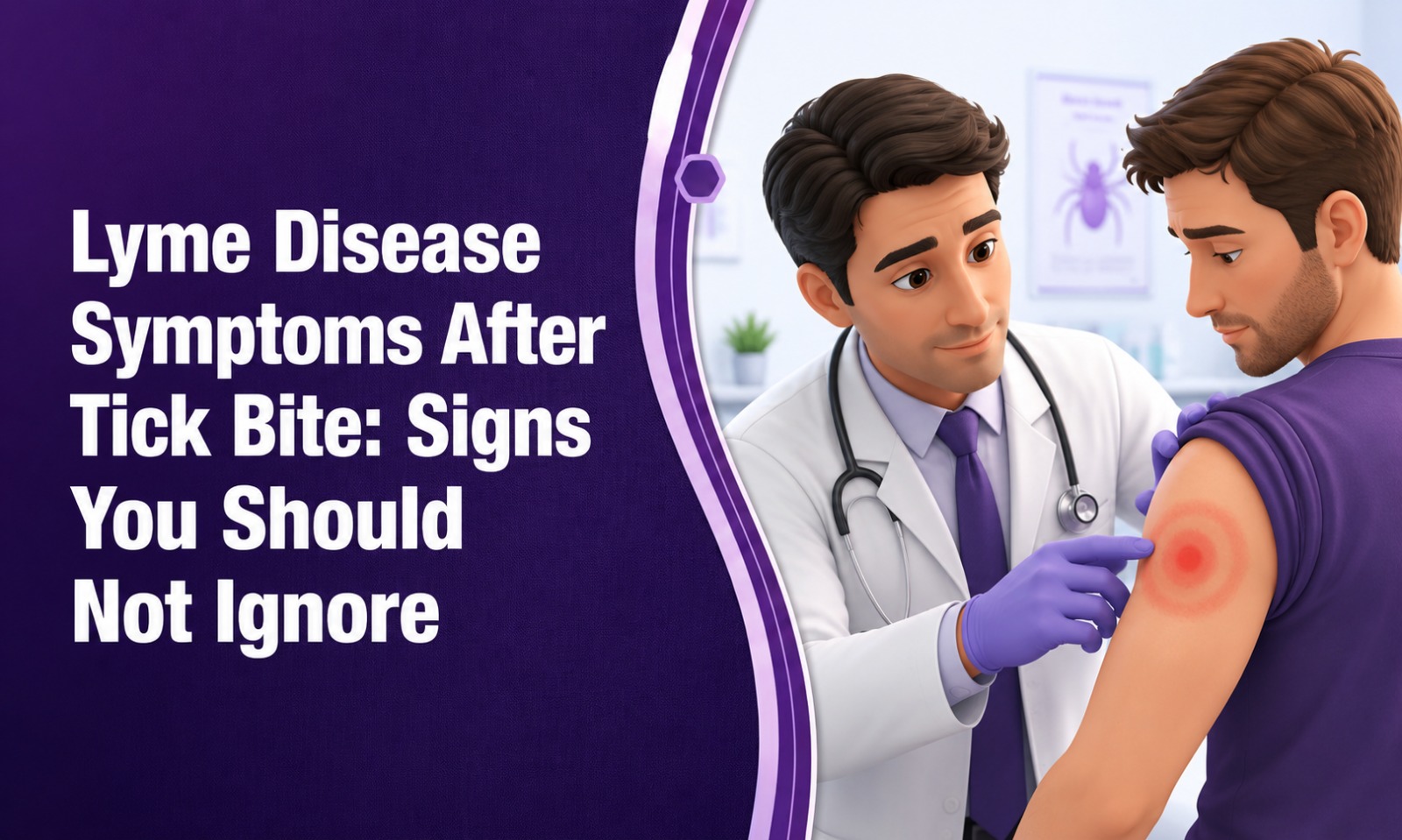
No. Many people connect Lyme disease with a bull’s-eye rash, but not every patient gets that classic pattern. Mayo Clinic says the rash can slowly spread from the bite site and may clear in the center, creating a target-like appearance, but the rash does not always occur.
The FDA also notes that many infected people may develop a rash, but the classic bull’s-eye appearance happens less often than many people think.
A Lyme rash may:
Spread slowly over several days
Feel warm to the touch
Look red, pink, or darker depending on skin tone
Appear flat or slightly raised
Show up with or without a clear center
Occur without pain or itching
Do not wait for a perfect bull’s-eye rash. A spreading rash after a tick bite needs medical review.
Lyme Disease Symptoms Day 4 After Tick Bite
Many people search for “Lyme disease symptoms day 4 after tick bite” because they notice a bite mark and start worrying. Day 4 can fall within the possible early symptom window, but not every mark means infection.
A small, itchy bump after a tick bite can look similar to a mosquito bite. Mayo Clinic explains that a tick bite may appear as a tiny itchy bump, and that alone does not mean a tick-borne illness has developed.
On day 4, watch for changes such as:
Rash that grows larger
Fever or chills
New headache
Strong fatigue
Muscle or joint aches
Swollen glands
Dizziness, weakness, or unusual symptoms
Take a photo of the bite area each day. This helps the doctor see whether the rash grows or changes.
Later Lyme Disease Symptoms
Untreated Lyme disease can move beyond the early stage. Mayo Clinic explains that stage 2 symptoms often appear 3 to 10 weeks after a tick bite and may include multiple rashes, neck stiffness, facial weakness, irregular heartbeat, pain that spreads from the back or hips to the legs, numbness, weakness, or eye inflammation.
Later Lyme disease can involve joints, nerves, eyes, and the heart. The FDA lists later-stage problems such as irregular heartbeat, arthritis with pain and swelling in large joints, and nervous system problems.
Call a doctor quickly if symptoms appear after a tick bite, especially when fever, rash, facial drooping, chest fluttering, joint swelling, severe headache, or numbness develops.
When Should You See a Doctor After a Tick Bite?
A person should see a doctor after a tick bite when symptoms appear or when the bite happened in an area known for Lyme disease. Mayo Clinic advises medical care if Lyme disease symptoms appear, especially after known or possible tick exposure.
See a doctor if you notice:
A spreading rash
Fever after a tick bite
Strong tiredness
Headache with neck stiffness
New joint pain or swelling
Facial weakness
Heart palpitations
Numbness or tingling
Symptoms that start days or weeks after outdoor exposure
Do not wait until symptoms become severe. Early care can make treatment simpler.
How Doctors Diagnose Lyme Disease
Doctors review symptoms, tick exposure, travel history, outdoor activity, rash appearance, and physical exam findings. They may order blood tests when Lyme disease seems possible.
However, timing matters. The FDA explains that most blood tests look for antibodies, and those antibodies may take several weeks to develop. Because of that delay, blood tests may not give accurate results soon after a tick bite.
This means an early negative test does not always end the discussion. A doctor may diagnose early Lyme disease based on exposure risk and symptoms, especially when a typical rash appears.
Can Doctors Start Treatment Before Test Results?
Yes, in some cases. The FDA explains that doctors may begin antibiotics before diagnostic tests finish when symptoms and exposure risk strongly suggest Lyme disease. It also notes that people treated with proper antibiotics in early Lyme disease usually recover quickly and fully.
This does not mean every tick bite needs antibiotics. A doctor must check the situation. The decision depends on the type of tick, attachment time, local Lyme risk, symptoms, pregnancy status, age, allergies, and other medical factors.
How to Remove a Tick Safely
Safe tick removal lowers risk and prevents skin irritation. The FDA recommends using fine-tipped tweezers, grasping the tick close to the skin, pulling upward with steady pressure, and cleaning the bite area and hands after removal. The FDA also warns people not to crush ticks with their fingers.
Follow these steps:
Use fine-tipped tweezers.
Hold the tick as close to the skin as possible.
Pull upward slowly and steadily.
Do not twist, burn, squeeze, or cover the tick with chemicals.
Clean the area with soap and water or an antiseptic.
Wash your hands.
Save the tick in a small sealed bag or take a photo if identification may help.
Watch the skin and your symptoms for the next month.
Do not use petroleum jelly, nail polish, heat, or alcohol to force the tick out. These methods can delay removal.
How to Prevent Lyme Disease
Prevention starts before going outdoors. Mayo Clinic recommends tick repellents, protective clothing, body checks, showering after outdoor exposure, and drying outdoor clothes on high heat to help kill ticks. It also advises checking areas such as underarms, hairline, ears, waist, between the legs, behind the knees, and belly button.
The FDA recommends avoiding wooded, brushy, and grassy areas when possible, wearing light-colored clothing, using EPA-registered repellents, treating clothing and gear with 0.5% permethrin, walking in the center of trails, and checking the body after outdoor activities.
Practical prevention tips:
Wear long pants and closed shoes outdoors.
Tuck pants into socks when walking through tall grass.
Use EPA-registered insect repellent.
Treat boots, socks, and outdoor gear with permethrin when appropriate.
Shower after hiking, gardening, or yard work.
Check pets for ticks before they enter the home.
Dry outdoor clothing on high heat after exposure.
Keep grass short and remove leaf piles near the home.
Is There a Lyme Disease Vaccine for People?
The FDA states that the United States does not currently have a licensed vaccine available to prevent Lyme disease in people.
That makes prevention and early symptom recognition especially important. Tick checks, quick removal, and doctor evaluation still provide the strongest protection.
Doctor’s Insight: Do Not Panic, But Do Not Ignore Symptoms
A tick bite can create anxiety, especially when someone sees redness or feels tired afterward. The best response is simple: remove the tick safely, clean the skin, document the bite, and watch for symptoms.
A small bump may heal without problems. However, a spreading rash, fever, body aches, headache, swollen glands, or unusual tiredness after tick exposure should prompt a medical visit. Lyme disease responds best when doctors catch it early.
Primary care plays an important role because many symptoms overlap with other conditions. A doctor can check for Lyme disease, skin infection, allergic reaction, viral illness, joint problems, or another tick-borne disease.
Lyme Disease Symptoms After Tick Bite: Quick Checklist
Use this checklist after a tick bite:
Question | Why It Matters |
Did the tick stay attached for many hours? | Longer attachment can increase risk |
Did you visit a wooded, grassy, or brushy area? | Ticks live in these places |
Did a rash spread from the bite area? | A spreading rash needs medical review |
Did fever or chills start? | Infection may cause flu-like symptoms |
Did fatigue feel unusual? | Lyme disease can cause extreme tiredness |
Did joint pain or swelling develop? | Later, Lyme disease may affect joints |
Did numbness, facial weakness, or palpitations occur? | These symptoms need urgent attention |
Final Takeaway
Lyme disease symptoms after a tick bite can start with a rash, fever, headache, fatigue, muscle aches, joint stiffness, or swollen lymph nodes. Later symptoms may affect the joints, nerves, eyes, or heart. A tick bite does not always cause Lyme disease, but symptoms after tick exposure need careful attention.
Early action helps. Remove the tick safely, watch symptoms for several weeks, and contact a doctor when a rash, fever, body aches, or unusual fatigue appear.
Concerned about a tick bite, rash, fever, body aches, or possible Lyme disease symptoms? Book an appointment with Passion Health Advanced Primary Care. Our care team can evaluate your symptoms, guide testing, discuss treatment options, and help you take the right next step.
5 Short FAQs
1. How soon do Lyme disease symptoms start after a tick bite?
Early symptoms often start 3 to 30 days after a tick bite, though later symptoms can appear weeks or months later.
2. Can Lyme disease happen without a bull’s-eye rash?
Yes. Some patients never see the classic bull’s-eye rash. A spreading rash or flu-like symptoms after tick exposure still need attention.
3. How long must a tick stay attached to spread Lyme disease?
The FDA says a tick usually needs to stay attached for 36 to 48 hours or more to transmit Lyme disease, and removing it within 24 hours greatly lowers the risk.
4. Can a Lyme disease test come back negative early?
Yes. Blood tests may not show accurate results soon after a tick bite because antibodies can take weeks to develop.
5. Should every tick bite get antibiotics?
No. A doctor decides based on symptoms, tick type, attachment time, local risk, and medical history.