Leg Pain or Swelling: When Your Body May Be Warning You
Leg pain can feel harmless at first. A sore calf may seem like a muscle strain. Swelling around the ankle may look like a normal long-day problem.
However, some symptoms can point to something more serious. The signs of a blood clot in the leg can start quietly, and delay can raise the risk of dangerous complications.
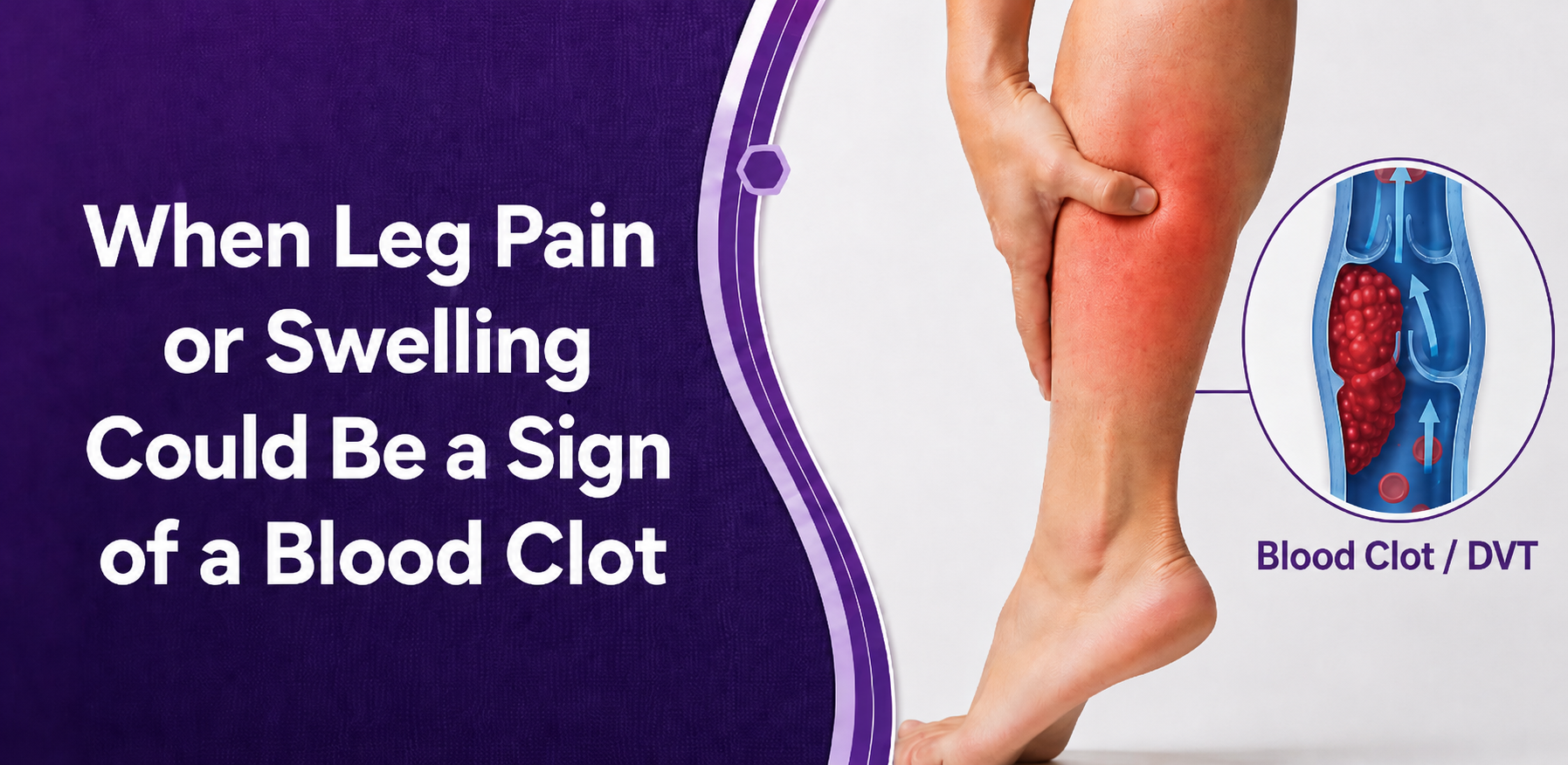
A blood clot in a deep leg vein can block normal blood flow. Doctors call this deep vein thrombosis, or DVT.
The clot may stay in the leg, but part of it can also break loose and travel to the lungs. That can cause a medical emergency called pulmonary embolism.
That is why one-sided leg swelling, calf pain, warmth, redness, or sudden tenderness needs attention. Do not ignore a leg that feels different from the other side.
If symptoms concern you, book an appointment with Passion Health Advanced Primary Care for a medical evaluation.
What Is a Blood Clot in the Leg?
A blood clot in the leg forms when blood thickens and clots inside a deep vein — a condition doctors call deep vein thrombosis, or DVT.
Unlike a surface bruise or a visible varicose vein, DVT develops deep inside the muscle tissue where you cannot see it. That is what makes it dangerous.
The clot blocks normal blood flow through the vein, causing pressure and inflammation to build in the surrounding tissue. Over time, or sometimes very quickly, that pressure creates symptoms you cannot ignore.
DVT most often strikes the calf or thigh, though it can develop anywhere in the leg. Certain people face a higher risk — those who sit for long hours, have recently had surgery, carry extra weight, smoke, or take hormonal medications. However, a blood clot in the leg can happen to anyone at any age.
Signs of a Blood Clot in the Leg You Should Observe Closely
The signs of a blood clot in the leg often appear in one leg, not both. Many patients first notice calf pain, swelling, or warmth. The pain may feel deep, tight, or cramp-like. It may also get worse when standing or walking.
A blood clot does not always cause severe pain. Some people notice only mild soreness or heaviness. Others see clear swelling or skin color changes. Because symptoms can look like a pulled muscle, many patients wait too long before asking for help.
Common warning signs may include:
Swelling in one leg, ankle, foot, or calf
Calf pain, cramping, soreness, or tenderness
Warm skin over the painful or swollen area
Red, purple, or darker skin color on one leg
A tight, heavy, or full feeling in the leg
Pain that gets worse while standing or walking
One leg looking larger than the other
These symptoms need medical attention, especially when they appear suddenly. A doctor can review your symptoms, check risk factors, and decide whether urgent testing makes sense.
How Signs of a Blood Clot in the Leg Differ by Location
Not every blood clot in the leg behaves the same way. Where the clot forms changes what you feel.
Clot Location | Common Symptoms | Urgency Level |
Calf vein (distal DVT) | Calf cramping, mild swelling, localized warmth | High — can travel upward |
Thigh vein (proximal DVT) | Significant swelling, thigh pain, redness | Very high — higher PE risk |
Behind the knee (popliteal) | Swelling, stiffness, pain behind the knee | Very high — unstable location |
Full leg involvement | Entire leg swollen, skin discoloration, severe pain | Emergency — seek care now |
Calf Pain and Swelling: When It May Be More Than Muscle Pain
Calf pain often confuses patients. A muscle strain can cause soreness after exercise, lifting, or sudden movement.
However, clot-related calf pain may happen without a clear injury. It may also come with swelling, warmth, or skin color change.
A pulled muscle usually improves with rest, stretching, or time. A blood clot may not improve that way. In fact, the discomfort may continue or slowly get worse. One-sided swelling also raises concern because it can signal blocked blood flow in a deep vein.
Here is a simple comparison:
Symptom Pattern | Possible Muscle Strain | Possible Blood Clot Concern |
Pain starts after exercise or injury | Common | Possible, but less typical |
Swelling affects one calf or ankle | Sometimes | More concerning |
Skin feels warm in one area | Less common | Common warning sign |
Redness or color change appears | Less common | More concerning |
Pain improves with rest | Often | May not improve |
Shortness of breath or chest pain occurs | Not expected | Emergency warning sign |
Why Blood Clots Form in the Leg
Blood clots can form when blood flow slows down, a vein gets injured, or the blood clots more easily than normal.
Long sitting, surgery, injury, and certain health conditions can increase the risk.
Some patients face a higher risk because of lifestyle, medical history, or medication use.
A person who has recently had surgery, stayed in bed due to illness, traveled for long hours, or has a past clot history should take symptoms seriously.
Blood clot risk factors may include:
Long sitting during travel or desk work
Recent surgery, injury, or hospital stay
Bed rest after illness
Previous blood clot
Family history of blood clots
Smoking
recent delivery
Certain hormone medicines
Cancer or cancer treatment
Older age
Excess body weight
Certain blood-clotting disorders
When Signs of a Blood Clot in the Leg Need Urgent Care
The signs of a blood clot in the leg can become dangerous if the clot travels to the lungs. This can lead to pulmonary embolism. That condition needs emergency treatment.
Leg pain or swelling comes with sudden shortness of breath, chest pain, coughing blood, fainting, dizziness, or a fast heartbeat. Do not wait for symptoms to pass. Do not drive yourself during breathing trouble or chest pain.
A patient should also seek prompt medical care when one leg suddenly swells, feels warm, turns red or purple, or develops deep calf pain. Early medical attention can reduce the risk of serious harm.
How a Doctor Checks for a Blood Clot
A doctor cannot confirm a clot by looking at the leg alone. Several conditions can cause leg pain and swelling, including injury, infection, vein problems, and inflammation. That is why proper evaluation matters.
During a visit, a clinician may ask about symptoms, travel, surgery, medications, family history, and previous clots. The doctor may check the leg for swelling, tenderness, warmth, and color change. If symptoms suggest DVT, the patient may need an ultrasound or other tests.
Early diagnosis helps guide the right treatment. It also helps prevent the clot from growing or moving to the lungs.
Treatment and Prevention
Treatment depends on the clot location, symptom severity, medical history, and risk level. A doctor may recommend different steps based on the patient’s condition.
Doctors may prescribe blood thinners to stop the clot from growing.
Blood thinners may also lower the chance of new clots.
Some patients may need follow-up imaging.
A doctor may suggest compression guidance when needed.
Specialist care may help if the clot risk stays high.
Never start or stop blood thinner medicine without medical advice.
Blood thinners can help protect against clots, but they can also increase bleeding risk
Prevention also matters because simple daily habits can lower clot risk.
Move your legs during long trips.
Walk regularly when your doctor allows activity.
Drink enough water throughout the day.
Avoid smoking.
Follow your doctor’s instructions after surgery or illness.
Keep follow-up visits after hospital care.
Manage chronic conditions such as heart disease, diabetes, high cholesterol, and weight concerns.
Ask your doctor about a custom prevention plan if you have a higher blood clot risk.
Final Takeaway
Leg pain can come from many causes, but the signs of a blood clot in the leg need quick attention. One-sided swelling, calf pain, warmth, redness, or sudden tenderness should not turn into a guessing game.
Passion Health Primary Care can review your symptoms, check your risk factors, and guide you on the next step.
FAQs
1. What are the first signs of a blood clot in the leg?
The first signs may include one-sided leg swelling, calf pain, warmth, tenderness, redness, or skin discoloration. Some people may have mild symptoms or no clear symptoms at first.
2. Can a blood clot in the leg feel like a muscle cramp?
Yes. A blood clot can feel like calf cramping, soreness, or deep leg pain. Unlike normal muscle pain, it may come with swelling, warmth, or color change.
3. When should I see a doctor for leg swelling?
See a doctor as soon as possible if one leg becomes swollen, painful, warm, red, or tender. These can be signs of deep vein thrombosis.
4. How do doctors treat a blood clot in the leg?
Doctors may prescribe blood thinners to stop the clot from getting bigger and reduce the chance of new clots. Some patients may need follow-up imaging or specialist care.
5. Can blood clots in the leg be prevented?
Some risks can be lowered by moving during long trips, staying active when medically safe, drinking enough water, avoiding smoking, and following the doctor’s instructions after surgery or illness.