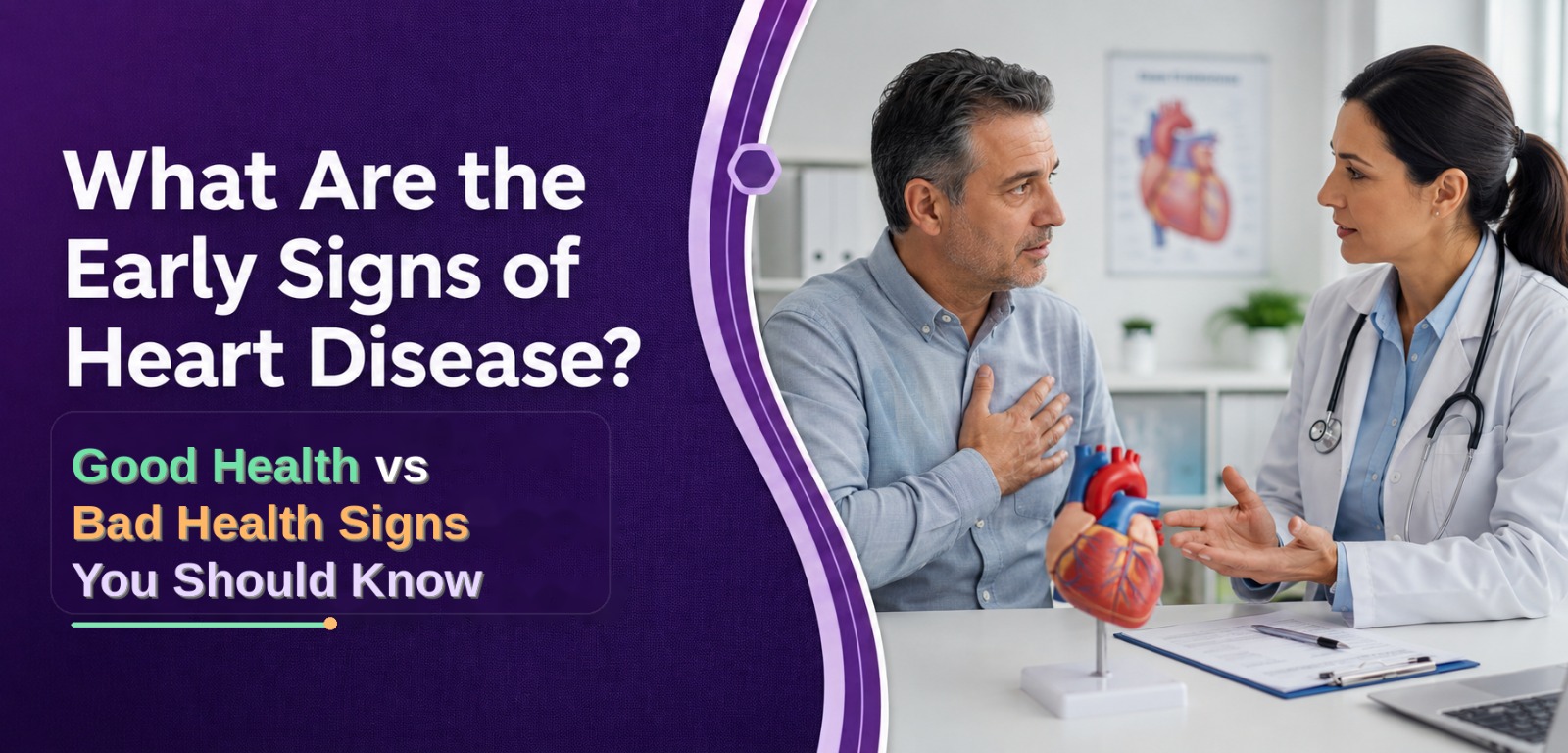
What Are the Early Signs of Heart Disease?
Heart disease can start quietly. Many people wait for severe chest pain, but the body may send smaller warning signs much earlier. These signs can show up as shortness of breath, unusual fatigue, chest pressure, dizziness, swelling, or a racing heartbeat.Heart disease includes several conditions, such as coronary artery disease, irregular heartbeats, heart valve disease, heart muscle disease, and congenital heart problems. Many forms can improve with healthy lifestyle changes and medical care.
Common early signs may include:
Chest pressure, tightness, heaviness, or burning
Shortness of breath with mild activity
Fast, slow, or irregular heartbeat
Dizziness or near-fainting
Fatigue that feels unusual
Swelling in the feet, ankles, or legs
Pain spreading to the jaw, neck, back, shoulder, or arm
Nausea, sweating, or weakness with chest discomfort
Some symptoms come and go. That does not mean the heart is safe. A blocked or narrowed artery may cause symptoms during activity and then settle during rest.
Concerned about chest pressure, shortness of breath, high blood pressure, cholesterol, or diabetes? Book a heart-risk checkup with Passion Health Advanced Primary Care →
Patients looking for primary care in Frisco, Irving, Plano, Prosper, Anna, Aubrey, Flower Mound, Ennis, Kaufman, Kemp, or Mesquite.
Good Heart Health vs Bad Heart Health
Good heart health means the heart pumps blood with less strain. Blood pressure stays controlled. Cholesterol stays in a safer range. Blood sugar remains steady. The person can walk, climb stairs, sleep, and do daily work without chest discomfort or unusual breathlessness.
Bad heart health often shows a different pattern. The heart works harder because the arteries, blood pressure, cholesterol, weight, smoking, diabetes, or stress place extra pressure on the body.
Good health signs
Normal blood pressure most of the time
Good energy during daily activity
No chest pressure with walking
Steady breathing during light exercise
No smoking or vaping
Bad health signs
Blood pressure often at or above 130/80 mm Hg
Chest pain, chest pressure, or chest tightness
Breathlessness that feels new
High LDL cholesterol
Diabetes with poor sugar control
Belly weight gain
Low activity level
Smoking history
Family history of early heart disease
High blood pressure, high blood cholesterol, and smoking are key risk factors for heart disease. It also notes that diabetes, overweight, obesity, unhealthy diet, physical inactivity, and excessive alcohol use can raise risk.
Why Chest Pain and Shortness of Breath Matter
Chest pain does not always feel sharp. Some patients describe it as pressure, squeezing, heaviness, burning, fullness, or discomfort. Shortness of breath may happen because the heart cannot move enough oxygen-rich blood during activity.
Do not ignore chest pain with sweating, fainting, severe weakness, shortness of breath, or pain spreading to the arm, jaw, neck, or back. That pattern needs urgent medical care, not a routine appointment.
For non-emergency symptoms, a primary care visit can help check blood pressure, cholesterol, diabetes risk, weight, medicines, family history, smoking history, and lifestyle triggers.
Heart Health Calculations to Know
These numbers do not diagnose heart disease alone, but they help guide risk.
1. Blood pressure check
Normal blood pressure sits below 120/80 mm Hg. CDC notes that high blood pressure means readings consistently at or above 130/80 mm Hg.
Simple rule:
120/80 or lower = better range
130/80 or higher = needs attention if repeated
2. BMI calculation
BMI can help screen weight-related risk in adults. CDC provides an adult BMI calculator for adults age 20 and older.
Formula:
BMI = weight in pounds × 703 ÷ height in inches²
Example:
180 lb, 70 inches tall
180 × 703 ÷ 4900 = 25.8 BMI
BMI does not tell the full story. Muscle, age, body shape, and waist size also matter.
3. Pulse check
A resting pulse often gives clues about fitness, stress, sleep, medication effects, and rhythm concerns. A racing, irregular, or fluttering heartbeat should not be ignored, especially when it comes with dizziness, chest discomfort, or shortness of breath.
Heart Risk Facts Patients Should Notice
CDC reports that about 47% of people in the United States have at least one of three key heart disease risk factors: high blood pressure, high blood cholesterol, or smoking. CDC also reports that heart disease accounts for about 1 out of every 5 deaths in the United States.
Vitamins, Food, and Heart Health
Vitamins can support overall health, but they do not replace blood pressure care, cholesterol care, diabetes care, or heart testing. A healthy eating pattern matters more than random supplements.
Heart-friendly nutrients often come from:
Leafy greens for folate and minerals
Beans and lentils for fiber
Oats for soluble fiber
Fatty fish for omega-3 fats
Nuts and seeds for magnesium and healthy fats
Low-fat dairy or fortified foods for vitamin D and calcium when appropriate
Vitamin D helps the body absorb calcium and supports bone and muscle health. NIH notes that vitamin D2 and D3 both raise vitamin D levels, though D3 may raise and maintain levels better in many cases. Still, a vitamin D pill does not “clean arteries.” A provider may check levels if fatigue, bone pain, low sunlight exposure, diet limits, or medical history raises concern.
Avoid starting supplements without guidance if kidney disease, blood thinners, heart medicines, or multiple prescriptions apply.
Heart Disease Symptoms That Need a Doctor Visit
A doctor visit makes sense when symptoms appear more than once, worsen, or feel new.
Schedule a heart-risk checkup for:
Mild chest pressure that comes and goes
Shortness of breath during normal activity
New fatigue without a clear reason
Palpitations or fluttering heartbeat
Dizziness with exertion
High blood pressure readings at home
Diabetes with cholesterol concerns
Family history of heart attack or stroke
Smoking history or vaping habit
Heart disease can sometimes be found early through regular health checkups. That point matters for adults over 40, people with diabetes, patients with high blood pressure, and anyone with high cholesterol.
How to Prevent Heart Disease Naturally
Natural prevention does not mean ignoring medical care. It means building daily habits that lower strain on the heart.
Start with these steps:
Walk most days
Reduce fried and processed foods
Add vegetables, beans, oats, and lean protein
Stop smoking
Sleep on a regular schedule
Manage stress before it becomes physical
Track blood pressure at home
Follow cholesterol and diabetes care plans
Keep appointments for lab checks
Lifestyle changes such as eating healthier foods, regular exercise, weight loss, stress reduction, and quitting smoking can help manage coronary artery disease risk.
Final Takeaway
Watch for chest pressure, shortness of breath, unusual fatigue, dizziness, palpitations, swelling, or pain that spreads to the jaw, neck, back, shoulder, or arm. These signs do not always mean a heart attack, but they deserve attention.
Passion Health Advanced Primary Care can help evaluate heart disease risk factors, check blood pressure, order labs, review symptoms, and guide the next step.
Worried about early heart disease symptoms or risk factors? Book an appointment with Passion Health Advanced Primary Care →
Patients looking for primary care in Frisco, Irving, Plano, Prosper, Anna, Aubrey, Flower Mound, Ennis, Kaufman, Kemp, or Mesquite.
FAQs
1. What are the early signs of heart disease?
Chest pressure, shortness of breath, dizziness, fatigue, swelling, and irregular heartbeat can be early signs.
2. Can heart disease happen without symptoms?
Yes. Some people do not notice symptoms until a serious heart problem appears.
3. Can high blood pressure cause heart disease?
Yes. High blood pressure can damage arteries and make the heart work harder.
4. When should I see a doctor for chest pain?
See a doctor if chest pain comes back, happens with activity, or comes with shortness of breath, sweating, dizziness, or weakness.
5. Can vitamins prevent heart disease?
Vitamins may support health, but they do not replace blood pressure control, cholesterol care, healthy food, exercise, or medical checkups.