
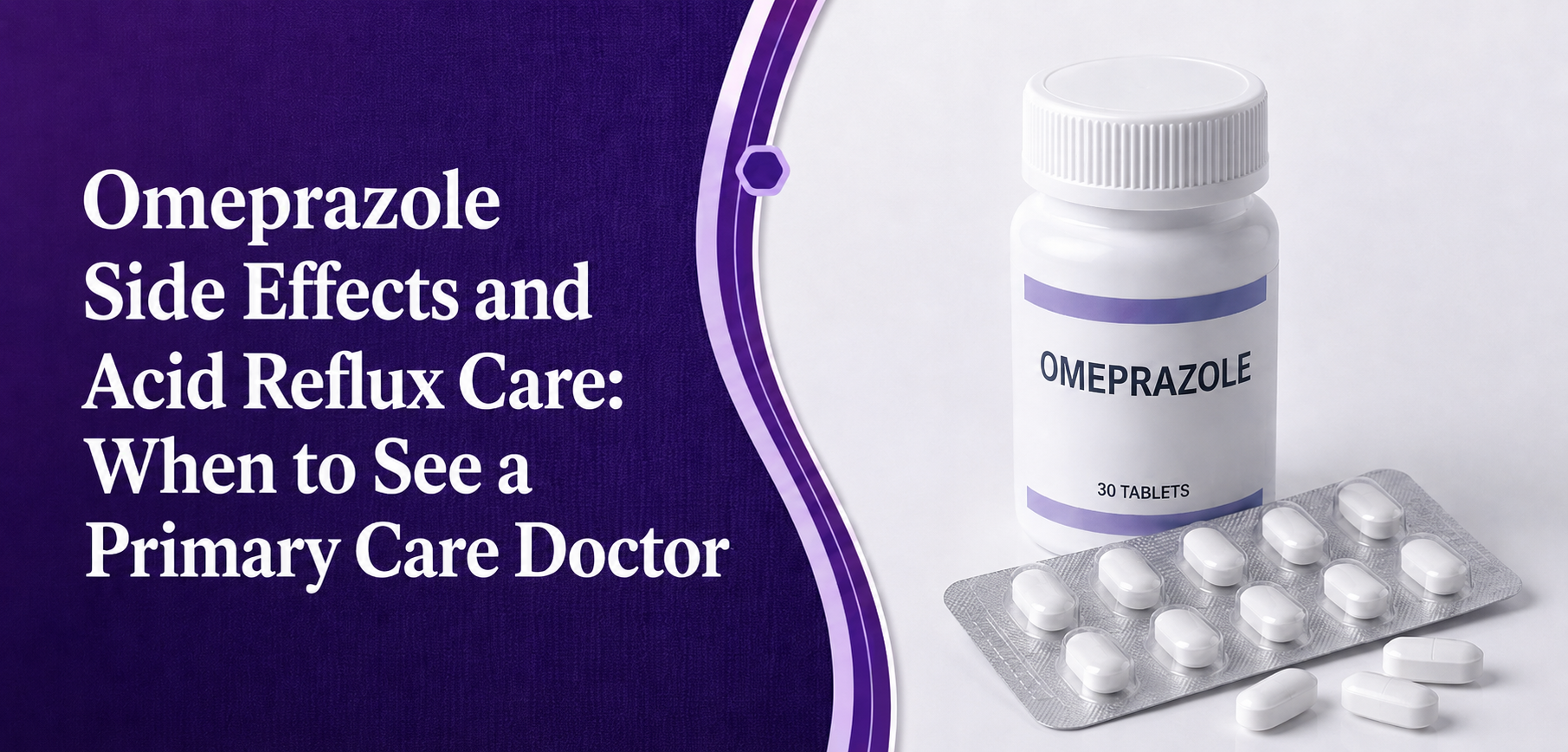
Omeprazole Side Effects and Acid Reflux Care
Heartburn, sour taste, burping, throat irritation, or stomach burning may need more than repeated medicine. Click any section below to move directly to that part of the article.
Passion Health Advanced Primary Care can review symptoms, medicines, and warning signs.
What Patients Should Know Before Taking Omeprazole
Heartburn may start with a small burning feeling after dinner. Then it shows up again at night. Over time, a sour taste, chest burning, burping, throat irritation, or stomach discomfort can disturb sleep, meals, and daily comfort.
Many patients take omeprazole and wait for the problem to settle. The medicine can help acid-related symptoms, but it does not answer a bigger question: why does acid reflux keep coming back?
Omeprazole side effects and acid reflux care deserve attention because stomach symptoms may come from reflux, ulcers, food triggers, medicine irritation, or another health concern.
Passion Health Advanced Primary Care can review symptoms, medicines, and warning signs before a mild stomach issue becomes harder to manage.
Patients looking for primary care in Frisco, Irving, Plano, Prosper, Anna, Aubrey, Flower Mound, Ennis, Kaufman, Kemp, Mesquite, McKinney, TX
What Is Omeprazole Used For?
Omeprazole lowers stomach acid. Doctors use it for acid reflux, heartburn, GERD, stomach ulcers, erosive esophagitis, and some H. pylori treatment plans when paired with antibiotics.
Mayo Clinic lists omeprazole for conditions linked to too much stomach acid, including GERD, ulcers, erosive esophagitis, and H. pylori-associated ulcers.
A patient may search for omeprazole after feeling chest burning, sour fluid in the throat, stomach pain, nausea, or nighttime reflux. The medicine may reduce acid irritation, but it does not fix every cause of stomach discomfort.
A primary care visit helps connect symptoms with the right next step. That may include food changes, medicine review, lab work, symptom tracking, or a specialist referral when symptoms suggest a deeper digestive issue.
Is Omeprazole an Antacid?
Omeprazole is not a regular antacid. That difference matters.
Antacids work quickly because they neutralize acid already inside the stomach.
Omeprazole works in a different way. It reduces acid production at the source, so it usually does not give instant relief.
MedlinePlus states that nonprescription omeprazole should not treat immediate heartburn symptoms and may take 1 to 4 days for full benefit.
That explains why some patients feel frustrated after one dose. They expect quick relief, but omeprazole does not work like a chewable antacid. It works better as planned acid control, not instant rescue treatment.
How Does Omeprazole Work?
Omeprazole belongs to a medicine group called proton pump inhibitors, also called PPIs. These medicines reduce acid by blocking acid pumps in the stomach lining.
Omeprazole is a PPI used for several acid-related conditions, including heartburn, peptic ulcer disease, GERD, and erosive esophagitis.
Lower acid levels may help the food pipe and stomach lining heal when reflux irritates them. However, stomach acid also helps with digestion. For that reason, repeated use without medical review can hide symptoms that need attention.
A better care plan looks at the full picture: when symptoms happen, what foods trigger them, where pain sits, which medicines the patient takes, how sleep changes, and whether warning signs appear.
When to Take Omeprazole
Many patients take omeprazole once daily in the morning. Some take it twice daily when a doctor recommends that schedule.
Omeprazole generally works best when taken 30 to 60 minutes before meals. When a patient takes it twice daily, the first dose usually comes before breakfast and the second before dinner.
Timing can change results. A missed dose, random timing, or incorrect use may reduce symptom control.
Patients should follow the package label or their doctor’s instructions instead of changing timing on their own.
How to Take Omeprazole Safely
Take omeprazole with water. Do not crush or chew tablets or capsules marked enteric-coated or gastro-resistant.
Patients should take omeprazole at the same time each day, swallow tablets or capsules with water, and avoid chewing or crushing enteric-coated or gastro-resistant forms.
Patients should also tell a provider about prescription medicines, over-the-counter medicines, vitamins, and supplements. Some medicines may need a different schedule or closer review.
More medicine does not always mean better reflux care. A higher dose may increase risk without solving the real cause.
Common Omeprazole Side Effects Patients Notice
Many patients tolerate omeprazole well. Still, side effects can happen.
Common omeprazole side effects may include headache, stomach pain, nausea, vomiting, constipation, diarrhea, or gas.
Call a primary care provider if side effects feel new, strong, or persistent. Also ask for help if reflux continues even after taking the medicine correctly.
A medication review can help answer an important question: does the patient still need omeprazole, or does the treatment plan need a change?
Can You Take Omeprazole Every Day?
Some patients take omeprazole daily for a short course. Others need longer treatment for a diagnosed condition. The safer question is not only, “Can I take it daily?” A better question asks, “Why do I need it every day?”
Patients should not use nonprescription omeprazole for longer than 14 days or repeat treatment more often than once every 4 months without talking to a doctor.
Daily use may make sense for certain medical reasons. Still, long-term reflux needs a closer look at diet, weight, smoking, alcohol, late meals, medicine triggers, ulcers, and GERD.
Omeprazole 20 mg vs 40 mg: Why Doctor Guidance Matters
Patients often search for omeprazole 20 mg and omeprazole 40 mg because they want to know which dose works better. A stronger dose does not always mean better treatment.
Omeprazole dosing depends on the condition, and a doctor may adjust the dose based on the diagnosis and response.
A dose decision should match the reason for treatment. Age, symptom pattern, past ulcers, other medicines, bleeding risk, and treatment length all matter. Patients should not raise the dose without medical guidance.
When Acid Reflux Needs a Primary Care Visit
Occasional heartburn after a heavy meal may improve with simple changes. Reflux that keeps returning needs a medical conversation.
Schedule a primary care visit when heartburn happens often, affects sleep, returns after medicine, or does not improve after the recommended course. Stomach pain, nausea, vomiting, trouble swallowing, or unexplained weight loss also deserve attention.
A provider can check whether the issue looks like GERD, gastritis, ulcer disease, medicine-related irritation, or another condition.
Warning Signs That May Not Be Simple Heartburn
Some symptoms need prompt medical attention because they may not come from simple reflux.
Patients should speak with a doctor before using nonprescription omeprazole if heartburn has lasted 3 months or longer, or if symptoms include chest or shoulder pain, shortness of breath, pain spreading to the arms, neck, or shoulders, unexplained weight loss, vomiting blood, trouble swallowing, painful swallowing, or black or bloody stools.
Do not ignore chest burning that feels unusual. Reflux can cause burning, but heart, lung, and digestive problems can also cause chest discomfort. A primary care provider can help sort out the cause.
Final Takeaway
Omeprazole can help acid reflux, heartburn, GERD, ulcers, and other acid-related conditions. It is not a quick antacid, and it should not become a long-term habit without a clear reason.
Omeprazole side effects and acid reflux care need the right timing, dose, duration, and medical review. Symptoms that return, worsen, or come with warning signs need attention.
If heartburn keeps coming back, stomach burning affects daily life, or omeprazole side effects concern you, Passion Health Advanced Primary Care can help guide the next step.
Our Primary Care Locations
FAQs
1. Is omeprazole an antacid?
No. Omeprazole is not a regular antacid. It lowers stomach acid production, while antacids neutralize acid already in the stomach.
2. When should I take omeprazole?
Many people take omeprazole in the morning, 30 to 60 minutes before food. Follow the label or your doctor’s instructions.
3. How long does omeprazole take to work?
Omeprazole may start helping within a day, but full relief can take 1 to 4 days.
4. What are common omeprazole side effects?
Common side effects may include headache, stomach pain, nausea, vomiting, diarrhea, constipation, or gas.
5. When should I see a doctor for acid reflux?
See a doctor if heartburn keeps coming back, affects sleep, needs repeated medicine, or comes with trouble swallowing, vomiting blood, black stools, chest pain, or weight loss.

Contact Dermatitis Primary Care in North Texas: Rash Relief and Treatment
A red, itchy patch can appear suddenly. It burns, spreads, flakes, or forms tiny blisters. Then the worry starts. Was it soap? Jewelry? Yard work? A cleaning product? Or something more than a simple rash?
Contact dermatitis happens when skin reacts after touching an irritant or allergen. Mayo Clinic describes it as an itchy rash caused by direct contact with a substance or an allergic reaction, and the rash itself is not contagious.
For patients across Frisco, Plano, Irving, Prosper, Anna, Aubrey, Flower Mound, Ennis, Kaufman, Kemp, Mesquite, McKinney, Dallas, Fort Worth, and nearby North Texas communities, contact dermatitis primary care in North Texas can help identify the trigger, calm the rash, and prevent future flare-ups.
If an itchy rash keeps spreading, does not improve, or affects sleep and daily work, Passion Health Advanced Primary Care can check your skin and guide safe treatment.
Book an appointment →Why Contact Dermatitis Primary Care in North Texas Matters
Many patients wait because they think the rash will clear on its own. Sometimes it does. However, contact dermatitis can last for weeks when the skin keeps touching the same trigger.
Mayo Clinic notes that the rash may last 2 to 4 weeks and often improves when the trigger gets identified and avoided.
Scratching can also make the rash worse. Repeated scratching may open the skin and create a setting where bacteria or fungi can grow.
Primary care helps patients stop guessing. A provider can review symptoms, check for infection, ask about products and work exposure, and decide whether the rash looks like contact dermatitis or another skin condition.
What Contact Dermatitis Is and How It Happens
Contact dermatitis is skin inflammation after direct exposure to a trigger. The rash often appears on the area that touched the substance.
Symptoms may include itching, dry or cracked skin, bumps, blisters, oozing, crusting, swelling, burning, or tenderness.
North Texas patients may notice flare-ups after heat, sweat, outdoor work, frequent handwashing, cleaning products, gloves, cosmetics, hair dye, detergents, or plants.
Weather may make irritated skin feel worse, but the real cause often comes from a specific product, chemical, plant, or allergen.
Irritant Contact Dermatitis in North Texas Workplaces
Irritant contact dermatitis happens when something damages the skin barrier. This type often affects people who work with their hands.
Construction workers, cleaners, food workers, healthcare workers, mechanics, hair stylists, florists, and agricultural workers can face higher risk because of repeated exposure to water, chemicals, gloves, plants, or tools.
A hand rash from soaps or gloves may look small at first. Soon, the skin can crack, sting, bleed, or hurt during work.
Contact dermatitis primary care in North Texas helps patients protect the skin barrier while treating the flare.
Allergic Contact Dermatitis From Hidden Triggers
Allergic contact dermatitis happens when the immune system reacts to a substance. The rash may not appear right away.
Common allergens include nickel in jewelry or buckles, antibiotic creams, fragrances, preservatives, cosmetics, hair dye, poison ivy, and some sunscreens.
This type can frustrate patients because the trigger hides in everyday items. A rash around the wrist may connect to a watch. Eyelid irritation may come from cosmetics, nail products, or skincare. A waistline rash may point to a belt buckle or clothing snap.
Signs You Need Primary Care for a Rash
Some mild rashes improve after the trigger stops. Still, certain symptoms need a medical review.
Book a primary care visit if the rash:
- Keeps spreading
- Lasts more than 1 to 3 weeks
- Affects sleep, work, or daily comfort
- Involves the face, eyes, mouth, hands, or private area
- Forms blisters, crusting, drainage, or open skin
- Feels warm, swollen, painful, or tender
- Comes back again and again
- Does not improve with gentle home care
Seek prompt medical help if fever, pus, or signs of infection appear. These symptoms may need a closer medical check.
How Contact Dermatitis Primary Care in North Texas Diagnoses Your Rash
A primary care visit starts with a close look at the rash and a clear conversation. Your provider may ask when the rash started, where it appeared first, what touched the skin, what job tasks you do, and which creams or products you already tried.
The exam may include:
- Rash location and pattern
- Skin color, swelling, cracking, or blisters
- Signs of infection
- Product, plant, jewelry, glove, or chemical exposure
- Work and hobby history
If the cause remains unclear, patch testing may help identify allergens. Your primary care provider may guide you toward the right next step when allergy testing is needed.
Treatment Options for Contact Dermatitis Rash Relief
Treatment focuses on three goals: stop the exposure, calm inflammation, and protect the skin while it heals.
A provider may recommend:
- Avoiding the suspected trigger
- Gentle, fragrance-free cleanser
- Cool wet cloths for comfort
- Regular moisturizer
- Protective gloves or clothing
- Doctor-recommended topical medicine
- Oral medicine for more severe cases
- Antibiotics only if infection is present
Patients should avoid adding many new creams or home remedies during a flare. Extra products can irritate the skin further, especially when the barrier already feels damaged.
Stop the Rash Cycle Before It Gets Worse
Constant itching can affect sleep, focus, and work. A recurring rash can also create stress because the trigger stays unclear.
Passion Health Advanced Primary Care offers contact dermatitis primary care in North Texas for patients who need practical answers, safer treatment guidance, and a plan to reduce future flare-ups.
Book an appointment →How Primary Care Helps Prevent Future Flare-Ups
A good treatment plan does not stop after the rash improves. Prevention matters because contact dermatitis often returns when the skin touches the same trigger again.
Your provider may help you:
- Identify unsafe soaps, lotions, detergents, gloves, or jewelry
- Choose fragrance-free skin products
- Protect hands at work
- Reduce sweat, friction, and repeated irritation
- Use moisturizers to support the skin barrier
- Create a plan for future flares
Contact Dermatitis Care Near You in North Texas
Passion Health Advanced Primary Care serves patients across North Texas, including Frisco, Plano, Irving, Prosper, Anna, Aubrey, Flower Mound, Ennis, Kaufman, Kemp, Mesquite, McKinney, Dallas, Fort Worth, and nearby DFW areas.
A primary care provider can check whether your rash looks like contact dermatitis, eczema, hives, infection, fungal rash, medication reaction, or another concern.
Then your care plan can match the likely cause instead of relying on guesswork.
Final Takeaway
A rash may look simple, but contact dermatitis can become painful, stubborn, and stressful when the trigger stays hidden. Early primary care can help calm the skin, lower infection risk, and prevent repeated flare-ups.
Need contact dermatitis primary care in North Texas? Passion Health Advanced Primary Care can review your symptoms, check your skin, and guide safe rash relief.
Book an appointment →