
Looking for Swollen Lymph Nodes Treatment Near Me in North Texas?
A swollen lump in your neck, under your jaw, in your armpit, or groin can make you worry fast. Some swollen lymph nodes come from common infections, but others need a medical check, especially when the swelling lasts, grows, hurts, or comes with fever.
Need swollen lymph nodes treatment near me in North Texas? Passion Health Advanced Primary Care can evaluate your symptoms, check for infection signs, review your health history, and guide your next step.
Patients looking for primary care in Frisco, Irving, Plano, Prosper, Anna, Aubrey, Flower Mound, Ennis, Kaufman, Kemp, Mesquite, McKinney, TX
What Are Swollen Lymph Nodes and Why Do They Swell?
Lymph nodes are small glands that help your immune system fight germs. They filter viruses, bacteria, and other harmful substances before those problems spread through the body.
Mayo Clinic explains that swollen lymph nodes most often happen because of bacterial or viral infections, while cancer causes them rarely.
You may notice swollen lymph nodes after a cold, sore throat, sinus infection, ear infection, dental infection, or skin infection.
The swelling means your immune system has started working harder in that area. Minor infections or illnesses often cause swollen lymph nodes, and swelling may improve as the body recovers.
Swollen Lymph Nodes Symptoms and Causes: What Your Body May Be Telling You
Swollen lymph nodes symptoms and causes can look different from person to person. A swollen lymph node may feel different depending on the cause. Some feel tender and soft, especially after a cold, sore throat, or nearby infection. Others may feel larger, firm, or painful when you press on them.
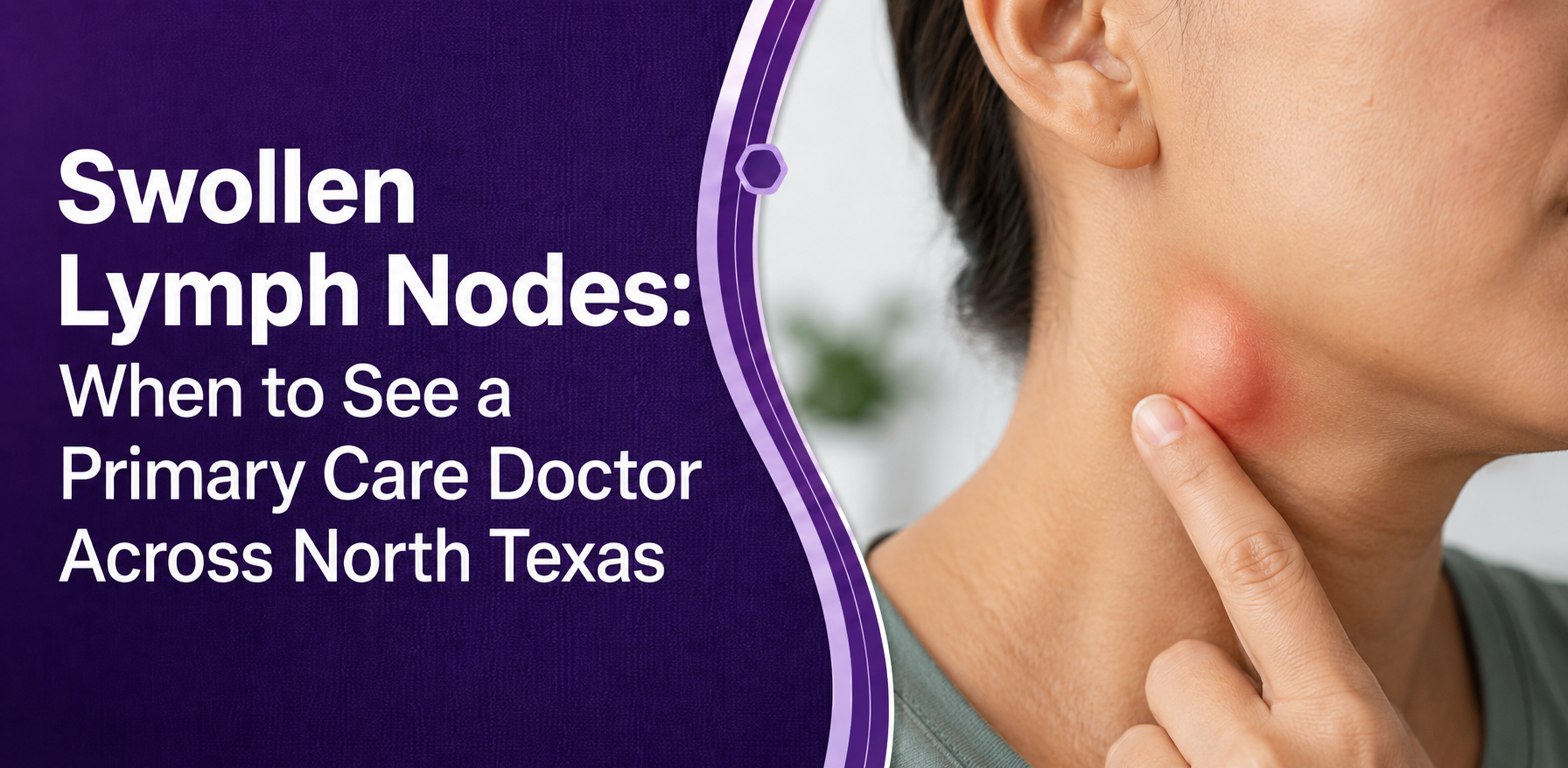
You may notice a lump under the jaw, on the side of the neck, in the armpit, or near the groin.
Some people also have soreness, warmth, redness, fever, cough, tiredness, body aches, or a runny nose.
When lymph nodes swell in the neck, the reason often starts nearby, such as a throat infection, sinus problem, ear infection, or dental issue.
Common causes include colds, flu, strep throat, ear infections, sinus infections, tooth infections, skin wounds, and bacterial skin infections. Immune conditions can also trigger lymph node swelling.
Less common causes need medical review when symptoms do not follow a normal infection pattern.
When to See a Doctor for Swollen Lymph Nodes
Many people search “when to see a doctor for swollen lymph nodes” because they do not know whether to wait or book a visit. That question matters because the timing, texture, size, and symptoms can give important clues.
Schedule a primary care visit if swollen lymph nodes have no clear cause, keep growing, feel hard or fixed, cause severe pain, or last longer than expected.
If the swelling doesn’t have an obvious cause, continues to get larger, or doesn’t improve within 2 to 4 weeks, it’s wise to schedule a visit. A lymph node that feels hard, rubbery, or fixed in place is also in need of a medical check.
You should also speak with a doctor if swollen lymph nodes are associated with fever, night sweats, unexplained weight loss, ongoing tiredness, skin drainage, or difficulty swallowing. These symptoms don’t necessarily mean something serious, but they do deserve a closer look.
Can a Primary Care Doctor Check Swollen Lymph Nodes?
Yes. A primary care doctor can examine the area, review your symptoms, and look for the most likely cause. You do not always need a specialist first. Primary care often gives patients the right starting point.
During the visit, your provider may check the size, location, tenderness, texture, and movement of the lymph node. The exam may also include your throat, ears, skin, mouth, teeth, and nearby infection signs.
Your provider may ask about recent illness, fever, travel, medicines, weight changes, or how long the swelling has stayed.
This careful review helps your provider decide whether you need home care, medicine, lab testing, imaging, follow-up, or referral.
What Happens During a Swollen Lymph Node Visit?
At your visit, the provider will first ask about the swelling and how it started. They may ask when you noticed the lump, whether it feels painful, whether it has changed in size, and whether you recently had a cold, sore throat, skin irritation, dental problem, or other infection.
After that, the provider may examine the swollen area and check nearby parts of the body. For example, a swollen node under the jaw may point to a throat, sinus, ear, or dental issue.
A swollen node in the armpit may connect with a skin irritation, wound, or infection on the arm or chest area. A swollen node in the groin may connect with irritation or infection in the lower body.
Evaluation may include a medical history, physical exam, blood tests, imaging, or biopsy when the cause needs more investigation.
Swollen Lymph Nodes Treatment Near Me: What Treatment Depends On
Swollen lymph nodes do not have one single treatment. The right care depends on the cause. Treatment depends on what caused the swelling. If a virus triggered it, the lymph node may shrink as you recover.
If bacteria caused the infection, your provider may recommend antibiotics. When swelling relates to an immune problem or another health condition, the care plan may involve more testing or a different type of treatment.
Swollen lymph nodes from a virus usually go down after the virus goes away, and antibiotics do not help viral infections. Treatment for other causes depends on the diagnosis.
That is why a medical check can help. Guessing can delay the right care, especially when swelling lasts, worsens, or comes with other symptoms.
Can Swollen Lymph Nodes Go Away Without Treatment?
Some swollen lymph nodes go down on their own after a common infection. Warm compresses, fluids, rest, and symptom care may help with mild tenderness. Still, home care should not replace a visit when the lump feels unusual or does not improve.
Watch the pattern. A lymph node that slowly gets smaller after a cold usually feels less concerning than a node that grows, stays hard, or appears without illness. Your provider can help you understand the difference.
Swollen Lymph Nodes in North Texas: Where Can You Get Checked?
A swollen lump in your neck, under your jaw, armpit, or groin can raise questions fast. Patients in Irving, Plano, Frisco, Prosper, Anna, Ennis, Kaufman, Kemp, Aubrey, Flower Mound, Mesquite, and nearby North Texas areas can visit Passion Health Advanced Primary Care for swollen lymph node evaluation.
If you searched “swollen lymph nodes treatment near me” or need a swollen lymph nodes primary care doctor, a visit can help you understand the possible cause, check for infection signs, and decide the right next step.
Final Takeaway: Do Not Guess About Swollen Lymph Nodes
Swollen lymph nodes often come from common infections, but you should not ignore swelling that lasts, grows, feels hard, or comes with fever, night sweats, weight loss, or ongoing fatigue.
Passion Health Advanced Primary Care can evaluate swollen lymph nodes, review possible causes, and guide your next step in North Texas.
FAQs
1. What causes swollen lymph nodes?
Common causes include colds, flu, sore throat, sinus infection, ear infection, dental infection, skin infection, and immune system reactions.
2. When should I see a doctor for swollen lymph nodes?
See a doctor if swelling grows, lasts 2 to 4 weeks, feels hard or fixed, has no clear cause, or comes with fever, night sweats, weight loss, or fatigue.
3. Can a primary care doctor treat swollen lymph nodes?
Yes. A primary care doctor can check the swollen area, look for infection signs, order tests if needed, and guide treatment.
4. Are swollen lymph nodes always serious?
No. Many cases come from common infections. Still, long-lasting, growing, painful, or unusual swelling needs medical evaluation.
5. Where can I get swollen lymph nodes treatment near me?
Passion Health Advanced Primary Care offers swollen lymph node evaluation for patients across North Texas.