Key Takeaways
- The FDA has not approved Ozempic specifically for PCOS.
- Semaglutide may support weight management in some adults with PCOS.
- GLP-1 medications may also support metabolic health in appropriate patients.
- Research shows the clearest benefits for weight-related outcomes.
- PCOS does not automatically mean Ozempic is the right treatment for you.
- A healthcare provider should review your health before discussing prescription weight-management medications.
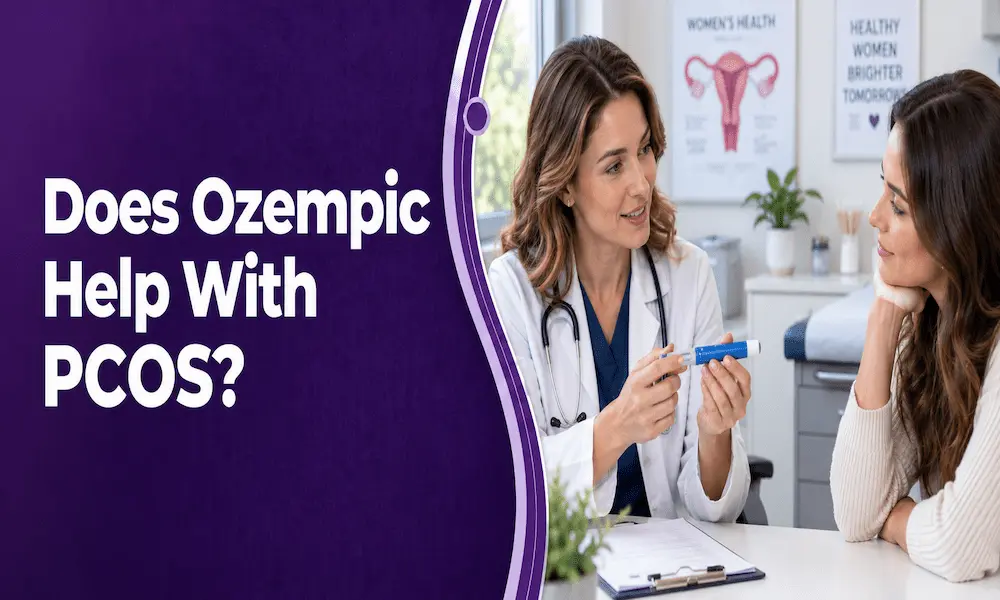
Does Ozempic Help With PCOS? Many people ask this question when PCOS makes weight management or blood sugar control more challenging.
Ozempic contains semaglutide, a GLP-1 receptor agonist that helps control blood sugar in adults with type 2 diabetes. However, the FDA has not approved Ozempic specifically to treat PCOS.
Still, doctors may consider GLP-1 medications for some adults with PCOS when weight or metabolic concerns also affect their health.
Because PCOS looks different from person to person, the right treatment depends on your symptoms, medical history, metabolic health, current medications, and personal goals.
If PCOS and weight changes are affecting your health, a medical evaluation can help you understand which options may fit your needs.
What Is PCOS, and Why Can It Affect Weight?
PCOS affects hormones and metabolism and occurs in about 10% to 13% of reproductive-aged women worldwide. Common symptoms include irregular periods, acne, excess hair growth, fertility challenges, and metabolic concerns.
PCOS can also increase the risk of insulin resistance, type 2 diabetes, and weight-management difficulties. Because these issues often overlap, researchers continue to study treatments that affect appetite, blood sugar, and body weight.
Does Ozempic Help With PCOS?
When people ask “Does Ozempic Help With PCOS?”, the answer requires some context.
Ozempic contains semaglutide. The medication belongs to a class called GLP-1 receptor agonists. The FDA currently approves Ozempic to improve blood sugar control in adults with type 2 diabetes and to reduce certain cardiovascular and kidney risks in specific adults with type 2 diabetes. The FDA does not list PCOS as an approved indication.
However, PCOS often overlaps with metabolic concerns. For example, some people may also have insulin resistance, prediabetes, type 2 diabetes, or higher body weight.
In those situations, a clinician may discuss GLP-1 medications when the person’s overall health and treatment goals support their use.
Therefore, Ozempic does not serve as a standard treatment for every person with PCOS. Instead, healthcare providers need to consider the complete health picture.
How Does Ozempic Work for PCOS?
Semaglutide works by activating GLP-1 receptors in the body. Although the medication does not directly treat the underlying cause of PCOS, its metabolic effects may matter for some people who also struggle with weight or blood sugar.
Helps Control Appetite
GLP-1 signaling can influence appetite and fullness. As a result, some people may eat less because they feel satisfied sooner and remain full longer.
For patients who qualify for medical weight management, this appetite effect can support a structured treatment plan.
Slows Digestion
Semaglutide slows stomach emptying. Consequently, food stays in the stomach longer, which can contribute to a longer feeling of fullness. The FDA prescribing information also notes that Ozempic delays gastric emptying.
Supports Blood Sugar Control
Semaglutide helps regulate blood glucose in people with type 2 diabetes. This effect matters because metabolic concerns often overlap with PCOS.
However, a person should not assume that PCOS automatically means they need a glucose-lowering medication.
May Support Weight Management
Appetite changes, slower digestion, and metabolic effects can contribute to weight reduction in some patients.
For people with PCOS and higher weight, weight management may improve overall metabolic health. Still, individual results can vary significantly.
PCOS, Insulin Resistance and Weight Management
Insulin resistance is common in PCOS and can raise the risk of type 2 diabetes and other metabolic concerns. However, PCOS can affect people at any body size, so weight alone should not guide treatment.
A complete evaluation may include blood sugar, blood pressure, cholesterol, symptoms, medications, and weight history to help choose the most appropriate care plan.
What Does Research Say About Semaglutide for PCOS?
Research on GLP-1 medications for PCOS is growing. A 2026 review found modest short-term BMI reductions in women with PCOS and Higher
weight or obesity, but evidence remains limited for insulin, menstrual changes, excess hair growth, and reproductive outcomes.
Current PCOS guidelines also support cautious use of anti-obesity medications for weight management while calling for more long-term research.
Therefore, semaglutide may help with weight-related concerns, but it does not cure PCOS or reliably improve every symptom.
Is Ozempic FDA-Approved for PCOS?
No. The FDA has not approved Ozempic specifically for PCOS.
The current FDA prescribing information lists Ozempic for adults with type 2 diabetes, including certain cardiovascular and kidney-risk indications. PCOS does not appear among its approved uses.
Nevertheless, clinicians sometimes prescribe medications for a condition or purpose that does not appear in the FDA-approved indication. Doctors call this off-label prescribing.
Off-label use does not automatically mean that a medication will suit every patient. Instead, the prescribing clinician must consider the available evidence, potential benefits, risks, medical history, and treatment goals.
Ozempic vs. Wegovy for PCOS: What’s the Difference?
Ozempic and Wegovy both contain semaglutide, so patients often confuse the two medications.
However, they serve different approved treatment purposes. Ozempic primarily targets type 2 diabetes and certain related cardiovascular and kidney risks. Wegovy uses semaglutide within an FDA-approved weight-management treatment program for qualifying patients.
Neither medication has a specific FDA approval for PCOS.
Therefore, asking which drug works “better for PCOS” oversimplifies the issue. A clinician should first determine why someone needs treatment—such as diabetes management, weight management, or another health concern—and then consider the appropriate options.
Who May Be a Candidate for Medical Weight Management?
PCOS alone does not determine whether someone qualifies for prescription weight-management treatment.
Instead, a healthcare provider may review several factors, including:
Current weight and weight history
Blood sugar levels
Prediabetes or type 2 diabetes
Blood pressure
PCOS-related concerns
Current medications
Previous weight-management efforts
Other medical conditions
Personal treatment goals
Moreover, a clinician should consider medication risks and contraindications before recommending treatment.
What Are the Side Effects and Risks of Ozempic?
Ozempic can cause side effects, so patients should understand both potential benefits and risks before starting treatment.
The FDA lists the most common side effects as
Nausea
Vomiting
Diarrhea
Ozempic also carries important warnings involving conditions such as pancreatitis, gallbladder disease, severe gastrointestinal reactions, and thyroid C-cell tumors. People with a personal or family history of medullary thyroid carcinoma or Multiple Endocrine Neoplasia syndrome type 2 should not use Ozempic.
When Should You Talk to a Primary Care Provider?
Consider talking with a healthcare provider if PCOS symptoms, weight changes, or metabolic concerns have started affecting your health.
For example, you may benefit from an evaluation if you experience:
Difficulty managing your weight
Irregular or missed periods
Concerns about high blood sugar
Prediabetes or type 2 diabetes
High blood pressure or cholesterol
Questions about semaglutide or GLP-1 medications
Side effects from a current medication
A primary care visit can also identify health concerns that extend beyond PCOS.
Therefore, instead of choosing a medication based on online information alone, discuss your symptoms and goals with a qualified healthcare professional.
How Passion Health Can Help With PCOS and Weight Management
If you keep asking, “Does Ozempic Help With PCOS?” the more useful question may be, “What treatment makes sense for my health?”
At Passion Health Advanced Primary Care, a provider can review your PCOS concerns, weight history, blood sugar, blood pressure, current medications, metabolic health, and treatment goals.
From there, your provider can discuss appropriate next steps and determine whether medical weight management or another approach fits your needs.
Treatment should focus on your overall health—not simply access to a specific medication.
Final Takeaway
Does Ozempic Help With PCOS? For some people, semaglutide may support weight or metabolic management when their overall health makes GLP-1 treatment appropriate. However, Ozempic does not serve as an FDA-approved treatment for PCOS itself, and current research does not prove that it improves every PCOS symptom.
Instead, focus on individualized care. A healthcare provider can look at your metabolic health, symptoms, medical history, and goals before recommending an appropriate treatment plan.
Struggling with PCOS-related weight concerns?
Schedule an evaluation at Passion Health Advanced Primary Care to discuss possible causes and receive personalized next steps.
Frequently Asked Questions
1. Does Ozempic Help With PCOS Weight Loss?
GLP-1 medications may support short-term weight reduction in some adults with PCOS and higher weight or obesity. However, results vary, and Ozempic does not have FDA approval specifically for PCOS. Current research supports cautious, individualized medical decision-making.
2. How does Ozempic work for PCOS?
Ozempic contains semaglutide, which activates GLP-1 receptors. It affects blood sugar regulation, slows gastric emptying, and can influence appetite. These effects may support metabolic or weight-related goals in some people with PCOS, but semaglutide does not directly cure PCOS.
3. Is Ozempic FDA-approved for PCOS?
No. The FDA has not approved Ozempic specifically to treat PCOS. Its approved indications focus on adults with type 2 diabetes and certain related cardiovascular and kidney risks.
4. Can Ozempic help with insulin resistance from PCOS?
Researchers continue to study this question. Some studies suggest GLP-1 medications may improve metabolic measures, while a recent systematic review found insufficient evidence to draw firm conclusions about insulin outcomes in PCOS.
5. Is Wegovy the same as Ozempic?
Both medications contain semaglutide, but they have different FDA-approved indications and treatment contexts. A healthcare provider can determine whether either medication fits a patient’s medical needs.
Medical Disclaimer
This article provides general educational information and does not replace personalized medical advice, diagnosis, or treatment. Always discuss prescription medications and individual treatment decisions with a qualified healthcare professional.

About the Author
Dr. Anantha Chentha is a board-certified internal medicine physician with extensive experience in primary care and chronic disease management. He provides comprehensive, patient-centered care with a focus on prevention, accurate diagnosis, and long-term health management.
View Provider Profile →