Key Takeaways
- Zinc supplements do not work on the same timeline for everyone.
- Your zinc level, diet, dose, absorption and health can affect results.
- People with low zinc intake may notice changes sooner than those with adequate levels.
- Taking more zinc does not necessarily make it work faster.
- High zinc intake may cause nausea, stomach upset and interfere with copper absorption.
- If symptoms continue, a primary care evaluation can help identify the underlying cause.
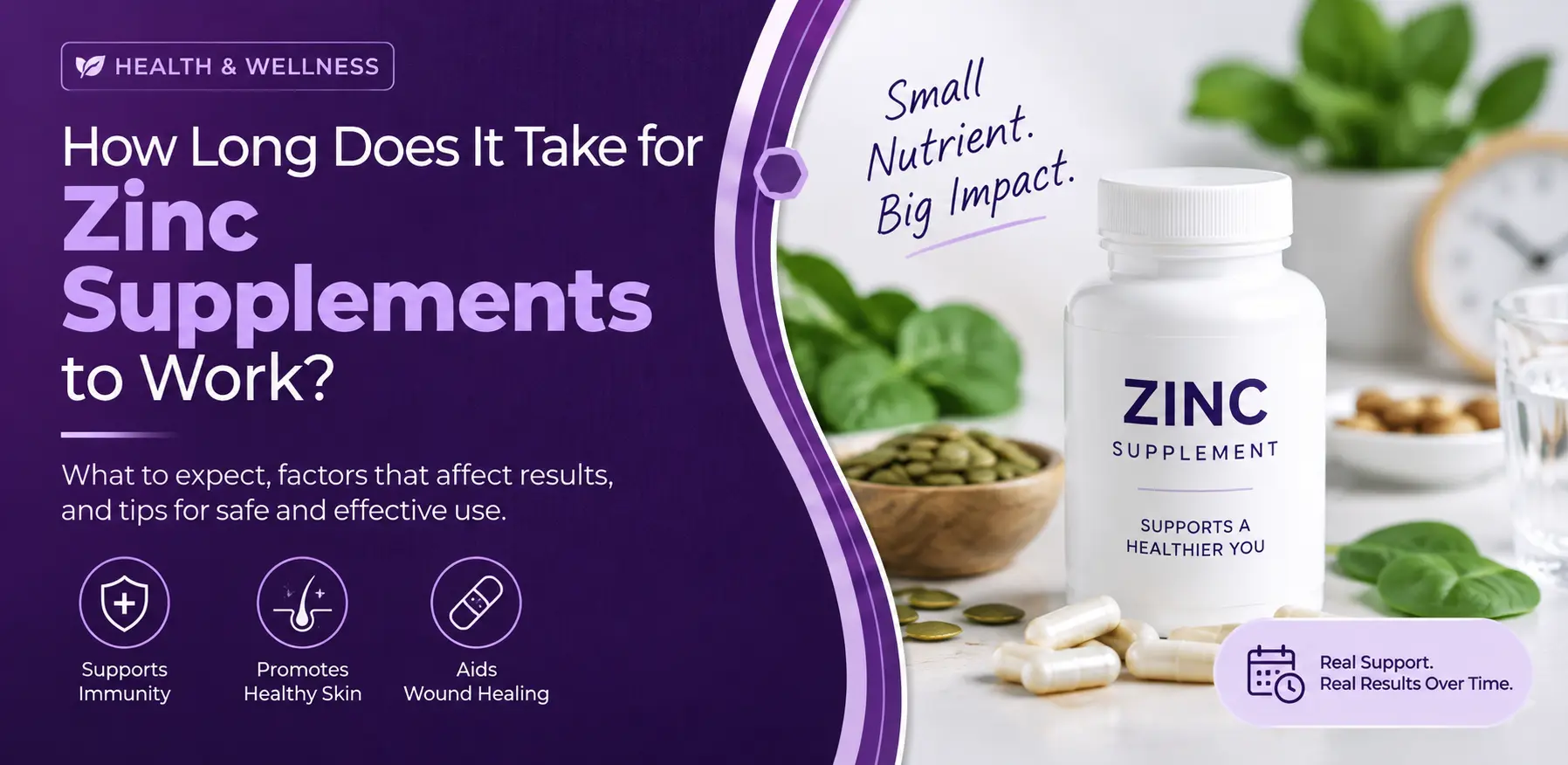
Starting a zinc supplement often raises one immediate question: how long does it take for zinc supplements to work? Some people take zinc after a clinician identifies low intake. Others start it because they want nutritional support for immunity, healing, appetite, or general wellness.
There is no single timeline that applies to everyone. Your response depends on why you take zinc, your starting zinc status, the dose, your diet, absorption, medications, and overall health.
Important: Zinc works as a nutrient that supports normal body functions. It does not behave like a fast-acting medicine that produces a clear effect within a few hours.
What Happens After You Take Zinc?
Your Body Starts With Absorption
After you swallow a zinc supplement, your digestive system breaks it down and absorbs part of the mineral. Your body then distributes zinc where it can support normal cellular and metabolic activity.
Absorption can begin relatively quickly, but that does not mean you will notice a physical change the same day.
Feeling a Difference Takes Longer
A nutrient can enter your system long before you notice a result. If low zinc contributes to a symptom, your body may need time to restore balance and support affected tissues.
For example, appetite or taste changes may follow a different timeline than hair, skin, or wound-related concerns.
Key point: Absorption may happen quickly, but visible or noticeable changes can take much longer.
Why Does Zinc Work Faster for Some People?
Your Starting Zinc Level Matters
Someone with inadequate zinc intake may respond differently from someone who already gets enough zinc through food.
If your zinc intake already meets your needs, adding a supplement may not produce any noticeable improvement.
Your Diet Changes the Picture
Foods such as meat, seafood, dairy products, beans, nuts, fortified cereals, and whole grains can contribute zinc to your daily diet.
A supplement only adds to what you already consume.
Your Health Can Affect Absorption
Digestive problems and certain medical conditions may influence how efficiently your body absorbs nutrients.
If absorption remains poor, simply taking more zinc may not solve the underlying issue.
Important: The reason behind low zinc matters just as much as the supplement itself.
What If You Actually Have Low Zinc?
Deficiency Gives Zinc a Clearer Purpose
Zinc supplementation makes more sense when a healthcare professional identifies a real need.
A clinician may review your diet, symptoms, medications, health history, and sometimes laboratory results before deciding whether zinc supplementation fits your situation.
Recovery Does Not Follow One Schedule
Even with low zinc, one symptom may improve before another.
Appetite changes may respond differently from slow wound healing, hair concerns, or skin problems. The body may also need time to restore normal nutrient status.
The Cause Still Needs Attention
If a digestive condition, restrictive eating pattern, or another health issue contributes to low zinc, correcting that problem also matters.
A supplement cannot always fix the entire situation by itself.
Quick reminder: Symptoms alone cannot confirm zinc deficiency.
How Can You Tell Whether Zinc Is Helping?
Start With a Specific Goal
Before judging the supplement, ask why you started taking it.
Did a clinician recommend zinc after an evaluation? Did you start it because of appetite changes? Are you hoping it will help frequent illness or slow healing?
A clear reason makes progress easier to evaluate.
Watch the Original Concern
Instead of searching for a general feeling that zinc is “working,” look at the specific issue that led you to use it.
If nothing changes, avoid increasing the dose automatically.
Persistent Symptoms Need Another Look
Fatigue, hair changes, appetite loss, slow healing, and frequent infections can have several causes.
Sleep problems, anemia, thyroid conditions, medication effects, infections, stress, and other nutritional issues can sometimes create similar symptoms.
Does Zinc Work Immediately for Immunity?
Zinc Supports Normal Immune Activity
Zinc plays an important role in the normal function of immune cells.
However, one zinc tablet does not suddenly make your immune system stronger.
Immunity Depends on More Than One Nutrient
Sleep, nutrition, chronic health conditions, stress, age, and exposure to infection can all affect how your immune system responds.
Zinc is only one part of that larger picture.
What About Zinc for Colds?
Researchers have studied certain zinc products, including lozenges, for cold symptoms. Results can differ depending on the formulation, timing, and dose.
That does not mean every zinc product prevents an infection or shortens every cold.
Key point: Zinc supports normal immune function, but it does not offer guaranteed protection from illness.
Can More Zinc Make It Work Faster?
Higher Doses Do Not Mean Faster Results
It can feel tempting to take more zinc when you do not notice a quick improvement.
However, increasing the dose does not automatically speed up recovery.
Too Much Zinc Can Create New Problems
For most adults, the tolerable upper intake level is 40 mg of zinc per day from all sources, unless a healthcare professional recommends another amount for a specific medical reason.
Excessive zinc intake may lead to nausea, vomiting, stomach discomfort, headaches, or reduced appetite.
Copper Balance Also Matters
Long-term high zinc intake can interfere with copper absorption.
That means an attempt to correct one nutrient problem could eventually contribute to another.
Important: More zinc is not necessarily more effective zinc.
Why Does Zinc Sometimes Upset the Stomach?
Nausea Can Happen
Some people experience nausea, stomach irritation, heartburn, or vomiting after taking zinc.
The dose and product type may influence how well you tolerate it.
Empty-Stomach Use May Feel Different
Certain zinc products can feel harder on the stomach when taken without food.
However, not every product follows the same instructions.
Prescription Zinc Is Different
Prescription zinc acetate may come with directions that differ from common over-the-counter supplements.
Follow the instructions for your specific product rather than applying one rule to every type of zinc.
Quick tip: If zinc repeatedly causes stomach problems, review the dose and timing with a clinician or pharmacist.
Can Zinc Interact With Medicines?
Some Medications Need Special Timing
Zinc can interact with certain medicines, including some antibiotics and other prescription drugs.
Taking them too close together may affect how well the medicine or zinc gets absorbed.
Other Supplements Matter Too
Iron and other minerals can also influence zinc absorption when people take large amounts at the same time.
If you use several supplements, the timing can become more important.
Avoid Guessing With Dose Spacing
A pharmacist or healthcare professional can tell you whether you need to separate zinc from a specific medicine.
Important: Always include vitamins and supplements when you tell your healthcare provider what you take.
When Should the Question Change From “When?” to “Why?”
No Improvement Deserves Attention
If you have taken zinc for a reasonable period and still experience the same symptoms, asking when zinc will start working may no longer be the most useful question.
You may need to ask whether zinc addresses the real cause.
Look Beyond One Nutrient
Ongoing fatigue, appetite changes, repeated infections, hair concerns, digestive symptoms, or slow wound healing may need a broader medical review.
Primary care can help connect symptoms with nutrition, medications, health history, and other possible causes.
Key takeaway: Sometimes the right next step is not a different supplement—it is a better explanation for the symptom.
Final Takeaway
So, how long does it take for zinc supplements to work? There is no exact number of days that fits everyone.
Your results depend on whether you actually need more zinc, why you take it, how much you use, your diet, your health, and how well your body absorbs nutrients. Some changes may appear sooner, while others may take longer. In some situations, zinc may not address the real cause of the problem at all.
If you continue to have symptoms or feel unsure about zinc, vitamins, or other supplements, book an appointment with Passion Health Advanced Primary Care. A primary care provider can review your diet, medications, symptoms, and supplement use and help you choose an appropriate next step.
Have questions about zinc, supplements, or ongoing symptoms?
Book an appointment with Passion Health Advanced Primary Care today.
Frequently Asked Questions
1. How long does it take for zinc supplements to work?
There is no fixed timeframe. The result depends on your zinc status, health, diet, dosage, absorption, and reason for taking the supplement.
2. Can I feel zinc working after one dose?
Usually not. Zinc supports ongoing body processes rather than causing an immediate noticeable effect.
3. Can zinc work faster if I take more?
No. A higher dose may increase side effects without producing faster results.
4. Why does zinc make me nauseous?
Some people develop stomach irritation from zinc, especially with certain doses or formulations.
5. Can I take zinc every day?
Some people can use zinc daily, but the dose matters. Long-term high intake can cause side effects and nutrient imbalances.
6. Should I stop zinc if nothing changes?
Do not automatically increase or stop a supplement prescribed for a medical reason. If you started zinc on your own and symptoms continue, discuss the situation with a healthcare professional.

About the Author
Dr. Anantha Chentha is a board-certified internal medicine physician with extensive experience in primary care and chronic disease management. He provides comprehensive, patient-centered care with a focus on prevention, accurate diagnosis, and long-term health management.
View Provider Profile →