Food Poisoning Symptoms Can Start Suddenly
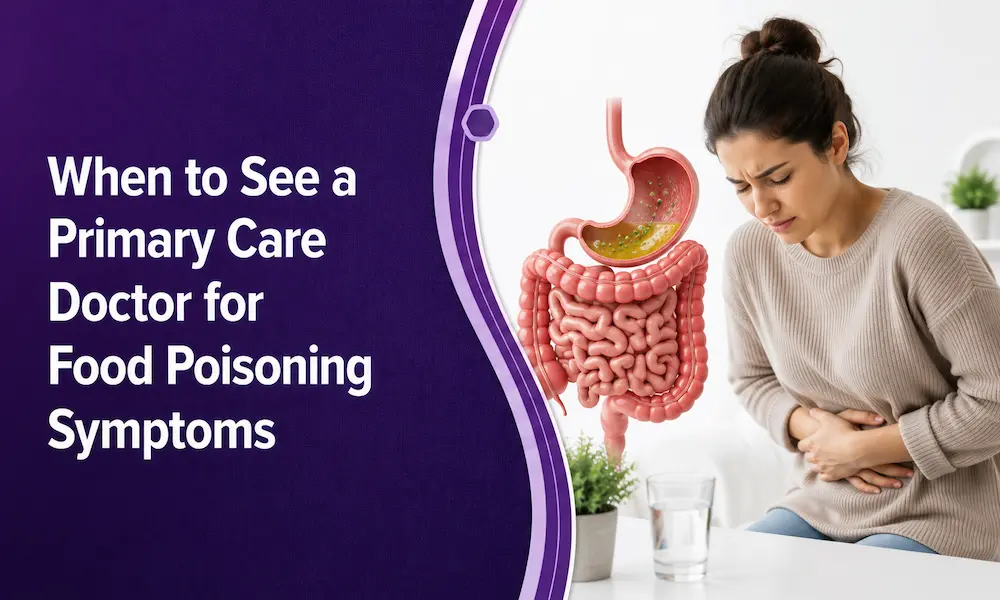
Food poisoning can turn a normal day into a stressful one. One meal may lead to stomach cramps, nausea, vomiting, diarrhea, fever, weakness, and body aches. Many cases improve with rest, fluids, and simple food choices. Some cases need medical attention.
Food poisoning happens when harmful germs, toxins, or parasites enter the body through contaminated food or drinks.
The symptoms can start within a few hours. Sometimes they may take a day or more to appear. The timing depends on the germ and the amount of contaminated food.
Mild symptoms may improve at home. Severe symptoms should not wait. A primary care doctor can help when symptoms continue, dehydration starts, or the illness affects a high-risk patient.
Feeling sick after eating? PassionHealth Advanced Primary Care can check your symptoms, review possible food exposure, and guide the right next step. Book an appointment →
Patients looking for primary care in Frisco, Irving, Plano, Prosper, Aubrey, Flower Mound, Ennis, Kaufman, McKinney, and Kemp.
Common Food Poisoning Symptoms
Food poisoning does not look the same for every patient. Some people get mild stomach upset. Others develop stronger symptoms that affect hydration, energy, and daily activity.
Common symptoms may include:
Symptoms often feel like a stomach bug. The difference may depend on recent food exposure.
When to See a Primary Care Doctor for Food Poisoning
See a primary care doctor for food poisoning if symptoms do not improve or start to worsen. The body can lose water and minerals quickly through vomiting and diarrhea. Dehydration can make a patient feel weak, dizzy, confused, or unable to function normally.
A doctor visit may help when you notice:
Diarrhea lasting more than 3 days
Bloody diarrhea
A fever that stays high
Vomiting that keeps coming back
Trouble keeping fluids down
Severe stomach pain
Dry mouth or strong thirst
Little or no urination
Dizziness when standing
Ongoing weakness
Symptoms after eating recalled food
Symptoms in an older adult
Symptoms in a patient with a weak immune system
A primary care doctor can check hydration, ask about recent meals, review medicines, and decide whether testing or treatment may help. This visit can also lower the risk of guessing wrong at home.
Why Dehydration Matters
Dehydration is one of the biggest concerns with food poisoning. Vomiting and diarrhea remove fluids from the body. Fever can make fluid loss worse. When the body loses too much fluid, simple home care may not work well enough.
Watch for these dehydration signs:
Very dry mouth
Little urination
Dizziness
Weakness
Lightheaded feeling
Confusion
Sunken eyes
Extreme thirst
Patients should not wait until dehydration becomes severe. A primary care doctor can check the patient and give clear hydration guidance. Some patients may need oral rehydration solutions or a higher level of care.
Food Poisoning With Fever
A low fever can happen with many stomach infections. A higher fever may suggest a stronger infection. Fever with bloody diarrhea, severe cramps, or ongoing vomiting needs medical care.
Do not ignore fever when it comes with:
Worsening diarrhea
Blood in stool
Severe stomach pain
Confusion
Extreme weakness
Fever tells the body that the immune system has started fighting something. A primary care doctor can look at the full picture and decide whether the patient needs testing, medicine guidance, or follow-up care.
Food Poisoning and Listeria: Why It Matters
Listeria is one foodborne germ that needs extra attention. Listeria infection can come from foods such as deli meats, hot dogs, soft cheeses, unpasteurized milk products, cold-smoked fish, raw sprouts, raw sushi, and unwashed fruits or vegetables.
Some patients may only feel mild stomach symptoms. Others can develop serious illnesses. Listeria can cause fever, chills, headache, diarrhea, vomiting, muscle aches, confusion, stiff neck, loss of balance, or seizures.
Higher-risk patients include:
Older adults
Pregnant women
Patients with weak immune systems
Patients taking immunosuppressant medicines
Patients with serious chronic diseases
A high-risk patient should contact a healthcare provider after possible Listeria exposure, especially if symptoms start after eating recalled food.
Food Poisoning vs. Stomach Bug
Food poisoning and a stomach bug can feel similar. Both can cause nausea, vomiting, diarrhea, cramps, and weakness. The cause can differ.
Food poisoning often starts after eating contaminated food. A stomach bug often spreads from person to person through close contact, shared surfaces, or poor hand hygiene.
A few clues may help:
Symptom Pattern | Food Poisoning | Stomach Bug |
Start time | Often after a meal | Often, after exposure to a sick person |
Main symptoms | Vomiting, diarrhea, cramps | Vomiting, diarrhea, and fever |
Duration | Hours to several days | Several days |
Concern signs | Blood, dehydration, high fever | Dehydration, ongoing fever |
A primary care doctor can help when the cause feels unclear or when symptoms do not improve.
What a Primary Care Doctor May Check
A primary care visit gives the patient a safer plan than guessing at home. The doctor may ask about recent meals, travel, restaurant food, leftovers, raw foods, recalled products, and symptoms in others who ate the same meal.
The visit may include:
Temperature check
Hydration review
Abdomen exam
Medicine review
Food exposure questions
Stool testing, if needed
Lab testing if symptoms look serious
Guidance on fluids and diet
Follow-up plan
Antibiotics do not help every case of food poisoning. Some infections need specific treatment, while others improve with supportive care. A doctor can guide that decision.
What to Do at Home for Mild Food Poisoning
Mild food poisoning often improves with simple care. The goal is to prevent dehydration and avoid irritating the stomach.
Helpful steps include:
Sip fluids often
Use oral rehydration drinks when needed
Eat bland foods when your appetite returns
Try crackers, rice, bananas, toast, or soup
Avoid alcohol
Avoid greasy foods
Avoid heavy dairy meals
Wash your hands often
Clean bathroom and kitchen surfaces
Do not take anti-diarrhea medicine without guidance if you have bloody diarrhea, high fever, or severe stomach pain. Some medicines can make certain infections worse.
Foods That Can Cause Food Poisoning
Many foods can carry germs when they are not cleaned, cooked, stored, or handled correctly.
Common sources include:
Undercooked chicken
Undercooked beef
Raw eggs
Seafood
Unwashed fruits
Unwashed vegetables
Raw sprouts
Deli meats
Soft cheeses
Unpasteurized milk
Food left out too long
Leftovers stored too long
Food poisoning can also happen at home, in restaurants, parties, picnics, and travel settings. Safe storage and clean handling matter every time.
How to Lower Your Risk
Food safety starts with daily habits. Small steps can prevent many stomach infections.
Use these safety tips:
Wash your hands before cooking
Rinse fruits and vegetables
Keep raw meat away from ready-to-eat foods
Use separate cutting boards
Cook meat to a safe temperature
Refrigerate leftovers quickly
Reheat leftovers well
Check food recall alerts
Throw away spoiled food
Avoid unpasteurized dairy
Heat deli meats until steaming when needed
These steps matter more for homes with older adults, pregnant women, young children, or patients with weaker immune systems.
Do Not Wait If Symptoms Get Worse
Food poisoning can change quickly. A patient may start with mild nausea and later develop repeated vomiting, fever, weakness, or dehydration. Waiting too long can make recovery harder.
Call a primary care doctor when symptoms last longer than expected or feel stronger than a normal upset stomach. Bring details about what you ate, when symptoms started, and whether others feel sick too. This information helps the doctor understand the likely cause.
Final Thoughts
Food poisoning usually improves with fluids, rest, and time. Still, some symptoms need a doctor’s care.
Bloody diarrhea, diarrhea lasting more than 3 days, high fever, repeated vomiting, severe stomach pain, dehydration, confusion, or weakness should not be ignored.
A primary care doctor can check symptoms, guide safe treatment, and help patients know when testing or follow-up care may help.
This matters even more for older adults, pregnant women, and patients with weak immune systems.
Food poisoning symptoms not improving? PassionHealth Advanced Primary Care can help you understand your symptoms and take the right next step.
FAQs
1. How long does food poisoning last?
Food poisoning may last a few hours to several days. See a doctor if diarrhea lasts more than 3 days or symptoms get worse
2. When should I see a doctor for food poisoning?
See a doctor if you have bloody diarrhea, high fever, repeated vomiting, severe stomach pain, dizziness, confusion, or dehydration signs.
3. Can food poisoning cause dehydration?
Yes. Vomiting and diarrhea can remove too much fluid from the body. Dry mouth, dark urine, weakness, and dizziness may mean dehydration.
4. What foods can cause food poisoning?
Common causes include undercooked meat, raw eggs, seafood, unwashed produce, deli meats, soft cheeses, and food left out too long.
5. Is food poisoning the same as a stomach bug?
No. They can feel similar, but food poisoning often starts after eating contaminated food. A stomach bug often spreads from person to person.