
Are Petechiae Red Spots on Your Skin a Warning Sign?
Small red or purple dots on the skin can feel confusing. At first, they may look like a normal rash, bug bites, or skin irritation. But sometimes, those tiny dots are petechiae.
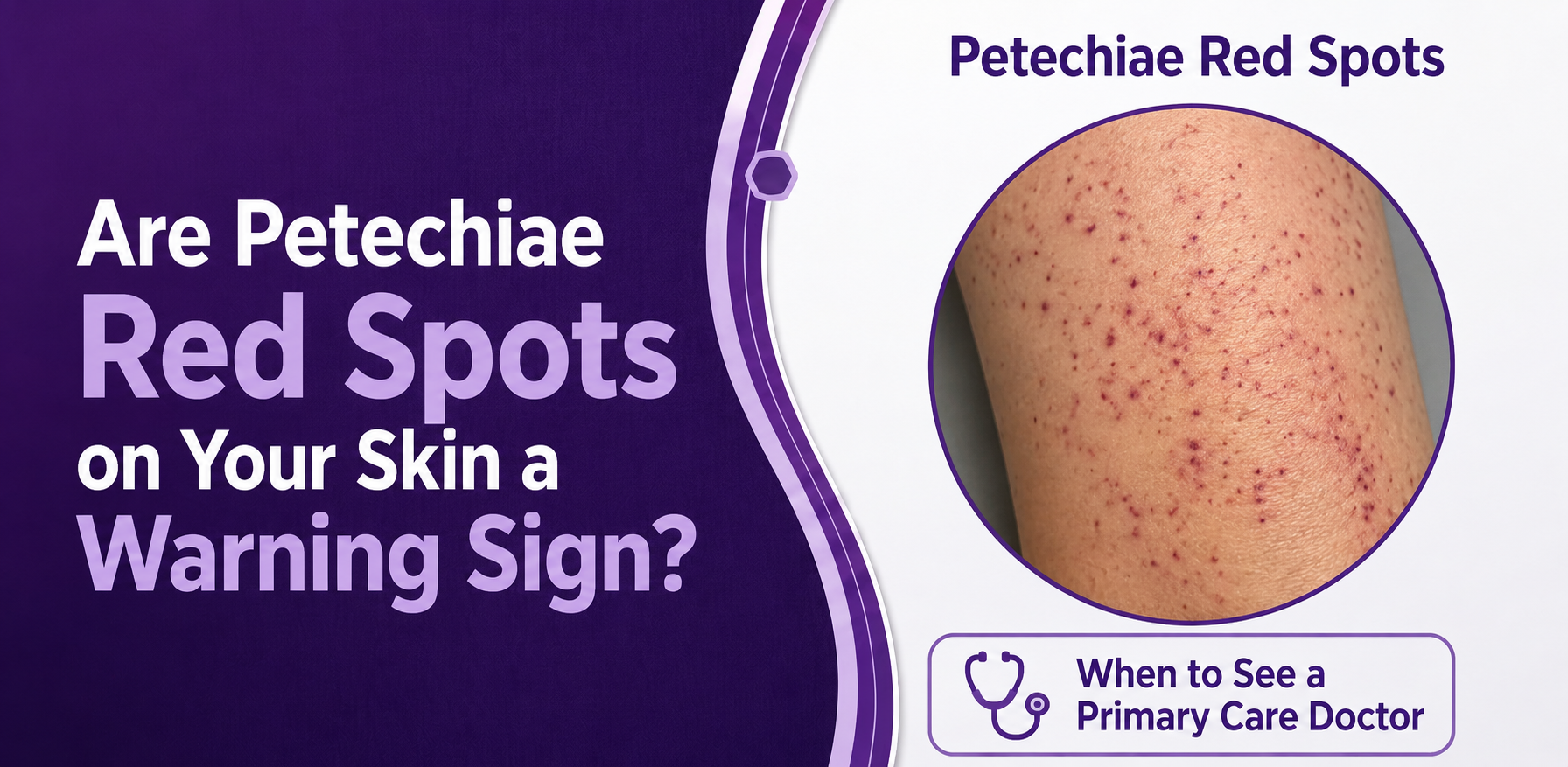
Petechiae, red spots on the skin, happen when very small blood vessels leak under the skin. The spots are usually flat. They may look red, purple, or brown, depending on skin tone.
Some causes are simple. Petechiae can sometimes appear after the body goes through pressure, such as repeated coughing, throwing up, lifting something heavy, or tight pressure on the skin.
But in some cases, petechiae can point to infection, low platelets, medication problems, or another health concern.
That is why new spots should not be ignored, especially when they appear suddenly or spread.
Not sure what those red spots mean? Book an appointment → Passion Health Advanced Primary Care.
Patients looking for primary care in Frisco, Irving, Plano, Prosper, Anna, Aubrey, Flower Mound, Ennis, Kaufman, Kemp, or Mesquite.
What Are Petechiae Red Spots on Skin?
Petechiae are flat, pinpoint marks that show up when a little bleeding happens under the skin. They are not the same as acne, hives, or a regular rash.
Most petechiae look like small dots. They may appear in groups. They can show up on the legs, arms, chest, stomach, face, eyelids, or inside the mouth.
One important clue is this: petechiae usually do not fade when pressed. A common rash may turn lighter for a moment when pressure is applied. Petechiae often stay the same color because the bleeding sits under the skin.
This does not mean every red dot is dangerous. Still, petechiae, red spots on the skin, deserve attention when the cause is not clear.
Petechiae Red Spots on Skin vs. a Regular Rash
Many people first think petechiae are a rash. That makes sense because both can look red or irritated.
However, there are some differences.
A regular rash may itch, burn, peel, swell, or feel raised. Petechiae usually feel flat. They often do not itch. They also do not feel like bumps on the skin.
The spots may be very small, almost like pinpoints made by a pen. They may appear in one area or spread across more skin.
If the spots came after heavy coughing or vomiting, the cause may be pressure. Petechiae need faster medical attention when they happen with fever, low energy, bruising, or bleeding.
What Can Trigger Petechiae Red Spots on Skin?
Petechiae can happen for many reasons. Some are mild. Others need a doctor’s evaluation.
Common causes may include:
Strong coughing
Vomiting
Heavy lifting
Straining
Skin pressure or injury
Bacterial infections
Certain medicines
Low platelet count
Blood clotting problems
Inflammation in blood vessels
A doctor looks beyond the spots. The full story matters. Recent illness, new medicine, fever, bruising, bleeding, and overall energy levels can help point to the cause.
When Petechiae Red Spots on Skin Need Medical Care
Petechia, or red spots on the skin, should be checked when they appear suddenly, spread quickly, or come with other symptoms.
Do not wait if petechiae happen with:
Fever
Dizziness
Confusion
Trouble breathing
Fainting
Severe tiredness
Easy bruising
Nosebleeds
Gum bleeding
Blood in urine or stool
Neck stiffness
Fast-spreading red or purple spots
These signs can mean the body needs quick medical attention. Petechiae may be small, but the cause behind them can be important.
A primary care visit can help decide whether testing, treatment, or referral is needed.
Petechiae Red Spots on Skin in Children
Petechiae in children can be more concerning because kids may not explain how they feel. A child may look tired, quiet, weak, or “not normal” before a parent understands what is wrong.
Parents should take petechiae seriously if a child also has fever, vomiting, trouble breathing, poor feeding, unusual sleepiness, or fast-spreading spots.
Even if the dots look small, it is safer to have a provider check them. A doctor can review recent illness, medicines, injuries, and symptoms.
How a Primary Care Doctor Checks Petechiae
Petechiae are a symptom, not a final diagnosis. The main goal is to find out why the spots appeared.
At Passion Health Advanced Primary Care, a provider may ask:
When did the spots start?
Are they spreading?
Did fever happen?
Any recent infection?
Any new medicine?
Any bruising or bleeding?
Any vomiting, coughing, or heavy lifting?
Any fatigue or weakness?
The provider may also check vital signs, examine the skin, review medicines, and discuss blood work if needed.
This helps patients get clear answers instead of worrying and guessing.
How Petechiae Red Spots on Skin Are Treated
Treatment depends on the cause.
If petechiae came from coughing, vomiting, or pressure, they may fade as the body heals. If the infection caused it, treatment may focus on the infection. If a medicine may be involved, a doctor can review safer next steps.
Do not change or stop any prescribed medicine without speaking with your doctor first. Some medicines need careful adjustment. Stopping suddenly can cause other problems.
No one cream fixes every case of petechiae. Because petechiae happen below the skin, a doctor first needs to understand what triggered them.
What to Do Before Your Appointment
A few simple steps can help the doctor understand the problem faster.
Take a clear photo of the spots. Write down when they started. Notice whether they spread. Check for fever. Make a list of all medicines and supplements.
Also, avoid scratching or scrubbing the area. Do not cover the spots with strong creams before a doctor sees them. If bleeding, bruising, fever, confusion, or breathing trouble happen, seek care right away.
What Not to Ignore
Petechiae, red spots on the skin, can seem harmless at first. But certain patterns matter.
Do not ignore spots that spread quickly. Do not ignore petechiae with fever. Do not ignore new bruising, bleeding gums, nosebleeds, or unusual weakness.
A small skin change can sometimes reveal a bigger health issue. Early care can help prevent delays.
Can Petechiae Be Prevented?
Not every case can be prevented. Still, healthy habits can lower some risks.
Wash your hands often. Avoid close contact with sick people. Protect skin from injury. Follow the medicine instructions carefully. Keep regular checkups, especially if a patient has chronic health conditions or takes long-term medication.
Good primary care also helps catch problems early. A yearly visit, medication review, and basic lab guidance can make a difference.
Why Choose Passion Health Advanced Primary Care?
Skin changes can feel stressful, especially when the spots appear suddenly. Passion Health Advanced Primary Care helps patients understand symptoms, review possible causes, and decide the right next step.
A provider can check the skin, review health history, discuss recent illness, and guide testing if needed. Patients can also get support for preventive care, chronic care, medication review, and referrals when needed.
The goal is simple: clear answers and timely care.
Final Thoughts
Petechiae, red spots on the skin, may look small, but they should not be brushed off. Some causes are simple. Others need medical care.
If new pinpoint red, purple, or brown dots appear, pay attention to timing, spreading, fever, bruising, and bleeding. A primary care visit can help find the cause and reduce worry.
Need a skin concern checked? Book an appointment → Passion Health Advanced Primary Care.
FAQs
1. Are petechiae always serious?
No. Petechiae are not always serious. They can happen after coughing, vomiting, or pressure. Still, sudden or spreading petechiae should be checked.
2. Do petechiae itch?
Petechiae usually do not itch. They are often flat and painless. If spots itch, another type of rash may be possible.
3. Can petechiae go away?
Some petechiae fade when the cause is mild. However, unexplained spots need a medical review to rule out serious causes.
4. When should I see a doctor for petechiae?
See a doctor if petechiae appear suddenly, spread, or happen with fever, bruising, bleeding, dizziness, confusion, or weakness.
5. Can medicine cause petechiae?
Some medicines may increase the risk of bleeding or bruising. A doctor can review current medicines and decide what needs attention.