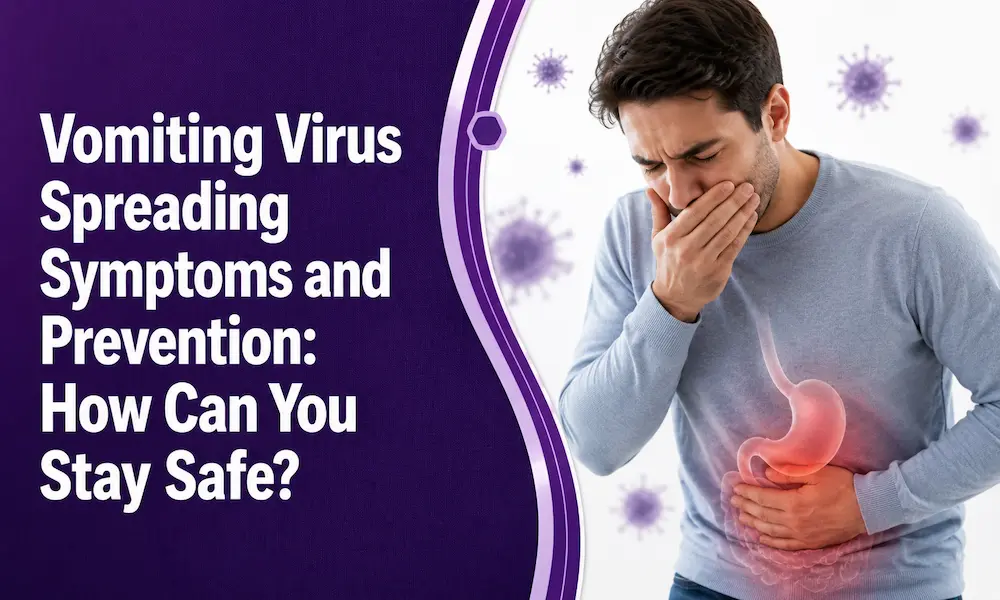
What Does a Vomiting Virus Mean?
A vomiting virus can start suddenly. One person may feel fine in the morning, then deal with vomiting, diarrhea, stomach cramps, and weakness by evening.
Many people call it a “stomach bug,” “stomach virus,” or “vomiting virus.” In many cases, this type of illness may come from viral gastroenteritis, and norovirus is one common cause.
When a vomiting virus spreads, the symptoms and prevention topic becomes popular, and patients usually want quick answers.
They want to know what symptoms to watch for, how the virus spreads, what to do at home, and when to call a doctor.
Need care for vomiting, diarrhea, stomach pain, or dehydration symptoms? Book an appointment with Passion Health Advanced Primary Care for safe medical guidance.
What Is a Vomiting Virus?
A vomiting virus is a common name people use for a virus that irritates the stomach and intestines. Doctors may call this viral gastroenteritis. It can cause sudden vomiting, watery diarrhea, nausea, stomach cramps, fever, headache, and body aches.
The CDC says norovirus symptoms usually start 12 to 48 hours after exposure and often include vomiting, diarrhea, nausea, and stomach pain. Fever, headache, and body aches can also happen.
Although many people call it “stomach flu,” it is not the same as influenza. Flu mainly affects the nose, throat, and lungs. A vomiting virus mainly affects the digestive system.
Norovirus, the Common Vomiting Virus
Norovirus, commonly called the vomiting virus, can cause sudden vomiting, diarrhea, nausea, and stomach cramps. Since it spreads quickly through food, surfaces, and close contact, knowing the symptoms and prevention steps can help protect your family.
Difference Between Norovirus and Vomiting Virus
Norovirus is a specific virus. It is one of the most common causes of a vomiting virus or stomach bug.
Topic | Vomiting Virus | Norovirus |
Meaning | Common or general name | Specific virus name |
Cause | Can happen from different viruses | Caused by norovirus only |
Symptoms | Vomiting, diarrhea, and stomach cramps | Vomiting, watery diarrhea, nausea, and cramps |
Spread | Depends on the virus | Spreads very fast through hands, food, surfaces, and close contact |
Medical term | Viral gastroenteritis | A common cause of viral gastroenteritis |
Why Is the Vomiting Virus Spreading So Fast?
A vomiting virus can spread quickly because only a small amount of the virus may make another person sick. It can move from person to person through hands, surfaces, food, drinks, bathrooms, towels, and shared objects.
Common spreading situations include:
How It Spreads | Common Example |
Close contact | Caring for a sick child or family member |
Contaminated surfaces | Touching door handles, phones, counters, or bathroom surfaces |
Food handling | Eating food prepared by someone who is sick |
Shared items | Sharing cups, spoons, towels, or utensils |
Crowded places | Schools, daycare centers, offices, nursing homes, and travel settings |
Vomiting Virus Spreading Symptoms
Symptoms can start suddenly. Some people vomit many times in one day. Others may have more diarrhea than vomiting. In children and older adults, symptoms can become more serious because fluid loss may happen faster.
Common symptoms include:
Sudden vomiting
Watery diarrhea
Nausea
Stomach pain or cramps
Low fever
Chills
Body aches
Tiredness
Loss of appetite
Most healthy people improve within a few days. However, dehydration can become dangerous, especially for young children, older adults, pregnant women, and people with chronic conditions.
How Long Does a Vomiting Virus Last?
A vomiting virus often lasts 1 to 3 days. However, weakness and low appetite may continue for a little longer.
Some people may also continue spreading the virus after they feel better, so prevention must continue even after vomiting stops.
Norovirus illness usually resolves within a few days, and treatment mainly focuses on replacing lost fluids. In some cases, IV fluids may be needed when a person cannot drink enough to avoid dehydration.
Vomiting Virus Spreading Prevention Tips
Prevention starts with simple habits. These steps can help protect family members, coworkers, and patients at higher risk.
1. Wash Hands With Soap and Water
Handwashing matters the most. Wash hands after using the bathroom, changing diapers, cleaning vomit or stool, and before preparing food. Hand sanitizer may help in some situations, but soap and water work better for many stomach viruses.
2. Clean High-Touch Surfaces
Clean bathroom surfaces, toilet handles, sinks, counters, door handles, phones, and light switches. Wear gloves when cleaning vomit or diarrhea accidents. Also, wash your hands after removing gloves.
3. Do Not Prepare Food While Sick
A sick person should avoid cooking for others during active vomiting or diarrhea. Also, avoid preparing food for at least 48 hours after symptoms stop. This helps reduce the chance of passing the virus to others.
4. Wash Clothes and Towels Carefully
Wash contaminated clothes, towels, bedsheets, and blankets with hot water when possible. Do not shake dirty laundry because germs can spread to nearby surfaces.
5. Keep Sick Family Members Separate
Use separate towels, cups, plates, and utensils. If possible, let the sick person use a separate bathroom. If that is not possible, clean the bathroom often.
Home Care for Vomiting Virus Symptoms
Home care should focus on hydration, rest, and gentle foods. There is no antibiotic for a virus. Antibiotics work against bacteria, not viruses.
Drink Small Sips Often
Large amounts of liquid can trigger more vomiting. Instead, take small sips every few minutes.
Good options include:
Oral rehydration solution
Water
Ice chips
Clear broth
Electrolyte drinks
Non-caffeinated fluids
Avoid alcohol. Also, limit caffeine because it can worsen fluid loss.
Eat Light Foods After Vomiting Slows
Do not force food during heavy vomiting. Once the stomach feels calmer, try small portions of bland foods.
Helpful foods may include:
Toast
Rice
Crackers
Bananas
Applesauce
Soup
Boiled potatoes
Avoid greasy, spicy, and very sweet foods until the stomach improves.
Dehydration Warning Signs
Dehydration is the biggest risk with vomiting and diarrhea. The body loses water and salts quickly. Therefore, watch symptoms closely.
Call a doctor if you notice:
Very little urine
Dark yellow urine
Dry mouth
Dizziness
Fast heartbeat
Extreme weakness
Confusion
Sunken eyes
No tears when a child cries
Trouble keeping fluids down
Medical care when diarrhea does not go away within several days, or when severe vomiting, bloody stools, stomach pain, or dehydration occur.
When to See a Doctor
A mild stomach virus may improve with fluids and rest. However, some symptoms need medical attention.
See a doctor if:
Vomiting continues, and fluids will not stay down
Diarrhea lasts more than a few days
Severe stomach pain develops
Blood appears in stool or vomit
The fever becomes high
Dehydration signs appear
Symptoms affect a baby, older adult, pregnant woman, or high-risk patient
Vomiting Virus vs Food Poisoning
A vomiting virus and food poisoning can look similar. Both can cause vomiting, diarrhea, nausea, and stomach cramps. However, food poisoning may come from bacteria, toxins, parasites, or viruses.
A doctor may ask:
What did you eat recently?
Did anyone else get sick?
When did symptoms start?
Do you have a fever or blood in your stool?
Are you able to drink fluids?
These answers help decide whether home care is enough or if medical testing may help.
Doctor’s Insight
As a primary care concern, a vomiting virus may look simple at first. However, dehydration can change the situation quickly. This matters more for children, older adults, and patients with diabetes, kidney disease, heart disease, or weak immune systems.
Also, do not take anti-diarrhea medicine without medical guidance if you have a fever, blood in stool, severe pain, or worsening symptoms. In some cases, the body needs to clear the infection naturally.
Simple Recovery Plan
Use this plan during the first 24 to 48 hours:
Sip fluids every few minutes.
Use oral rehydration solution if vomiting or diarrhea continues.
Rest and avoid heavy meals.
Wash your hands often with soap and water.
Clean bathroom surfaces frequently.
Avoid cooking for others while sick.
Keep towels and utensils separate.
Call a doctor if dehydration signs appear.
This plan supports recovery and helps stop the virus from spreading to others.
Final Takeaway
Vomiting Virus Spreading Symptoms and Prevention is an important topic because stomach viruses can move fast through homes, schools, workplaces, and shared spaces. Watch for sudden vomiting, watery diarrhea, nausea, stomach cramps, fever, headache, body aches, and dehydration signs.
Most people improve within a few days. However, severe vomiting, ongoing diarrhea, blood in stool, severe stomach pain, or dehydration needs medical care.
Vomiting virus symptoms can become serious when vomiting, diarrhea, stomach pain, or dehydration does not improve.
Early medical guidance can help protect your health and prevent complications.
Book an appointment → Passion Health Advanced Primary Care
FAQs
1. What is a vomiting virus?
A vomiting virus is a stomach infection that can cause vomiting, diarrhea, nausea, cramps, and weakness. Norovirus is one common cause.
2. What are the common vomiting virus symptoms?
Common symptoms include sudden vomiting, watery diarrhea, stomach pain, nausea, low fever, headache, and body aches.
3. How long does a vomiting virus last?
Most people feel better within 1 to 3 days, but weakness and low appetite may last a little longer.
4. How can I prevent a vomiting virus from spreading?
Wash hands with soap and water, clean bathroom surfaces, avoid sharing towels or utensils, and do not cook for others while sick.
5. When should I see a doctor for a vomiting virus?
See a doctor if vomiting does not stop, diarrhea lasts several days, blood appears, severe stomach pain occurs, or dehydration signs develop.