
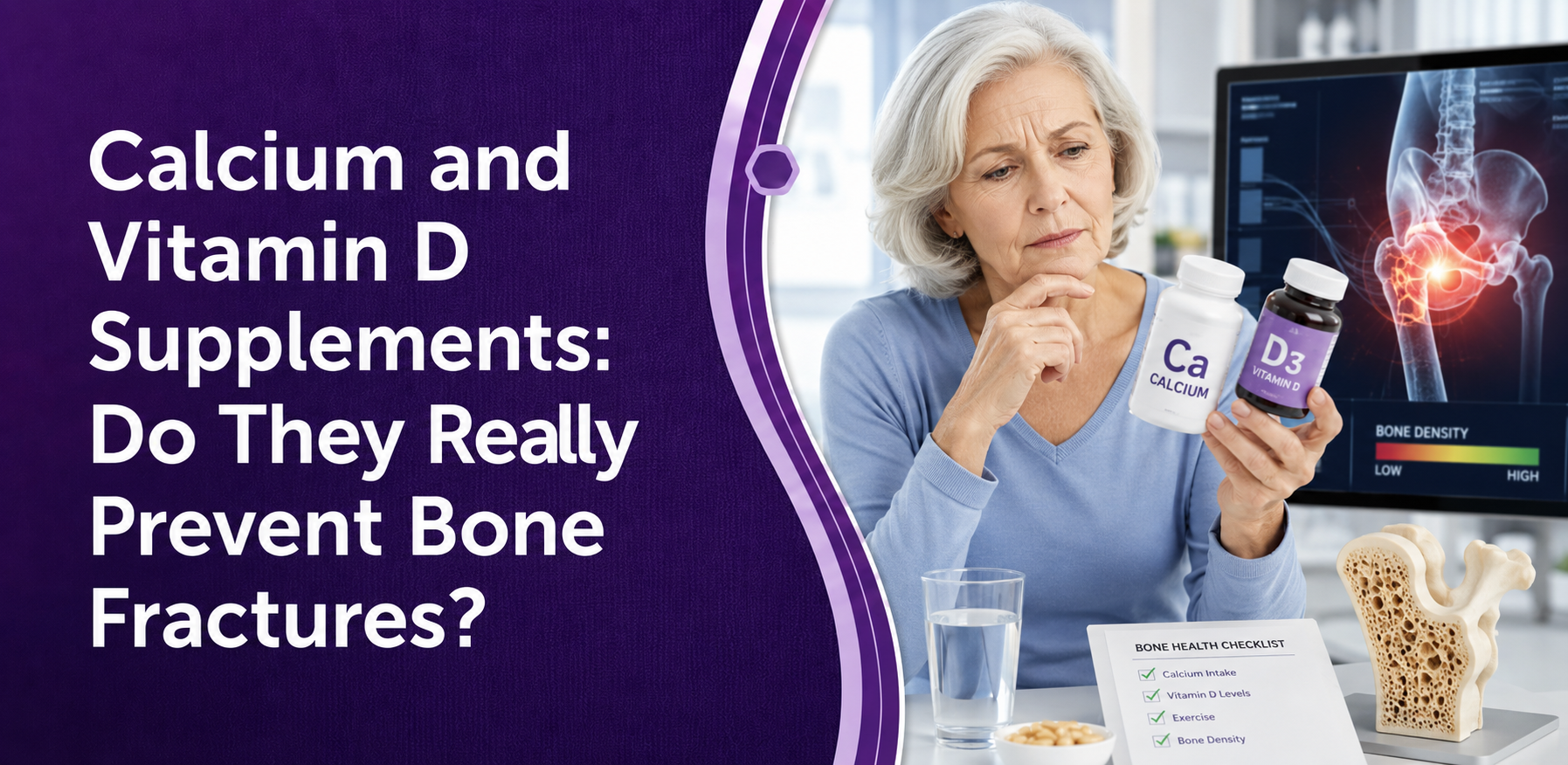
Calcium and Vitamin D for Bone Fractures: What Older adults Should Know
A broken bone can change life in one painful moment. One fall in the bathroom, one missed step, or one weak hip can lead to surgery, long recovery, and fear of walking again.
Many adults take calcium and vitamin D supplements because they believe these pills will protect bones from fractures.
But do they really work that way?
New research suggests calcium and vitamin D supplements may not prevent fractures or falls for many generally healthy older adults. That sounds surprising, especially because calcium and vitamin D still play a major role in bone health.
The truth sits in the middle. Calcium and vitamin D supplements can help some people, but they cannot replace food, strength training, fall prevention, medicine review, vitamin testing, and bone density screening.
If you take calcium and vitamin D supplements or worry about weak bones, book an appointment with Passion Health Advanced Primary Care.
A primary care provider can review your bone risk, vitamin D level, diet, medicines, and fall risk before a fracture changes your daily life.
What New Research Says About Calcium and Vitamin D for Older adults
In this new research, a large review looked at many clinical trials on calcium, vitamin D, and fracture prevention in older adults.
The review found that calcium and vitamin D did not clearly reduce overall fractures, hip fractures, or falls for many generally healthy older adults.
That finding may sound surprising. Many adults hear “take calcium and vitamin D” and assume fractures will not happen.
Yet bones, balance, muscles, eyesight, medicine side effects, and home safety all play a role in fracture risk.
Calcium and vitamin D for Older people may help fill nutrition gaps. Still, supplements do not replace a full bone-health plan. A tablet cannot strengthen leg muscles, fix dizziness, improve balance, or remove fall hazards at home.
Calcium and Vitamin D for Older people: Why Bone Health Needs Attention
Bone loss can speed up after age 50, especially when calcium intake stays low, vitamin D levels drop, or daily movement decreases. This can make bones weaker and raise the risk of falls and fractures.
Calcium and vitamin D support bone health in different ways:
Calcium helps build and maintain strong bones
Calcium also supports muscles, heart function, and blood clotting
Vitamin D helps the body absorb calcium
Vitamin D supports muscle strength and balance
Low calcium intake may cause the body to pull calcium from bones
Weak muscles can increase fall and fracture risk
Calcium and vitamin D for older people work best as part of a full bone-health plan, not as a supplement-only routine.
Do Calcium and Vitamin D for Older people Prevent Bone Fractures?
Many Older adults take supplements because they want fewer fractures. That makes sense. Strong bones should lower the risk.
Yet recent research shows calcium and vitamin D supplements may not clearly reduce fractures or falls in many generally healthy older adults.
That does not mean calcium and vitamin D have no value. It means supplements should not become the only plan.
Fractures often happen because several risks come together:
Low bone density
Weak leg muscles
Poor balance
Vision problems
Dizziness from medicines
Low vitamin D
Poor protein intake
Unsafe home setup
Previous falls
Osteoporosis
Who May Still Need Calcium and Vitamin D for Older Adults?
The new research does not mean everyAging adults should stop supplements. In fact, stopping without medical advice can create problems, especially for adults with known bone or vitamin issues.
Calcium and vitamin D for Older adults may still matter more for adults who have:
Osteoporosis or osteopenia
A past fracture from a minor fall
Very low vitamin D levels
Poor food intake
Limited sunlight exposure
Kidney, stomach, or absorption problems
Certain long-term medicines
A doctor-recommended bone-health plan
A primary care provider can decide whether testing makes sense. Blood work can check vitamin D levels. A bone density test can help detect osteoporosis.
How Much Calcium Do Older adults Need?
Calcium needs depend on age and sex. The Bone Health & Osteoporosis Foundation gives these general daily calcium goals from food and supplements combined:
Group | Daily Calcium Goal |
Women aged 50 and younger | 1,000 mg |
Women aged 51 and older | 1,200 mg |
Men aged 70 and younger | 1,000 mg |
Men aged 71 and older | 1,200 mg |
These numbers include calcium from meals, drinks, fortified foods, and calcium and vitamin D supplements.
More calcium does not always mean stronger bones. Extra calcium may cause constipation, gas, kidney stone concerns, or other problems in some adults. A safer approach starts with food first, then supplements only when needed.
Calcium and Vitamin D for Older Adults: Food Should Come First
Food gives more than calcium. It also gives protein, magnesium, potassium, and other nutrients that support bones and muscles. Many Older adults can improve calcium intake by adding simple foods to daily meals.
Good calcium-rich foods include:
Plain yogurt
Milk
Cheese
Fortified almond, soy, oat, or rice milk
Sardines with bones
Canned salmon with bones
Collard greens
Kale
Bok choy
Calcium-set tofu
Fortified orange juice
Fortified cereals
Beans
Food labels can help. For calcium, a label showing 30% daily value usually means about 300 mg of calcium. A label showing 20% daily value usually means about 200 mg.
This helps Older adults count their daily intake without guessing. Calcium and vitamin D for older adults work best when the plan starts with real food and uses supplements only when needed.
How Much Vitamin D Do Older Adults Need?
Vitamin D helps the body absorb calcium. It also supports muscles that help prevent falls. Adults age 50 and older generally need about 800 to 1,000 IU of vitamin D daily.
Vitamin D can come from sunlight, food, and supplements. However, many Older adults may not get enough from sunlight and food alone.
Vitamin D food sources include:
Salmon
Tuna
Mackerel
Egg yolks
Fortified milk
Fortified orange juice
Fortified cereals
Fortified plant-based milk
Sunlight can help the skin make vitamin D, but age, sunscreen, darker skin tone, season, location, and time indoors can reduce vitamin D production.
A blood test can show whether a Aging adults has low vitamin D. Guessing can lead to too little or too much. That is why calcium and vitamin D for Older adults should match personal health needs.
Who Has a Higher Risk for Vitamin D Deficiency?
Some Older adults face a higher risk of low vitamin D. A provider may recommend testing when risk factors exist.
Vitamin D deficiency risk may increase with:
Little outdoor time
Homebound lifestyle
Nursing home living
Certain stomach or bowel conditions
Celiac disease
Inflammatory bowel disease
Certain seizure medicines
Obesity
Very dark skin tone
Osteoporosis or low bone mass
Low vitamin D can affect bone strength and muscle function. It may also make a Aging adults feel weaker. Primary care can help find the cause and choose the right dose.
Supplement Safety: More Calcium Is Not Always Better
Calcium supplements can help when food intake falls short. Still, they should not replace a healthy diet.
Taking more calcium than needed may cause:
Constipation
Gas or bloating
Kidney stone concerns
Possible excess calcium buildup risks
Medicine interactions
Some calcium supplements absorb better when taken with food. Calcium also absorbs better in smaller amounts, often 500 to 600 mg or less at one time.
Vitamin D also needs care. Many multivitamins and calcium products already contain vitamin D. Taking several products together can raise the total dose without the person noticing.
Before starting calcium and vitamin D for Older adults, review all supplements, prescriptions, kidney stone history, and lab results with a primary care provider.
Warning Signs That Need Primary Care
Bone health problems do not always cause symptoms early. Still, certain signs deserve attention.
Talk with a primary care provider if you notice:
Loss of height
New back pain
A hunched posture
A fracture after a minor fall
Trouble standing from a chair
Frequent stumbling
Muscle weakness
Long-term steroid use
Dizziness after taking medicines
Low appetite or poor nutrition
These signs can point to bone loss, muscle weakness, medication side effects, or vitamin problems. Early care can help prevent a bigger injury later.
Should Older adults take calcium and Vitamin D Every Day?
Not every Older people needs the same daily dose. Calcium and vitamin D for Older adults should depend on diet, vitamin D level, bone density, health history, and current medicines.
A doctor may recommend different steps based on the person’s needs:
More calcium-rich foods
Vitamin D testing
A supplement for low levels
Bone density screening
Osteoporosis treatment, if needed
Fall-prevention support
Medicine review for dizziness
Too much calcium or vitamin D can cause problems. High calcium may lead to constipation or kidney stone risk, while too much vitamin D can raise calcium levels too high. A personal plan is safer than guessing.
Final Takeaway
Calcium and vitamin D for Older adults support bone health, calcium absorption, and muscle strength. However, supplements alone may not prevent fractures for many healthy older adults.
A better plan includes calcium-rich foods, safe vitamin D guidance, strength exercises, fall-risk checks, medication review, and bone density screening when needed.
A primary care visit can help find risks early and guide safer bone-health choices.
For bone health guidance, vitamin D testing, supplement reviews, fall-risk review, and Older people preventive care, schedule a visit with Passion Health Advanced Primary Care today.
FAQs
1. Do calcium and vitamin D supplements prevent fractures?
Calcium and vitamin D supplements may help some adults, but they may not prevent fractures for every person. Bone protection needs diet, exercise, fall prevention, and medical review.
2. Should food come before supplements?
Yes. Food should come first because it provides calcium and other nutrients that support bones and muscles. Supplements should only fill the gap.
3. Can too much calcium cause problems?
Yes. Too much calcium may cause constipation, bloating, kidney stone concerns, or other risks in some adults.
4. Who should ask a doctor before taking supplements?
Adults with kidney stones, kidney disease, osteoporosis, heart concerns, many medicines, or a past fracture should ask a doctor first.
5. What is the best way to protect bones?
The best plan includes calcium-rich food, enough vitamin D, strength training, balance work, fall prevention, and bone density screening when needed.