
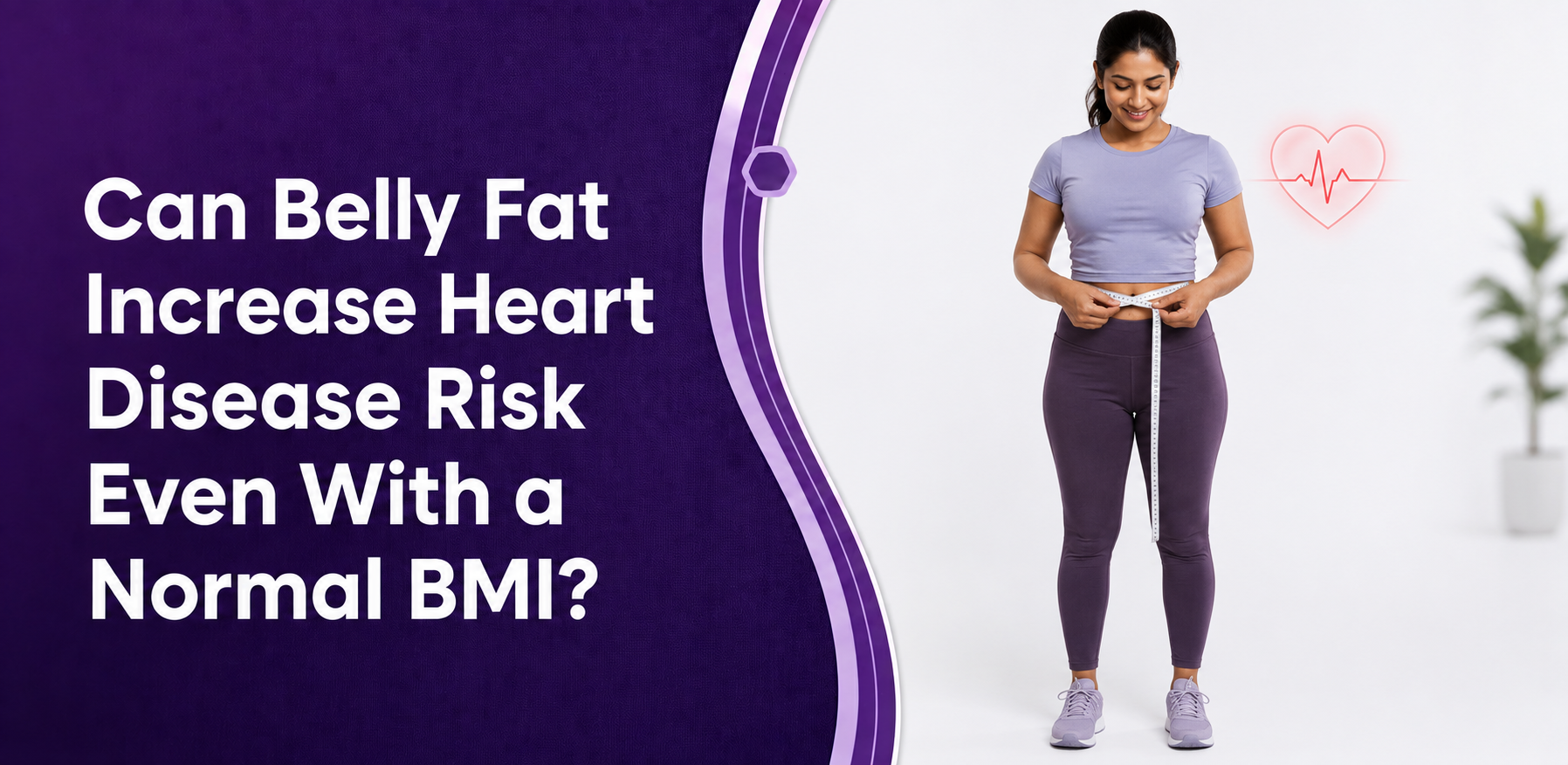
Key Takeaways
- Belly fat may increase heart disease risk even when BMI falls within a healthy range.
- Visceral fat surrounds internal organs and may promote inflammation and metabolic problems.
- BMI cannot show where the body stores fat or distinguish body fat from muscle.
- Waist circumference and waist-to-hip ratio provide important information beyond BMI.
- Healthy eating, regular exercise, quality sleep and stress management may help reduce visceral fat.
- Primary care screening can assess waist size, blood pressure, cholesterol and blood sugar together.
A Healthy Weight Does Not Always Mean a Healthy Heart
Your weight falls within a healthy range. Your BMI looks normal. Therefore, you may assume that you have little reason to worry about heart disease. However, your waistline may reveal a different story.
If you have ever wondered, “Can belly fat increase heart disease risk?”, new research offers an important answer. Fat stored around the abdomen may raise cardiovascular risk even when BMI classifies someone as having a healthy weight.
BMI remains a useful screening measurement. Still, it cannot show where your body stores fat or distinguish fat from muscle. Waist circumference and waist-to-hip ratio provide additional information about abdominal fat and metabolic health.
Consequently, a complete cardiovascular assessment should look beyond the number on the scale.
What Is Belly Fat?
Belly fat includes fat beneath the skin and deeper fat surrounding the abdominal organs. Although both types contribute to waist size, they do not affect health in the same way.
Subcutaneous fat
Subcutaneous fat sits directly beneath the skin. You can usually pinch this softer type of fat around your stomach. While excessive amounts can affect health, researchers have found a weaker connection between subcutaneous fat and cardiovascular disease.
Visceral fat
Visceral fat develops deeper inside the abdomen and surrounds organs such as the liver, pancreas, and intestines. Unlike subcutaneous fat, visceral fat actively releases hormones and inflammatory substances.
As a result, excessive visceral fat may interfere with:
Blood-sugar regulation
Blood pressure control
Insulin sensitivity
Normal inflammatory responses
Over time, these changes may contribute to diabetes, artery damage, and cardiovascular disease.
Can Belly Fat Increase Heart Disease Risk at a Healthy Weight?
Yes. Can Belly Fat Increase Heart Disease Risk? Research suggests that excessive abdominal fat may raise a person’s cardiovascular risk despite a normal or overweight BMI.
Researchers recently analyzed health information from more than 260,000 adults. They tracked participants for approximately 20 years and compared BMI classifications with waist circumference and waist-to-hip ratio.
The study examined several outcomes, including:
Stroke
Atrial fibrillation
Coronary heart disease
Overall cardiovascular disease
Cardiovascular-related death
Death from any cause
Among participants with a normal BMI, 5% had a high waist circumference, while 18% had a high waist-to-hip ratio. Additionally, approximately 39% of participants with an overweight BMI had a high waist circumference. Around 40% had a high waist-to-hip ratio.
Most importantly, people with a normal or overweight BMI and elevated abdominal measurements showed a 15% to 50% greater risk across most of the cardiovascular outcomes that researchers examined.
The Journal of the American College of Cardiology published the underlying study. Reports from Medical Xpress and Healthline also explained their patient-level implications.
However, the study found an association rather than direct causation. Researchers also lacked detailed information about physical activity, diet, and genetic obesity risks. Moreover, they collected waist measurements only once. Future studies should examine how changes in abdominal fat affect long-term cardiovascular health.
Why Can BMI Miss Hidden Health Risks?
Healthcare professionals calculate BMI by dividing a person’s weight in kilograms by the square of their height in meters. This quick calculation sorts people into underweight, normal, overweight, and obesity categories.
Nevertheless, BMI cannot identify:
The amount of muscle a person carries
The location of body fat
The difference between visceral and subcutaneous fat
Individual metabolic health
Differences in body composition across age, sex, and ethnicity
For example, two people can share the same height, weight, and BMI. One may have greater muscle mass and a smaller waist. Meanwhile, the other may carry more fat around the abdomen. Although their BMI numbers match, their metabolic and cardiovascular risks may differ.
Therefore, healthcare providers should not use BMI as the only measure of heart health.
Belly Fat vs. BMI: Which Measurement Matters More?
Neither measurement provides a complete answer alone. BMI offers a convenient estimate of weight relative to height. In comparison, waist measurements help identify central fat distribution.
Waist circumference measures the size of the midsection. Meanwhile, the waist-to-hip ratio compares the waist measurement with the widest part of the hips. Together, these tools provide a clearer view of body composition.
Rather than replacing BMI entirely, clinicians can combine these measurements with blood tests, medical history, and lifestyle information. This approach helps identify people who appear healthy by BMI standards but carry other cardiovascular risks.
How Does Visceral Fat Affect the Heart?
So, can belly fat increase heart disease risk through biological changes? Visceral fat may influence several processes that affect the heart and blood vessels.
First, visceral fat can promote chronic inflammation. Persistent inflammation may damage blood vessel walls and support plaque development in the arteries.
Second, abdominal fat may contribute to insulin resistance. When cells respond poorly to insulin, blood sugar rises, which increases the likelihood of type 2 diabetes.
Furthermore, visceral fat may increase triglycerides, reduce healthy HDL cholesterol, and contribute to high blood pressure. These conditions can work together and gradually increase cardiovascular risk.
Still, waist size cannot diagnose heart disease. It serves as one piece of a broader health assessment.
How Can You Measure Your Waist Correctly?
Although waist measurement looks simple, tape placement can affect the result. Follow these general steps:
Stand upright with your feet together.
Locate the area between the bottom of your ribs and the top of your hip bones.
Wrap a flexible measuring tape around your waist.
Keep the tape level and snug without pressing into your skin.
Breathe out normally before recording the measurement.
Clinical thresholds can vary according to sex, ethnicity, and the guideline that a healthcare provider follows. Therefore, ask your primary care provider to confirm your measurement and explain what it means for your personal health.
Can You Reduce Visceral Belly Fat?
You cannot choose where your body loses fat. For instance, abdominal exercises strengthen core muscles, but they do not specifically burn visceral fat. However, sustainable overall fat loss may reduce fat around the internal organs.
Consider these heart-healthy strategies:
Eat more vegetables, fruit, whole grains, legumes, and lean protein.
Reduce added sugar, refined carbohydrates, and saturated fat.
Include regular aerobic exercise, such as brisk walking or cycling.
Add strength training when your health allows it.
Aim for consistent, restorative sleep.
Limit alcohol and avoid tobacco.
Use practical techniques to manage chronic stress.
Choose gradual changes instead of highly restrictive diets.
Before starting an intense exercise or weight-loss plan, speak with a healthcare professional—especially if you have diabetes, high blood pressure, heart disease, or mobility limitations.
How Primary Care Can Identify Hidden Cardiovascular Risk
When patients ask, “Can belly fat increase heart disease risk?”, primary care providers can look beyond weight and explain the individual factors that shape risk.
During a preventive visit, your provider may evaluate:
Waist circumference, BMI, and weight changes
Blood pressure
Cholesterol and triglycerides
Family history of early heart disease
Diet and physical activity
Sleep quality and stress
Smoking and alcohol use
Existing conditions and medications
After reviewing these factors, your provider can recommend realistic nutrition goals, safe physical activity, and ongoing monitoring. When necessary, the care team may order laboratory tests or recommend further cardiovascular evaluation.
Passion Health Advanced Primary Care also supports patients who need ongoing care for diabetes, high cholesterol, elevated blood pressure, and weight-related concerns.
When Should You Contact a Primary Care Provider?
Consider scheduling a preventive appointment if you:
Have noticed an increasing waistline
Have high blood pressure or cholesterol
Live with diabetes or prediabetes
Have a family history of early heart disease
Smoke or previously smoked
Struggle to maintain healthy lifestyle habits
Have not completed a recent physical exam
Want medically guided weight-management support
Look Beyond the Scale to Protect Your Heart
Can belly fat increase the risk of heart disease? Current evidence suggests that abdominal fat may reveal cardiovascular risks that BMI alone can miss. In particular, visceral fat may contribute to inflammation, insulin resistance, high blood pressure, and unhealthy cholesterol levels.
Still, your waist measurement represents only one part of your overall health. A primary care provider can combine it with your blood pressure, laboratory results, family history, and lifestyle to create a more personalized risk assessment.
Do not wait for heart disease symptoms to appear.
Schedule a preventive heart health visit with Passion Health Advanced Primary Care at one of our convenient North Texas locations.
Frequently Asked Questions
1. Can belly fat increase heart disease risk even with a normal BMI?
Yes. Excess abdominal fat may increase cardiovascular risk even when BMI places someone within a healthy weight range. Waist measurements can help identify risks that BMI may overlook.
2. Is waist circumference better than BMI?
Waist circumference provides information about abdominal fat, while BMI estimates weight relative to height. Healthcare providers can use both measurements for a more complete assessment.
3. Does a normal BMI mean that my heart is healthy?
No. Blood pressure, cholesterol, blood sugar, waist size, smoking, family history, and physical activity also influence heart health.
4. Can sit-ups remove visceral fat?
Sit-ups strengthen abdominal muscles, but they cannot target visceral fat. Regular physical activity and sustainable nutrition changes may reduce overall and abdominal fat.
5. Can a primary care doctor assess my heart disease risk?
Yes. A primary care provider can review your history, physical measurements, blood pressure, and laboratory results to estimate cardiovascular risk and create a personalized prevention plan.

About the Author
Dr. Anantha Chentha is a board-certified internal medicine physician with extensive experience in primary care and chronic disease management. He provides comprehensive, patient-centered care with a focus on prevention, accurate diagnosis, and long-term health management.
View Provider Profile →