Key Takeaways
- Low ferritin can indicate depleted iron stores despite normal hemoglobin.
- Iron deficiency can develop before a blood count shows anemia.
- Blood loss, low iron intake, poor absorption, or increased needs can reduce iron stores.
- Fatigue and reduced stamina may occur, but other conditions can cause similar symptoms.
- A medical evaluation helps identify the cause and guide appropriate treatment.
- Discuss supplements and follow-up testing with your healthcare provider.
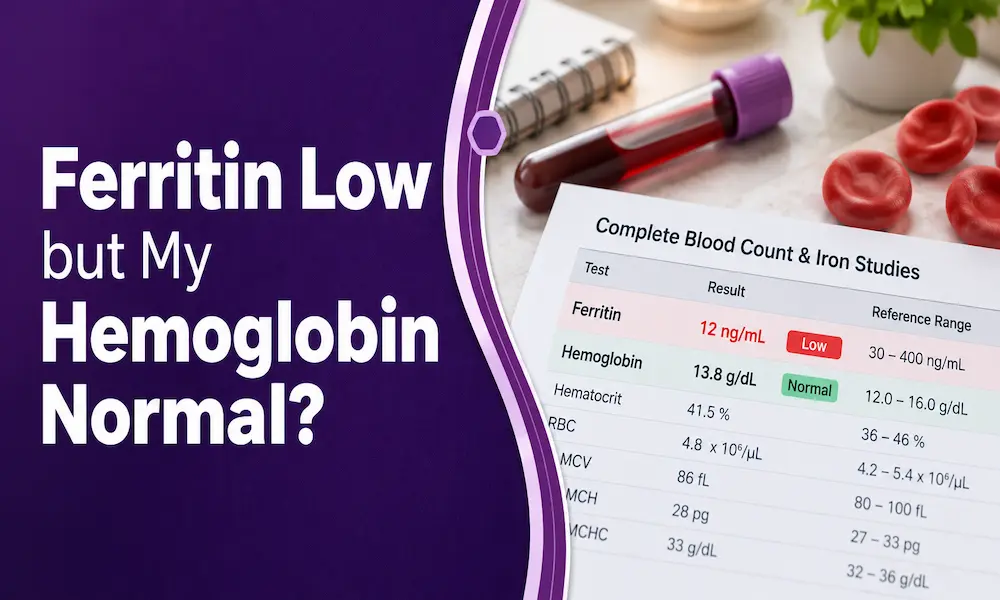
You open your laboratory report and notice something confusing. Your ferritin result carries a low flag, but your hemoglobin sits comfortably within the normal range. Both measurements involve iron, so why do they tell different stories?
Why is my ferritin low but my hemoglobin normal? This can happen when your body has already used much of its stored iron but still maintains enough circulating iron to produce hemoglobin. Healthcare professionals call this situation iron deficiency without anemia.
The finding deserves attention, even when you feel healthy. Understanding what caused the change can help your doctor decide whether dietary adjustments, further investigation, or treatment would benefit you.
Your Blood Report May Reveal Two Different Stages of Iron Health
Imagine checking a household’s grocery supply. The kitchen might contain enough ingredients for today’s meals, even though the pantry has almost nothing left for tomorrow.
Your body manages iron in a somewhat similar way.
Ferritin gives your doctor information about stored iron. Hemoglobin reflects a different function: helping red blood cells deliver oxygen throughout your body.
When available iron becomes scarce, stored supplies may decline before a standard blood count shows anemia.
This distinction matters because normal hemoglobin does not guarantee that every aspect of iron health remains satisfactory.
Does Low Ferritin Always Lead to Anemia?
No. Some people maintain normal hemoglobin for an extended period, particularly when the reason for iron depletion changes or treatment begins.
Others experience further losses that eventually interfere with healthy red blood cell production.
The outcome depends on how much iron remains available and whether the original cause continues.
Where Could Your Iron Be Going?
Instead of focusing only on the ferritin number, consider the circumstances that may have created the shortage.
Monthly Bleeding May Exceed Iron Replacement
Heavy menstrual periods represent an important possible explanation. When menstrual blood loss repeatedly exceeds the amount of iron absorbed from food, reserves can gradually shrink.
Everyday Meals May Not Meet Your Needs
Someone who regularly skips meals or eats very few iron-containing foods may struggle to replace ordinary iron losses.
Vegetarian diets can supply adequate iron, but food selection and absorption deserve particular attention.
Your Digestive System May Absorb Less Iron
The problem sometimes involves absorption rather than food choices.
Celiac disease, certain gastrointestinal illnesses, and previous digestive surgery can limit how much iron enters the bloodstream.
Your Body May Require Additional Iron
Pregnancy and rapid adolescent growth increase nutritional demands. An existing borderline supply may become insufficient during these periods.
Small Losses May Continue Unnoticed
Regular blood donation can contribute to iron depletion. Bleeding from the stomach or intestines may also occur without visible blood.
Unexplained low iron stores warrant particular attention in men and postmenopausal women because doctors must consider possible gastrointestinal sources.
Can You Feel Unwell Even Without Anemia?
A normal hemoglobin result does not mean symptoms are impossible.
Some individuals with low iron reserves report unusual tiredness, reduced physical stamina, difficulty concentrating, or uncomfortable sensations in their legs during rest.
Others notice increased hair shedding or feel that ordinary activities require more effort than before.
However, these experiences are not unique to iron deficiency. Sleep problems, thyroid conditions, medications, and other nutritional concerns may produce overlapping symptoms.
For that reason, doctors evaluate the complete situation before connecting a particular symptom to ferritin.
What Do Your Ferritin Numbers Actually Tell You?
A ferritin report usually displays a numerical value and a laboratory reference interval. That interval provides a starting point, not a complete diagnosis.
For many otherwise healthy adults, a result below 15 ng/mL strongly suggests very limited iron reserves. Clinicians also commonly regard results below 30 ng/mL as consistent with iron deficiency.
The interpretation changes when chronic inflammation or other medical conditions affect the measurement.
Ferritin may rise during inflammatory illness, making iron depletion harder to recognize.
Your doctor may therefore compare the result with other iron measurements instead of relying exclusively on the number highlighted on the report.
How Does a Doctor Investigate the Difference?
A productive medical visit often begins with questions rather than another prescription.
Your provider may want to know whether you have experienced heavier periods, digestive discomfort, dietary changes, recent pregnancies, or frequent blood donations.
Previous test results can reveal whether ferritin dropped gradually or changed unexpectedly.
Depending on your history, your doctor might request:
Complete blood count: To examine hemoglobin and red blood cell characteristics.
Repeat ferritin testing: To reassess stored iron.
Transferrin saturation: To understand how much transported iron is available.
Additional iron studies: To clarify uncertain findings.
Inflammation testing: To help interpret ferritin when illness may affect the result.
Further investigation may focus on digestive conditions or blood loss if the initial evaluation suggests those possibilities.
What Can You Do After Receiving a Low Ferritin Result?
The next step should address the reason for the deficiency, not simply aim for a higher number.
Rethink the Iron Content of Your Meals
Pairing plant-based iron sources with foods containing vitamin C can improve absorption. Lentil soup with tomatoes offers one practical example.
Ask Whether Iron Supplements Make Sense
Some patients benefit from oral iron, while others need additional testing before treatment.
Iron products can upset the digestive system, and excessive intake can be harmful. Avoid choosing a high-dose supplement solely from an online recommendation.
Address Ongoing Iron Loss
A supplement cannot fully solve the problem if substantial bleeding or poor absorption continues.
Your provider may recommend further care based on the cause.
Check Whether Treatment Is Helping
Ferritin generally needs time to recover. Your doctor may arrange follow-up blood tests after several weeks or months to assess your response.
When Is It Important to Seek Medical Care?
Arrange a primary care visit if your ferritin remains low, your energy changes without explanation, or your bleeding patterns become unusual.
Do not assume an acceptable hemoglobin result makes further evaluation unnecessary.
Severe shortness of breath, fainting, chest pain, substantial bleeding, or black, tar-like stools require prompt emergency assessment.
Make Sense of Your Iron Results With Passion Health
Finding low ferritin alongside normal hemoglobin provides useful information about your body’s iron reserves. It may signal a nutritional shortage, increased iron requirements, or a health issue that needs further investigation.
A thoughtful primary care evaluation can help clarify the findings and identify a suitable path forward.
Passion Health supports patients across North Texas with primary care evaluations, preventive health guidance, and follow-up for abnormal laboratory findings.
Book an Appointment at Passion Health to discuss your ferritin and hemoglobin results with a healthcare provider.
Take the next step toward better iron health
Schedule an evaluation at Passion Health Advanced Primary Care to discuss possible causes and receive personalized next steps.
Frequently Asked Questions
1. Can someone have low iron without anemia?
Yes. Stored iron can become insufficient before hemoglobin drops outside the expected range.
2. Why does ferritin fall when hemoglobin stays normal?
Stored supplies may decrease while enough iron remains available for current red blood cell production.
3. Does low ferritin explain every case of fatigue?
No. Fatigue has many causes, so medical evaluation helps identify the actual problem.
4. Should I take iron supplements immediately?
Discuss your results with a healthcare professional first. The appropriate treatment depends on the cause and severity.
5. Can ferritin improve without medication?
Dietary changes may help some individuals, but persistent losses or significant deficiency can require medical treatment.

About the Author
Dr. Anantha Chentha is a board-certified internal medicine physician with extensive experience in primary care and chronic disease management. He provides comprehensive, patient-centered care with a focus on prevention, accurate diagnosis, and long-term health management.
View Provider Profile →