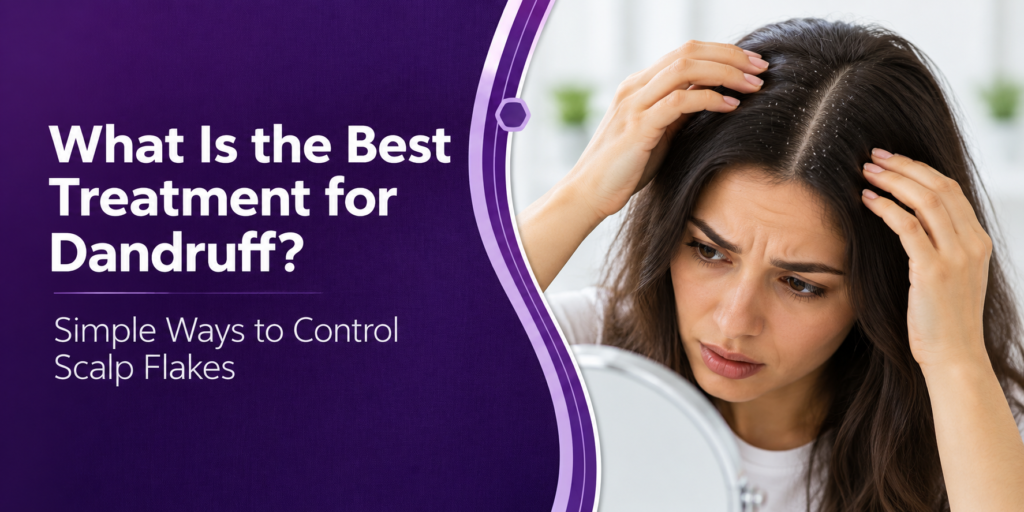
Scalp flakes can feel embarrassing, uncomfortable, and hard to control. A person may wash their hair, notice temporary relief, and then see the flakes return again. Itching often adds to the frustration. Because so many products promise quick relief, many people keep changing shampoos without knowing what truly helps.
So, what is the best treatment for dandruff? In many mild cases, the best starting point is a dandruff shampoo with an active ingredient that targets scaling, oil buildup, or scalp irritation. The most helpful choice depends on the type of flakes, how often the problem returns, and whether redness or irritation appears along with the flaking.
Why Dandruff Keeps Coming Back
Key takeaways
- Medicated shampoos often help, and the active ingredient matters more than the brand name.
- Leave the shampoo on the scalp for the time listed on the label before rinsing.
- Redness, itching, or greasy scale may point to seborrheic dermatitis rather than simple dandruff.
- Home remedies can help mild flaking but do not replace treatment for persistent symptoms.
- See a doctor when dandruff does not improve after several weeks of consistent treatment.
On this page
Dandruff does not always go away after one or two washes. The scalp sheds skin cells all the time, but dandruff makes that shedding more visible. Oil production, irritation, and scalp sensitivity all play a role.
The scalp also contains a common yeast called Malassezia. In some people, this yeast contributes to flaking and irritation. That does not mean the scalp is dirty. It simply means the skin reacts in a way that leads to visible flakes.
Weather, stress, hair products, and scalp oil may make symptoms worse. Some people notice more flaking during colder months. Others see it flare after using strongly fragranced products or heavy styling items.
What Is the Best Treatment for Dandruff?
For many adults, over-the-counter dandruff shampoos provide the best first step. These shampoos use ingredients that address common dandruff triggers.
Common Dandruff Shampoo Ingredients
Ingredient | Main benefit | Best use |
Ketoconazole | Helps control yeast-related flaking | Recurrent dandruff |
Selenium sulfide | Helps reduce flaking and scalp oil | Oily, flaky scalp |
Zinc pyrithione | Helps manage dandruff and itching | Mild to moderate dandruff |
Salicylic acid | Helps loosen scale buildup | Thick flakes |
Coal tar | Slows rapid scalp cell buildup | Stubborn scaling |
No single product works for everyone. One person may improve with zinc pyrithione, while another may do better with ketoconazole. The key is to use one treatment correctly and give it enough time to show results.
How to Use Dandruff Shampoo the Right Way
Many shampoos fail because people rush through the process. Treatment shampoos need proper scalp contact.
For better results:
Wet the hair and scalp thoroughly.
Apply the shampoo directly to the scalp, not only to the hair.
Use the fingertips to spread the lather across the affected areas.
Let the product stay on the scalp for the time listed on the label.
Rinse well.
Follow the schedule recommended on the bottle.
Avoid harsh scratching with the nails. Scratching can irritate the skin and increase discomfort.
A steady routine works better than changing products every few days. Pick a wash pattern that matches the hair type and scalp condition.
Dry Scalp and Dandruff Are Not Always the Same
Some people assume every scalp flake means dandruff. That is not always true.
A dry scalp often causes smaller, lighter flakes and a tight feeling. Dandruff often causes larger flakes and more itching.
Other skin problems can look similar:
Seborrheic dermatitis may cause redness and greasy scale.
Scalp psoriasis may create thicker, more defined patches.
Product irritation may happen after dye, fragrance, or styling products.
Fungal infections can sometimes cause flaking with other scalp changes.
That is why a scalp problem that keeps returning deserves closer attention.
Are Home Remedies a Good Idea?
Home remedies appear everywhere online. Coconut oil, lemon juice, tea tree oil, baking soda, and apple cider vinegar often come up in dandruff discussions. Some people report short-term comfort with these methods, but that does not make them the best choice.
Certain home remedies may irritate already sensitive skin. Strong acids, concentrated oils, or rough ingredients can make burning, redness, or itching worse.
Tea tree oil often gets attention in scalp care, but it does not work well for everyone. Some people react badly to it and develop irritation.
For that reason, a medically recognized dandruff shampoo usually makes a safer and more practical starting point than homemade mixtures.
What Helps Beyond Shampoo?
A few daily habits can support better scalp care:
Wash away heavy product buildup.
Avoid very hot water during hair washing.
Limit harsh styling products when the scalp feels irritated.
Keep scratching to a minimum.
Stay consistent with the chosen treatment plan.
A person does not need an overly complicated routine. In fact, simple care often works better than constant experimentation.

How Soon Can Dandruff Improve?
Dandruff rarely clears overnight. Relief often begins after several proper uses of a suitable shampoo. More noticeable control may develop over the next few weeks when the routine stays consistent.
If a product helps, ongoing maintenance may prevent flare-ups from returning quickly. If the scalp shows little change after a fair trial, it may be time to try another active ingredient or speak with a healthcare professional.
When Do Recurring Scalp Flakes Need Medical Attention?
Occasional scalp flakes may settle with a suitable anti-dandruff shampoo. However, ongoing discomfort or unusual changes in scalp appearance can indicate a problem that needs more than routine hair care.
Consider scheduling a medical consultation if you notice:
Intense itching: Frequent scratching disrupts sleep or daily activities.
Increasing redness: Irritated areas grow larger or extend beyond the hairline.
Stubborn scaly patches: Thick, crusty areas remain despite regular scalp cleansing.
Scalp discomfort: Tenderness, swelling, or painful spots develop.
Unexpected hair changes: Noticeable thinning, broken hairs, or isolated bald patches appear.
Repeated flare-ups: Flakes continue after several weeks of appropriate shampoo use.
Product sensitivity: Burning, irritation, or worsening symptoms follow a new hair-care product.
A primary care clinician can assess the affected areas, discuss recent hair-care habits, and look for signs of conditions such as seborrheic dermatitis, psoriasis, or contact dermatitis. The findings can help guide treatment choices or determine whether a dermatologist should provide further care.
The Bottom Line on the Best Dandruff Treatment
When asking what the best treatment for dandruff is, the best answer usually starts with the right dandruff shampoo, the right routine, and enough time to judge results properly. The goal is not to chase every trend or try every home remedy. The goal is to calm the scalp, reduce flakes, and identify when the problem points to something more than ordinary dandruff.
A steady, practical approach often works best. When scalp flakes refuse to settle down, medical guidance can save time and frustration.
Need care for this?
A Passion Health clinician can see you in person or online.
In person
Request an in-person visit at any Passion Health location to review your cholesterol numbers and heart risk.
Choose your clinic and clinician across North Texas
Book an appointment in person at Passion Health clinicsOnline
Answer a few questions online to find the right next step, whether that is a visit, lab work, or a referral. For non-emergency questions, you can get care online through Passion Health Online Care.
Adults 18 and older in Texas · Texas-licensed clinicians
Get the right care in a few stepsBlood work
Your clinician can order a lipid panel and any other labs recommended for you during your visit.
Essential Blood Work · $59
Get Passion Health Blood WorkFrequently Asked Questions
What causes dandruff?
Oil, scalp irritation, yeast activity, and certain skin conditions can all contribute.
Which dandruff treatment works best?
A dandruff shampoo with the right active ingredient often works best for mild cases.
Can dandruff go away on its own?
Mild dandruff may improve, but many cases return without regular scalp care.
Do home remedies work for dandruff?
Some may give temporary comfort, but many lack strong medical support and may irritate the scalp.
When should a person see a doctor?
A doctor visit helps when dandruff stays persistent, becomes painful, or does not improve with standard treatment.
About the Author
Dr. Anantha Chentha is a board-certified internal medicine physician with extensive experience in primary care and chronic disease management. He provides comprehensive, patient-centered care with a focus on prevention, accurate diagnosis, and long-term health management.
View Provider Profile →