Can Primary Care Help With Psoriasis Treatment?
An itchy, scaly patch may look like dry skin at first. Then it grows, flakes, burns, cracks, or keeps coming back. That is when many people start to wonder, “Is this psoriasis, eczema, an allergy, or something else?”
Psoriasis can feel frustrating because it often comes and goes. One week, the skin looks calmer.
The next week, stress, cold weather, infection, or irritation may trigger another flare. The good news is that help can start with a primary care visit.
Psoriasis treatment in primary care focuses on checking the skin, reviewing symptoms, finding possible triggers, guiding safe next steps, and deciding when a dermatologist referral may help.
Worried about itchy, scaly, or painful skin patches? Book an appointment with Passion Health Advanced Primary Care today.
Where Psoriasis Starts and Why It Happens
The Psoriasis is a long-term skin condition linked to immune system activity. It causes skin cells to build up faster than normal. Instead of shedding slowly, the cells collect on the surface and form thick, scaly patches.
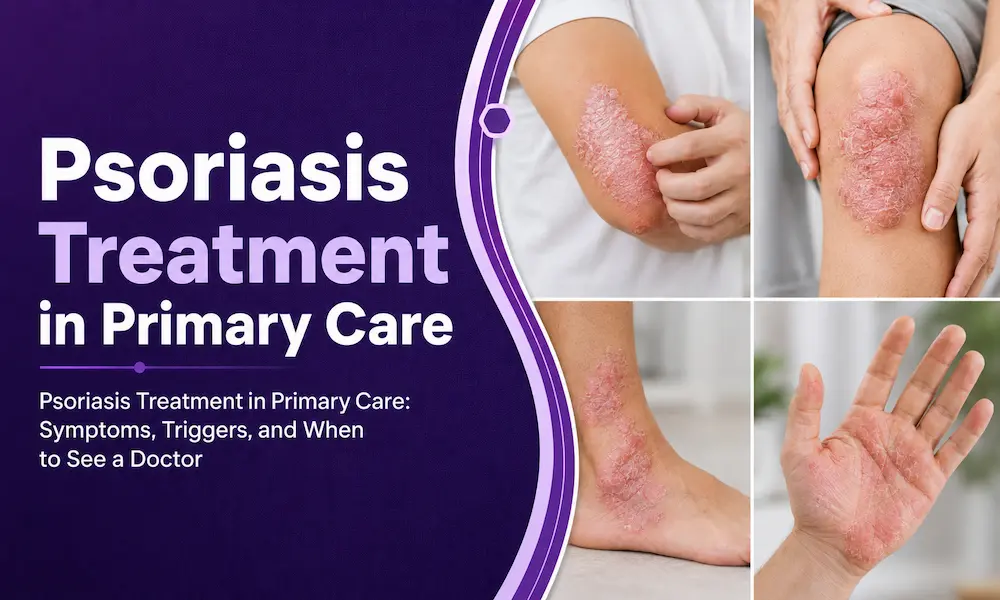
These patches may itch, burn, sting, crack, or bleed. They may appear on the elbows, knees, scalp, back, hands, feet, face, skin folds, or nails. Psoriasis can affect small areas or larger parts of the body.
Psoriasis is not contagious. You cannot catch it by touching someone’s skin, sharing a room, shaking hands, or using the same chair. It comes from changes inside the body, not from poor hygiene.
Because psoriasis can look like other skin problems, a medical visit matters. A care team can check the rash, ask about symptoms, and help decide whether the skin changes fit psoriasis or another condition.
Psoriasis Symptoms That Patients Often Notice First
Psoriasis symptoms can look different from person to person. Some patients notice only small patches. Others have large, painful, or recurring areas.
Common symptoms include:
Raised, thick skin patches
Dry or scaly skin
Itching
Burning or stinging
Flaking
Cracking or bleeding
Sore skin
Nail pitting, thickening, or lifting
Scalp scaling or dandruff-like flakes
Skin discomfort that affects sleep or daily life
Psoriasis may look red or pink with silvery scaling on lighter skin. On darker skin, it may look purple, brown, gray, or darker than the surrounding skin. The patches may also look thicker or leave color changes after a flare improves.
What Does Psoriasis Look Like When It Starts?
Early psoriasis may not look dramatic. A small dry patch may appear first and fail to improve with regular lotion. Over time, the area may itch, flake, or return in the same spot.
Some people notice scalp flakes first. Others notice rough patches on the elbows, knees, lower back, or hands. Nails may change before skin symptoms become obvious.
Because early psoriasis can look like eczema, fungal infection, allergic rash, or dry skin, guessing can lead to the wrong treatment. Psoriasis treatment in primary care starts with a careful symptom review and skin check.
Common Places Psoriasis Can Appear
Psoriasis can appear almost anywhere, but some areas are more common.
1. Scalp Psoriasis
Flakes, itching, thick scale, redness, discoloration, and soreness may appear on the scalp. Some patients mistake this for dandruff, but it can feel thicker, more irritated, or harder to control.
Scratching can worsen irritation. It can also lead to bleeding or temporary hair shedding from inflammation or scratching. A doctor can help decide whether symptoms look like scalp psoriasis, seborrheic dermatitis, fungal infection, or another scalp condition.
2. Plaque Psoriasis
This common type often causes raised, scaly patches on the elbows, knees, scalp, and lower back. These plaques may itch, crack, or feel painful.
3. Nail Psoriasis
Tiny dents, thick nails, color changes, lifting, or crumbling may appear when psoriasis affects the nails. These changes can look like a fungal infection, so proper evaluation helps.
4. Face or Skin Fold Psoriasis
Psoriasis on the face, underarms, groin, or skin folds needs careful care. These areas can react strongly to harsh products or strong creams. Patients should avoid using prescription creams in sensitive areas without medical guidance.
What Causes Psoriasis?
This disease does not have one simple cause. It involves the immune system, genetics, and environmental triggers. When the immune system becomes overactive, skin cells grow and move to the surface too quickly.
Family history may increase risk, but not every patient with psoriasis has a family member with it. Some people develop symptoms after a trigger, such as infection, skin injury, stress, or medication changes.
Psoriasis treatment in primary care often includes a trigger review. This helps patients understand what may worsen flares and what habits may support better control.
Common Psoriasis Triggers
Triggers can differ from patient to patient. One person may flare after stress. Another may flare during cold weather or after an infection.
Common triggers include:
Stress
Dry skin
Cold or dry weather
Skin cuts, scrapes, or sunburn
Infections
Smoking
Heavy alcohol use
Certain medications
Irritating skin products
Poor sleep
Changes in general health
A trigger does not mean the patient caused the condition. It means something may have pushed the immune system or skin into a flare. Tracking symptoms can help patients spot patterns.
Psoriasis Treatment in Primary Care: What Can Be Done?
Psoriasis treatment in primary care depends on symptoms, location, severity, medical history, and patient safety. Primary care may help with mild symptoms and guide referrals when symptoms need advanced care.
A primary care visit may include:
Skin evaluation
Symptom history
Trigger review
Medication review
Skin care guidance
Discussion of over-the-counter options
Prescription treatment when appropriate
Check for signs of infection
Review of joint pain or swelling
Referral to dermatology when needed
Primary care does not replace dermatology for severe psoriasis, complex cases, biologic medicines, or advanced therapies. However, it can help patients start the right path instead of waiting until symptoms become harder to manage.
Treatment Options Patients May Hear About
Psoriasis has several treatment options. The right plan depends on the patient.
1. Moisturizers and Skin Care
Moisturizers can help reduce dryness, cracking, and irritation. Fragrance-free products usually work better for sensitive skin. Gentle bathing habits can also help protect the skin barrier.
Patients should avoid harsh scrubbing. Scrubbing scales too aggressively can worsen irritation and trigger more inflammation.
2. Topical Medicines
Doctors may recommend topical treatments for mild or limited psoriasis. These may include steroid creams or non-steroid prescription options. Patients should use prescription creams only as directed, especially on the face, groin, underarms, or skin folds.
3. Scalp Treatments
Scalp psoriasis may need medicated shampoos, oils, foams, or prescription treatments. Since scalp symptoms can come from different conditions, evaluation helps avoid the wrong product.
4. Light Therapy
Some patients need phototherapy, also called light therapy. Dermatology offices often manage this treatment. It uses controlled light exposure, not random tanning or unsafe sun exposure.
5. Oral or Injectable Medicines
Moderate to severe psoriasis may need oral medicines or injectable biologic medicines. Dermatologists usually manage these treatments because they require careful screening, monitoring, and follow-up.
Primary care can still support the patient by reviewing overall health, checking related risks, and coordinating referrals.
Can Psoriasis Be Cured?
There is no known cure for psoriasis. However, treatment can help control symptoms, reduce flares, and improve comfort.
Patients should feel cautious about products that promise a permanent cure, overnight results, or guaranteed clearing. Psoriasis often needs long-term management. The goal is better control, safer treatment, and fewer flare problems.
Psoriasis treatment in primary care can help patients understand what is realistic and what needs specialist care.
Psoriasis and Joint Pain: A Warning Sign
Some people with psoriasis can develop psoriatic arthritis. This condition can cause joint pain, swelling, stiffness, or tenderness. It may affect fingers, toes, knees, ankles, back, or other joints.
Do not ignore joint symptoms if they appear with psoriasis. Early evaluation matters because joint inflammation can worsen over time.
Tell a healthcare professional if you notice:
Morning joint stiffness
Swollen fingers or toes
Heel pain
Back stiffness
Painful joints
Nail changes with joint pain
Fatigue with skin flares
Primary care can review these symptoms and guide next steps, including referral when needed.
When Should You See a Doctor for Psoriasis?
Do not wait too long if the rash keeps coming back or starts affecting daily life. Skin symptoms can worsen when patients keep trying random creams without knowing the cause.
See a doctor if:
The rash spreads
Itching affects sleep
Skin cracks or bleeds
Pain, burning, or swelling develops
Scalp symptoms become severe
The rash appears on the face, genitals, palms, or feet
Nails change
Over-the-counter products do not help
You notice joint pain or stiffness
You feel unsure whether it is psoriasis, eczema, infection, or allergy
Why Psoriasis Treatment in Primary Care Matters
Many patients first visit primary care for a new or confusing rash. Psoriasis treatment in primary care can help when symptoms look mild, early, or limited.
A primary care team can review the skin, ask about flare-ups, check for infection signs, discuss safe skin care, and recommend next steps. This can also help patients avoid risky self-treatment, harsh creams, or online “cures” that may irritate the skin.
If the rash spreads, affects sensitive areas, looks severe, or comes with joint pain, the care team may recommend dermatology or specialist care.
What to Expect at a Primary Care Visit
A psoriasis visit usually starts with a simple skin and symptom review. The care team may ask when the rash started, where it appears, what triggers it, and which creams, shampoos, or products you already use.
They may also ask about joint pain, recent infections, stress, medication changes, smoking, alcohol use, and family history. These details can help find possible triggers and warning signs.
During the skin exam, the care team checks the rash pattern, location, scaling, and irritation. If the rash looks unclear or severe, they may recommend dermatology care or further testing.
Helpful tip: Bring your current medicines, creams, supplements, and photos of flare-ups. Photos can show what the rash looks like when symptoms are worse.
Simple Skin Care Tips That May Help Flares
Skin care does not replace medical treatment, but it can support comfort.
Try these basic steps:
Use a gentle, fragrance-free moisturizer
Avoid harsh scrubs
Take short lukewarm showers
Pat skin dry instead of rubbing
Avoid picking thick scales
Protect skin from cuts and irritation
Track flare triggers
Manage stress when possible
Follow treatment instructions carefully
Patients should ask a healthcare professional before trying strong peels, steroid creams from old prescriptions, or online remedies.
Psoriasis Treatment in Primary Care and Referral Support
Primary care can help with the first skin evaluation and mild symptom care.
The care team can review triggers, medication safety, and related concerns like joint pain.
If psoriasis looks severe, widespread, or hard to control, dermatology care may be needed.
Referral support can help patients avoid delays and get the right level of care.
At Passion Health Primary Care, our care team can guide safe next steps for psoriasis concerns.
Final Thoughts
Psoriasis can feel uncomfortable, confusing, and hard to ignore. When itchy, scaly, painful, or recurring patches keep coming back, a primary care visit can help you understand possible triggers and next steps.
Psoriasis treatment in primary care may help with evaluation, mild symptom care, and referral guidance when dermatology care is needed. Do not keep guessing if the rash spreads, bleeds, affects sleep, or comes with joint pain.
At Passion Health Advanced Primary care , our care team can evaluate your skin symptoms, review your health history, and guide safe next steps for psoriasis concerns.
FAQs
1. Can primary care treat psoriasis?
Primary care can help evaluate psoriasis symptoms, manage mild concerns, review triggers, and recommend next steps. Severe or complex psoriasis may need dermatology care.
2. Is psoriasis contagious?
No. Psoriasis is not contagious. It does not spread through touch, shared spaces, or close contact.
3. What does psoriasis look like?
Psoriasis often causes thick, raised, scaly patches that may itch, burn, crack, or bleed. It may look red, purple, brown, gray, or darker than nearby skin.
4. Can psoriasis go away permanently?
Psoriasis has no known cure. Symptoms may improve and return. Treatment can help control flares and improve comfort.
5. When should I see a doctor for psoriasis?
See a doctor if the rash spreads, becomes painful, bleeds, affects sleep, appears in sensitive areas, or comes with joint pain or stiffness.