
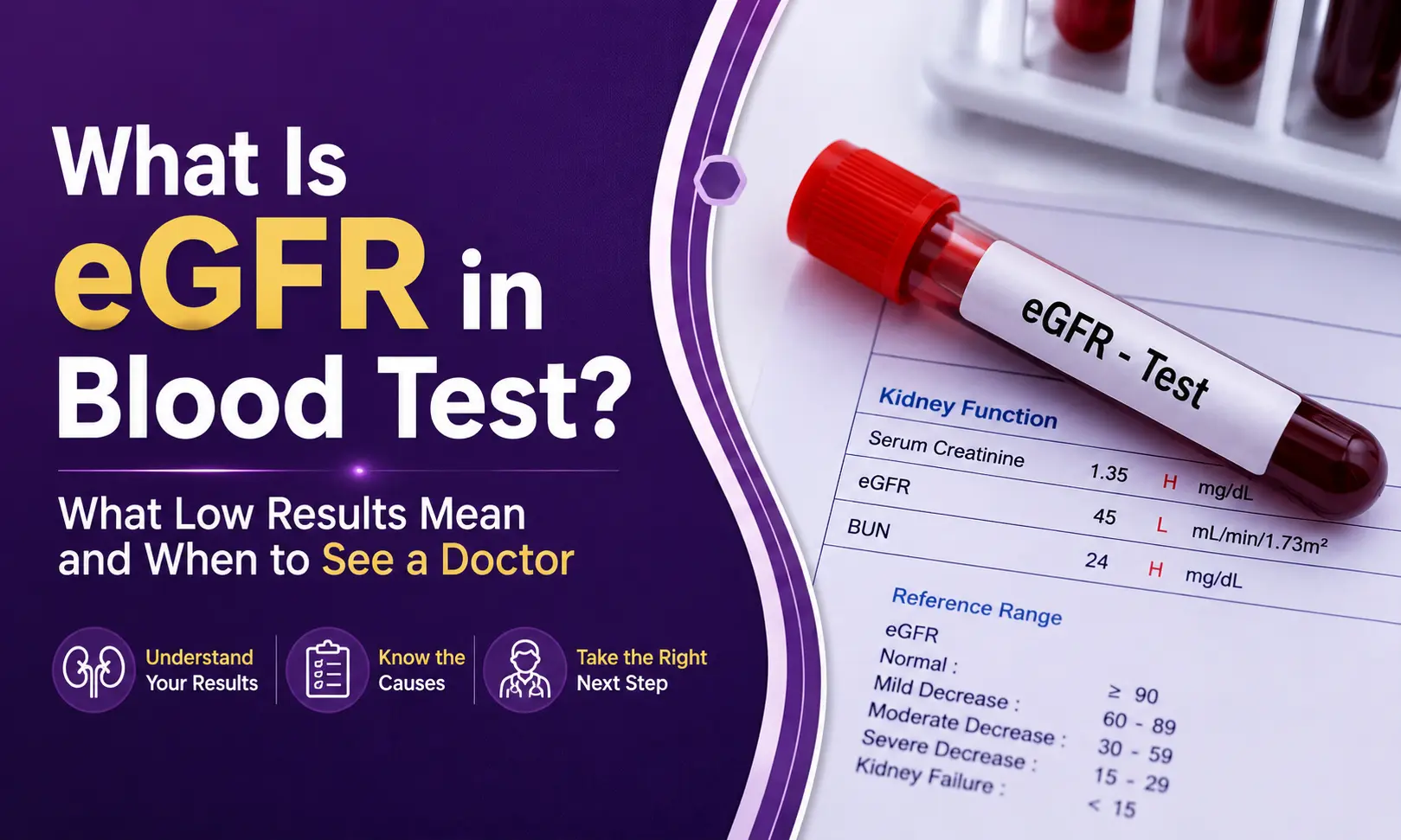
What Is eGFR in Blood Test?
What Low Results Mean and When to See a Doctor
An eGFR blood test estimates how well your kidneys remove waste and extra fluid from your blood. Learn what a low eGFR result means, what can affect the number, which follow-up tests may help, and when to contact a primary care doctor.
Understanding Your eGFR Blood Test Result
An eGFR blood test gives your doctor an estimate of how well your kidneys remove waste and excess fluid from your blood.
A low result can point to reduced kidney function, but one abnormal reading does not always mean you have chronic kidney disease.
Many people first notice the What Is eGFR in Blood Test number after routine bloodwork. Seeing a low or flagged result can feel worrying, but several factors can affect the number, including age, dehydration, recent illness, medications, creatinine levels, and urine test results.
Instead of assuming the worst, talk with a primary care doctor about the result. Your doctor can review your health history, compare previous test results, and decide whether you need repeat bloodwork or additional kidney tests.
Did your bloodwork show a low eGFR? Schedule a visit with Passion Health Advanced Primary Care to review the results.
Patients looking for primary care in Frisco, Irving, Plano, Prosper, Anna, Aubrey, Flower Mound, Ennis, Kaufman, Kemp, McKinney, TX
What Is eGFR in a Blood Test?
eGFR means estimated glomerular filtration rate. Your kidneys contain tiny filters called glomeruli, which remove waste and extra water from the bloodstream. The result estimates how much blood those filters clean each minute.
Usually, laboratories calculate eGFR from blood creatinine. Your muscles produce creatinine, while your kidneys remove it. Consequently, higher creatinine may produce a lower eGFR estimate.
Still, creatinine does not tell the whole story. Age, muscle mass, diet, exercise, illness, and certain medicines can influence it. Sometimes, a doctor may order cystatin C for another estimate.
What Does a Low eGFR Blood Test Mean?
A low eGFR blood test suggests that your kidneys may filter blood more slowly than expected. However, your doctor must determine whether the change looks temporary, persistent, or reflects another condition.
First, the doctor may compare your current result with older tests. Next, the review may include creatinine, urine albumin, blood pressure, blood sugar, hydration, recent illness, and medicine use.
One low result does not confirm chronic kidney disease. Generally, doctors diagnose CKD when an eGFR stays below 60 for more than three months or when other evidence of kidney damage lasts that long. CKD may also occur with an eGFR above 60 when other tests show kidney damage.
eGFR Levels and What They May Mean
eGFR result | General meaning |
90 or higher | Normal or high unless another test shows kidney damage |
60–89 | Mild reduction; this range alone does not establish CKD |
45–59 | Mild-to-moderate reduction |
30–44 | Moderate-to-severe reduction |
15–29 | Severe reduction |
Below 15 | Kidney failure range that needs prompt medical evaluation |
Importantly, eGFR often decreases with age. Likewise, a result from 60 to 89 does not automatically mean kidney disease. Doctors also check urine albumin, urine blood, and other signs of damage.
Common Reasons for a Low eGFR Result
Several conditions can reduce kidney filtration. For example, diabetes and high blood pressure can damage kidney blood vessels over time. Chronic kidney disease, acute kidney injury, urinary blockage, inflammation, infection, and some heart conditions may also lower eGFR.
Meanwhile, temporary factors can affect the estimate. Dehydration, vomiting, diarrhea, fever, intense exercise, unusual muscle mass, and diet changes may alter creatinine. Certain medicines can also influence kidney function.
Therefore, never stop a medicine or start a supplement based only on an online explanation. Instead, bring a complete medicine and supplement list to your appointment.
Are There Symptoms of Low eGFR?
Early kidney disease often causes no clear symptoms. As a result, routine blood and urine tests matter for people with diabetes, high blood pressure, heart disease, or a family history of kidney problems.
When kidney function declines, some people notice fatigue, swelling, urinary changes, muscle cramps, itchy skin, nausea, poor appetite, or shortness of breath. However, other conditions can cause the same symptoms.
For that reason, symptoms cannot confirm low eGFR. Laboratory tests and a medical review provide a clearer answer.
Kidney Health & Primary Care Follow-Up
Not Sure What Your Low eGFR Result Means?
Passion Health Advanced Primary Care can review your symptoms, creatinine level, urine test results, blood pressure, medications, and health history to determine the right next step.
What Tests May Follow a Low eGFR Blood Test?
After a low result, a primary care doctor may repeat eGFR and creatinine. The next result can show whether the number improves, remains stable, or continues to decline.
In addition, the doctor may order a urine albumin-to-creatinine ratio, or uACR. Increased urine albumin can signal kidney damage even when eGFR remains above 60.
Depending on the situation, other tests may include urinalysis, cystatin C, blood urea nitrogen, electrolytes, blood sugar, or kidney imaging. Together, eGFR and uACR provide two key kidney markers.
A low eGFR needs context. Book a primary care appointment to review your bloodwork, medicines, blood pressure, and diabetes risk.
Can a Low eGFR Improve?
A low eGFR may improve when a temporary issue caused the change. For instance, kidney filtration may recover after treatment for dehydration, infection, urinary blockage, or a medicine-related problem.
However, chronic kidney damage may not fully reverse. Even so, early care can protect remaining kidney function. Your doctor may help control blood pressure, manage blood sugar, review medicines, adjust nutrition, and schedule repeat testing.
Avoid excessive water, detox products, or unproven supplements. Instead, follow an individualized medical plan.
When to See a Primary Care Doctor for Low eGFR
Schedule a visit when your report flags eGFR as low, especially when the number has dropped from an earlier result. You should also seek follow-up when eGFR remains below 60, urine tests show protein or blood, or creatinine and potassium appear abnormal.
Moreover, people with diabetes, high blood pressure, heart disease, or kidney-affecting medicines need careful review. Swelling, unusual fatigue, reduced urination, nausea, or worsening shortness of breath also deserve prompt attention.
A primary care doctor can evaluate the entire pattern and refer you to a kidney specialist when changes look severe, persistent, or complex.
How Primary Care Helps Protect Kidney Function
Primary care can compare laboratory trends, check blood pressure and blood sugar, order urine testing, and review medicines. Furthermore, treatment can address diabetes, hypertension, and other conditions that strain the kidneys.
Regular monitoring also helps your doctor detect meaningful changes sooner. When necessary, primary care can coordinate kidney imaging, specialist evaluation, and long-term treatment.
Take Away: the Next Step After a Low eGFR Result
An eGFR blood test offers an important estimate of kidney filtration, but one number never tells the full story. Instead, trends, urine albumin, related blood tests, symptoms, and health history guide the next decision.
Early evaluation may uncover a temporary cause or identify kidney damage sooner. Therefore, do not ignore a flagged result or try to correct it without medical guidance.
Have questions about a low eGFR blood test? Book an appointment with Passion Health Advanced Primary Care to review your kidney-function results and discuss the right next steps.
Our Primary Care Locations
Frequently Asked Questions About eGFR
1. Is an eGFR of 60 low?
An eGFR near 60 needs context because persistence and other signs of kidney damage matter.
2. Can dehydration cause a low eGFR result?
Yes. Dehydration can affect kidney function and alter the creatinine level used to estimate eGFR.
3. Should I worry about one low eGFR blood test?
One result deserves follow-up rather than an immediate conclusion. Previous tests, urine findings, medicines, and recent illnesses provide important context.
4. What connects creatinine and eGFR?
Laboratories commonly use blood creatinine to calculate eGFR because the kidneys remove creatinine from the blood.
5. When does low eGFR require a kidney specialist?
Referral depends on the eGFR level, rate of decline, urine findings, complications, and possible cause. A primary care doctor can determine when specialist care becomes necessary.