
Tonsil Cancer Symptoms: a Lasting Sore Throat
A sore throat can feel ordinary at first. Many people blame allergies, cold weather, reflux, or a simple infection.
Most throat pain improves with time, fluids, and basic care. Still, some throat symptoms deserve a closer look, especially when they stay on one side, come with ear pain, or do not improve.
Tonsil cancer symptoms can look like common throat problems. That creates risk because a person may wait too long before getting checked. A lasting sore throat does not always mean cancer, but it should never turn into weeks of guessing.
If throat pain, one swollen tonsil, trouble swallowing, ear pain, or a neck lump worries you, schedule a visit with Passion Health Advanced Primary Care. A primary care provider can examine your throat, check for infection, review risk factors, and guide the next step.
Patients looking for primary care in Frisco, Irving, Plano, Prosper, Anna, Aubrey, Flower Mound, Ennis, Kaufman, Kemp, or Mesquite.
What Is Tonsil Cancer?
Tonsil cancer starts in the tonsils, the two oval pads of tissue at the back of the mouth. The tonsils support the immune system, but cells in this area can sometimes change and grow in an abnormal way.
Doctors often place tonsil cancer under oropharyngeal cancer, which affects the middle part of the throat. This area includes the tonsils, the back of the tongue, the soft palate, and the throat wall.
The important point is simple: tonsil cancer symptoms may start quietly.
Early signs can feel like tonsillitis, a stubborn sore throat, or dental discomfort. For that reason, a medical exam matters when symptoms last, change, or keep coming back.
Tonsil Cancer Symptoms That Need Attention
Tonsil cancer can start quietly, and the warning signs may not look the same for everyone.
Some symptoms feel mild in the beginning. Others may affect eating, speaking, or swallowing.
Common tonsil cancer symptoms include:
Sore throat that does not go away
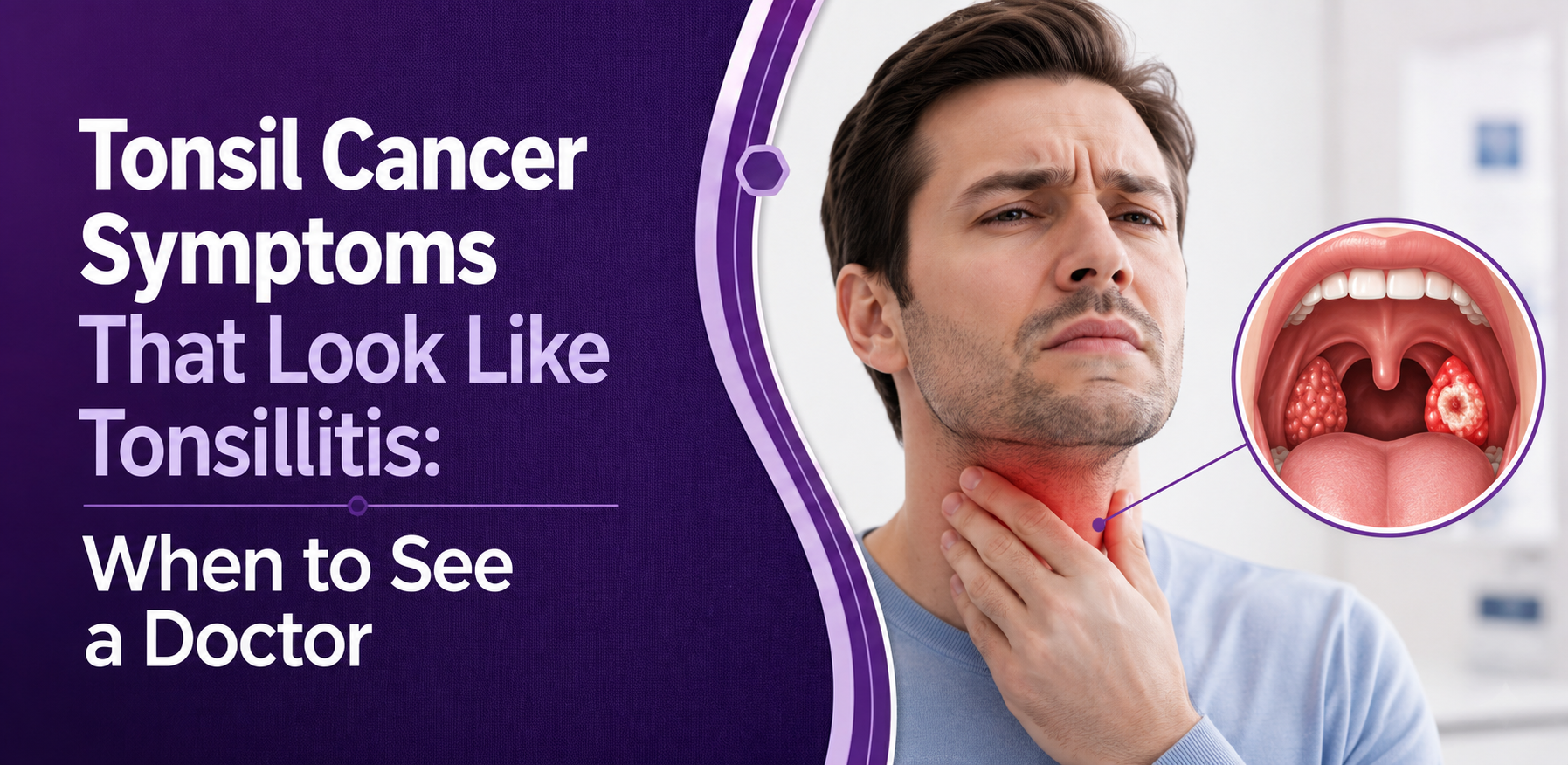
One tonsil looks larger than the other
Trouble swallowing food, liquids, or pills
Feeling like something sits in the back of the throat
Ear pain, especially on one side
Neck lump or swollen lymph nodes
Mouth pain
Blood in saliva
Bad breath that does not improve
Sores in the back of the mouth that do not heal
Jaw stiffness
Pain while chewing or speaking
These signs do not confirm cancer. Infection, tonsillitis, reflux, allergies, dental problems, and other throat conditions can cause similar symptoms. However, tonsil cancer symptoms deserve medical care when they last longer than expected or feel unusual.
First Stage Tonsil Cancer Symptoms and Early Warning Signs
First-stage tonsil cancer symptoms may not feel dramatic. A person may notice a sore spot, mild swallowing trouble, or one-sided throat irritation. Sometimes, the first clue comes from a neck lump instead of throat pain.
Early warning signs may include:
One-sided sore throat
One tonsil that looks different
Mild earache without a clear ear infection
A small lump in the neck
Swallowing may feel difficult, almost like food pauses near the back of the throat.
White, red, or sore-looking changes near the tonsil
Do not panic if you see a white spot on a tonsil. Tonsil stones, infection, and irritation can also cause white patches.
Still, a white spot that stays, bleeds, grows, or comes with one-sided swelling needs a provider exam.
Tonsil Cancer Symptoms vs Tonsillitis
Tonsillitis often starts quickly. It may cause fever, red, swollen tonsils, throat pain, and white patches.
With proper treatment, tonsillitis symptoms often begin to ease, and swallowing may feel more comfortable.
Tonsil cancer symptoms often raise more concern when they stay on one side or do not improve. The symptom pattern matters.
Key Difference to Watch
Tonsillitis usually improves. Tonsil cancer symptoms may linger, slowly worsen, or return without a clear infection.
A practical rule helps: if throat symptoms last more than a few days and worry you, contact a healthcare provider. If symptoms continue for two weeks or longer, book an appointment and get a proper throat exam.
HPV and Tonsil Cancer Symptoms
HPV, or human papillomavirus, plays a role in many throat cancers, including some tonsil cancers.
HPV-related tonsil cancer can affect adults who otherwise feel healthy. It may also appear without a heavy tobacco or alcohol history.
Having HPV does not automatically lead to cancer, but some long-lasting HPV infections can raise the risk of tonsil and throat cancers.
In many cases, the immune system clears HPV without trouble. However, certain HPV infections can cause cell changes over time.
Tobacco use, vaping, chewing tobacco, heavy alcohol use, and weak immune function may also raise risk. Alcohol and tobacco together increase concern even more.
Because risk factors can hide in the background, tonsil cancer symptoms should guide action. A sore throat that refuses to improve needs attention, even when a person feels healthy in every other way.
When to See a Primary Care Doctor for Tonsil Cancer Symptoms
Book a visit if you notice:
Throat pain that does not improve
One swollen tonsil
Ear pain with throat symptoms
Trouble swallowing
Neck lump or swelling
Blood in saliva
Mouth sore that does not heal
Ongoing bad breath with throat changes
Jaw stiffness
Voice or speech changes
A primary care provider can look inside the throat, feel the neck for swollen lymph nodes, check for infection, and decide if you need medicine, testing, or an ENT referral.
Do not wait months to “see what happens.” A short exam can bring clarity. It may show a simple infection. It may point to reflux, allergies, tonsil stones, or dental issues. In some cases, it may lead to earlier cancer detection.
How a Primary Care Doctor Checks the Symptoms
A visit usually starts with questions. Your provider may ask when symptoms began, whether pain affects one side, whether swallowing has changed, and whether you use tobacco or drink alcohol often.
Next, the provider may examine the mouth, throat, tonsils, ears, and neck. They may check for swollen lymph nodes and look for sores, bleeding, white patches, or uneven tonsil size.
If symptoms suggest infection, the provider may order a throat test. If a tonsil looks suspicious or symptoms keep returning, your provider may refer you to an ear, nose, and throat specialist. An ENT doctor may recommend a biopsy or imaging test when needed.
Treatment Options for Tonsil Cancer
Treatment depends on the tumor size, location, stage, HPV status, and overall health. A cancer specialist may recommend surgery, radiation, chemotherapy, or a combined plan after reviewing the tumor size, location, and spread.
Some early tumors may qualify for special surgical approaches.
Primary care does not replace cancer specialty treatment. However, primary care often helps patients take the first step. Your provider can evaluate symptoms, start the referral process, coordinate records, and support follow-up care.
How to Lower Your Risk
You cannot prevent every case of tonsil cancer. Still, daily choices can lower risk and improve overall throat health.
Helpful steps include:
Avoid tobacco and vaping
Limit alcohol
Keep regular dental visits
Ask your provider about HPV vaccination
Report lasting throat changes early
Keep follow-up visits if symptoms return
Routine care matters because mouth and throat changes can start small. A provider or dentist may notice changes before they become harder to treat.
Final Takeaway
Tonsil cancer symptoms can look like a common sore throat. That makes awareness important. One-sided throat pain, one swollen tonsil, earache, trouble swallowing, blood in saliva, mouth sores, or a neck lump should not be ignored when they last or worsen.
Most sore throats do not come from cancer. Even so, symptoms that stay need answers. Early evaluation can protect your health, reduce worry, and guide the right next step.
Book an appointment with Passion Health Advanced Primary Care →
FAQs
1. What are the early tonsil cancer symptoms?
Early tonsil cancer symptoms may include a sore throat that does not improve, one swollen tonsil, ear pain, trouble swallowing, or a lump in the neck.
2. Can tonsil cancer look like tonsillitis?
Yes. Tonsil cancer can sometimes look like tonsillitis because both may cause throat pain, swelling, white patches, or swallowing trouble. Lasting or one-sided symptoms need a doctor’s exam.
3. Does a white spot on the tonsil mean cancer?
Not always. A white spot may come from tonsillitis, tonsil stones, or irritation. However, a spot that does not heal, grow, bleed, or come with one-sided swelling needs medical care.4. When should lasting throat symptoms get checked by a primary care doctor?
See a primary care doctor if throat pain lasts more than 1 to 2 weeks, one tonsil looks larger, swallowing feels difficult, ear pain continues, or a neck lump appears.
5. Can HPV cause tonsil cancer?
Some long-lasting HPV infections can raise the risk of tonsil and throat cancers. Having HPV does not automatically lead to cancer, but lasting symptoms should be checked.