How Long Does Tonsillitis Last: Normal Healing or Warning Sign?
Is your sore throat just a normal infection, or is tonsillitis taking longer than it should? At first, it may feel like simple throat pain.
Then, swallowing becomes painful, the tonsils look red or swollen, a fever starts, and even talking feels uncomfortable. Now the real doubt begins: How long does tonsillitis last?
For many patients, tonsillitis improves within a few days. Still, some cases last longer, come back often, or need medical treatment. That is why timing matters. If throat pain keeps getting worse instead of better, the body may be dealing with more than a normal viral infection.
At Passion Health Advanced Primary Care, our providers can check the cause, do a strep test when needed, and guide the right treatment.
Book an appointment today if your tonsillitis is not improving.
How Long Does Tonsillitis Last in Most Cases?
So, how long does tonsillitis last? In most cases, symptoms improve in about 3 to 4 days. Tonsillitis symptoms usually go away within this time, but symptoms that last longer should be checked by a healthcare provider.
However, the exact recovery time depends on the cause. Viral tonsillitis may improve with rest, fluids, and supportive care. Bacterial tonsillitis, such as strep throat, may need antibiotics. Viral tonsillitis often clears in a few days, while bacterial tonsillitis may take around 10 days with treatment.
Therefore, the better question is not only why tonsillitis lasts long, but also why it happens. A viral infection, bacterial infection, weak immunity, or repeated exposure to germs can change the recovery timeline.
What Is Tonsillitis?
Tonsillitis means swelling and inflammation of the tonsils. The tonsils sit at the back of the throat, one on each side. Tonsillitis mainly affects children and teens, but adults can also get it.
The tonsils help trap germs that enter through the mouth and nose. However, because they fight germs directly, they can also become infected. When this happens, the throat may become painful, red, swollen, and hard to swallow.
Many patients search for tonsillitis last because the pain can feel intense. Some patients also notice white or yellow patches on the tonsils, bad breath, fever, or swollen neck glands.
How Long Does Tonsillitis Last if It Is Viral?
Viral tonsillitis often improves on its own. In many cases, symptoms ease within several days. Viral tonsillitis typically goes away on its own in about one week.
Still, “viral” does not always mean “mild.” A viral throat infection can cause strong pain, fever, fatigue, and trouble swallowing. Since antibiotics do not treat viruses, care usually focuses on comfort and hydration.
Helpful care may include warm fluids, rest, saltwater gargles, soft foods, and doctor-approved pain relievers. Fluids, rest, soft foods, warm liquids or cold foods, humidifier use, and saltwater gargles for symptom relief.
How Long Does Tonsillitis Last if It Is Bacterial?
Bacterial tonsillitis can last longer without proper treatment. Strep throat, caused by group A streptococcus can cause tonsillitis. Bacteria can lead to strep throat and may need antibiotics.
If a doctor confirms bacterial tonsillitis, antibiotics may help clear the infection and reduce the risk of complications. However, patients should finish the full antibiotic course, even after feeling better. Stopping antibiotics too soon can allow bacteria to survive and cause reinfection.
So, tonsillitis with bacterial infection? Bacterial tonsillitis may take about 10 days to run its course, and antibiotics may be needed to lower the risk.
What Causes Tonsillitis?
Tonsillitis usually happens because of a viral infection. However, bacteria can also cause it.
Viral infections commonly cause tonsillitis, while bacterial infections such as strep throat can also trigger it.
Common causes may include:
Cold and flu-like viruses
Strep throat bacteria
Close contact with someone sick
Poor hand hygiene
Sharing cups, utensils, or food
Repeated throat infections
Children get tonsillitis more often because they spend time in schools, daycare centers, and group settings. Also, school-age children face more exposure to viruses and bacteria.
Tonsillitis Symptoms You Should Not Ignore
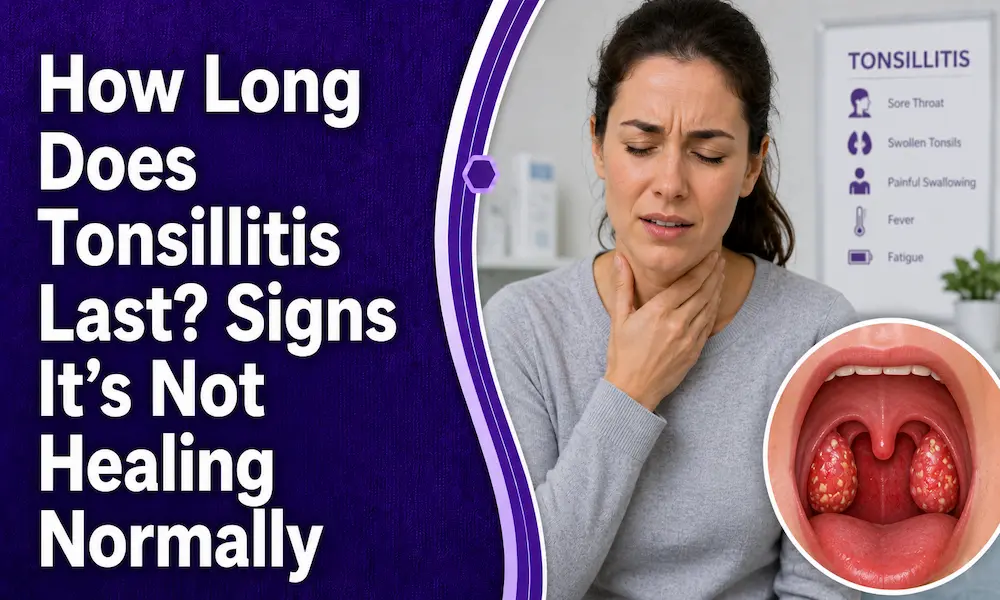
The symptoms can feel different from a normal sore throat. Mayo Clinic lists common symptoms such as red swollen tonsils, white or yellow patches, sore throat, painful swallowing, fever, swollen neck glands, bad breath, stomachache, neck pain, stiff neck, and headache.
Watch for these signs:
Sore throat that feels sharp or severe
Pain while swallowing
Fever
Red or swollen tonsils
White or yellow coating on tonsils
Swollen glands in the neck
Bad breath
Muffled voice
Headache
Ear pain or neck pain
Tiredness or weakness
If symptoms keep getting worse after a few days, do not wait too long. The answer to changes when pain continues, fever rises, or swallowing becomes difficult.
Is Tonsillitis Contagious?
Tonsillitis itself is an inflammation of the tonsils. However, the germs that cause it can spread. Viruses and bacteria that cause tonsillitis are contagious, even though tonsillitis itself is not directly contagious.
It can spread through:
Coughing
Sneezing
Close contact
Kissing
Sharing food or drinks
Touching contaminated surfaces
Because of this, handwashing matters. Also, avoid sharing cups, spoons, water bottles, and towels when someone has throat infection symptoms.
How Long Is Tonsillitis Contagious?
The contagious period depends on the cause. Viral infections can spread while symptoms are active. Bacterial infections may spread until proper treatment reduces the bacteria.
As a safe rule, stay home while fever, severe throat pain, and trouble swallowing continue. Staying home until the fever goes away and swallowing feels comfortable again, which usually takes about 3 to 4 days.
If a doctor gives antibiotics for strep throat or bacterial tonsillitis, ask when it is safe to return to work, school, or public places.
How to Treat Tonsillitis Safely
Treatment depends on the cause. Viral and bacterial tonsillitis can look similar, but they need different treatment. Bacterial infection may need antibiotics, while viral infection needs supportive care.
A doctor may recommend:
Throat exam
Rapid strep test
Throat culture
Antibiotics for bacterial infection
Fever or pain medicine
Hydration and rest
Follow-up care if symptoms return
At home, patients can try warm liquids, broth, soft foods, saltwater gargles, and a humidifier. However, home care should not replace medical care when symptoms look serious.
Can Tonsillitis Go Away on Its Own?
Yes, viral tonsillitis may go away on its own. However, bacterial tonsillitis may need antibiotics. Therefore, guessing can become risky, especially when fever, white patches, swollen glands, or severe pain appear.
This is where medical testing helps. MedlinePlus explains that providers may use a rapid strep test or throat culture to check for strep throat because it requires treatment.
If you keep asking how long tonsillitis lasts because symptoms do not improve, schedule a visit. A quick exam can help separate a viral throat infection from bacterial tonsillitis.
Signs Tonsillitis Is Not Healing Normally
Tonsillitis may need medical attention when symptoms last longer than expected. Contact a provider or urgent care for a sore throat lasting more than four days, fever over 101°F, or breathing difficulty.
Warning signs include:
Sore throat lasting more than 3 to 4 days
Fever that stays high or returns
Trouble swallowing fluids
Drooling
Breathing difficulty
One swollen tonsil with severe pain
Neck swelling
Severe weakness
Repeated tonsillitis episodes
Symptoms that improve, then suddenly worsen
Urgent care for trouble breathing, extreme trouble swallowing, or a lot of drooling.
When Is Tonsillitis an Emergency?
Do not wait if breathing becomes difficult. Also, do not ignore drooling, severe swallowing trouble, or signs of dehydration. These symptoms can mean the throat swelling has become serious.
Emergency signs include:
Trouble breathing
Inability to swallow saliva
Severe dehydration
Confusion
Neck stiffness with high fever
Severe one-sided throat swelling
Voice changes with worsening throat pain
In rare cases, untreated bacterial tonsillitis can lead to complications. Possible complications such as obstructive sleep apnea, tonsillar cellulitis, and peritonsillar abscess.
How to Recover Faster from Tonsillitis
Recovery starts with the right diagnosis. After that, care becomes easier.
Try these steps:
Drink plenty of fluids
Rest your voice
Eat soft foods
Use warm saltwater gargles
Avoid smoke and throat irritants
Take prescribed medicine correctly
Replace your toothbrush after an infection
Avoid close contact until symptoms improve
Also, do not stop antibiotics early if a provider prescribes them. Finishing treatment helps prevent the infection from returning.
Take away
For many patients, tonsillitis improves in 3 to 4 days. Viral tonsillitis may take around a week. Bacterial tonsillitis may take about 10 days and may need antibiotics.
However, symptoms that last longer, keep returning, or affect breathing or swallowing need medical care.
The cause, severity, treatment, and overall health. Most cases improve quickly, but warning signs should never be ignored.
A sore throat should not control your week. If you have swollen tonsils, fever, trouble swallowing, or symptoms that are not healing normally, visit Passion Health Advanced Primary Care. Our team can help you find the cause and start the right treatment.
Book an appointment today if you have a fever, swollen tonsils, painful swallowing, or repeated sore throat.
FAQs
1. How long does tonsillitis last?
Most tonsillitis cases improve within a few days. Viral tonsillitis may take about a week, while bacterial tonsillitis may need antibiotics and can take longer to fully clear. If symptoms last more than 3–4 days or get worse, see a doctor.
2. Is tonsillitis contagious?
Yes, the viruses or bacteria that cause tonsillitis can spread through coughing, sneezing, close contact, kissing, or sharing food and drinks. Good handwashing and avoiding shared cups can help reduce spread.
3. What causes tonsillitis?
Most tonsillitis cases come from common viruses. However, bacteria can also cause it, especially group A strep, which causes strep throat. Treatment depends on whether the cause is viral or bacterial.
4. Can tonsillitis go away on its own?
Yes, viral tonsillitis often improves with rest, fluids, soft foods, and throat comfort care. However, bacterial tonsillitis may need antibiotics, so testing may help if fever, white patches, or severe throat pain appear.
5. When should I see a doctor for tonsillitis?
See a doctor if you have a sore throat with fever, painful swallowing, trouble swallowing, extreme tiredness, or symptoms that do not improve. Get urgent care for trouble breathing, severe swallowing difficulty, or heavy drooling.