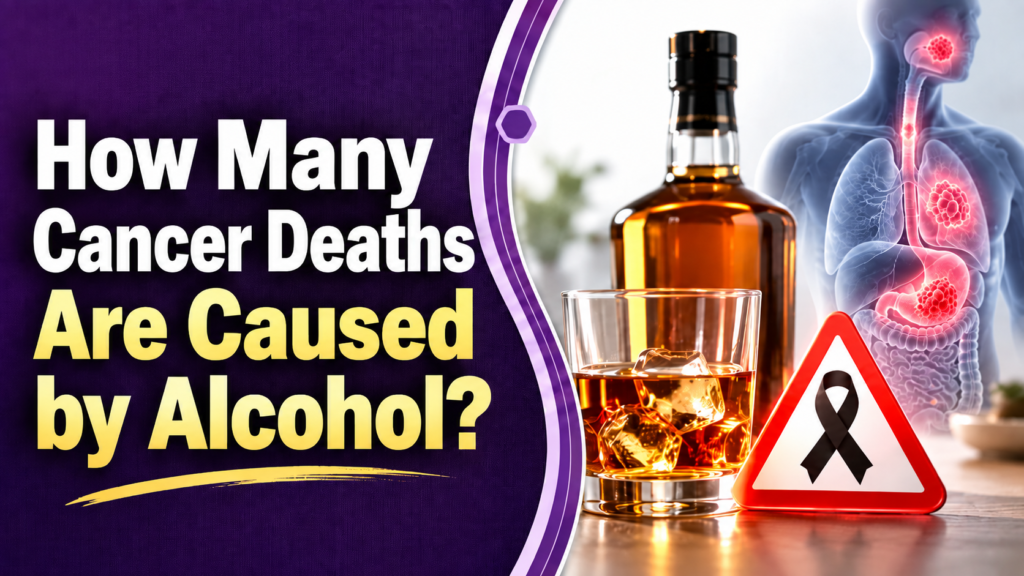
Passion Health Primary Care Blog How Many Cancer Deaths Are Caused by Alcohol?

How Many Cancer Deaths Are Caused by Alcohol?

Medically reviewed by Dr. Anantha Chentha, MD, FACP, CHCQM-PHY ADV Internal Medicine

Most people know that smoking can cause cancer. The connection between alcohol and cancer risk, however, receives far less attention.

That deserves to change.

A major U.S. analysis estimated that annual alcohol-related cancer deaths increased substantially over recent decades. Researchers based their analysis on long-term Global Burden of Disease data.

How many cancer deaths are caused by alcohol?

Key takeaways

  • Alcohol is an established cancer-causing exposure, and cancer risk can rise even with light or moderate drinking.
  • Alcohol is linked to several cancers, including those of the mouth, throat, esophagus, liver, and colon.
  • Alcohol and tobacco used together raise cancer risk further, especially for mouth and throat cancers.
  • Cutting back on alcohol is one cancer-risk factor you can change, and primary care can help you measure your intake.
  • Recent U.S. analysis suggests younger men face notable alcohol-attributable colorectal cancer risk, but it does not prove alcohol alone caused each cancer.

There is no single number that applies to every year or population. But recent U.S. research estimates that many thousands of cancer deaths each year are attributable to alcohol use. Earlier national estimates have also linked alcohol to a meaningful share of U.S. cancer deaths.

These estimates do not mean alcohol was the only factor involved in every death. Cancer usually develops through a combination of age, genetics, environmental exposures, and lifestyle factors. Instead, researchers use population-level evidence and statistical models to estimate how much of the cancer burden can reasonably be attributed to alcohol exposure.

What Did a U.S. Study Find?

A recent study examined alcohol-attributable cancer mortality in the United States over several decades.

Researchers reported that estimated annual deaths increased substantially over the study period. Men and adults aged 55 and older experienced the greatest overall burden.

The research also showed why alcohol-related cancer awareness should not focus only on liver disease.

Among men ages 20 to 54, colorectal cancer had the highest alcohol-attributable cancer mortality rate. Among women in the same age range, breast cancer ranked first, followed by colorectal cancer. Among older men, liver cancer remained particularly important, while breast cancer represented the largest alcohol-attributable cancer mortality burden among older women.

These findings make an important point: alcohol-related cancer deaths can involve several parts of the body, not just the liver.

Which Cancers Are Linked to Alcohol?

Strong scientific evidence has established alcohol as a cancer-causing exposure. Major international health agencies classify alcoholic beverages as carcinogenic to humans and describe established links with multiple cancers.

Alcohol has established links with cancers involving:

  1. Mouth and oral cavity

  2. Throat and pharynx

  3. Larynx, or voice box

  4. Esophagus

  5. Liver

  6. Colorectum

  7. Female breast

Recent analyses also examined trends involving pancreatic, stomach, and prostate cancers, although evidence strength can vary across cancer sites. Established causal relationships should therefore be distinguished from emerging or less certain associations.

How Does Alcohol Increase Cancer Risk?

Alcohol does not need to remain in one organ to affect cancer risk.

When the body processes ethanol, it produces acetaldehyde, a toxic compound that can damage DNA and proteins. Alcohol metabolism can also contribute to oxidative stress, interfere with nutrient absorption, and influence hormone levels. Higher estrogen levels are one pathway that may help explain the relationship between alcohol consumption and breast cancer.

Alcohol can also make tissues in the mouth and throat more vulnerable to harmful substances.

This becomes particularly important when alcohol and tobacco are used together. Combined alcohol and tobacco exposure can raise the risk of several head, neck, and esophageal cancers much more than either exposure alone.

Is Only Heavy Drinking a Cancer Concern?

No. The relationship generally follows a dose-response pattern: as alcohol consumption increases, the risk of several alcohol-related cancers also increases.

However, risk does not suddenly begin only when someone becomes a heavy drinker.

Even light drinking can increase the risk of some cancers, including breast cancer.

Major health agencies state that, specifically in relation to cancer risk, there is no established completely risk-free level of alcohol consumption. In general, drinking less means lower alcohol-related cancer exposure.

This does not mean that a person who occasionally drinks alcohol will develop cancer. Cancer risk is not certain. It means that population studies consistently find an increasing risk with increasing alcohol exposure.

What Counts as One Alcoholic Drink?

People sometimes underestimate how much alcohol they consume because a large glass, strong cocktail, or oversized beer may contain more than one standard serving.

In the United States, a standard drink is generally defined as containing about 14 grams of pure alcohol. That is approximately 12 ounces of regular beer, 5 ounces of wine, or 1.5 ounces of 80-proof distilled spirits.

Knowing serving sizes can make conversations about alcohol and health more meaningful.

You do not need to wait until alcohol causes noticeable symptoms before discussing your intake with your healthcare provider.

Can Cutting Back on Alcohol Reduce Cancer Risk?

Reducing alcohol exposure is one risk factor people can change.

Research suggests that stopping alcohol consumption is associated with lower risks of some alcohol-related cancers, including oral and esophageal cancer, with possible reductions for several others. The decline in risk may take years rather than occur immediately.

Major health agencies similarly identify reducing alcohol consumption as an important cancer-prevention strategy.

You do not have to think about prevention as an all-or-nothing decision.

For some people, the first practical step may be identifying how many drinks they actually consume each week. Others may choose alcohol-free days, smaller servings, or complete avoidance.

People who drink heavily or regularly should talk with a healthcare professional before suddenly stopping, because alcohol withdrawal can sometimes become medically dangerous.

Why Primary Care Matters in Cancer Prevention

This is not limited to cancer treatment centers.

Primary care can identify risks years before a serious illness develops.

Your primary care provider can review your personal and family medical history, discuss alcohol and tobacco exposure, evaluate chronic conditions, and determine which preventive screenings are appropriate for your age and risk profile.

That may include conversations about colorectal cancer screening, breast cancer screening, and other preventive services based on individual circumstances.

A healthcare visit also provides an opportunity to discuss alcohol privately and without judgment.

The goal is not to label patients. The goal is to identify modifiable risks and help patients make informed decisions.

What Does This Research Mean for Younger Adults?

One of the more notable findings from a recent U.S. analysis involved adults between the ages of 20 and 54.

Colorectal cancer represented the leading alcohol-attributable cancer mortality burden among men in this age group. Breast cancer ranked first among women, with colorectal cancer second.

That does not prove that alcohol alone caused those individual cancers. The study was a population-based observational trend analysis that relied on Global Burden of Disease estimates.

Still, the results challenge the assumption that alcohol-related cancer is primarily a concern for older adults with liver disease. Prevention conversations can matter much earlier in life.

Need care for this?

A Passion Health clinician can see you in person or online.

In person

Request an in-person visit at any Passion Health location to review your cholesterol numbers and heart risk.

Choose your clinic and clinician across North Texas

Book an appointment in person at Passion Health clinics

Online

Answer a few questions online to find the right next step, whether that is a visit, lab work, or a referral. For non-emergency questions, you can get care online through Passion Health Online Care.

Adults 18 and older in Texas · Texas-licensed clinicians

Get the right care in a few steps

Blood work

Your clinician can order a lipid panel and any other labs recommended for you during your visit.

Essential Blood Work · $59

Get Passion Health Blood Work

Frequently Asked Questions

Is there any safe amount of alcohol for cancer risk?

Major health agencies state that there is no established completely risk-free level of alcohol consumption with respect to cancer. Lower intake generally means lower alcohol-related cancer risk.

Does alcohol raise the risk of breast cancer?

Yes. Breast cancer is among the cancers with established links to alcohol, and risk generally rises as alcohol intake increases.

Does quitting alcohol lower cancer risk over time?

Research suggests that stopping alcohol consumption is associated with lower risks of some alcohol-related cancers, although the decline may take years.

Does combining alcohol and smoking increase cancer risk?

Yes. Alcohol and tobacco used together raise the risk of several head, neck, and esophageal cancers more than either exposure alone.

Should I talk with my primary care provider about my drinking?

Yes. A primary care visit is a private, judgment-free place to review your alcohol intake and cancer screening needs.

Dr. Anantha Chentha, internal medicine physician
Physician Author

About the Author

Dr. Anantha Chentha
MD, FACP, CHCQM-PHY ADV | Internal Medicine

Dr. Anantha Chentha is a board-certified internal medicine physician with extensive experience in primary care and chronic disease management. He provides comprehensive, patient-centered care with a focus on prevention, accurate diagnosis, and long-term health management.

View Provider Profile

Related Post