6 Key Takeaways
- Understand rebound congestion: Overusing certain nasal decongestant sprays can worsen nasal blockage.
- Recognize warning signs: Recurring congestion and shorter periods of relief may indicate nasal spray overuse.
- Check medication ingredients: Oxymetazoline and phenylephrine can cause rebound congestion with prolonged use.
- Follow usage instructions: Avoid using oxymetazoline nasal spray for more than three consecutive days.
- Allow time for recovery: Rebound congestion may take several days to a few weeks to improve after stopping the offending spray.
- Seek primary care: A doctor can evaluate persistent congestion, review medications, and recommend appropriate care.
Nasal spray rebound congestion happens when prolonged or frequent use of certain nasal decongestants causes nasal swelling to return or worsen. Although these sprays provide temporary relief, excessive use can make breathing through the nose more difficult. Symptoms may improve within a few days after discontinuing the offending medication, but complete recovery can take several weeks in some cases.
A blocked nose can make sleeping, working, and even enjoying a meal uncomfortable. Naturally, reaching for a nasal spray seems like a quick solution. However, if congestion keeps returning shortly after each dose, the medication itself may contribute to the problem.
Understanding why this happens can help you make safer medication choices and recognize when persistent congestion needs medical attention.
If nasal congestion continues to affect your daily routine, schedule a primary care appointment at Passion Health for a personalized evaluation.
What Is Nasal Spray Rebound Congestion?
Nasal spray rebound congestion, also known as rhinitis medicamentosa, occurs when overuse of topical nasal decongestants leads to persistent nasal blockage.
Imagine using a nasal spray before bedtime because a cold makes breathing difficult. The medication works quickly, and you sleep comfortably. However, the next evening, your nose feels blocked again. After several days, you notice that congestion returns whenever the medication wears off.
This pattern may indicate rebound congestion rather than a lingering cold.
Unlike ordinary nasal congestion, which often develops because of allergies or respiratory infections, rebound congestion involves the nasal tissues’ response to repeated decongestant exposure.
Why Does Nasal Spray Make Congestion Worse?
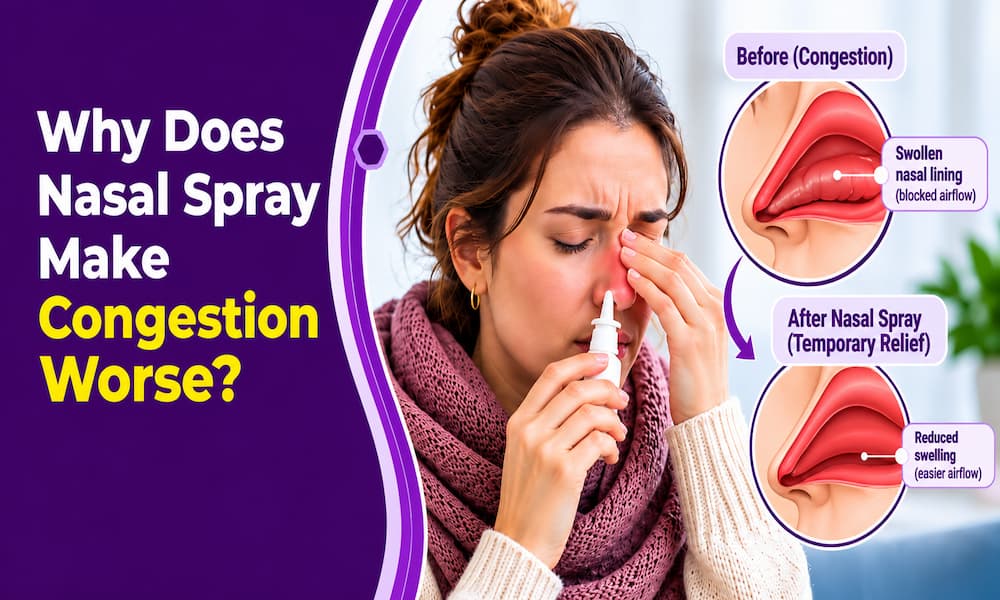
The lining inside your nose contains small blood vessels that help regulate airflow. During a cold or allergic reaction, inflammation causes these tissues to swell, narrowing the nasal passages.
Decongestant sprays temporarily reduce swelling by narrowing these blood vessels. As a result, you get improved airflow and quick relief.
However, repeated exposure can change how nasal tissues respond to the medication. As the effects wear off, swelling may return, creating a cycle of recurring nasal blockage.
Over time, you may notice that the spray provides less relief or that you need it more frequently.
Although taking another dose seems convenient, continued overuse may contribute to the very symptoms you want to relieve.
Which Nasal Sprays Can Cause Rebound Congestion?
Different nasal sprays serve different purposes. Therefore, identifying the active ingredient matters more than recognizing the brand name.
Swipe sideways to view the full table.
| Nasal Spray Type | Common Ingredients | Rebound Congestion Risk |
|---|---|---|
| Decongestant sprays | Oxymetazoline, phenylephrine | Yes, with overuse |
| Corticosteroid sprays | Fluticasone, mometasone | Not typically |
| Antihistamine sprays | Azelastine | Not typically |
| Saline sprays | Sodium chloride | No |
Unlike decongestants, nasal corticosteroids help manage inflammation, while saline sprays provide moisture and help loosen mucus.
Before purchasing a nasal spray, read the medication label carefully and follow the recommended instructions.
Five Warning Signs of Nasal Spray Overuse
Rebound congestion can develop gradually, making it difficult to recognize during the early stages.
Pay attention to these common warning signs:
Congestion returns quickly: Nasal blockage develops again shortly after the medication wears off.
Relief becomes shorter: Each application seems to provide less lasting comfort.
Frequent spray use: You feel the need to reach for the medication throughout the day.
Persistent nighttime congestion: Nasal stuffiness continues to interrupt sleep.
Congestion without other cold symptoms: Nasal blockage remains even after coughing, sneezing, or sore throat improves.
These symptoms do not automatically confirm rhinitis medicamentosa. Allergies, sinus inflammation, and structural nasal problems can produce similar discomfort.
How Long Does Rebound Congestion Last?
Recovery from nasal spray rebound congestion varies according to medication use, nasal inflammation, and underlying health conditions.
Cleveland Clinic explains that nasal blockage may improve over several days or take weeks to resolve after withdrawing from the offending spray.
During the initial recovery period, congestion may temporarily increase. This discomfort can make it tempting to return to the decongestant.
However, repeatedly restarting the medication may prolong the cycle.
Long-term nasal spray use, untreated allergies, and chronic nasal inflammation can delay recovery. Therefore, a primary care doctor may recommend a personalized medication withdrawal plan rather than a fixed recovery schedule.
How Can You Relieve Rebound Congestion Safely?
Managing rebound congestion involves addressing excessive decongestant use and understanding why nasal blockage developed in the first place.
Review Your Current Medication
Check the active ingredient, recommended dosage, and duration of use. If you have exceeded the recommended limit, speak with a healthcare professional about appropriate next steps.
Consider Saline Nasal Sprays
Saline sprays can moisturize dry nasal tissues and loosen thick mucus without causing medication-related rebound congestion.
Maintain Comfortable Indoor Humidity
Dry indoor air may increase nasal irritation. A clean humidifier may help maintain comfortable humidity levels, especially during colder months.
Address Underlying Allergies
Seasonal allergies may contribute to recurring nasal inflammation. Identifying triggers and discussing appropriate allergy medications with your doctor may help reduce reliance on decongestants.
Avoid increasing medication doses or combining multiple decongestants without professional guidance.
What Happens During a Primary Care Visit?
When nasal congestion continues despite medication use, a primary care doctor can help identify the underlying cause.
Your doctor may ask when the congestion started, which nasal spray you use, how frequently you apply it, and whether symptoms affect one or both nostrils.
Additionally, a nasal examination may help identify inflammation, irritation, or other potential causes of blockage.
Depending on the findings, your doctor may recommend medication adjustments, allergy management, follow-up care, or referral to an ear, nose, and throat specialist.
Bring your nasal spray bottle to the appointment. The medication label provides useful information that can guide treatment decisions.
When Should You See a Doctor for Persistent Nasal Congestion?
Contact a primary care doctor if nasal congestion continues beyond the medication’s recommended usage period, repeatedly interrupts sleep, or affects everyday activities.
Seek prompt medical attention if you develop persistent fever, significant facial pain, recurring nosebleeds, or ongoing blockage on one side of your nose.
Severe breathing difficulties, sudden vision changes, or swelling around the eyes with a severe headache require emergency medical attention.
Early evaluation can help distinguish rebound congestion from other nasal and respiratory conditions.
Find Relief From Persistent Nasal Congestion at Passion Health
Nasal spray rebound congestion can turn temporary symptom relief into an ongoing problem. Recognizing medication overuse and addressing the underlying cause can help you make informed decisions about your nasal health.
At Passion Health, primary care providers can evaluate persistent nasal congestion, review your medications, and recommend appropriate care based on your symptoms and medical history.
With 10 clinic locations across North Texas, Passion Health offers primary care in Frisco, Plano, Prosper, Irving, Aubrey, McKinney, Flower Mound, Kaufman, Ennis, and Kemp/Seven Points.
Still struggling with a stuffy nose that keeps coming back? Book an appointment with Passion Health Primary Care today and take the next step toward understanding your symptoms.
Medical references for E-E-A-T
Cleveland Clinic – Rhinitis Medicamentosa
MedlinePlus – Oxymetazoline Nasal Spray
Need care for persistent nasal congestion?
A Passion Health clinician can evaluate your nasal symptoms, review medication use, and recommend appropriate next steps.
In person
Visit a Passion Health primary care clinician for a nasal examination, medication review, and evaluation of persistent congestion or possible rebound congestion.
Choose your clinic and clinician across North Texas
Book a primary care appointmentOnline care
Explore Passion Health Online Care for eligible sinus and allergy symptoms. A clinician can review your submitted information and recommend next steps when appropriate.
Available for eligible conditions and patients in Texas
Explore Passion Health Online CareNasal spray medication review
If congestion keeps returning after nasal spray use, a primary care clinician can review your medication ingredients, usage frequency, and underlying symptoms to recommend an appropriate management plan.
Bring your nasal spray bottle or medication label to your appointment.
Frequently Asked Questions
1. Can nasal spray make a stuffy nose worse?
Yes. Overusing nasal decongestant sprays can cause rebound congestion and persistent nasal blockage.
2. Does rebound congestion go away on its own?
Symptoms often improve after stopping the offending spray, but persistent congestion may require medical attention.
3. Can I use saline nasal spray every day?
Yes. Saline nasal sprays generally support daily use according to product instructions without causing rebound congestion.
4. Can rebound congestion cause sleep problems?
Yes. Nasal blockage can cause mouth breathing, interrupted sleep, and nighttime discomfort.
5. Can a primary care doctor treat rebound congestion?
Yes. A primary care doctor can evaluate symptoms, review medications, and recommend appropriate treatment.

About the Author
Dr. Anantha Chentha is a board-certified internal medicine physician with extensive experience in primary care and chronic disease management. He provides comprehensive, patient-centered care with a focus on prevention, accurate diagnosis, and long-term health management.
View Provider Profile →