Blood Pressure Chart and Calculator: What Your Numbers Mean
A blood pressure reading may look like two simple numbers. However, those numbers provide useful information about how strongly blood moves through the arteries while the heart contracts and rests.
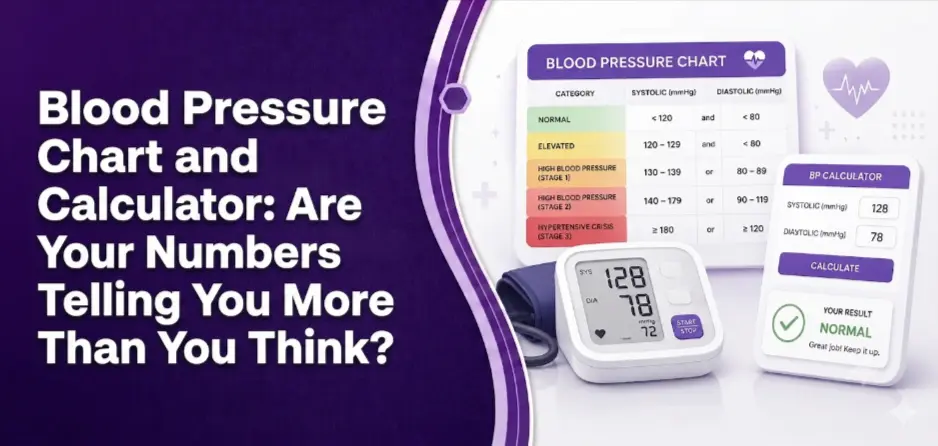
Use the Blood Pressure Chart and Calculator below to check the standard adult category for a recent reading. Then, enter the same numbers into the mean arterial pressure calculator to estimate the average pressure in the arteries during one heartbeat cycle.
Have repeated high blood pressure readings? Schedule a primary care visit with Passion Health Advanced Primary Care for a complete evaluation and personalized care plan.
Patients looking for primary care in Frisco, Irving, Plano, Prosper, Aubrey, Flower Mound, Ennis, Kaufman, Kemp, McKinney, TX
Check Your Reading With the Blood Pressure Chart and Calculator
A blood pressure monitor reports the result as systolic pressure over diastolic pressure. For example, a result may appear as 120/80 mm Hg.
The systolic number appears first and shows the pressure inside the arteries when the heart contracts. Meanwhile, the diastolic number shows the pressure between heartbeats, when the heart relaxes.
Enter a recent reading in the Blood Pressure Chart and Calculator to view:
Estimated mean arterial pressure
Pulse pressure
Adult blood pressure category
General next-step guidance
Mean Arterial Pressure Calculator
Enter a recent systolic and diastolic reading to estimate your MAP.
Your MAP estimate
Blood pressure category
What to consider next
The Blood Pressure Chart and Calculator offers educational guidance rather than a medical diagnosis. Therefore, discuss repeated abnormal readings, symptoms, and medication questions with a healthcare professional.
Blood Pressure Chart and Calculator for Adults
The following blood pressure chart and calculator uses current American Heart Association adult categories.
A reading enters the higher category when either number reaches a higher range. For example, 118/92 mm Hg falls within Stage 2 hypertension because the diastolic number reaches 92.
Blood Pressure Chart for Adults
Compare your systolic and diastolic readings below.
This adult chart provides general education and does not diagnose hypertension.
One high result does not automatically confirm hypertension. Instead, a clinician reviews repeated measurements, home readings, medical history, medicines, and cardiovascular risk before making a diagnosis or recommending treatment.
What Is a Normal Blood Pressure?
The Blood Pressure Chart and Calculator shows that, for most adults, normal blood pressure remains below 120/80 mm Hg. In contrast, systolic pressure from 120 to 129 with diastolic pressure below 80 falls within the elevated range.
Although a normal reading offers reassurance, it only captures one moment. Stress, movement, caffeine, exercise, pain, smoking, talking, and an incorrect cuff size can temporarily affect the result.
Consequently, accurate technique matters just as much as the number on the monitor. A clear pattern of readings provides more useful information than one isolated measurement.
What Do Systolic and Diastolic Blood Pressure Mean?
Systolic Pressure
Systolic pressure measures the force inside the arteries when the heart pumps blood forward. It appears as the top or first number in a blood pressure result.
For instance, the number 135 in a reading of 135/78 mm Hg represents systolic pressure. Since 135 falls between 130 and 139, this reading reaches the Stage 1 hypertension range even though the diastolic number remains below 80.
Diastolic Pressure
Diastolic pressure measures arterial pressure while the heart relaxes between beats. It appears as the bottom or second number.
As another example, a reading of 118/85 mm Hg also falls within Stage 1 hypertension. The systolic result remains normal, but the diastolic result falls between 80 and 89.
What Is Mean Arterial Pressure?
Mean arterial pressure, often called MAP, estimates the average pressure that pushes blood through the arteries during one complete cardiac cycle. Clinicians may consider MAP when evaluating circulation and blood flow to major organs.
A common estimate uses this formula:
MAP = (Systolic pressure + 2 × Diastolic pressure) ÷ 3
The calculation gives more weight to diastolic pressure because the heart usually spends more time in the relaxation phase than in the contraction phase at a typical resting heart rate.
For example, a blood pressure reading of 120/80 mm Hg gives an estimated MAP of 93.3 mm Hg:
(120 + 2 × 80) ÷ 3 = 93.3
Still, MAP cannot replace the systolic and diastolic values used to classify adult hypertension. Clinical MAP goals also vary according to the person’s condition, symptoms, and care setting.
What Does a MAP Result Mean?
Clinicians commonly use MAP in hospitals, emergency departments, and critical care settings. However, a home MAP estimate cannot diagnose poor circulation, shock, or organ damage.
A MAP near or above 60 to 65 mm Hg often appears in clinical discussions about maintaining tissue perfusion. Nevertheless, that threshold does not create a universal normal MAP range for every adult.
Clinicians must consider the cause, symptoms, heart rhythm, medications, and overall medical condition.
Likewise, a result above 100 mm Hg does not independently confirm hypertension. The complete systolic and diastolic reading provides the standard adult blood pressure category.
Therefore, use the Blood Pressure Chart and Calculator as an educational tool. Do not use the result alone to start, stop, or change medication.
What Is Pulse Pressure?
Pulse pressure equals the difference between systolic and diastolic pressure.
Pulse pressure = Systolic pressure − Diastolic pressure
For example, a blood pressure of 120/80 mm Hg creates a pulse pressure of 40 mm Hg. The Blood Pressure Chart and Calculator displays this value along with the estimated MAP.
Pulse pressure can vary with age, activity, arterial stiffness, and certain health conditions. However, one unusual result does not provide enough information for a diagnosis. A clinician can review the full pattern when pulse pressure remains consistently narrow or wide.
Can One High Reading Diagnose Hypertension?
No. One reading acts like a snapshot, while readings collected over time provide a broader picture.
The American Medical Association recommends taking at least two measurements and averaging them when an initial office reading runs high. Similarly, the American Heart Association recommends two home readings taken one minute apart and a written record of the results.
For a useful home record, write down:
Date and time
Systolic pressure
Diastolic pressure
Pulse rate
Medicines taken that day
Symptoms or unusual circumstances
In addition, bring the monitor and recorded results to a primary care appointment. A clinician can compare the home device with office equipment and check whether the cuff fits correctly.
Blood Pressure Care & Primary Care Support
Not Sure What Your Blood Pressure Numbers Mean?
Passion Health Advanced Primary Care can review your home blood pressure readings, symptoms, medications, and health history. A provider can help identify possible causes of high or low readings and create a personalized blood pressure management plan.
What Should You Do After a High Blood Pressure Reading?
Start by staying calm. Anxiety can raise the next measurement and make the pattern harder to interpret.
Sit quietly for several minutes, confirm the cuff position, and repeat the reading. Afterward, record both results instead of keeping only the lower number.
Repeated Stage 1 readings deserve a primary care discussion. Meanwhile, Stage 2 readings call for timely evaluation, especially when the person already has heart disease, diabetes, kidney disease, or takes blood pressure medicine.
A primary care evaluation may include:
Review of home readings
Medication and supplement review
Blood sugar testing
Cholesterol testing
Thyroid evaluation
Sleep apnea screening
Nutrition and activity guidance
When Is Blood Pressure Dangerously High?
A reading above 180 systolic and/or 120 diastolic mm Hg falls within the severe hypertension range. Wait at least one minute, remain seated, and take the measurement again.
When the repeated result remains that high without new symptoms, contact a healthcare professional immediately. Do not wait several days for a routine visit.
Call emergency services when a reading above 180/120 occurs with symptoms such as:
Shortness of breath
Weakness
Vision changes
Difficulty speaking
Those symptoms may signal a hypertensive emergency, so do not wait for the pressure to fall on its own.
When Should You See a Primary Care Doctor?
Schedule an appointment when home readings repeatedly reach 130/80 mm Hg or higher. Also, seek medical guidance when readings change suddenly, blood pressure stays high despite medication, or low readings cause dizziness, fainting, or unusual weakness.
Primary care follow-up matters because high blood pressure often develops without obvious symptoms. Regular monitoring can identify a pattern before complications occur.
Moreover, never stop blood pressure medicine because one home result looks normal. A normal number may show that the treatment works, rather than prove that the medicine is no longer necessary.
Key Takeaways
A normal adult blood pressure falls below 120/80 mm Hg.
Either number can place the reading into a higher category.
MAP estimates average arterial pressure during one cardiac cycle.
The MAP result cannot replace the standard Blood Pressure Chart and Calculator.
One high reading does not confirm hypertension.
Accurate home technique and repeated measurements improve interpretation.
Severe readings with concerning symptoms require emergency care
Our Primary Care Locations
Frequently Asked Questions
1. Is 130/80 high blood pressure?
Yes. A reading of 130/80 mm Hg falls within the Stage 1 hypertension range under current adult categories.
2. Is 140/90 high blood pressure?
Yes. A reading of 140/90 mm Hg falls within the Stage 2 hypertension range.
3. What is a good MAP?
MAP needs clinical context. Many clinicians use 60 to 65 mm Hg as a minimum perfusion reference in certain acute-care settings, but no single MAP target fits every person.
4. Can the Blood Pressure Chart and Calculator diagnose hypertension?
No. Hypertension classification relies on systolic and diastolic readings, repeated measurements, and professional evaluation.
5. Should I average my blood pressure readings?
Yes. Multiple readings often provide a more representative pattern than one measurement. Take two readings one minute apart and record both.