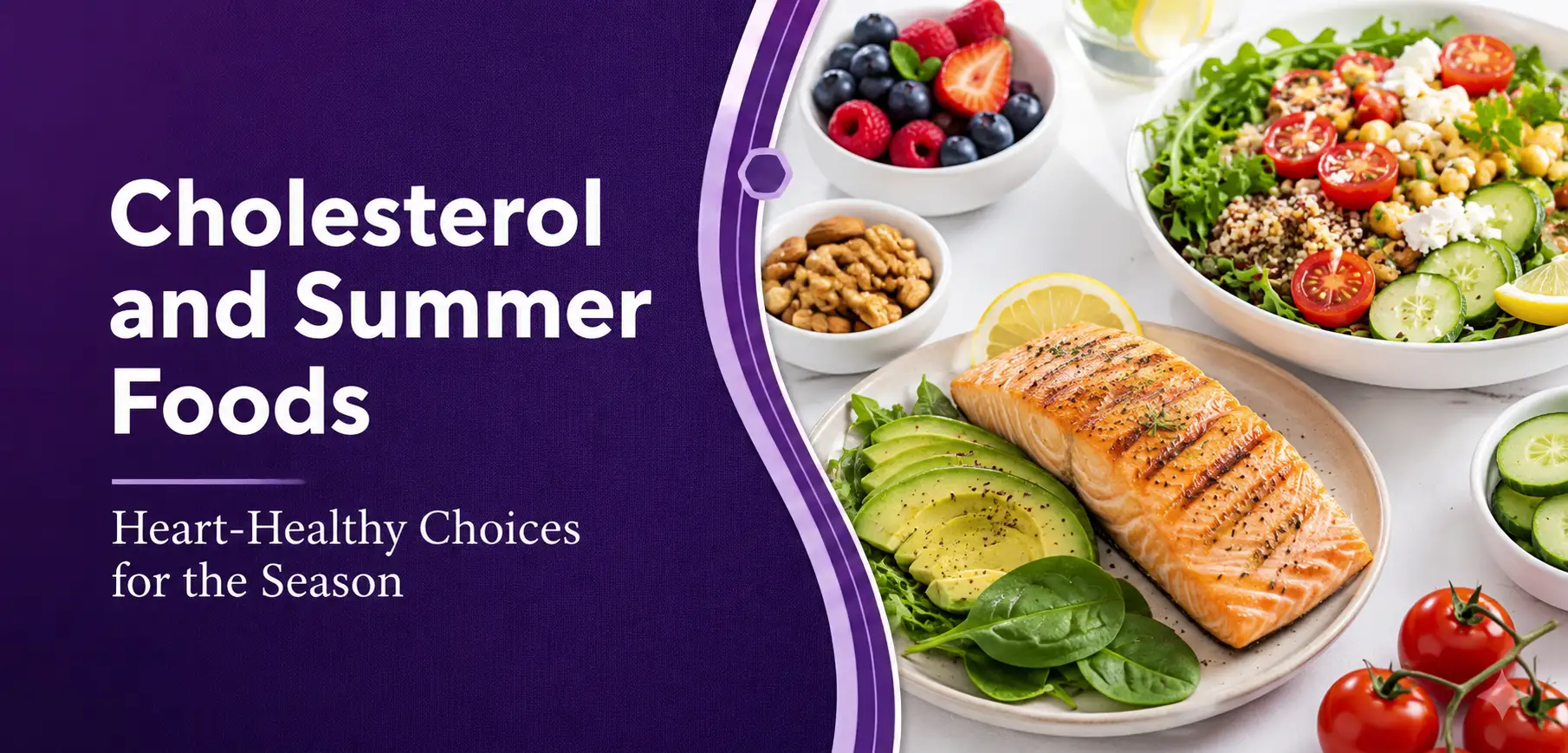
Cholesterol and Summer Foods: Heart-Healthy Choices
for the Season
Cholesterol and summer foods are closely connected because summer often brings cookouts, vacations, picnics, restaurant meals, and frozen treats. While these foods can be enjoyable, frequent intake of fatty meats, fried foods, creamy side dishes, and sugary desserts may make cholesterol management more difficult.
The good news is that summer also offers many fresh and nutritious choices. Berries, tomatoes, beans, whole grains, fish, vegetables, nuts, and healthy fats can support better heart health while keeping meals colorful and satisfying.
You can eat healthily in summer without avoiding every food you enjoy. Instead, focus on smart portions, simple cooking methods, and healthier replacements.
Concerned about your cholesterol? Schedule a heart health check at Passion Health Advanced Primary Care.
Key Takeaways
Summer meals can support healthy cholesterol when they include fruits, vegetables, whole grains and lean proteins.
Berries, beans, oats, avocado, nuts and grilled fish are heart-healthy summer food choices.
Fatty meats, fried foods, creamy side dishes and sugary drinks may make cholesterol management more difficult.
Simple cookout swaps can reduce saturated fat while adding more fiber and nutrients to your meals.
Regular cholesterol testing and primary care guidance can help protect your long-term heart health.
Why Cholesterol Management Matters During Summer
Cholesterol is a substance the body needs for normal cell and hormone function. However, too much LDL cholesterol, often called “Bad” cholesterol, may contribute to plaque buildup inside the arteries.
High cholesterol usually does not cause obvious symptoms. A person may feel healthy while cholesterol levels remain elevated. That is why routine blood testing and regular health reviews are important.
Summer eating habits can affect overall heart health. Cookout foods such as hot dogs, sausage, fatty burgers, fried chicken, full-fat cheese, and creamy desserts often contain high amounts of saturated fat. Eating these foods regularly may increase LDL cholesterol over time.
A heart-friendly diet should include more fiber, vegetables, whole grains, lean protein, and unsaturated fats.
Best Summer Foods for Healthy Cholesterol Levels
1. Berries
Strawberries, blueberries, raspberries, and blackberries are refreshing summer fruits. They contain fiber, vitamins, and natural plant compounds.
Use berries in:
- Oatmeal
Low-fat yogurt
Fruit salads
Smoothies
Whole-grain cereal
Homemade frozen fruit snacks
Choose whole fruit more often than fruit juice because whole fruit provides more fiber and can help you feel full.
2. Tomatoes
Tomatoes are easy to add to summer meals. They work well in salads, sandwiches, wraps, salsa, and grilled dishes.
Prepare a simple tomato salad using cucumber, onion, herbs, lemon juice, and a small amount of olive oil. Fresh tomato salsa can also replace creamy dips that contain more saturated fat.
3. Avocados
Avocados provide fiber and unsaturated fats. They can add creaminess without relying on butter, mayonnaise, or large amounts of cheese.
Try avocado in:
Whole-grain toast
Salads
Fish tacos
Bean wraps
Grilled vegetable sandwiches
Homemade guacamole
Avocados are nutritious, but portions still matter because they are calorie-dense.
4. Beans and Lentils
Beans and lentils are excellent sources of plant protein and fiber. Black beans, chickpeas, kidney beans, and lentils can replace processed meat in many summer recipes.
Easy meal ideas include:
Black bean and corn salad
Chickpea cucumber salad
Lentil bowls
Bean tacos
Three-bean salad
Homemade hummus
Drain and rinse canned beans to remove some of the sodium before serving.
5. Oats and Whole Grains
Oats contain soluble fiber, which can be helpful in a cholesterol-conscious diet. Other whole grains, including quinoa, barley, brown rice, and whole-grain bread, also add fiber and texture to summer meals.
Try:
Chilled overnight oats
Quinoa vegetable salad
Brown rice bowls
Whole-grain hamburger buns
Barley salad with herbs
Whole-grain wraps
Choose products with a whole grain listed near the beginning of the ingredient list.
6. Grilled Fish
Choosing fish over fatty burgers, sausages, and processed meat is a heart-healthy option. Salmon, trout, sardines, and mackerel contain omega-3 fatty acids.
Season fish with lemon, garlic, pepper, and fresh herbs. Grill or bake it instead of frying it.
Serve grilled fish with:
Roasted vegetables
Brown rice
Quinoa
Bean salad
Leafy greens
Grilled corn
Avoid heavy cream sauces or large amounts of butter, which can increase the meal’s saturated fat content.
7. Nuts and Seeds
Walnuts, almonds, pistachios, flaxseeds, chia seeds, and pumpkin seeds provide unsaturated fats, protein, and fiber.
Add a small portion to:
Yogurt
Oatmeal
Salads
Smoothies
Grain bowls
Choose unsalted or lightly salted options when possible. A small handful is usually enough for a snack.
8. Summer Vegetables
Vegetables can help make meals more filling without adding large amounts of saturated fat.
Popular summer vegetables include the following:
Bell peppers
Zucchini
Eggplant
Cucumber
Corn
Okra
Leafy greens
Summer squash
Grill vegetables on skewers, mix them into salads, or add them to wraps. Try filling half the plate with vegetables during cookouts and family meals.
9. Low-Fat Dairy Foods
Low-fat plain yogurt can provide protein and calcium while containing less saturated fat than many full-fat desserts.
Combine yogurt with berries, cinnamon, or chopped nuts for a refreshing summer snack. Avoid flavored yogurts with large amounts of added sugar.
10. Water-Rich Fruits
Watermelon, cantaloupe, peaches, oranges, and grapes can help make summer meals feel refreshing.
These fruits can replace pastries, candy, or heavy frozen desserts. Although fruit is healthy, it cannot directly remove cholesterol from the body. Its benefit comes from supporting a balanced diet and replacing less nutritious foods.
Are Your Summer Foods
Affecting Your Cholesterol?
A primary care doctor can review your cholesterol numbers, eating habits, and heart health risks and recommend practical changes for healthier summer meals.
Book an Appointment →Cholesterol-Friendly Summer Cookout Swaps
Small changes can make a cookout more supportive of heart health.
Instead | Choose |
Fatty burger or sausage | Grilled fish, chicken, or bean burger |
White hamburger bun | Whole-grain bun |
Creamy potato salad | Herb and olive oil potato salad |
Chips and creamy dip | Vegetables with hummus |
Fried chicken | Grilled skinless chicken |
Butter-covered corn | Corn with lime, herbs, and pepper |
Ice cream sundae | Berries with low-fat yogurt |
Sugary soda | Water or unsweetened iced tea |
You don’t have to change everything at once. Begin with one or two swaps at each gathering.
Three Simple Summer Recipes
Berry Overnight Oats
Combine rolled oats, low-fat milk, chia seeds, berries, and cinnamon in a covered container. Refrigerate overnight and serve cold.
Avoid adding heavy cream, flavored syrup, or large amounts of sugar.
Grilled Fish and Vegetable Plate
Season salmon or trout with lemon, garlic, herbs, and black pepper. Grill it with zucchini, peppers, onions, or asparagus.
Serve with quinoa or brown rice for a balanced meal.
Black Bean and Corn Salad
Mix rinsed black beans, corn, tomato, cucumber, bell pepper, red onion, lime juice, herbs, and a small amount of olive oil.
Enjoy it as a side dish, in a whole-grain wrap, or served over your favorite grain.
Tips for Adding Healthy Foods to Summer Meals
Plan Before Gatherings
Avoid arriving at a cookout extremely hungry. Eat a light meal or snack beforehand to make it easier to control portions.
Choose Better Cooking Methods
Grill, bake, steam, roast, or air-fry food instead of deep-frying it. Trim visible fat from meat and remove poultry skin.
Add Flavor Without Heavy Sauces
Use lemon, lime, vinegar, garlic, pepper, paprika, cumin, chili flakes, and fresh herbs.
These ingredients can add flavor without relying on butter, cream, or excessive salt.
Read Nutrition Labels
Compare products and check:
Saturated fat
Trans fat
Sodium
Added sugar
Dietary fiber
Serving size
Pay attention to portion sizes because some packages contain more than one serving.
Focus on Replacement
Adding berries to a meal does not cancel out a large serving of fried or fatty food. Healthy eating works best when nutritious foods replace foods high in saturated fat.
For example, replace sausage with grilled fish or replace creamy dip with hummus.
Summer Foods to Limit
Some foods are best enjoyed less often or in smaller portions when managing cholesterol:
Bacon, sausage, and hot dogs
Fatty cuts of beef
Fried chicken
Fried seafood
Full-fat cheese
Butter and heavy cream
Creamy dressings
Pastries and doughnuts
Ice cream
Packaged snacks containing trans fat
Sugary beverages
Highly processed meat
Occasional treats can still fit into a balanced eating plan. The main goal is to avoid making them the center of every summer meal.
Can Healthy Summer Foods Replace Cholesterol Medicine?
Healthy eating can help lower cholesterol levels, but it should not replace prescribed treatment without medical guidance.
Some people can manage mild cholesterol changes through diet, exercise, weight management, and other lifestyle habits. Others may need medication because of genetics, diabetes, kidney disease, existing heart disease, or a higher cardiovascular risk.
Never stop or change cholesterol medication without speaking with a healthcare professional.
When Should You Get Your Cholesterol Checked?
Because high cholesterol usually has no symptoms, routine blood testing is important.
Consider scheduling a cholesterol review if:
You do not know your current cholesterol level
Your LDL or triglycerides were previously elevated
You have high blood pressure
You have diabetes
You smoke or have previously smoked
You have kidney disease
You have a family history of high cholesterol
A close relative developed heart disease at a young age
You take cholesterol medication
A primary care doctor can review total cholesterol, LDL, HDL, triglycerides, blood pressure, medications, family history, and overall heart risk.
Make healthier summer choices and protect your heart. Book an appointment with Passion Health Advanced Primary Care today.
Final Takeaway
Managing cholesterol and summer foods does not require giving up cookouts, picnics, or seasonal meals. The goal is to make more heart-friendly choices throughout the week.
Choose vegetables, fruits, beans, whole grains, fish, nuts, seeds, and unsaturated fats more often. Limit fatty meats, fried foods, creamy sauces, and sugary desserts.
Small and consistent changes can support healthier cholesterol levels and better long-term heart health.
Our Primary Care Locations
Frequently Asked Questions
1. What are the best summer foods for high cholesterol?
Good options include berries, vegetables, beans, lentils, oats, whole grains, grilled fish, nuts, seeds, avocado, and low-fat yogurt. These foods can support a heart-healthy eating pattern.
2. Can watermelon lower cholesterol?
Watermelon is a nutritious fruit that can replace sugary desserts, but it does not directly lower cholesterol on its own. Cholesterol management depends on the overall diet, activity level, body weight, medical history, and treatment plan.
3. Is grilled food good for cholesterol?
Grilling can be healthier than frying, especially when preparing fish, skinless chicken, or vegetables. However, grilling fatty burgers, sausage, or processed meat does not make them cholesterol-friendly.
4. Can I eat eggs during summer if I have high cholesterol?
Eggs can fit into many eating plans, but individual needs vary. Pay attention to the full meal and avoid pairing eggs frequently with bacon, sausage, butter, or full-fat cheese. Ask a doctor or dietitian for personalized advice.
5. What drinks are best for cholesterol management?
Water, sparkling water, and unsweetened tea are better choices than soda, sweet tea, and high-sugar beverages. Drinks alone cannot lower cholesterol, but choosing low-sugar options can support overall heart health.

About the Author
Dr. Anantha Chentha is a board-certified internal medicine physician with extensive experience in primary care and chronic disease management. He provides comprehensive, patient-centered care with a focus on prevention, accurate diagnosis, and long-term health management.
View Provider Profile →