Could Your Cholesterol, Blood Pressure, or Kidney Health Be Raising Your Heart Risk?
Cholesterol matters, but it never tells the whole story. Blood pressure, diabetes, smoking, kidney function, medication use, age, and sex also influence the likelihood of a future heart attack or stroke. Therefore, the 2026 American cholesterol guideline recommends a broader method for evaluating cardiovascular risk.
The Prevent-ASCVD Risk Calculator combines these factors to estimate the chance of a first atherosclerotic cardiovascular disease event. ASCVD includes coronary heart disease and stroke. Although the result can support prevention decisions, it cannot diagnose disease or determine treatment by itself.
A risk score is only one part of your heart-health picture. A primary care doctor can interpret the percentage alongside your cholesterol, blood pressure, kidney health, diabetes status, medications, family history, and lifestyle.
Patients looking for primary care in Frisco, Irving, Plano, Prosper, Aubrey, Flower Mound, Ennis, Kaufman, Kemp, McKinney, TX
Key Takeaways
- The PREVENT-ASCVD Risk Calculator estimates both 10-year and 30-year cardiovascular risk.
- It considers cholesterol, blood pressure, kidney function, diabetes, smoking, and current medications.
- A lower PREVENT score does not mean you should ignore elevated cholesterol or other risk factors.
- Family history, Lp(a), ApoB, and other factors may help clarify risk for selected patients.
- A primary care doctor can interpret your result and develop a personalized prevention plan.
Calculate Your 10- and 30-Year ASCVD Risk
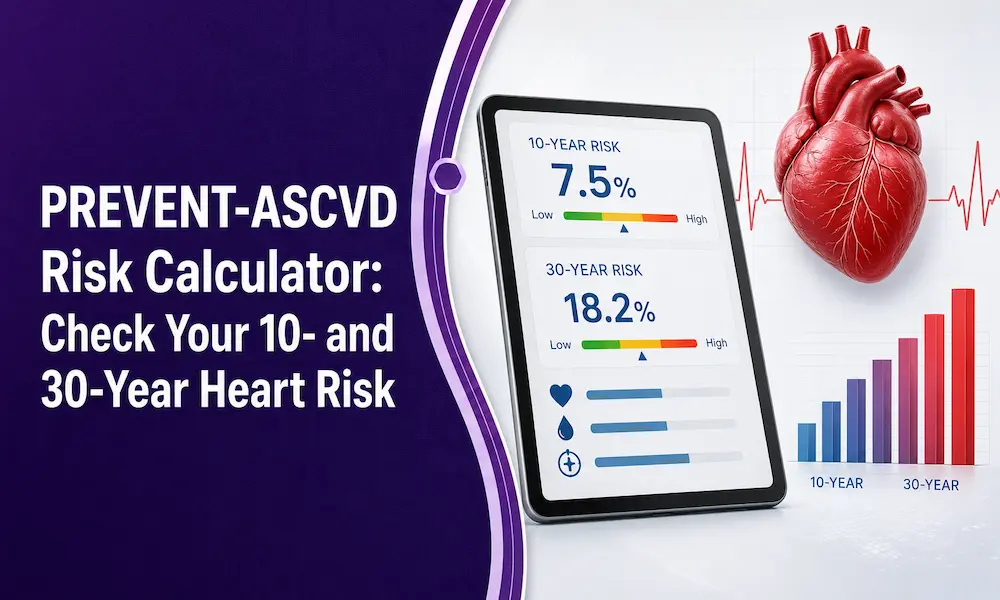
PREVENT-ASCVD Risk Calculator
Estimate your 10-year and eligible 30-year risk of a first heart attack or stroke using the sex-specific PREVENT-ASCVD base equations.
Enter recent, accurate health measurements whenever possible. Estimated information can produce a misleading result.
The 10-year result estimates the likelihood of a first ASCVD event during the next decade. Meanwhile, the 30-year result can reveal longer-term risk that a short window may miss, especially among younger adults. Someone in their forties may have a low 10-year percentage yet face meaningful risk across the next three decades.
Who Should Not Use This PREVENT-ASCVD Calculator?
People with known cardiovascular disease, ineligible ages, or missing current clinical measurements should not rely on this tool. Additionally, anyone experiencing urgent symptoms needs immediate medical assessment instead of an online calculation.
What Is the PREVENT-ASCVD Risk Calculator?
PREVENT stands for Predicting Risk of Cardiovascular Disease Events. Researchers developed the AHA PREVENT equations using contemporary information from more than 6.5 million diverse U.S. adults. Unlike the older Pooled Cohort Equations, PREVENT does not use race as a biological variable.
How Did the 2026 Cholesterol Guidelines Change Heart Risk Assessment?
Yes, your estimated risk may change under the updated approach. The 2026 ACC/AHA dyslipidemia guideline recommends PREVENT-ASCVD for primary-prevention lipid decisions in adults ages 30 through 79. Previously, clinicians commonly used the Pooled Cohort Equations.
The PREVENT-ASCVD Risk Calculator often produces lower 10-year risk estimates than the older calculator.
Therefore, the guidelines use lower thresholds for risk categories and treatment discussions.
A lower PREVENT score does not mean elevated cholesterol should be ignored.
Kidney disease, diabetes, and cardiometabolic health may change the interpretation.
Clinicians calculate the initial risk first.
They review risk factors not included in the equation.
They personalize the result using medical and family history.
They consider additional testing only when it could change treatment.
Why the Prevent-ASCVD Risk Calculator May Produce a Different Result
PREVENT uses newer populations, different variables, and updated equations. Consequently, its percentage may differ from a result produced by the older calculator.
In many adults, PREVENT produces a lower 10-year percentage than the Pooled Cohort Equations. However, patients should not directly compare the old and new numbers without also comparing their categories. The 2026 guideline uses lower PREVENT thresholds so that treatment discussions continue to reach people who may benefit.
What Health Information Does the Calculator Use?
The base calculator uses age, biological sex, total cholesterol, HDL cholesterol, systolic blood pressure, diabetes status, current cigarette smoking, eGFR, antihypertensive treatment, and statin use.
eGFR measures how well the kidneys filter blood.
Kidney function matters because chronic kidney disease can increase cardiovascular risk.
Chronic kidney disease also commonly occurs alongside high blood pressure or diabetes.
Some PREVENT models may also include hemoglobin A1c (HbA1c), urine albumin-to-creatinine ratio (UACR), and a Social Deprivation Index (SDI).
How Kidney Health and Diabetes Affect Your Risk Estimate
Kidney disease and diabetes can damage blood vessels and raise heart risk.
A low eGFR may indicate reduced kidney function.
Urine albumin may reveal kidney or blood-vessel damage.
Diabetes can increase inflammation and damage arteries over time.
Blood pressure and glucose control can lower modifiable risk.
Smoking cessation and appropriate cholesterol treatment also support prevention.
Use an elevated score to start a constructive discussion with your doctor—not to create fear.
What Does Your PREVENT-ASCVD Risk Score Mean?
The guideline defines low risk as below 3%. Borderline risk ranges from 3% to below 5%, while intermediate risk ranges from 5% to below 10%. High risk begins at 10%.
For borderline risk, clinicians may consider LDL-lowering therapy after reviewing additional factors. At intermediate risk, they should consider therapy through a clinician-patient discussion. High risk generally calls for closer evaluation and stronger management of modifiable risk factors.
Nevertheless, the percentage does not issue a prescription. Family history, LDL level, chronic kidney disease, diabetes, HIV, elevated lipoprotein(a), apolipoprotein B, and coronary artery calcium may influence the final plan.
What the New Risk Categories Mean for Cholesterol Treatment
Below 3%: Focus on healthy habits and routine monitoring.
3% to below 5%: Consider LDL-lowering treatment after reviewing additional risk factors.
5% to below 10%: Discuss treatment options with a healthcare professional.
10% or higher: Indicates high cardiovascular risk and requires clinical review.
Risk categories do not automatically determine medication use.
Treatment decisions should consider benefits, side effects, tolerance, cost, and patient preferences.
Shared decision-making helps create an evidence-based, personalized treatment plan.
HEART RISK AND CHOLESTEROL REVIEW
Need Help Understanding Your Heart Risk?
A primary care provider can review your PREVENT-ASCVD score, cholesterol, blood pressure, kidney health, diabetes risk, medications, and family history.
Book an Appointment →What Should Your LDL Cholesterol Goal Be?
Patient group | General LDL goal |
Borderline or intermediate risk | Below 100 mg/dL |
High primary-prevention risk | Below 70 mg/dL |
Established ASCVD with very high risk | Below 55 mg/dL |
Could Your Recommended LDL Goal Be Lower?
Yes. Diabetes, kidney disease, inherited lipid risk, coronary calcium, or established ASCVD may support a lower individualized target.
Patients should never increase a statin dose or add a supplement based only on an online result. Instead, medication decisions should include possible interactions, pregnancy considerations when relevant, liver or muscle symptoms, other medical conditions, and follow-up laboratory needs.
Why Your Risk Score May Not Show the Complete Picture
No risk equation includes every important factor.
A family history of early cardiovascular disease may increase risk.
High lipoprotein(a), or Lp(a), can indicate inherited heart risk.
The 2026 guideline recommends measuring Lp(a) at least once.
Apolipoprotein B may provide additional insight for selected patients.
Coronary artery calcium imaging may help clarify uncertain risk.
Not every patient needs additional testing.
Primary care doctors can identify which findings may change treatment.
When Should You Discuss Your ASCVD Risk With a Primary Care Doctor?
Schedule a primary care visit if:
Your 10-year PREVENT-ASCVD risk reaches 3% or higher.
Your LDL cholesterol remains elevated.
Your blood pressure repeatedly exceeds your recommended range.
You have diabetes, kidney disease, or a family history of early heart disease.
You have questions about starting or continuing statin treatment.
During your visit, your primary care doctor can:
Confirm your blood pressure and laboratory results.
Review your medications, lifestyle, and complete medical history.
Identify risk factors that the calculator does not include.
Recommend a lipid panel, HbA1c, kidney-function test, urine albumin test, Lp(a), or ApoB when appropriate.
You do not need to wait for a high-risk result. A borderline score may require attention when early heart disease runs in your family. Similarly, a low score may not tell the full story if your LDL remains at or above 160 mg/dL.
When to Review Your New Heart Risk Score With a Primary Care Doctor
Review the result after new laboratory findings, medication changes, a new diagnosis, smoking cessation, or meaningful lifestyle progress.
What Tests May Be Recommended After an Elevated Risk Result?
Depending on your history, testing may include a lipid panel, HbA1c, creatinine with eGFR, and urine albumin. Additionally, Lp(a) or ApoB may clarify lipid risk. Selected patients may benefit from coronary artery calcium imaging when treatment remains uncertain.
How Can Primary Care Help Lower Your Heart Disease Risk?
Primary care can turn a percentage into a practical plan. Your clinician can set an LDL goal, manage hypertension or diabetes, support smoking cessation, recommend habits, and monitor medication response.
Effective plans usually begin with manageable steps. These may include replacing saturated fats with unsaturated fats, eating more vegetables and fiber-rich foods, increasing activity gradually, improving sleep, and avoiding tobacco. Nevertheless, lifestyle efforts should complement medication when medication offers meaningful additional protection.
When Might You Need a Cardiology Referral?
Primary care can manage many cardiovascular risk factors, while cardiology may help with:
Suspected heart disease
Severe or inherited cholesterol disorders
Abnormal test results
Complex medication needs
Chest pressure, sudden shortness of breath, fainting, or new neurological symptoms require urgent medical care. Primary care and cardiology may work together to manage blood pressure, diabetes, kidney health, preventive screenings, and medications.
Take the Next Step With a Primary Care Heart Risk Assessment
The PREVENT-ASCVD Risk Calculator offers a more personalized view of heart attack and stroke risk than cholesterol alone. Even so, the number represents a starting point rather than a final answer.
Review your result carefully and with a qualified healthcare professional before changing medication. Passion Health Advanced Primary Care can evaluate your cholesterol, blood pressure, kidney function, diabetes risk, family history, and prevention goals together.
Our Primary Care Locations
Frequently Asked Questions:
1. Is PREVENT the same as the old ASCVD calculator?
No. PREVENT uses contemporary data, excludes race, and includes kidney and metabolic health factors. The older Pooled Cohort Equations use different inputs and thresholds.
2. Can the score tell me whether I need a statin?
No. It supports a treatment discussion, but your clinician must consider the complete clinical picture.
3. How often should risk be recalculated?
Timing depends on age, current results, treatment, and health changes. Ask your primary care doctor when repeat testing and reassessment make sense.

About the Author
Dr. Anantha Chentha is a board-certified internal medicine physician with extensive experience in primary care and chronic disease management. He provides comprehensive, patient-centered care with a focus on prevention, accurate diagnosis, and long-term health management.
View Provider Profile →