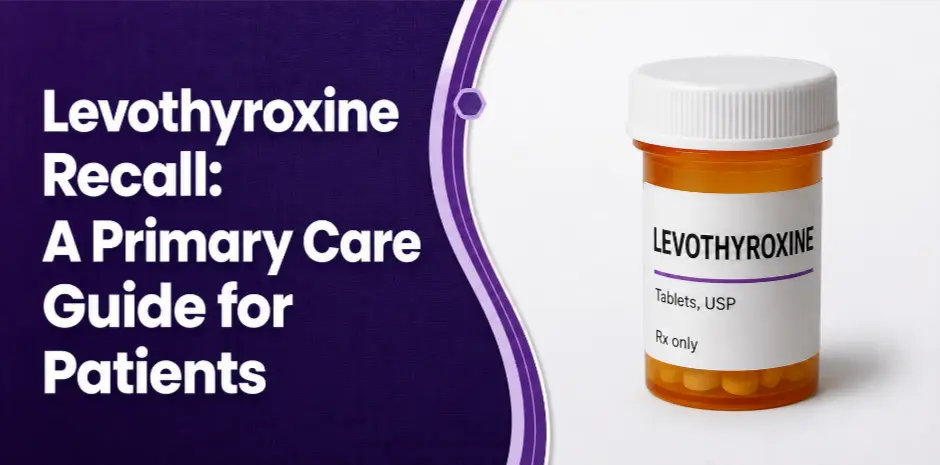
Is Your Thyroid Medication Part of the Levothyroxine Recall?
The levothyroxine recall 2026 may leave patients wondering, “Is my thyroid medication affected?” Major Pharmaceuticals recalled selected levothyroxine sodium tablets after routine stability testing identified potency concerns. However, the recall does not include every prescription, strength, manufacturer, or lot.
Although affected tablets may provide less thyroid hormone than intended, patients should not stop treatment or adjust their dose without medical guidance.
Instead, contact the dispensing pharmacy to verify the manufacturer and lot number. A primary care doctor can also evaluate returning symptoms, review medication interactions, coordinate replacement tablets, and determine whether thyroid testing may be appropriate.
Concerned about your thyroid medication? Bring the prescription bottle and available packaging to Passion Health Advanced Primary Care for a thorough medication and symptom review.
Patients looking for primary care in Frisco, Irving, Plano, Prosper, Aubrey, Flower Mound, Ennis, Kaufman, Kemp, McKinney, TX
Levothyroxine Recall Update
Major Pharmaceuticals started the recall after routine quality checks showed that certain tablets did not meet the required potency standards. Shipping of the affected products began on January 22, 2025. The recall covers selected 25, 50, 75, 88, 112, 125, and 150 microgram tablets.
The FDA designated the action as a Class II recall. This classification means the product may cause temporary or medically reversible health effects, while the chance of serious harm remains remote. California State Board of Pharmacy recall notice
Key Takeaways
The recall includes only specific Major Pharmaceuticals strengths, packages, and lots.
Subpotent tablets may deliver less thyroid hormone than the prescribed amount.
Patients should ask their dispensing pharmacy to verify the manufacturer and lot.
Never stop levothyroxine, skip doses, or increase the dosage without medical guidance.
A primary care doctor may order TSH and free T4 tests when medically appropriate.
Why Did Major Pharmaceuticals Recall Levothyroxine?
Routine stability testing found that certain tablets failed to meet assay specifications. In simple terms, the tablets may not provide the expected amount of active levothyroxine.
Consequently, someone taking an affected product could receive less thyroid hormone than intended despite following every dosing instruction correctly. The reduced amount could also allow hypothyroidism symptoms to return.
Still, the recall does not mean every affected patient will develop symptoms. Individual effects may depend on the level of reduced potency, length of use, medical history, and usual thyroid hormone requirements.
Does the Recall Affect All Levothyroxine?
No. Several companies manufacture or distribute levothyroxine. Therefore, taking a strength listed in the levothyroxine recall 2026 does not automatically mean your medicine belongs to an affected lot.
Check the following details:
Manufacturer or distributor
Medication strength
Lot or batch number
Expiration date
Package type
National Drug Code, when available
A standard pharmacy bottle may not show every detail. For that reason, ask the dispensing pharmacy to review its purchasing and dispensing records.
Which Levothyroxine Strengths and Lots Entered the Recall?
The July 2026 notice lists the following Major Pharmaceuticals products:
Strength | Reported affected lot numbers | Expiration |
25 mcg | N02212 | July 2026 |
50 mcg | N02200 | October 2026 |
75 mcg | N02172, N02288, N02296 | July or December 2026 |
88 mcg | N02310 | January 2027 |
112 mcg | N02203 | September 2026 |
125 mcg | N02266 | November 2026 |
150 mcg | N02167 | July 2026 |
The products include 100-tablet cartons containing ten 10-tablet blister packs. The notice also identifies selected individual blister packages.
Important: Recall information can change. Do not rely on this table alone. Ask your pharmacist to confirm the manufacturer, National Drug Code, lot, expiration date, packaging, and current recall status.
What Should Patients Do About the Levothyroxine Recall 2026?
Follow these steps if you think your medication may qualify:
Continue treatment unless a clinician advises otherwise. Stopping thyroid hormone without a replacement plan can allow hypothyroidism to worsen.
Keep the medicine and packaging. Do not discard potentially affected tablets before speaking with the pharmacy.
Review the label. Look for the strength, manufacturer, lot number, and expiration date.
Call the dispensing pharmacy. Ask the pharmacist to check whether the prescription came from an affected supply.
Contact your doctor. Report new, returning, or worsening symptoms.
Complete testing when recommended. Exposure to an affected lot does not automatically require immediate blood work.
Follow replacement directions. The pharmacy or prescribing clinician can explain the safest transition.
What Is Levothyroxine?
Levothyroxine contains a laboratory-made form of thyroxine, also called T4. The medicine replaces thyroid hormone when the body cannot produce enough.
Doctors commonly prescribe it for hypothyroidism. In addition, clinicians may use it for selected goiters or thyroid hormone suppression after certain thyroid cancer treatments. Many patients take one dose daily and need long-term treatment.
Levothyroxine should never serve as a routine obesity or weight-loss treatment. Excessive thyroid hormone can cause serious or life-threatening complications. FDA-approved prescribing information
What Happens When Levothyroxine Is Subpotent?
A subpotent tablet may supply less thyroid hormone than the label promises. As a result, TSH may rise while free T4 may fall. Previous symptoms may then return.
However, increasing the dose without first identifying an affected product creates another risk. Once the patient receives unaffected medication, the higher dose could provide too much thyroid hormone.
Therefore, doctors review the medication details, current symptoms, test results, health history, and daily dosing habits before deciding whether the treatment needs any changes.
Symptoms of Too Little Thyroid Medication
Insufficient thyroid hormone may cause:
Fatigue or weakness
Increased sensitivity to cold
Dry skin
Hair thinning or loss
Unexplained weight gain
Low mood
Difficulty concentrating
Slow heart rate
Muscle or joint discomfort
Heavy or irregular menstrual periods
These symptoms do not confirm exposure to recalled medication. Anemia, diabetes, vitamin deficiencies, depression, medication effects, and sleep disorders may cause similar concerns. Consequently, primary care evaluation can help identify the actual cause.
Symptoms That May Suggest Too Much Thyroid Hormone
Taking an excessive dose, accidentally doubling a dose, or changing medication absorption may lead to:
Rapid or irregular heartbeat
Tremors
Nervousness or irritability
Trouble sleeping
Increased sweating
Heat intolerance
Diarrhea
Increased appetite
Unexplained weight loss
Menstrual changes
Patients should not respond by skipping or changing doses independently.
Thyroid Medication Review
Concerned About Your
Thyroid Medication?
A primary care visit can help verify your prescription, evaluate returning symptoms, review interactions, and determine whether thyroid blood testing makes sense.
Schedule a Medication Review →What Happens During a Primary Care Visit?
First, the doctor reviews the prescription bottle, available packaging, refill date, and dispensing information. Next, the visit may cover the symptom timeline, weight changes, heart rate, and blood pressure.
The clinician will also ask about calcium, iron, antacids, supplements, and other prescriptions because these products can affect levothyroxine absorption. When necessary, the office can coordinate with the pharmacy and arrange replacement medication.
Finally, the doctor may order thyroid tests, develop a follow-up schedule, or recommend an endocrinology consultation for a complex thyroid condition.
Which Thyroid Blood Tests May Be Needed?
A primary care doctor may order TSH and free T4 tests based on the affected lot, length of exposure, symptoms, pregnancy status, medical history, and timing of the medication replacement.
TSH test
TSH often serves as the primary monitoring test for hypothyroidism. A higher-than-expected result may indicate that the body needs more thyroid hormone. Nevertheless, doctors interpret the value alongside previous results, symptoms, medications, and dosing habits.
Free T4 test
Free T4 measures available thyroxine circulating in the blood. This test can provide additional information when symptoms return or TSH changes.
Thyroid levels may need several weeks to stabilize following a product or dose change. Therefore, the clinician should choose the testing schedule instead of applying one timeline to every patient.
How to Take Levothyroxine Correctly
Take the medicine exactly as prescribed and at a consistent time each day. Patients commonly take tablets on an empty stomach, 30–60 minutes before breakfast, with a full glass of water.
Additionally, follow formulation-specific instructions for capsules or liquid products. Never double a missed dose unless a healthcare professional specifically recommends it.
MedlinePlus advises separating calcium carbonate and iron supplements from levothyroxine by at least four hours. Other products, including antacids and certain cholesterol medicines, may also interfere with absorption.
Coffee, soy, high-fiber foods, milk, and walnuts may affect absorption for some patients. However, do not eliminate necessary foods or medicines without guidance. Instead, ask a doctor or pharmacist to create an appropriate schedule.
Who May Need Closer Monitoring?
The levothyroxine recall 2026 may require faster follow-up for:
Pregnant patients or those planning pregnancy
Infants and children
Adults aged 65 or older
People with heart disease or irregular heart rhythms
Patients with osteoporosis or diabetes
People receiving thyroid cancer treatment
Patients with pituitary or adrenal conditions
Anyone who notices symptoms after a recent refill
When to Contact a Primary Care Doctor
Schedule a timely appointment for returning fatigue, constipation, cold sensitivity, weight changes, or symptoms that began after a refill.
Likewise, seek guidance if the pharmacy cannot verify the lot or if you have trouble obtaining replacement tablets.
Contact a clinician promptly during pregnancy or when planning pregnancy. You should also request help with abnormal thyroid results, frequent manufacturer changes, or confusing medication-timing instructions.
Seek emergency care for chest pain, severe breathing difficulty, fainting, seizures, severe confusion, facial or throat swelling, or a very rapid or irregular heartbeat. These symptoms are not expected consequences of the recall; they require urgent evaluation regardless of the suspected cause.
Final Takeaway
The levothyroxine recall 2026 covers selected Major Pharmaceuticals products, not every levothyroxine prescription. Confirm the manufacturer and lot with your pharmacy before concluding.
Most importantly, do not stop treatment or change your dose independently. Primary care can coordinate the medication review, symptom evaluation, laboratory monitoring, replacement prescription, and ongoing thyroid treatment.
Take control of your thyroid health with the right medical guidance. Schedule a visit with Passion Health Advanced Primary Care for a medication review, symptom evaluation, and personalized thyroid care.
Our Primary Care Locations
Frequently Asked Questions
1. Is all levothyroxine recalled?
No. The recall includes only selected strengths, packages, and lots distributed by Major Pharmaceuticals.
2. Should I stop taking recalled levothyroxine?
Do not stop treatment on your own. Contact the dispensing pharmacy and prescribing clinician for safe replacement instructions.
3. What does subpotent levothyroxine mean?
Subpotent medication may contain less active thyroid hormone than the labeled amount, which could reduce treatment effectiveness.
4. Can primary care test my thyroid levels?
Yes. A primary care doctor can evaluate symptoms and order TSH and free T4 tests when appropriate.
5. Can I take calcium or iron with levothyroxine?
Calcium and iron can reduce absorption. Patients commonly need to separate them from levothyroxine by at least four hours, but individual instructions may differ.

About the Author
Dr. Anantha Chentha is a board-certified internal medicine physician with extensive experience in primary care and chronic disease management. He provides comprehensive, patient-centered care with a focus on prevention, accurate diagnosis, and long-term health management.
View Provider Profile →