Could Your Blood Pressure Medication Be Part of a Recall?
Many people take blood pressure medicine every day without thinking much about the bottle label. But when a medication recall appears in the news, it can quickly create worry. Patients may ask, “Is my medicine safe?” “Should I stop taking it?” or “Do I need a new prescription?”
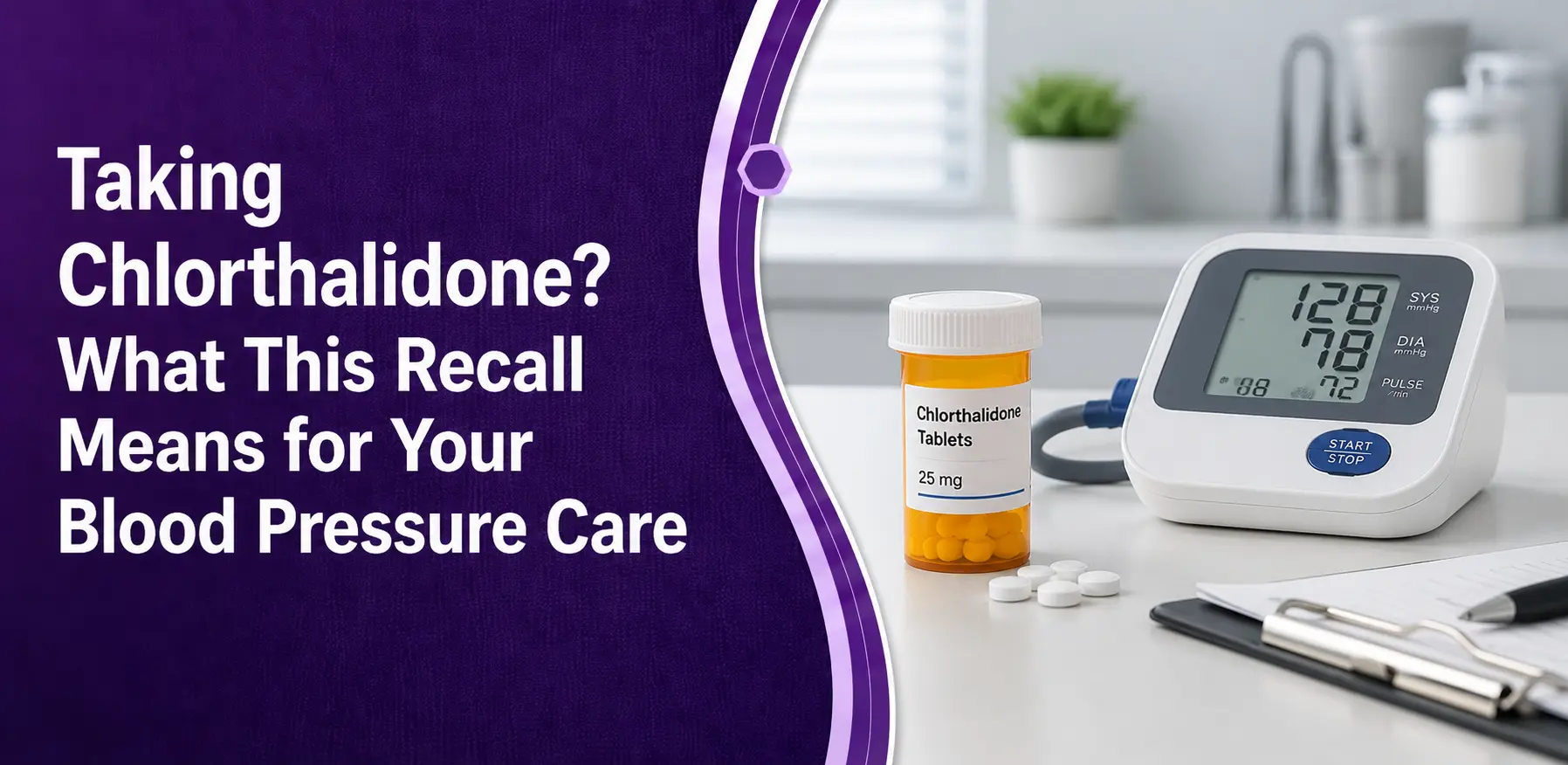
A recent recall involving chlorthalidone has raised these questions for some patients. Doctors may prescribe chlorthalidone to help lower high blood pressure and manage fluid buildup in certain patients.
It is commonly used to help manage high blood pressure and fluid buildup. The current recall does not mean every chlorthalidone tablet is affected. It applies to specific products, bottle sizes, and lot numbers.
If you take chlorthalidone, the safest step is not to panic.
Check your medication bottle, contact your pharmacy, and speak with your primary care doctor if you are unsure what to do next.
Patients looking for primary care in Frisco, Irving, Plano, Prosper, Anna, Aubrey, Flower Mound, Ennis, Kaufman, Kemp, McKinney.
What Is Chlorthalidone?
Chlorthalidone belongs to a group of medicines that help the body get rid of extra salt and fluid. Doctors may prescribe it to help treat high blood pressure. It may also be used for swelling caused by certain heart, kidney, or liver conditions.
This medication helps the body remove extra salt and fluid through urine. When the body holds less extra fluid, blood pressure may come down. For many patients, chlorthalidone is part of a long-term blood pressure care plan.
Because blood pressure problems often need steady treatment, patients should take chlorthalidone exactly as prescribed. Changing the dose, skipping tablets, or stopping suddenly can affect blood pressure control.
Why Is Chlorthalidone Used for Blood Pressure?
High blood pressure can go unnoticed because it does not always cause symptoms. Many people do not feel symptoms, even when their numbers are high.
Over time, uncontrolled blood pressure can put extra strain on the heart, blood vessels, kidneys, brain, and eyes.
Chlorthalidone may help lower blood pressure by reducing extra fluid in the body. It is usually not the only part of the treatment.
A doctor may also recommend diet changes, lower sodium intake, exercise, weight management, home blood pressure tracking, and regular follow-up visits.
Some patients take chlorthalidone alone. For some patients, chlorthalidone may be used with other blood pressure medicines to help keep readings under better control.
That is why medication review is important, especially when a recall affects one of the medicines in a patient’s daily routine.
Latest News: Chlorthalidone Blood Pressure Medication Recall
Recent reports say certain bottles of Chlorthalidone Tablets USP, 25 mg, have been recalled in the United States. The recall was linked to failed dissolution specifications.
In simple terms, dissolution means how a tablet breaks down after it is taken. If a tablet does not dissolve as expected, the body may not receive the medicine in the intended way. This may affect how consistently the medicine helps control blood pressure.
The reported recall involves:
Chlorthalidone Tablets USP, 25 mg
100-count bottles, lot RISA24001
1,000-count bottles, lot RISB24002
Expiration date: April 2027
Rising Pharma Holdings Inc. was listed as the U.S. distributor for the affected chlorthalidone tablets.
Manufactured by Inventia Healthcare Limited
Patients should compare the lot number and expiration date on their bottle with the recall information. If the bottle does not match the recalled lot numbers, it may not be part of this recall.
What Does “Failed Dissolution” Mean?
Failed dissolution does not always mean a tablet is contaminated. It means the tablet may not break down according to the required testing standards.
For a medication to work properly, the tablet must dissolve predictably. If it dissolves too slowly, unevenly, or not as expected, the medicine may not be absorbed the way it should be. For a blood pressure medication, this matters because patients rely on steady blood pressure control.
Should You Stop Taking Chlorthalidone?
Do not stop taking chlorthalidone on your own without speaking to a pharmacist, prescribing doctor, or primary care provider.
Stopping blood pressure medicine suddenly may cause blood pressure to rise. For some patients, that can create more risk than continuing the medication for a short time while they get professional guidance.
The best next step is to call your pharmacy. A pharmacist can help confirm whether your bottle matches the recall. They can also explain whether a replacement is available. Your doctor can review your blood pressure numbers, symptoms, and medication list before making changes.
How to Check If Your Chlorthalidone Bottle Is Recalled
Start by looking at the medication bottle label. You may need to check the side, back, or pharmacy sticker.
Look for:
Medication name: Chlorthalidone Tablets USP
Strength: 25 mg
Bottle count: 100 tablets or 1,000 tablets
Lot number: RISA24001 or RISB24002
Expiration date: April 2027
Manufacturer or distributor details
If the label is hard to read, call your pharmacy. Do not guess. The pharmacy that filled your prescription may be able to check the product information for you.
What Symptoms Should Patients Watch For?
Many people with high blood pressure do not feel symptoms. That is why home blood pressure checks can be helpful. If you take chlorthalidone and are worried about the recall, monitor your blood pressure as directed by your doctor.
Contact a healthcare provider if you notice:
Blood pressure readings higher than usual
Dizziness or faintness
Unusual weakness
Muscle cramps
Fast or irregular heartbeat
Severe tiredness
Swelling that gets worse
Confusion or feeling very unwell
Side effects after taking the medication
These symptoms do not always mean the medicine is recalled. However, there are reasons to ask for medical guidance.
Common Chlorthalidone Side Effects
Like many blood pressure medicines, chlorthalidone can cause side effects.
Some patients may notice increased urination, especially when first starting treatment. Others may feel lightheaded if blood pressure drops too low.
Possible side effects may include dizziness, dehydration, low potassium, changes in kidney function, gout symptoms, or blood sugar changes in some patients.
A doctor may order lab testing from time to time to check electrolytes and kidney function.
Patients should also tell their doctor about all medications, supplements, and over-the-counter products they use. This helps reduce the chance of drug interactions or duplicated treatment.
What May Interact With Chlorthalidone?
Chlorthalidone can interact with other medicines and supplements. This is one reason medication review is important in primary care.
Tell your doctor and pharmacist about everything you take, including:
Other blood pressure medicines
Diabetes medicines
Pain relievers
Cough and cold medicines
Steroid medicines
Lithium
Digoxin
Herbal supplements
Some over-the-counter products may raise blood pressure or affect how your blood pressure medicine works. Always ask before starting something new, even if it seems harmless.
What Should You Tell Your Care Team Before Taking Chlorthalidone?
Before taking chlorthalidone, your doctor should know your full health history. This helps your care team decide whether the medicine is safe for you.
Tell your primary care doctor if you have:
Diabetes or high blood sugar
Kidney disease
Liver disease
Gout
Lupus
Allergies to chlorthalidone or sulfa medicines
Past dehydration problems
Frequent dizziness or fainting
Vomiting, diarrhea, or heavy sweating
Pregnancy plans or breastfeeding concerns
Also, share your recent blood pressure readings if you check them at home. These readings help your provider understand how well your medicine is working.
When to Call a Primary Care Doctor
A primary care doctor can help when a medication recall creates confusion. This is especially important for patients who take more than one blood pressure medicine or have other health conditions such as diabetes, kidney disease, heart disease, or fluid retention.
Call a primary care doctor if:
Your bottle matches the recalled lot number
You are unsure whether your medication is affected
Your blood pressure is higher than normal
You stopped or skipped doses because of recall concerns
You need a medication review
You are having side effects
You need help coordinating with your pharmacy
Your doctor can help decide whether you should continue, replace, or adjust your medication. They can also check your blood pressure and review safer next steps based on your health history.
How Passion Health Advanced Primary Care Can Help
At Passion Health Advanced Primary Care, patients can discuss blood pressure concerns, medication questions, and recall-related worries with a primary care provider.
A visit may include blood pressure measurement, medication review, symptom discussion, refill guidance, lab testing if needed, and follow-up planning. The goal is to help patients stay safe while keeping blood pressure controlled.
A recall can feel stressful, but you do not have to manage it alone. The right next step depends on your bottle, your blood pressure readings, your current medication plan, and your overall health.
Final Takeaway
The chlorthalidone blood pressure medication recall affects specific 25 mg tablet bottles, not every chlorthalidone prescription.
Patients should check the lot number and expiration date, contact their pharmacy, and speak with a healthcare provider before making any medication changes.
If you take chlorthalidone and feel unsure about the recall, your blood pressure numbers, or your next refill, a primary care visit can help you make a safer decision.
Worried about a chlorthalidone recall or blood pressure medication change?
Passion Health Advanced Primary Care can review your medication list, check your blood pressure, and guide the safest next step.
FAQs
1. Is every chlorthalidone prescription recalled?
No. The recall affects only specific chlorthalidone products, bottle sizes, and lot numbers. Check your bottle label or call your pharmacy to confirm.
2. Should I stop taking chlorthalidone after hearing about the recall?
Do not stop taking chlorthalidone on your own. Stopping blood pressure medicine suddenly may cause your blood pressure to rise. Speak with your pharmacist or primary care doctor first.
3. How do I know if my chlorthalidone bottle is affected?
Look for the medication name, strength, lot number, expiration date, and pharmacy details on your bottle. Your pharmacy can help confirm whether it matches the recalled product.
4. What side effects should I watch for while taking chlorthalidone?
Call your care team if you notice dizziness, fainting, unusual weakness, muscle cramps, fast heartbeat, severe thirst, swelling, rash, or blood pressure readings that are higher or lower than usual.
5. When should I call a primary care doctor?
Call a primary care doctor if your bottle may be affected, your blood pressure changes, you miss doses, you have side effects, or you need help reviewing your medication plan.