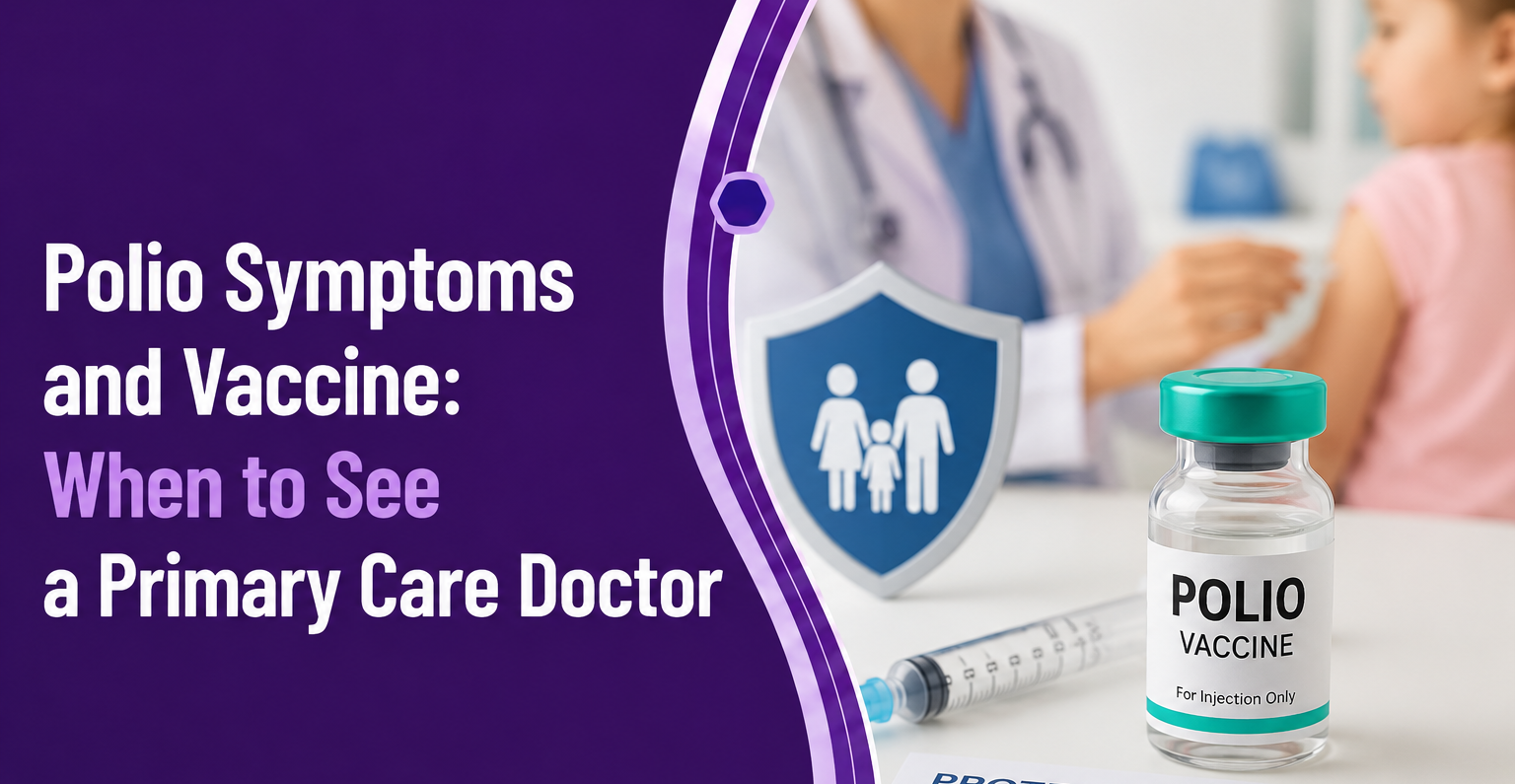
Polio Symptoms and Vaccine: Why Early Primary Care Guidance Matters
Polio may sound like an old disease, but it still matters today. Vaccination made polio rare in the United States, but vaccine protection still plays an important role for children, adults with missing records, and travelers.
Contents ↓
Polio Symptoms and Vaccine: Why Early Primary Care Guidance Matters
Polio may sound like an old disease, but it still matters today. Vaccination made polio rare in the United States, but vaccine protection still plays an important role for children, adults with missing records, and travelers.
Polio Symptoms and Vaccine: When to See a Primary Care Doctor is for parents, adults, and anyone worried about fever, weakness, travel exposure, or incomplete vaccine history.
• Polio can spread even before a person looks seriously sick.
• Some people carry the virus without clear symptoms.
• Vaccination gives the strongest protection before exposure.
Passion Health Advanced Primary Care can review symptoms, vaccine history, travel plans, and catch-up vaccine needs.
Patients looking for primary care in Frisco, Irving, Plano, Prosper, Anna, Aubrey, Flower Mound, Ennis, Kaufman, Kemp, or Mesquite.
How Polio Spreads
Polio mainly spreads through the fecal-oral route. This means the virus can pass from stool to hands, food, water, or surfaces and then enter another person’s mouth.
People can spread polio even when they do not feel very sick. This makes vaccine protection important for families, schools, travel, and community health.
Main spread risks include:
Spread Method | Example |
|---|---|
Poor hand hygiene | Not washing hands after bathroom use |
Contaminated food or water | Unsafe food handling |
Close contact | Contact with an infected person |
Travel exposure | Travel to areas where polio risk still exists |
Early Polio Symptoms
Many polio infections do not cause symptoms. When symptoms appear, they may look like a regular viral illness.
Early symptoms may include:
• Fever
• Sore throat
• Headache
• Tiredness
Some people may also notice stomach pain, nausea, vomiting, muscle aches, or neck stiffness.
These symptoms do not always mean polio. Flu, stomach viruses, COVID, meningitis, and other infections can cause similar signs. A primary care doctor can check symptoms, vaccine history, and exposure risk.
Serious Polio Warning Signs
A small number of polio infections can affect nerves and muscles. Serious symptoms need fast medical attention.
Important warning signs include:
• Sudden arm or leg weakness
• Trouble walking
• Loss of reflexes
• Trouble breathing or swallowing
Do not ignore sudden weakness, severe neck stiffness, or breathing trouble. These signs need urgent medical evaluation.
Why the Polio Vaccine Matters
The polio vaccine helps the immune system build protection before exposure. Once serious nerve damage happens, treatment cannot fully reverse it.
Doctors can support breathing, movement, pain control, and recovery. However, prevention gives better protection than treatment after serious illness starts.
• Vaccine timing matters.
• Catch-up doses help close protection gaps.
• Travel plans may require vaccine review.
Polio Vaccine Time Period
Children usually receive the inactivated polio vaccine, also called IPV, in a 4-dose schedule.
Dose | Recommended Time |
Dose 1 | 2 months |
Dose 2 | 4 months |
Dose 3 | 6–18 months |
Dose 4 | 4–6 years |
The final dose helps give long-term protection before school age. Parents should check vaccine records if a child missed a dose or changed clinics.
Simple Vaccine Calculation
A simple calculation can help parents understand missing doses.
Example 1: Child vaccine gap
A child received:
• Dose 1 at 2 months
• Dose 2 at 4 months
• Dose 3 at 9 months
This child still needs 1 final dose between ages 4 and 6 years.
Calculation:
4 total doses needed − 3 doses already received = 1 dose remaining
Example 2: Adult with unclear vaccine record
An adult has no clear polio vaccine record. A primary care doctor may review whether the adult needs a full IPV series or catch-up doses.
Basic calculation idea:
• 0 past doses = may need 3 doses
• 1 past dose = may need 2 more doses
• 2 past doses = may need 1 more dose
Adults should not guess vaccine status before travel. A doctor can review records and recommend the correct next step.
Do Adults Need a Polio Booster?
Most fully vaccinated adults do not need routine polio boosters. However, some adults may need one lifetime IPV booster if they have higher exposure risk.
This may apply to:
• Certain international travelers
• Some healthcare workers
• Laboratory workers with possible poliovirus exposure
• Adults with incomplete vaccine history
A primary care visit can help decide whether a booster makes sense.
Worried About Polio Symptoms or Vaccine Records?
Passion Health Advanced Primary Care can review your symptoms, vaccine history, travel plans, and catch-up vaccine needs before risks become confusing.
When to See a Primary Care Doctor
See a primary care doctor if symptoms appear after travel, possible exposure, or missing vaccination.
Schedule a visit for:
• Fever with muscle pain
• Neck stiffness
• Unusual weakness
• Missing vaccine records
A primary care doctor can review symptoms, check strength and reflexes, look at vaccine history, and guide testing or referral when needed.
Primary Care Visit Structure
A polio-related primary care visit may include:
Step | What Happens |
Symptom review | Fever, weakness, pain, travel, exposure |
Vaccine review | Childhood records, missing doses, booster need |
Physical exam | Strength, reflexes, walking, breathing signs |
Next steps | Vaccine guidance, testing, referral, monitoring |
This structured approach helps avoid confusion and supports safer care decisions.
Post-Polio Syndrome
Some people who had polio earlier in life may develop new symptoms years later. This condition is called post-polio syndrome.
Symptoms may include new muscle weakness, fatigue, joint pain, breathing concerns, or swallowing problems.
A primary care doctor can review symptoms and connect the patient with neurology, physical therapy, pulmonary care, or other support when needed.
Polio Prevention Tips
Vaccine protection matters most, but daily hygiene also helps reduce spread.
Important prevention steps:
• Keep polio vaccines up to date
• Wash hands after bathroom use
• Review travel vaccine needs early
• Ask about catch-up vaccines if records are unclear
Good prevention protects one person and also helps protect the community.
Final Takeaway
Polio can start with mild symptoms, or it may cause no symptoms at all. In rare cases, it can damage the nervous system and lead to paralysis.
The best time to check vaccine status comes before illness, before travel, and before school or work requirements create stress.
• Check vaccine records early.
• Do not ignore weakness or neck stiffness.
• Ask a doctor before travel if records are unclear.
Passion Health Advanced Primary Care can help with vaccine record review, polio vaccine questions, travel vaccine guidance, and symptom evaluation.
Patients looking for primary care in Frisco, Irving, Plano, Prosper, Anna, Aubrey, Flower Mound, Ennis, Kaufman, Kemp, or Mesquite.
Our Primary Care Locations
FAQs
1. What are the first symptoms of polio?
Early symptoms may include fever, sore throat, headache, tiredness, vomiting, stomach pain, neck stiffness, and muscle aches.
2. Can polio happen after vaccination?
Polio becomes very unlikely after full vaccination. People with missing or incomplete vaccines have a higher risk.
3. How many polio vaccine doses does a child need?
Children usually need 4 IPV doses at 2 months, 4 months, 6–18 months, and 4–6 years.
4. Do adults need a polio vaccine?
Adults with no vaccine record, incomplete vaccination, or travel risk should ask a primary care doctor about IPV vaccination.
5. When should I see a doctor for polio symptoms?
See a doctor for fever with weakness, neck stiffness, severe headache, trouble walking, or symptoms after travel or possible exposure.