
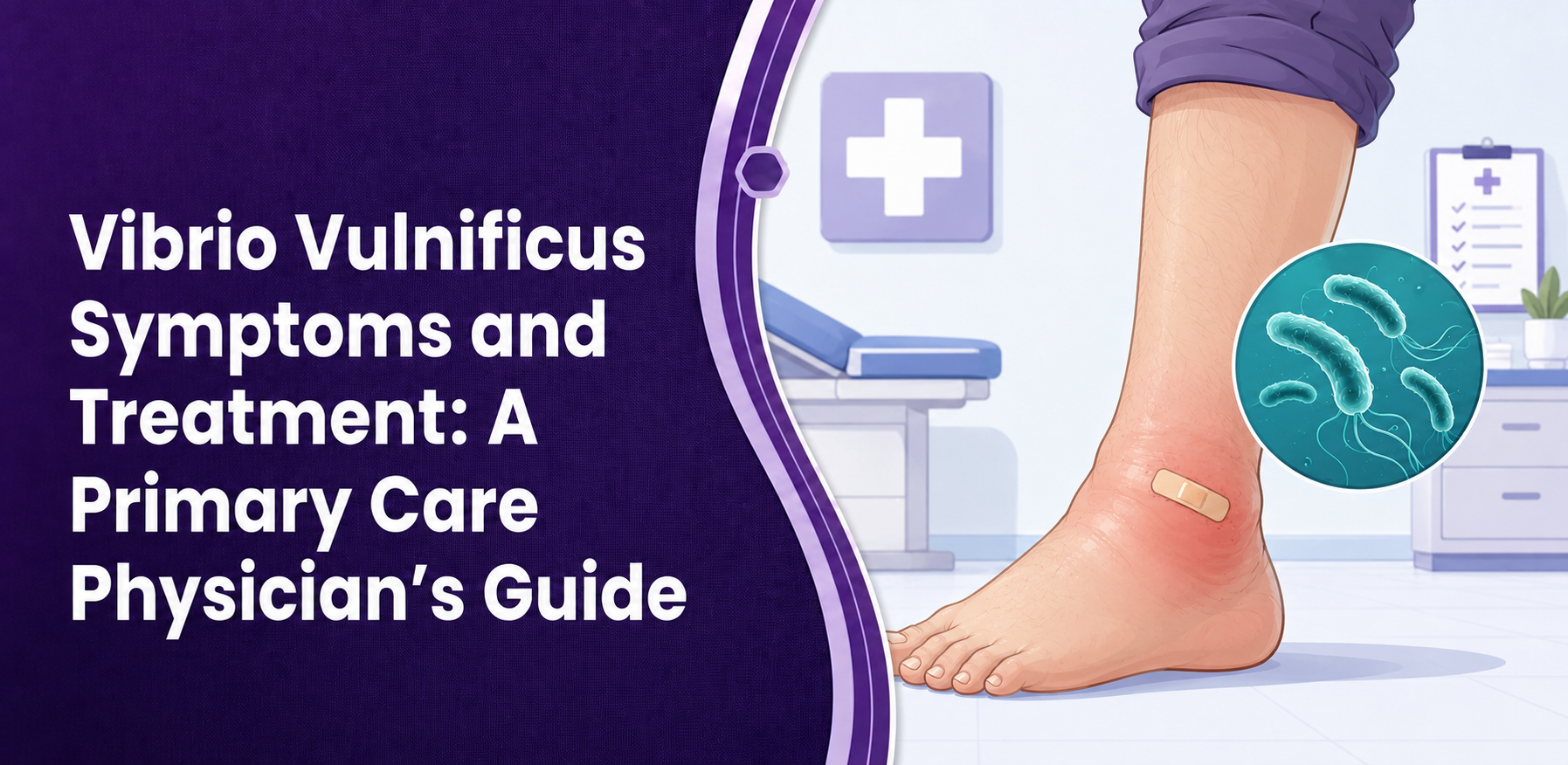
What Should You Know About Vibrio Vulnificus Infection?
Vibrio vulnificus symptoms and treatment require prompt attention because this bacterial infection can progress quickly. People may encounter Vibrio vulnificus after eating raw or undercooked shellfish or exposing an open wound to warm coastal water.
Although the infection remains uncommon, it may cause severe tissue damage, bloodstream infection, and life-threatening sepsis.
From a primary care perspective, early recognition starts with one important question: Did the symptoms follow raw-seafood consumption, seafood handling, or coastal-water exposure?
That detail can help a physician determine whether a patient needs outpatient evaluation or immediate emergency care.
If you develop rapidly increasing wound pain, spreading redness, skin discoloration, blisters, fever, confusion, or fainting after a possible exposure, go to an emergency room immediately.
Patients looking for primary care in Frisco, Irving, Plano, Prosper, Anna, Aubrey, Flower Mound, Ennis, Kaufman, Kemp, McKinney, TX
PRIMARY CARE GUIDANCE
Concerned After Seafood or Coastal-Water Exposure?
If you notice new stomach symptoms or mild wound changes, a primary care provider can assess your exposure, review your risk factors, and recommend the appropriate next step.
Severe pain, spreading redness, blisters, confusion, or fainting requires immediate emergency care.Key Takeaways
- ✓Vibrio vulnificus can enter the body through raw shellfish or open wounds exposed to coastal water.
- ✓Symptoms may include diarrhea, fever, severe wound pain, swelling, discoloration, and painful blisters.
- ✓Liver disease, diabetes, kidney disease, and weakened immunity increase the risk of severe infection.
- ✓Severe infections may require urgent antibiotics, hospital care, and surgical removal of damaged tissue.
- ✓Rapidly worsening pain, spreading redness, blisters, confusion, or fainting requires immediate emergency care.
What Primary Care Physicians Want Patients to Know About Vibrio Vulnificus
Vibrio vulnificus naturally lives in warm saltwater and brackish water. Brackish water contains both fresh water and saltwater and commonly occurs where rivers meet the ocean.
According to the Centers for Disease Control and Prevention, several Vibrio species can cause an illness called vibriosis. However, Vibrio vulnificus can cause particularly severe wound and bloodstream infections. Bacterial levels also tend to rise between May and October as coastal water temperatures increase.
The bacteria do not literally eat flesh. Instead, a serious infection may cause necrotizing fasciitis, a medical emergency that destroys tissue surrounding a wound.
Therefore, patients should focus on exposure history and warning signs rather than the media label.
How Vibrio Vulnificus Infection Develops
Most infections begin through seafood consumption or direct wound exposure.
Raw and undercooked oysters create a recognized risk because oysters filter coastal water and can collect bacteria inside their tissues.
Furthermore, contaminated oysters may look, smell, and taste normal. Lemon juice, alcohol, and hot sauce do not reliably kill the bacteria, so thorough cooking offers the safest protection.
The bacteria can also enter the body through cuts, scrapes, puncture wounds, recent tattoos, piercings, or surgical incisions. Contact with saltwater, brackish water, raw shellfish, or raw-seafood juices may expose these openings.
Ordinary social contact does not usually spread the infection. Instead, environmental and food-related exposures cause most cases.
Recognizing Vibrio Vulnificus Symptoms and Treatment Needs Early
Symptoms vary depending on whether the infection affects the digestive tract, an open wound,d or the bloodstream. In addition, symptoms may begin within hours and worsen rapidly.
Digestive symptoms may include:
Watery diarrhea
Stomach cramps
Nausea
Vomiting
Chills
Meanwhile, a wound infection may cause:
Increasing redness and warmth
Swelling around the wound
Severe or worsening pain
Skin discoloration
Fluid or discharge
Large, painful blisters
A bloodstream infection may cause fever, chills, rapid heartbeat, confusion, severe weakness, and dangerously low blood pressure. According to Cleveland Clinic, the infection can advance to sepsis, shock, and extensive tissue injury.
Understanding Vibrio vulnificus symptoms and treatment helps patients recognize that rapidly changing skin symptoms require urgent medical attention. Do not wait until the next day if pain, swelling, or discoloration continues to spread.
Symptoms That Require Immediate Emergency Care
Patients should go to an emergency room immediately when they develop severe or rapidly progressing symptoms after eating raw seafood or exposing a wound to coastal water.
Emergency warning signs include:
Severe pain that appears greater than the wound’s visible size
Redness or swelling that spreads quickly
Dark, purple or unusually discolored skin
Large, painful or fluid-filled blisters
Fever and chills with an infected wound
Confusion or unusual drowsiness
Dizziness, fainting or extreme weakness
Rapid heartbeat or signs of low blood pressure
These symptoms may indicate a serious wound or bloodstream infection. Consequently, a routine primary care appointment cannot replace emergency treatment.
When you arrive at the hospital, tell the medical team about recent oysters, seafood preparation, fishing, swimming or coastal travel. Clear exposure information may support faster diagnosis and treatment.
Medical Conditions That Increase the Risk of Severe Infection
Anyone can develop vibriosis. Nevertheless, certain medical conditions significantly increase the risk of complications.
Higher-risk conditions include:
Liver disease or cirrhosis
Chronic kidney disease
Hemochromatosis
A weakened immune system
Recent stomach surgery
Treatment with immune-suppressing medication
Medicines that reduce stomach acid may also increase vulnerability in some patients. Additionally, adults who live with several chronic illnesses may have less ability to control a rapidly advancing infection.
Primary care physicians can identify these risks during routine visits. They can also provide individualized seafood and coastal-water safety guidance before summer travel.
INFECTION RISK REVIEW
Do You Have a Higher Risk of Severe Infection?
Liver disease, diabetes, kidney disease, and weakened immunity can increase the risk of serious complications. Passion Health Advanced Primary Care can review your medical history and provide personalized seafood, wound-care, and travel precautions.
Schedule a Risk Assessment →How Healthcare Professionals Diagnose the Infection
A clinician begins by reviewing symptoms, timing, and possible exposure. Therefore, patients should mention raw oysters, undercooked shellfish, seafood handling, and contact between an open wound and coastal water.
Next, the medical team may collect blood, stool, wound fluid, or tissue samples. Laboratory testing can then identify Vibrio bacteria. However, severe symptoms may require immediate treatment before the laboratory returns final results.
The American Society for Microbiology describes biological mechanisms that help Vibrio vulnificus invade tissue and resist the body’s defenses. These characteristics help explain why some infections can progress so rapidly.
Clinical Management of Vibrio Vulnificus Symptoms and Treatment
Treatment depends on the infection’s location, severity, and duration. The patient’s medical history also influences the treatment plan.
Mild gastrointestinal illness may mainly require fluids and close symptom monitoring. The CDC does not recommend antibiotics for every mild Vibrio infection. However, persistent diarrhea, dehydration, fever, or underlying medical risks require professional evaluation.
Severe or prolonged infections may require prescription antibiotics. In addition, patients with bloodstream infection may need intravenous fluids, oxygen, blood-pressure support, and intensive hospital monitoring.
Serious wound infections often require both antibiotics and surgery. A surgeon may drain infected fluid or remove damaged tissue through surgical debridement. In advanced cases, the medical team may need to remove part of an affected limb to prevent further spread and protect the patient’s life.
Patients should never use leftover antibiotics or attempt to choose medication without medical guidance. Several skin and digestive conditions can cause similar symptoms, while incorrect treatment may delay necessary care.
The Role of Primary Care in Risk Assessment and Early Guidance
Primary care supports prevention, assessment of non-emergency symptoms, and coordination after hospital treatment. During a visit, a provider can review exposure history, examine a mild wound, and identify chronic conditions that increase the likelihood of complications.
Primary care may help by:
Reviewing liver, kidney, and blood-sugar health
Identifying medicines that may affect infection risk
Evaluating mild or uncertain symptoms
Providing wound-care instructions
Discussing seafood preparation and travel precautions
Directing patients to emergency care when necessary
Coordinating specialist or surgical follow-up
Monitoring wound healing after hospitalization
A responsible primary care approach to Vibrio vulnificus symptoms and treatment includes recognizing the limits of outpatient care. When symptoms suggest tissue destruction, sepsis or shock, the provider should direct the patient to emergency services without delay.
Prevention Guidance for Patients at Increased Risk
First, cook oysters and other shellfish thoroughly. Next, keep raw seafood and its juices away from cooked food. Clean utensils, preparation surfaces, and hands after handling shellfish.
Furthermore, avoid saltwater and brackish water when you have an open wound, recent tattoo, piercing,g or surgical incision. If exposure cannot be avoided, cover the area with a waterproof bandage. After accidental contact, wash the wound promptly with soap and clean running water.
Wear protective gloves when handling raw seafood, especially if your hands have cuts. Most importantly, people with liver disease, diabetes, kidney disease, or weakened immunity should avoid raw oysters and ask their healthcare provider about additional precautions.
Coastal-Water and Seafood Safety for North Texas Patients
Although North Texas does not sit on the coast, residents may encounter Vibrio during Gulf Coast vacations, cruises, fishing trips, or seafood meals. Symptoms may also begin after a traveler returns home, which can make the connection less obvious.
Always tell your provider about recent coastal travel and seafood exposure. Passion Health Advanced Primary Care can evaluate non-emergency concerns, review personal risk factors, and offer prevention guidance.
However, severe wound pain, rapidly spreading swelling, blistering, confusion,n or fainting requires immediate emergency care.
A Primary Care Physician’s Final Guidance
Recognizing Vibrio vulnificus symptoms and treatment needs early can protect tissue, reduce complications, and save lives. Cook shellfish thoroughly, protect open wounds near coastal water, and share your complete exposure history with your healthcare team.
Protect Your Health Before Your Next Coastal Trip
For non-emergency questions about wound care or personal risk, our primary care team can help you understand your problem, manage chronic conditions, and prevent infections through practical food-safety and wound-care guidance.
Our Primary Care Locations
Frequently Asked Questions
1. How quickly can symptoms begin?
Symptoms may begin within hours or shortly after exposure. Severe wound and bloodstream infections can progress rapidly.
2. Can a small cut lead to infection?
Yes. Bacteria can enter through a small cut, scrape, puncture, or other break in the skin.
3. Does every infection need antibiotics?
No. Mild intestinal illness may not require antibiotics. Severe, prolonged, wound or bloodstream infections need professional evaluation and may require urgent treatment.
4. Can I identify a contaminated oyster by its smell?
No. An oyster may look, smell, and taste normal while carrying harmful bacteria.
5. Should I contact primary care or visit an emergency room?
Contact primary care for prevention guidance and non-emergency concerns. Go to an emergency room for rapidly worsening pain, swelling, discoloration, blisters, fever, confusion, fainting, or severe weakness.

About the Author
Dr. Anantha Chentha is a board-certified internal medicine physician with extensive experience in primary care and chronic disease management. He provides comprehensive, patient-centered care with a focus on prevention, accurate diagnosis, and long-term health management.
View Provider Profile →