COVID-19 affects each person differently. Some people recover after a few days of mild symptoms, while others develop breathing problems, pneumonia, or other serious complications.
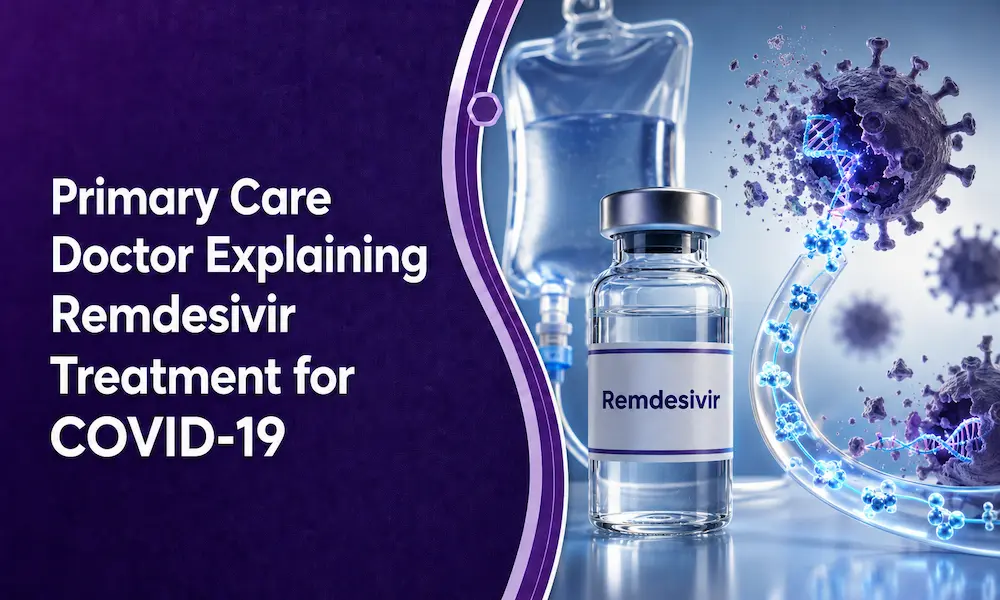
Remdesivir treatment for COVID-19 gives certain high-risk patients an antiviral treatment option. The medication slows the virus’s ability to multiply, but it does not instantly remove the virus or control every symptom.
Have COVID-19 symptoms or a positive test? Contact Passion Health Advanced Primary Care promptly. Our primary care providers can assess your risk, review your medications, and discuss suitable treatment options.
Patients looking for primary care in Frisco, Irving, Plano, Prosper, Aubrey, Flower Mound, Ennis, Kaufman, Kemp, and McKinney, TX
Key Takeaways
Remdesivir is an IV antiviral treatment for eligible adults and children with COVID-19.
The medication slows the virus’s ability to copy its RNA and multiply inside the body.
Eligible high-risk outpatients should start treatment within seven days after symptoms begin.
Possible side effects include nausea, rash, liver-enzyme changes and infusion-related reactions.
A healthcare provider must assess eligibility, review medications and coordinate monitored IV treatment.
What Is Remdesivir?
Remdesivir, available under the brand name Veklury, belongs to a class of medicines called antivirals. Healthcare professionals use it to treat eligible adults and children with COVID-19.
A doctor or nurse gives the medicine through an intravenous, or IV, infusion. Patients receive each infusion in a hospital, infusion centre, or another healthcare setting that can manage severe allergic reactions.
Remdesivir does not treat influenza, common colds, or bacterial infections. It also does not prevent COVID-19 or replace vaccination and supportive care.
How Does Remdesivir Work?
SARS-CoV-2, the virus that causes COVID-19, carries genetic instructions in RNA. The virus must copy its RNA before it can multiply and spread to other cells.
The virus uses an enzyme called RNA-dependent RNA polymerase during this copying process. Remdesivir interferes with that enzyme and interrupts the production of new viral RNA.
As a result, the virus has more difficulty creating complete copies of itself. This action gives the immune system additional time to respond.
Remdesivir does not directly relieve fever, coughing, congestion, or fatigue. Patients may still need rest, fluids, fever management, oxygen support, or other medical treatment.
Who May Qualify for Remdesivir?
The FDA approves remdesivir for eligible hospitalised patients with COVID-19. It also approves the medication for non-hospitalized patients with mild-to-moderate COVID-19 who face a high risk of severe illness.
Risk factors may include:
Older age
Obesity
Chronic kidney disease
A weakened immune system
A positive COVID-19 test does not automatically mean that someone needs remdesivir. A healthcare professional must consider age, weight, symptom duration, current medications, medical history, and the risk of complications.
What Side Effects Can Remdesivir Cause?
Some patients tolerate remdesivir without major problems. Others may experience mild or serious side effects.
Possible side effects include:
Nausea
Rash
Sweating
Fever or chills
Discomfort around the IV site
Changes in blood pressure
Changes in heart rate
Increased liver enzymes
Changes in blood-clotting results
A serious infusion or allergic reaction may cause wheezing, breathing difficulty, dizziness, vomiting, rash, or swelling of the face, eyes, lips, tongue, or throat.
Patients should report these symptoms immediately. The healthcare team may slow or stop the infusion and provide appropriate treatment.
How Effective Is Remdesivir?
A clinical trial found that a three-day remdesivir course reduced hospitalization or death by 87% among unvaccinated, high-risk outpatients compared with placebo.
This percentage does not give every patient an 87% individual benefit. Age, previous immunity, vaccination history, chronic conditions, and circulating variants can influence outcomes.
Studies also found that remdesivir may shorten recovery for some hospitalized patients. However, the medicine cannot guarantee recovery or prevent every COVID-19 complication.
COVID-19 TREATMENT & PRIMARY CARE
Could You Qualify for Early COVID-19 Treatment?
A primary care provider can assess your symptoms, review your risk factors and medications, and discuss whether remdesivir or another treatment may be appropriate.
Book an Appointment →Why Does Early Treatment Matter?
Antiviral treatments usually provide the greatest benefit during the earlier stage of infection, when the virus actively creates new copies.
Eligible outpatients should start remdesivir as soon as possible after diagnosis and within seven days after symptoms begin. The outpatient course generally includes one IV infusion daily for three consecutive days.
Patients should not wait until symptoms become severe before contacting a provider. An early appointment gives the primary care team time to assess risk and coordinate appropriate treatment.
How Do Patients Receive Remdesivir?
Healthcare professionals administer remdesivir slowly through an IV line. Each infusion usually lasts between 30 and 120 minutes.
The treatment schedule depends on the clinical setting:
Eligible outpatients generally receive three daily infusions.
Many hospitalised patients receive five days of treatment.
Some hospitalised patients may need up to ten days.
The medical team determines the appropriate duration based on disease severity and clinical response.
Patients cannot purchase remdesivir for unsupervised home use. A trained team must prepare the medication, administer the infusion, and monitor the patient.
What Does Treatment Monitoring Include?
Clinicians review liver laboratory results before treatment and repeat testing when medically appropriate. They also check prothrombin time, which shows how long blood takes to clot.
Patients should tell the provider about:
Liver or kidney conditions
Previous allergic reactions
Pregnancy or breastfeeding
Prescription medicines
Nonprescription products
Vitamins and herbal supplements
Chloroquine or hydroxychloroquine use
Chloroquine and hydroxychloroquine may reduce remdesivir’s antiviral activity. Patients should not combine, stop, or change medicines without professional guidance.
Can People With Kidney Problems Receive It?
The current FDA prescribing information does not recommend a dose adjustment for patients with any degree of kidney impairment, including patients who receive dialysis.
However, every patient still needs an individual medical review. A clinician should consider kidney health, liver function, medications, allergies, and the complete medical history before treatment.
Patients should never assume that a general recommendation confirms personal eligibility.
How Can Primary Care Help?
Primary care often provides the first medical evaluation after symptoms begin or a COVID-19 test returns positive.
A primary care provider can:
Confirm when symptoms started
Check oxygen levels and vital signs
Evaluate chronic medical conditions
Identify severe-disease risk factors
Review medications and allergies
Compare antiviral treatment options
Coordinate infusion or hospital care
Monitor symptoms and recovery
Recognize emergency warning signs
Not every primary care clinic provides remdesivir infusions on-site. However, a provider may assess eligibility and coordinate treatment with a hospital or infusion center.
Can Remdesivir Prevent COVID-19?
Remdesivir treats an active COVID-19 infection in eligible patients. It does not prevent infection and does not work as a substitute for vaccination.
A person who receives remdesivir may still spread COVID-19. Patients should follow current guidance about staying home while sick, improving ventilation, testing, and protecting people at higher risk.
When Should You Seek Emergency Care?
Call 911 or seek immediate medical help for the following:
Trouble breathing
Persistent chest pain or pressure
New confusion
Difficulty waking or remaining awake
Pale, gray, or blue lips, skin, or nail beds
Rapidly worsening symptoms
Antiviral treatment does not replace emergency care. Do not wait for a routine appointment when severe symptoms develop.
Take the Next Step
Early evaluation matters because COVID-19 antivirals have limited treatment windows. Contact a healthcare provider soon after symptoms begin or a test returns positive.
If you have COVID-19 symptoms or a high risk of complications, book an appointment with Passion Health Advanced Primary Care
Our Primary Care Locations
Frequently Asked Questions
1. Is remdesivir an antibiotic?
No. Remdesivir targets a virus, while antibiotics treat certain bacterial infections.
2. Can patients take remdesivir at home?
Patients cannot take it as a home tablet. A trained professional must administer it through an IV.
3. When should outpatient treatment begin?
Eligible outpatients should begin treatment as soon as possible and within seven days after symptoms start.
4. Does remdesivir cure COVID-19?
Remdesivir may reduce the risk of severe outcomes for certain patients, but it cannot guarantee a cure.
5. Does every patient with COVID-19 need remdesivir?
No. A healthcare professional must evaluate eligibility, timing, risks, and clinical need.

About the Author
Dr. Anantha Chentha is a board-certified internal medicine physician with extensive experience in primary care and chronic disease management. He provides comprehensive, patient-centered care with a focus on prevention, accurate diagnosis, and long-term health management.
View Provider Profile →