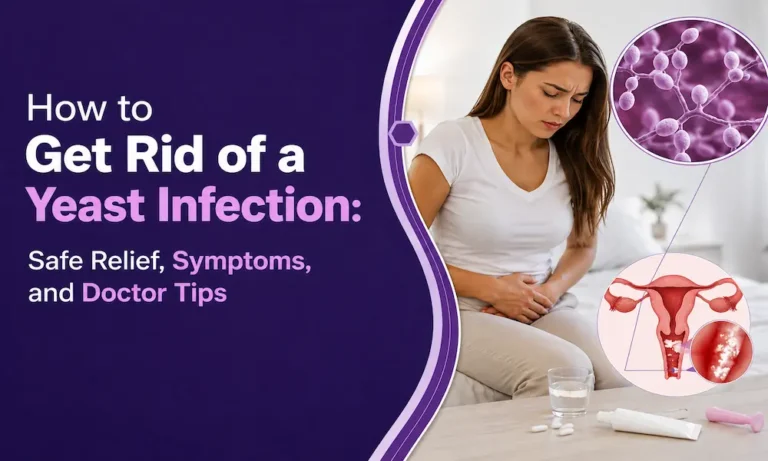
How to Get Rid of a Yeast Infection Without Guessing
A yeast infection can make everyday life uncomfortable very quickly. It may start with mild itching, then turn into burning, soreness, swelling, or thick white discharge. Many patients search for how to get rid of a yeast infection because they want quick relief and clear answers.
However, vaginal itching or discharge does not always mean yeast. Similar symptoms can happen with bacterial vaginosis, irritation, a urinary infection, skin sensitivity, or sexually transmitted infections. That is why safe treatment starts with understanding the symptoms, choosing the right antifungal treatment, and knowing when to see a doctor.
If symptoms feel new, severe, repeated, or confusing, Passion Health Advanced Primary Care can help you find the cause and choose the safest treatment plan. Book an appointment →
Patients looking for primary care in Frisco, Irving, Plano, Prosper, Anna, Aubrey, Flower Mound, Ennis, Kaufman, Kemp, or McKinney.
What Is a Yeast Infection?
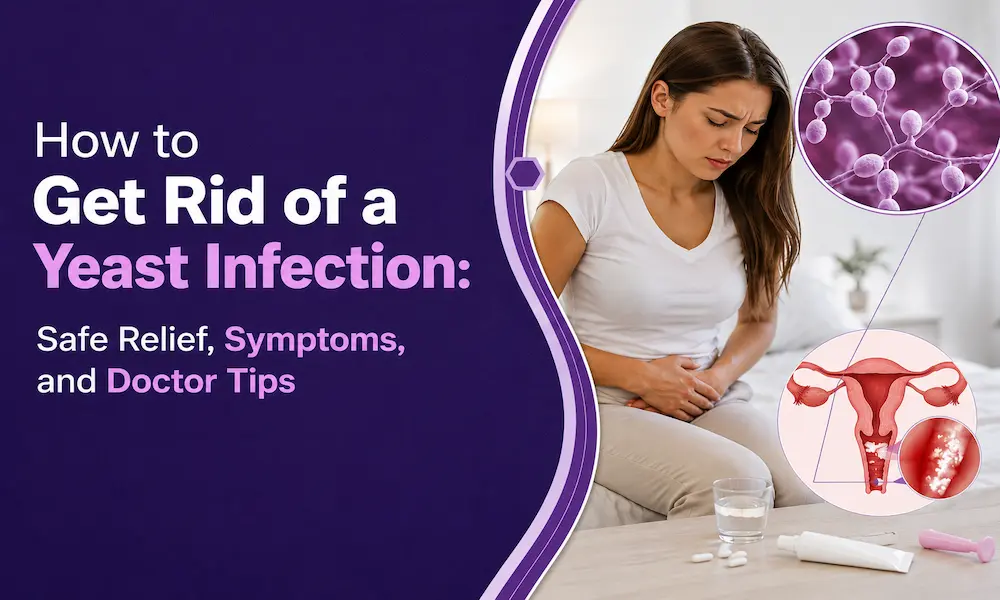
A yeast infection happens when a fungus called Candida grows more than normal. Candida can live naturally in the vaginal area without causing problems. Trouble begins when the normal balance of healthy bacteria and yeast changes.
When yeast overgrows, it can irritate the skin and tissue around the vagina. This irritation may cause itching, burning, swelling, redness, soreness, and discharge.
Important points:
Candida causes many vaginal yeast infections.
Yeast can grow faster when the vaginal balance changes.
Antibiotics, hormones, diabetes, and moisture can raise the risk.
A yeast infection usually needs antifungal treatment.
Repeated symptoms need a doctor’s review.
Common Yeast Infection Symptoms
Yeast infection symptoms can feel mild for some patients and strong for others. The symptoms may also change from one infection to another.
Common symptoms include:
Burning sensation
Soreness
Pain during sex
Burning while urinating
Thick white discharge
Clumpy discharge
Discharge with little or no strong odor
Some patients first notice itching. Others notice burning during urination and think it may be a urine infection. A few patients notice discharge before pain or irritation starts.
How to Get Rid of a Yeast Infection Safely
The safest way to get rid of a yeast infection is to use the right antifungal treatment and avoid anything that irritates the vaginal area.
Common treatment options include:
Antifungal vaginal creams
Antifungal vaginal tablets
Antifungal suppositories
Prescription oral antifungal medicine
Longer treatment plans for repeated infections
Most mild yeast infections improve with antifungal medicine. Some treatments are available over the counter, but not every case should be self-treated. A first-time infection, severe symptoms, pregnancy, diabetes, or repeated infections need medical advice.
Treatment tips:
Read the medicine instructions fully.
Use the medicine for the full course.
Do not stop early when symptoms improve.
Avoid sex if symptoms cause burning or pain.
Call a doctor if symptoms continue or return.
Stopping treatment too early can allow symptoms to come back.
How to Get Rid of a Yeast Infection Fast: What Actually Helps?
It is normal to want fast relief. Itching and burning can disturb sleep, work, exercise, and daily comfort. Still, fast relief should not mean unsafe shortcuts.
Helpful fast-relief steps include:
Start the correct antifungal treatment.
Keep the area dry.
Wear loose cotton underwear.
Avoid tight leggings or jeans.
Avoid scented soaps and sprays.
Do not scratch the area.
Change wet clothes quickly.
Skip sex until pain or burning improves.
Can You Treat a Yeast Infection at Home?
Home care can support comfort, but it may not fully clear the infection without antifungal medicine. Think of home care as support, not the main cure.
Safe home care steps:
Wear breathable cotton underwear.
Keep the vaginal area dry.
Change out of sweaty clothes after exercise.
Change out of wet swimsuits quickly.
Wash only the outside area with mild soap and water.
Avoid scented pads, tampons, sprays, and washes.
Avoid douching.
Avoid scratching, even when the itching feels strong.
These steps can reduce irritation and moisture.
Home care cannot always:
Kill yeast overgrowth
Confirm the diagnosis
Treat bacterial vaginosis
Treat sexually transmitted infections
Replace a doctor visit for repeated symptoms
So, when patients ask how to get rid of a yeast infection at home, the best answer is: use safe comfort steps with proper antifungal treatment, and see a doctor when symptoms do not improve.
What Causes a Yeast Infection?
A yeast infection often starts when something changes the natural balance in the vaginal area. This change allows yeast to grow too much.
Common causes and triggers include:
Recent antibiotic use
Hormone changes
Tight clothing
Damp workout clothes
Wet swimsuits
Scented soaps
Douching
Vaginal sprays
Some hormone medicines
Antibiotics can trigger yeast infections because they may reduce healthy bacteria. Healthy bacteria help control yeast. When those bacteria drop, yeast can grow faster.
Diabetes can also raise the risk. High blood sugar can create an environment where yeast grows more easily.
Yeast Infection vs Other Vaginal Problems
A yeast infection can look like other conditions. That is why symptoms need careful attention.
Yeast infection often causes:
Thick white discharge
Itching
Burning
Redness
Swelling
Little or no strong odor
Bacterial vaginosis may cause:
Thin gray or white discharge
Fishy smell
More odor after sex
Mild irritation
Urine infection may cause:
Burning while urinating
Frequent urination
Urgent need to urinate
Lower belly discomfort
Cloudy or bloody urine
Some sexually transmitted infections may cause:
Yellow or green discharge
Pelvic pain
Bleeding between periods
Pain during sex
Sores or bumps
Strong burning
If discharge has a strong odor, unusual color, blood, pelvic pain, or fever, do not assume it is yeast. A medical checkup can prevent wrong treatment.
Mistakes That Can Make a Yeast Infection Worse
Many patients try quick fixes because symptoms feel irritating. Some common habits can make burning and itching worse.
Avoid these mistakes:
Using scented vaginal washes
Douching
Applying perfume near the vaginal area
Scratching hard
Sitting in sweaty clothes for hours
Wearing tight underwear all day
Using harsh soaps
Trying garlic internally
Putting yogurt inside the vagina
Using vinegar rinses
Using leftover medicine without advice
The vaginal area is sensitive. Harsh products can damage the skin barrier and increase irritation. If a product burns, stings, or worsens itching, stop using it and ask a doctor.
Better choices include:
Gentle external cleansing
Dry clothing
Cotton underwear
Fragrance-free products
Correct antifungal treatment
Medical care for repeated symptoms
When Should You See a Primary Care Doctor?
A doctor visit helps when symptoms are new, severe, repeated, or unclear. You should not keep guessing if symptoms do not follow the usual pattern.
See a doctor if:
This is your first yeast infection.
Symptoms feel severe.
You have strong swelling or pain.
OTC treatment does not help.
Symptoms return soon after treatment.
You get repeated yeast infections.
You have four or more infections in one year.
You have diabetes.
You have a weak immune system.
You are pregnant.
Discharge has a strong odor.
Discharge looks green, yellow, gray, or bloody.
You have pelvic pain.
You have a fever.
You may have STI exposure.
A provider can review symptoms, check for other causes, and recommend the right treatment. If infections keep returning, the provider may suggest testing or a longer prevention plan.
Recurrent Yeast Infection: Why It Keeps Coming Back
Some patients treat symptoms, feel better for a short time, and then symptoms return. This cycle can feel frustrating.
Repeated yeast infections may happen because:
The diagnosis was wrong.
Treatment did not fully clear the infection.
A less common Candida type caused symptoms.
Blood sugar stays high.
Antibiotics disturbed the vaginal balance.
Hormone changes continue.
Tight or damp clothing keeps irritating.
The immune system needs medical attention.
Track these details before your visit:
Date symptoms started
Main symptom
Discharge color and texture
Any odor
Recent antibiotic use
Recent period
Recent sex
Products used
Treatment tried
How long relief last
This information helps your doctor find patterns and choose better care.
Yeast Infection During Pregnancy
Pregnancy can increase the chance of a yeast infection because hormone levels change the vaginal environment.
Safety tips:
Do not self-treat without asking a healthcare provider.
Ask which vaginal antifungal option is safe.
Avoid oral antifungal medicine unless your provider recommends it.
Report pelvic pain, bleeding, fever, or unusual discharge.
Share all symptoms clearly during the visit.
Pregnancy changes the safety. A doctor can help choose a safer treatment and rule out other problems.
How to Prevent Yeast Infections
Prevention focuses on reducing moisture, irritation, and triggers.
Daily prevention tips:
Wear cotton underwear.
Avoid tight underwear.
Avoid tight jeans for long hours.
Change sweaty clothes quickly.
Change wet swimsuits quickly.
Dry gently after bathing.
Avoid douching.
Avoid scented soaps near the vaginal area.
Avoid vaginal deodorant sprays.
Use fragrance-free period products if irritation starts.
Take antibiotics only when prescribed.
Manage diabetes carefully.
See a doctor if infections happen often.
Healthy routines can support the body, but food or supplements alone cannot cure an active yeast infection. Balanced meals, good sleep, hydration, and blood sugar control can help overall health.
Step-by-Step Plan: How to Get Rid of a Yeast Infection
Use this simple plan when symptoms start.
Step 1: Check symptoms
Look for:
Itching
Burning
Thick white discharge
Redness
Swelling
Soreness
Step 2: Review possible triggers
Ask yourself:
Did I take antibiotics recently?
Did I use a scented product?
Did I wear wet clothes for a long time?
Do I have diabetes?
Am I pregnant?
Have I had this before?
Do symptoms feel different this time?
Step 3: Use safe treatment
If symptoms clearly match a yeast infection, antifungal treatment may help. Follow the instructions and finish the full course.
Step 4: Reduce irritation
Wear loose clothing, keep the area dry, avoid scented products, and do not scratch.
Step 5: Call a doctor if needed
Get medical care if symptoms do not improve, return often, or feel unusual.
Final Takeaway
Learning how to get rid of a yeast infection starts with safe care, not random shortcuts. Yeast infections often cause itching, burning, redness, swelling, soreness, and thick white discharge. Antifungal medicine usually helps, while home care can reduce irritation and support healing.
If symptoms continue, return, or feel confusing, Passion Health Advanced Primary Care can review your symptoms, check possible causes, guide safe treatment, and help prevent repeat infections.
Book an appointment with Passion Health Advanced Primary Care →
FAQs
1. How do I know if I have a yeast infection?
Common signs include itching, burning, redness, soreness, pain during sex, burning while urinating, and thick white discharge.
2. How to get rid of a yeast infection safely?
Many mild yeast infections improve with antifungal treatment. Avoid scented soaps, douching, and tight clothing. See a doctor if symptoms do not improve.
3. Can a yeast infection go away on its own?
A mild infection may improve, but many need treatment. Waiting too long can make symptoms worse or delay the right diagnosis.
4. When should I see a doctor for a yeast infection?
See a doctor if this is your first infection, symptoms keep coming back, you have pelvic pain, fever, pregnancy, diabetes, or treatment does not work.
5. Can yeast infections come back?
Yes. Recurring yeast infections may happen due to antibiotics, high blood sugar, hormones, moisture, or irritation. A doctor can help find the cause.