Key Takeaways
- Occasional foamy urine may result from dehydration or a forceful urine stream.
- Persistent foam can sometimes indicate protein leaking into the urine.
- Diabetes and high blood pressure can increase the risk of kidney problems.
- Swelling, blood in the urine, fatigue, or urination changes require medical attention.
- Urinalysis, UACR, creatinine, and eGFR tests can help identify the cause.
- A primary care checkup can provide clear answers and guide the right treatment.
Noticing foam in the toilet can feel alarming, especially when an online search mentions kidney disease. Fortunately, one episode often has a simple explanation, such as dehydration, forceful flow, or a cleaning solution. Still, persistent foam warrants attention because protein in the urine can cause it.
Understanding Foamy Urine: When to Worry helps you respond calmly. Consider how often foam occurs, how long it remains, and whether other symptoms accompany it. A primary care provider can review those clues and order tests.
What Does Foamy Urine Mean?
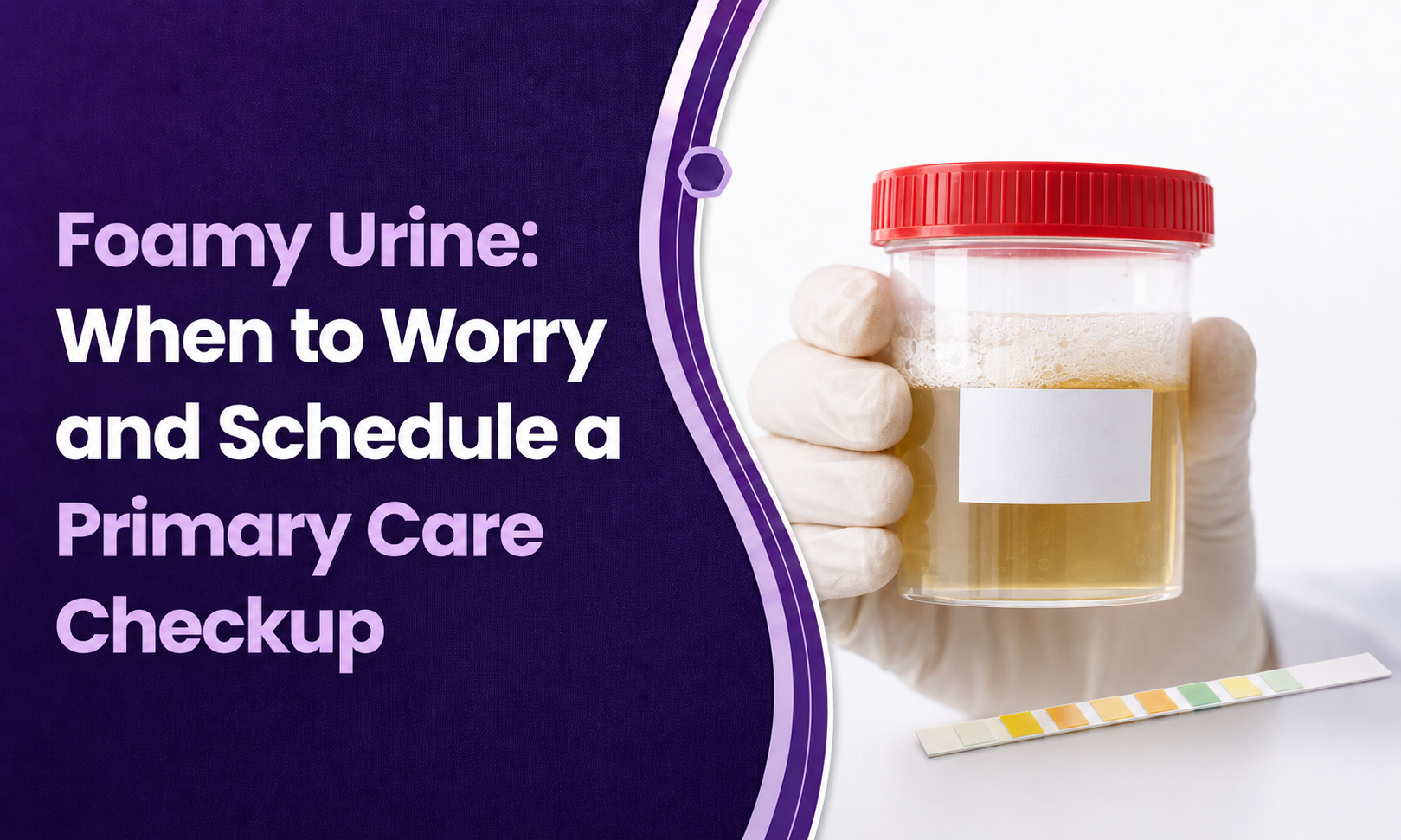
Foamy urine describes urine that creates many bubbles or a frothy layer after it reaches the toilet water. However, appearance varies with water level, urine speed, hydration, and chemicals in the bowl. Therefore, foam does not provide a diagnosis by itself.
Occasional bubbles commonly develop from a fast stream. Likewise, concentrated urine may foam when you lack fluid. Toilet cleaners can also create a misleading reaction.
Persistent, dense foam raises another question. Healthy kidneys keep albumin in the bloodstream. Damaged filters may let protein escape into urine, a finding called proteinuria or albuminuria. Nevertheless, only testing can confirm it.
How Much Foam in Urine Is Normal?
No exact bubble count or foam thickness defines normal urine. Instead, focus on pattern and persistence. Large, clear bubbles that disappear quickly after occasional forceful urination usually cause less concern.
Dense, whitish froth that returns frequently, grows more noticeable, or remains after flushing deserves a medical discussion.
Consider the setting. If bubbles appear only in a recently cleaned toilet, flush it and compare later. If dark urine follows exercise, heat, or limited fluids, normal hydration may help. However, extra water cannot “wash out” kidney damage.
Foamy Urine vs. Bubbly Urine
People often use “bubbly” and “foamy” interchangeably, yet the pattern can offer useful context. Normal bubbles often look larger, clearer, and temporary. Concerning foam may look finer, denser, paler, and more persistent. Even so, photographs cannot reliably distinguish harmless bubbles from proteinuria.
A urine sample gives better information than pictures. Consequently, record the frequency, duration, color, and associated symptoms. Those observations can guide testing.
Does Foamy Urine Affect Men and Women Differently?
Comparison | Foamy urine in men | Foamy urine in women |
Common causes | Dehydration, forceful urine flow, proteinuria, diabetes, and high blood pressure | Dehydration, forceful urine flow, proteinuria, diabetes, and high blood pressure |
Sex-specific considerations | Retrograde ejaculation may cause cloudy or foamy urine after sexual activity | UTIs, vaginal discharge, and pregnancy may affect urine appearance |
Related symptoms | Dry orgasm, reduced semen, or fertility concerns | Burning, urgency, pelvic discomfort, discharge, or frequent urination |
Important warning signs | Persistent foam, swelling, blood in urine, or changes in urination | Persistent foam, swelling, severe headache, vision changes, or high blood pressure during pregnancy |
Next step | Seek medical evaluation if foamy urine in men keeps recurring | Ask a primary care provider about recurring foam and appropriate urine testing |
Common Causes of Foamy Urine
Several everyday and medical factors can cause foamy urine:
Forceful urination from a full bladder
Dehydration and concentrated urine
Soap or toilet-cleaning chemicals
Proteinuria linked to diabetes or high blood pressure
Less common causes, including retrograde ejaculation, lupus, or amyloidosis
Because causes vary, proper testing helps determine the right treatment.
Why Is My Urine Foaming in the Morning?
Morning urine often looks darker or foamier because you usually drink nothing while sleeping. Moreover, a full morning bladder may create a stronger stream. If the bubbles disappear quickly and the pattern improves with ordinary hydration, the cause may remain harmless.
However, repeated morning foam does not automatically equal dehydration. Notice whether it continues later in the day, becomes denser, or appears with swelling and fatigue. Persistent change warrants testing regardless of the time it occurs.
Foamy Urine and Kidney Disease
The connection between foam and kidney disease involves protein leakage. Each kidney contains microscopic filters that remove waste while retaining blood cells and useful proteins. Diabetes, uncontrolled blood pressure, autoimmune disease, and other conditions may injure those filters. As a result, albumin may enter the urine.
Importantly, foam does not reveal a disease stage, and some people with kidney disease notice none. Conversely, many people who see bubbles have no damage. Therefore, Foamy Urine: When to Worry centers on risk factors, symptoms, and testing.
People with diabetes, hypertension, heart disease, obesity, or a family history benefit from monitoring because tests may identify early risk.
Foamy Urine: When to Worry About Other Symptoms
Arrange a medical visit if foamy urine:
Appears regularly for several days
Becomes denser or more noticeable
Continues despite normal hydration
Occurs with swelling around the eyes, face, hands, ankles, or feet
Appears with blood, painful urination, fever, fatigue, or nausea
Occurs with appetite loss, breathlessness, or changes in urine volume
Seek urgent medical care for:
Inability to urinate
Severe breathing difficulty
Confusion
Rapidly worsening swelling
People with diabetes or high blood pressure should get persistent foamy urine checked early, even without other symptoms.
Foamy Urine, No More Panic: Start With Primary Care
Searches for “foamy urine no more panic” reflect a need for reassurance. Do not assume kidney failure after seeing bubbles. However, do not ignore a recurring change.
Primary care offers a practical start. Your provider can review timing, medications, swelling, urinary discomfort, diabetes, and hypertension, then check blood pressure and arrange testing.
Persistent foam deserves a clear answer, not guesswork. Schedule a primary care visit when the pattern continues or concerns you.
How Doctors Identify the Cause of Foamy Urine
Doctors do not diagnose the cause from the foam’s appearance alone. Instead, they consider how often it occurs, how long it lasts, related symptoms, and personal risk factors. Most evaluations begin in a primary care setting.
Health History and Physical Examination
Your provider may ask when the foam started, whether it appears every day, and whether normal hydration changes it. They may also review your medications, supplements, urinary symptoms, recent illnesses, and family history of kidney disease.
Additionally, the provider may check your blood pressure and look for swelling around your eyes, face, hands, ankles, or feet. Diabetes, high blood pressure, and cardiovascular disease can increase the risk of kidney damage.
Urinalysis
A urinalysis checks a urine sample for protein, blood, glucose, and signs of infection. Although the test can detect abnormalities, one result may not provide the complete answer.
Exercise, fever, dehydration, and illness can temporarily influence urine findings. Therefore, your provider may repeat the test to confirm whether an abnormality continues.
Urine Albumin-to-Creatinine Ratio
A urine albumin-to-creatinine ratio, or UACR, compares the amount of albumin with creatinine in a urine sample. Albumin normally remains in the bloodstream, while damaged kidney filters may allow it to enter the urine.
A higher UACR result may indicate kidney damage. However, your provider will interpret the result alongside your medical history, blood pressure, kidney function, and follow-up results.
Blood and Kidney Function Tests
Blood creatinine and estimated glomerular filtration rate, or eGFR, help evaluate how effectively the kidneys filter blood. Depending on your risk factors, your provider may also order blood glucose, A1C, electrolytes, or other relevant tests.
If results show persistent protein loss or declining kidney function, primary care can coordinate further testing or refer you to a kidney specialist.
Tests Your Primary Care Provider May Order
Urinalysis usually provides the first step. This test can identify protein, blood, glucose, infection markers, and other abnormalities. If protein appears, your provider may order a urine albumin-to-creatinine ratio, often called UACR.
This test compares albumin with creatinine in one sample and helps estimate kidney-related protein loss.
Blood testing may include creatinine and estimated glomerular filtration rate, or eGFR. Depending on your history, the provider may also check glucose, A1C, cholesterol, or electrolytes.
One abnormal result does not establish chronic kidney disease. Exercise, illness, or fever can affect urine protein. Therefore, your provider may repeat testing. Substantial protein loss or declining function may require a nephrology or urology referral.
How Primary Care Turns a Symptom Into a Care Plan
When considering Foamy Urine: When to Worry, your primary care provider may:
Review how often the foam appears and how long it lasts
Ask about recent illness, fever, exercise, or pregnancy
Discuss current medications and supplements
Check your blood pressure and blood sugar
Evaluate swelling, fatigue, pain, or changes in urination
Explain your urine and kidney test results clearly
Recommend monitoring, treatment, or repeat testing
Refer you to a kidney specialist when necessary
Create a care plan based on your overall health
Understanding Foamy Urine: When to Worry helps you recognize meaningful changes and seek appropriate care without unnecessary panic.
Foamy Urine Treatment Depends on the Cause
Foamy urine treatment depends on the cause. Hydration may help if dehydration causes it, while a confirmed urinary infection may require medication. Diabetes, high blood pressure, or kidney problems need proper medical management and monitoring. Understanding Foamy Urine: When to Worry helps you avoid unsafe home remedies and seek the right care.
Get Foamy Urine Checked in North Texas
Knowing Foamy Urine: When to Worry balances reassurance with timely action. Occasional bubbles may come from urine speed, dehydration, or chemicals. In contrast, persistent foam with other symptoms deserves evaluation.
Passion Health Advanced Primary Care can review symptoms, check risks, arrange testing, and coordinate specialist care when necessary.
Don’t ignore persistent foamy urine.
Schedule an evaluation at Passion Health Advanced Primary Care to discuss possible causes and receive personalized next steps.
Frequently Asked Questions
1. Is occasional foamy urine normal?
Yes. A forceful stream, dehydration, or cleaner residue may create temporary bubbles. Monitor whether they return.
2. What does foamy urine mean?
It may reflect urine speed or concentration. However, recurring dense foam can accompany proteinuria.
3. Can foamy urine indicate kidney disease?
It can, but foam alone cannot diagnose kidney disease. Urinalysis, UACR, creatinine, and eGFR provide answers.
4. When should I contact a primary care provider?
Seek evaluation when foam persists for several days, worsens, or occurs with swelling, fatigue, blood, pain, fever, or changes in urination.
5. Can drinking water stop foamy urine?
Normal hydration may help concentrate urine. However, water cannot treat proteinuria.

About the Author
Dr. Anantha Chentha is a board-certified internal medicine physician with extensive experience in primary care and chronic disease management. He provides comprehensive, patient-centered care with a focus on prevention, accurate diagnosis, and long-term health management.
View Provider Profile →